

Kakishibu — Japanese Persimmon Tannin Dye and Waterproofing Treatment
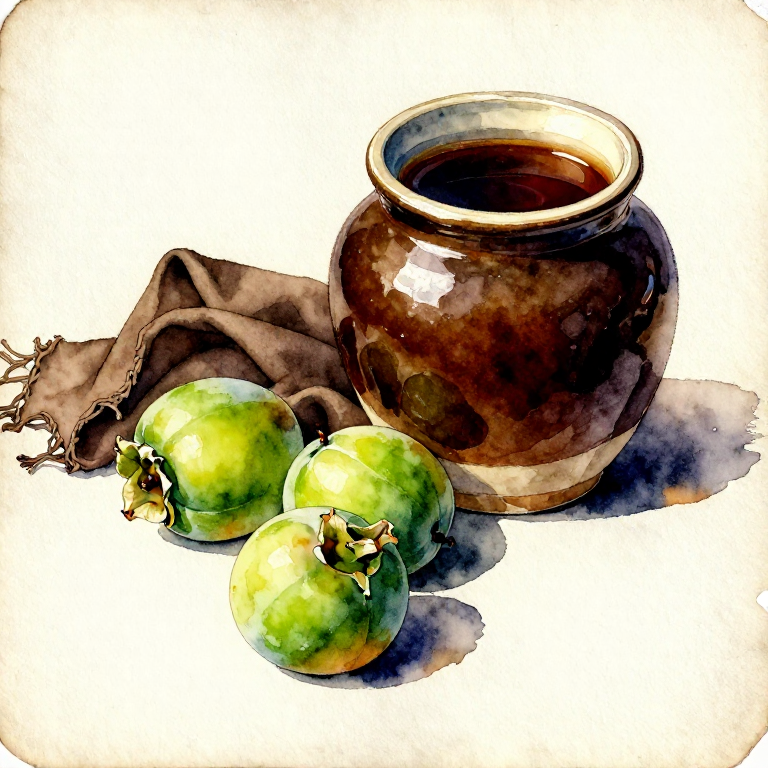
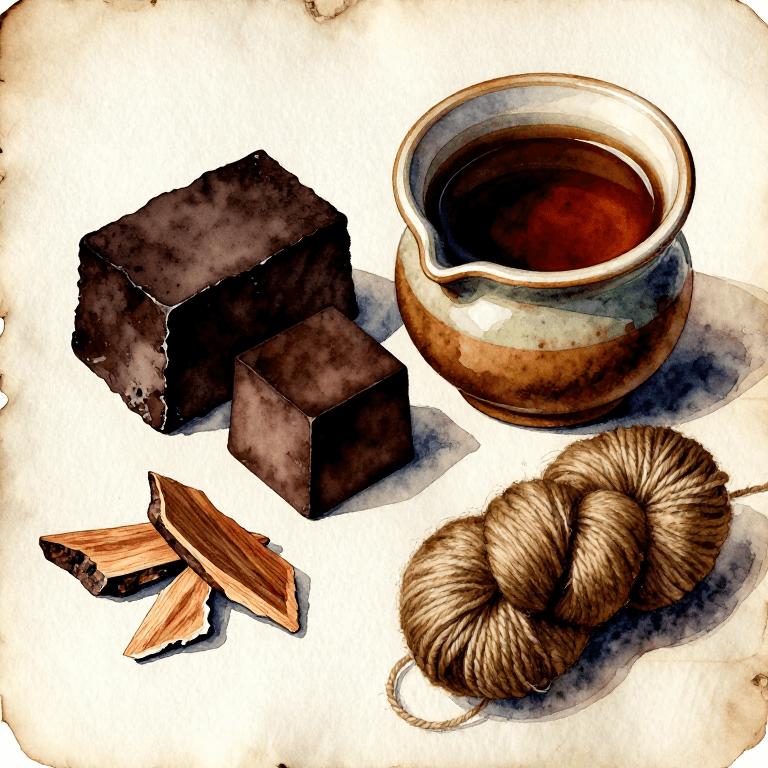
Kakishibu (柿渋) is a traditional Japanese dye and preservative made from the fermented juice of unripe persimmon fruits (Diospyros kaki). The green, astringent fruits are crushed, pressed, and the juice is left to ferment for one to three years in sealed jars. During fermentation, the soluble tannins in the juice polymerise into large, insoluble molecules that bond permanently to cellulose fibres — cotton, linen, hemp, and paper — producing a rich reddish-brown colour that deepens with sun exposure over months.
Kakishibu has been used in Japan for over a thousand years. Its applications go far beyond textile dyeing: it waterproofs paper (washi treated with kakishibu becomes the material for traditional umbrellas, fans, and sake-brewing bags), preserves fishing nets against rot, hardens and protects wooden surfaces, and serves as a natural insect repellent. The tannins in kakishibu have antimicrobial properties — kakishibu-treated cloth resists mould and bacteria, making it practical for work clothing and food-contact items.
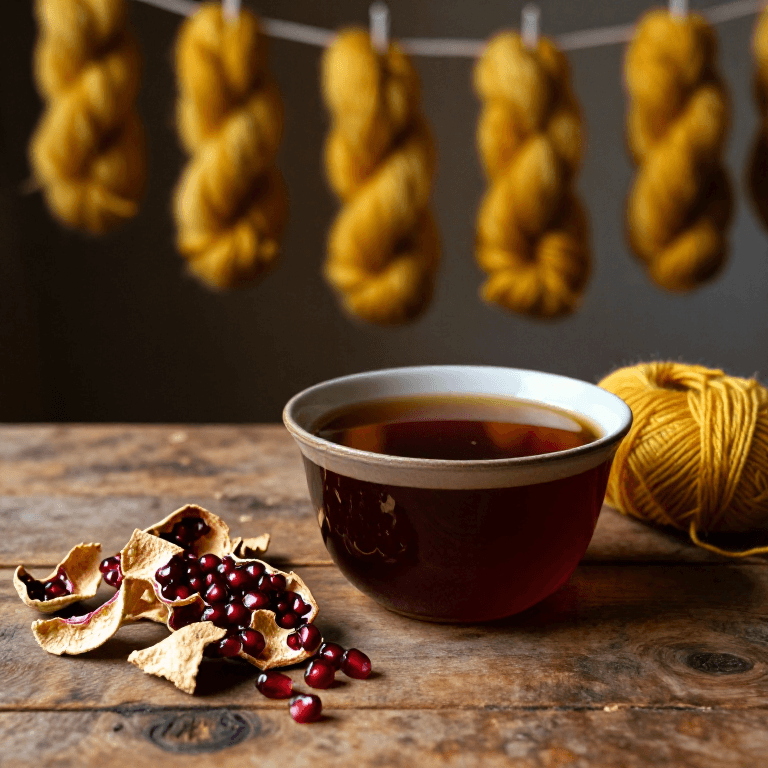
Unlike most natural dyes, kakishibu is applied cold — no heating is needed. The dyed fabric is then exposed to sunlight, which accelerates the oxidation and polymerisation of the tannins. Each sun exposure deepens the colour, so kakishibu-dyed textiles darken progressively over weeks and months. The final colour — a warm, rich reddish-brown with depth and complexity — is unique to this process. No other natural dye develops its colour through post-dyeing sun exposure in this way.
Hướng dẫn
Harvest unripe green persimmons
Harvest unripe green persimmons
Collect unripe, hard, green persimmon fruits (Diospyros kaki) in mid to late summer, before they begin to soften or colour. The fruits must be astringent varieties — the kind that pucker the mouth if bitten raw. The astringency comes from soluble tannins (primarily shibuol), which are the active dye compounds. Sweet, non-astringent persimmon varieties contain far less tannin and produce weak kakishibu. Gather about 2 kg of green fruits for a small batch.
Vật liệu cho bước này:
 Hồng xanh (chưa chín)2 kg
Công cụ cần thiết:
 Cân nhà bếp điện tử
Crush the persimmons and press out the juice
Crush the persimmons and press out the juice
Roughly chop the green persimmons (including skins, excluding stems) and crush them thoroughly with a wooden mallet or in a heavy mortar. The crushed fruit should be a greenish-brown pulp. Place the pulp in muslin cloth and squeeze hard to extract as much juice as possible. The fresh juice is a cloudy, yellow-green liquid with an intensely astringent taste and a sharp, tannic smell. Collect the juice in a clean glass or ceramic container — do not use metal, as the tannins react with iron and darken the liquid prematurely.
Công cụ cần thiết:
 Vải mút-xơ-lin
 Thìa khuấy bằng gỗ
Ferment the juice for 1-3 years
Ferment the juice for 1-3 years
Pour the fresh juice into a wide-mouthed glass jar or ceramic crock, leaving headspace. Cover loosely with cloth (fermentation gases must escape) and store in a cool, dark place. Stir once a week for the first month, then leave undisturbed. Over months, the juice darkens from yellow-green to amber, then to deep brown. The tannins polymerise during fermentation, forming the large molecules that bond permanently to cellulose. Fresh kakishibu (less than 6 months) can be used but gives weaker, less permanent colour. Traditionally, kakishibu is aged 1-3 years for full potency. The liquid develops a strong, distinctive smell during fermentation — store it where the odour will not be a problem.
Công cụ cần thiết:
 Lọ thuỷ tinh
Strain the fermented kakishibu
Strain the fermented kakishibu
After fermentation, strain the kakishibu through a fine mesh strainer to remove sediment and any fruit fragments. The strained liquid should be a dark, reddish-brown — clear but deeply coloured, with a thick, slightly viscous consistency. Well-aged kakishibu has a strong, characteristic smell that diminishes after application and drying. The strained liquid is ready to use as a dye, waterproofing agent, or wood finish. It can be stored indefinitely — kakishibu improves with age.
Công cụ cần thiết:
 Rây lưới mịn
Apply kakishibu to cotton fabric — cold application
Apply kakishibu to cotton fabric — cold application
Kakishibu works best on cellulose fibres — cotton, linen, hemp — and on paper. Pre-wash the fabric to remove sizing. Lay the fabric flat and brush or pour the kakishibu evenly over the surface, or submerge the fabric in a tray of kakishibu for 30 minutes. No heat is needed — kakishibu is applied at room temperature. Squeeze out excess and hang to dry. The first application gives a pale tan that looks underwhelming — the magic happens in the next step.
Vật liệu cho bước này:
 Vải muslin cô tông1 cái
Sun-expose the dyed fabric to develop the colour
Sun-expose the dyed fabric to develop the colour
Hang the kakishibu-treated fabric in direct sunlight for several hours. UV light accelerates the oxidation and polymerisation of the tannins — the fabric will visibly darken during sun exposure. After drying in the sun, re-apply another coat of kakishibu and sun-dry again. Repeat 3-5 times over several days. Each application deepens the colour from pale tan through cinnamon to a rich, warm reddish-brown. This progressive colour development — impossible with any other natural dye — is the defining characteristic of kakishibu dyeing. The final colour continues to deepen over months of normal light exposure.
Understand kakishibu's role beyond dyeing
Understand kakishibu's role beyond dyeing
Kakishibu is not merely a dye — it is a functional coating. Paper treated with kakishibu becomes water-resistant, stiff, and durable: this is shibu-gami, used for traditional Japanese umbrellas (wagasa), fans (uchiwa), sake-brewing filter bags, and wrapping paper. Wood coated with kakishibu gains a warm brown finish with natural insect and rot resistance — an alternative to urushi (lacquer) for everyday objects. Fishing nets soaked in kakishibu resist saltwater degradation. The tannin's antimicrobial properties made kakishibu-treated cloth the practical choice for work aprons, storage bags, and food-preparation surfaces in traditional Japanese homes.
Vật liệu
2- Tạm thời
- 1 cáiTạm thời
Công cụ yêu cầu
5- Tạm thời
- Tạm thời
- Tạm thời
- Tạm thời
- Tạm thời
Vật liệu bản thiết kế liên kết
Bản thiết kế này làm ra

Blueprint liên quan
Các blueprint này chia sẻ kiến thức — kỹ thuật, vật liệu hoặc nguyên tắc
CC0 Phạm vi công cộng
Bản thiết kế này được phát hành theo CC0. Bạn tự do sao chép, sửa đổi, phân phối và sử dụng cho bất kỳ mục đích nào mà không cần xin phép.
Hỗ trợ nhà sáng tạo bằng cách mua sản phẩm qua bản thiết kế, nơi họ nhận Hoa hồng nhà sáng tạo do nhà bán hàng đặt, hoặc tạo phiên bản mới và kết nối trong bản thiết kế riêng để chia sẻ doanh thu.