NGHỆ THUẬT
LÀM ĐẸP VÀ SỨC KHỎE
THỦ CÔNG
VĂN HÓA VÀ LỊCH SỬ
GIẢI TRÍ
MÔI TRƯỜNG
THỰC PHẨM VÀ ĐỒ UỐNG
KỸ THUẬT NGƯỢC
KHOA HỌC
THỂ THAO
CÔNG NGHỆ
THIẾT BỊ ĐEO
Nguy hiểm

Lithium Cobalt Oxide Cathode
Every cell before this one in the chain works by making and unmaking a compound. Lead becomes lead sulphate and comes back. Cadmium becomes cadmium hydroxide and comes back. The electrode is consumed and rebuilt on every cycle, and everything that is rebuilt eventually gets rebuilt badly.
**Intercalation is a different idea entirely.** Build a crystal with layers, park lithium ions between the layers, and pull them out and put them back without the host ever changing. Nothing is made, nothing is unmade, and in principle nothing wears out.
Stanley Whittingham had shown this worked with a sulphide, lithium titanium disulphide, but the voltage was low. John Goodenough and Koichi Mizushima's insight was to try an OXIDE instead: oxygen holds its electrons more tightly than sulphur, so pulling lithium out of a cobalt oxide costs more energy - and that energy is exactly what comes back as voltage.
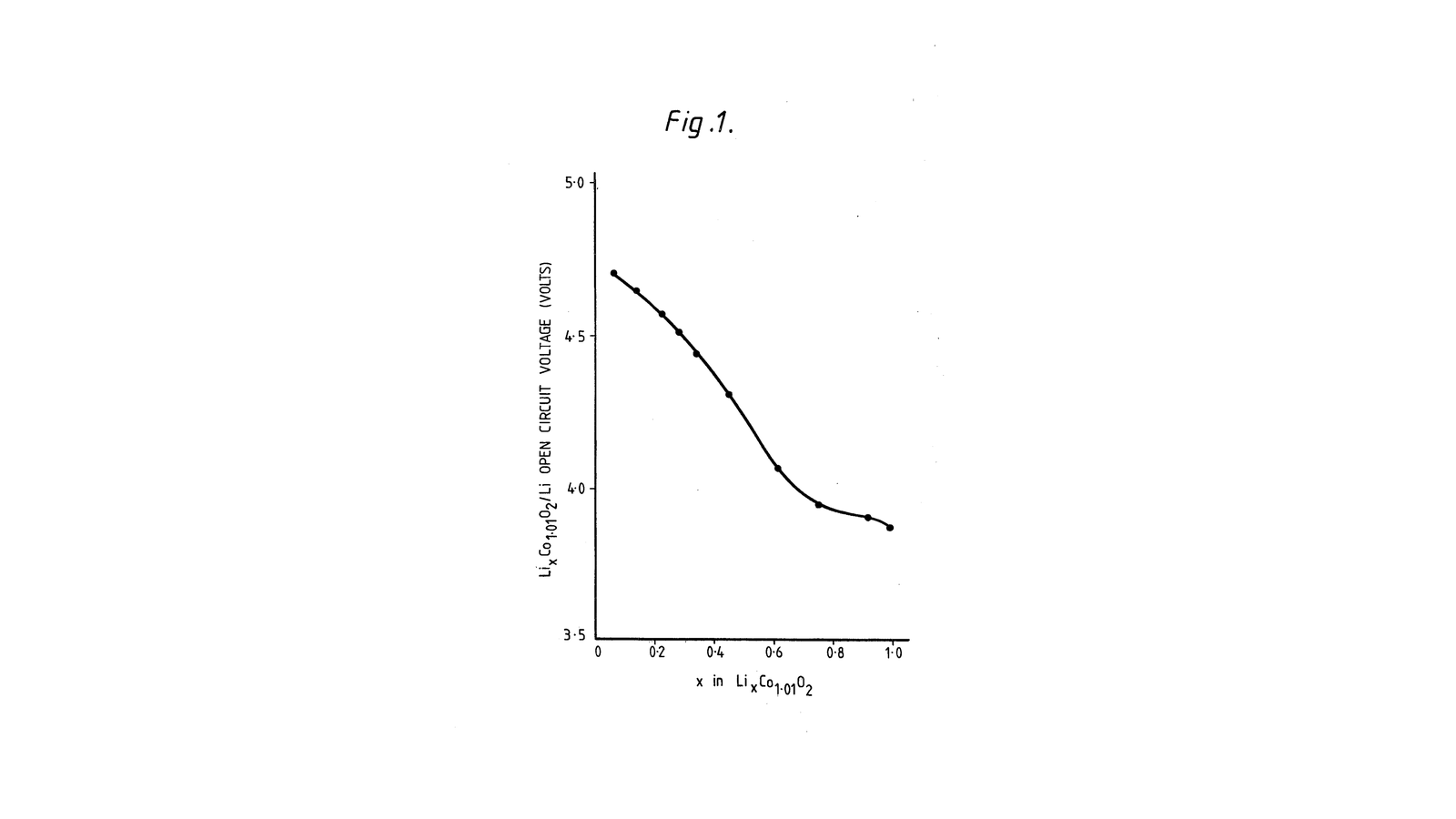
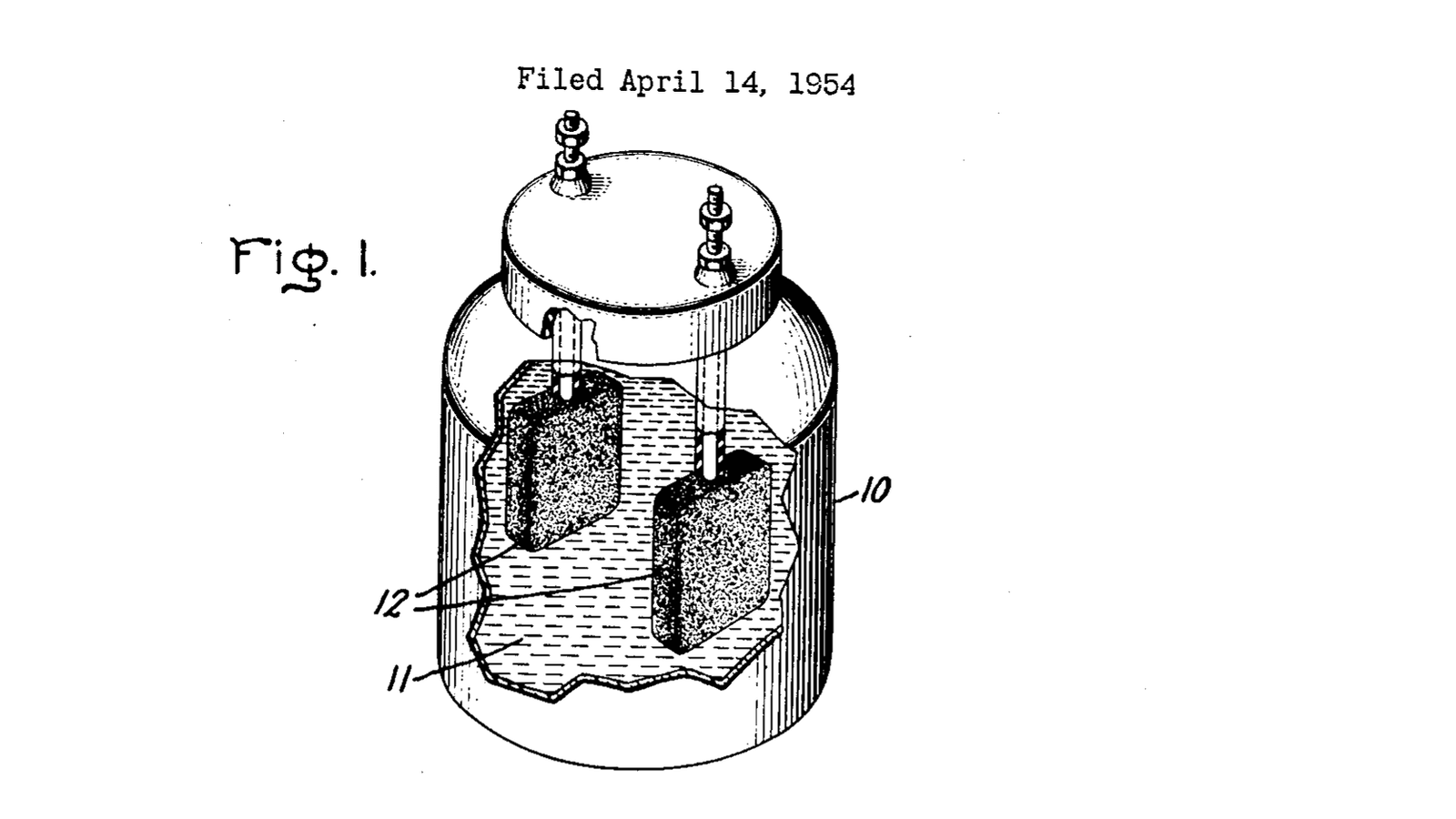
**US 4,302,518** "Electrochemical cell with new fast ion conductors", John B. Goodenough and Koichi Mizushima, priority 5. April 1979, filed 31. March 1980, granted 24. November 1981. It claims a family, *"fast ion conductors of the formula AxMyO2 where A is Li, Na or K, M is a transition metal e.g. Co or Ni"*, and the worked example is Li0.99Co1.01O2. The patent reports open-circuit voltages *"nearly twice as large as those found for the known ion conductor LixTiS2"* - and the figure on the cover of this blueprint is theirs: voltage against how much lithium is left, running from about 3.9 V up past 4.5 V.
That curve is the reason your phone exists.
**What you are making here.** The cathode powder, by solid-state synthesis, and the measurements that tell you whether you made it. You are not building a lithium cell: that needs lithium metal or a graphite anode, a dry organic electrolyte and an argon glovebox, and doing it on a bench is how people set fire to their houses. The last step says what a full cell would need and why the line is drawn where it is.
Cobalt compounds are toxic and a suspected carcinogen as dust, and this runs a furnace at 900 degrees. Gated for the first reason.
Nâng cao
2 hours of work across a 12-hour firing
Nội dung nguy hiểm
Blueprint này chứa các quy trình nguy hiểm. Đăng nhập và bật nội dung nguy hiểm trong cài đặt tài khoản của bạn để xem hướng dẫn từng bước.
Blueprint liên quan
Các blueprint này chia sẻ kiến thức — kỹ thuật, vật liệu hoặc nguyên tắc


CC0 Phạm vi công cộng
Bản thiết kế này được phát hành theo CC0. Bạn tự do sao chép, sửa đổi, phân phối và sử dụng cho bất kỳ mục đích nào mà không cần xin phép.
Hỗ trợ nhà sáng tạo bằng cách mua sản phẩm qua bản thiết kế, nơi họ nhận Hoa hồng nhà sáng tạo do nhà bán hàng đặt, hoặc tạo phiên bản mới và kết nối trong bản thiết kế riêng để chia sẻ doanh thu.