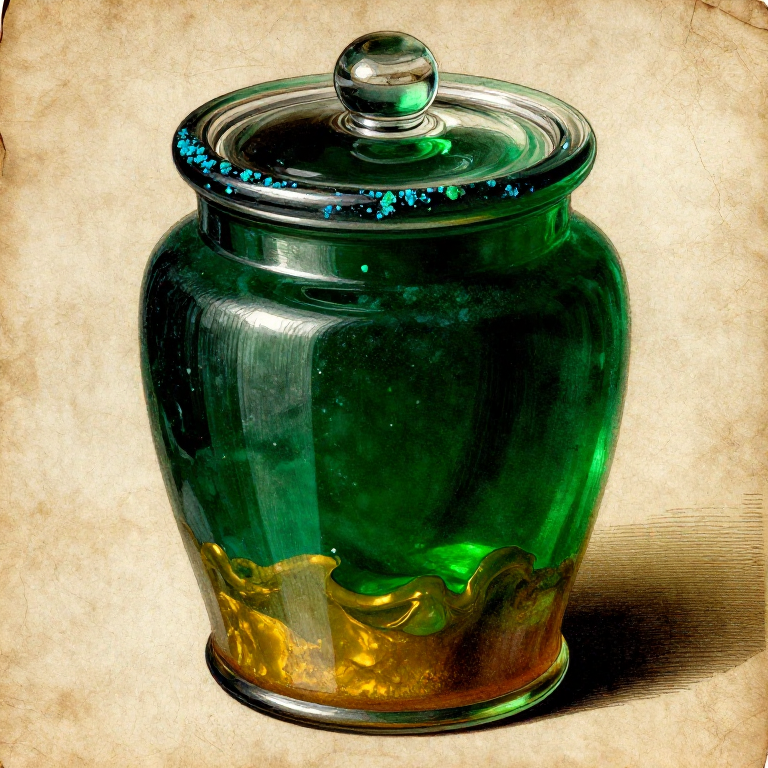

Making Copper Resinate Green — The Transparent Glaze of Medieval and Renaissance Painters
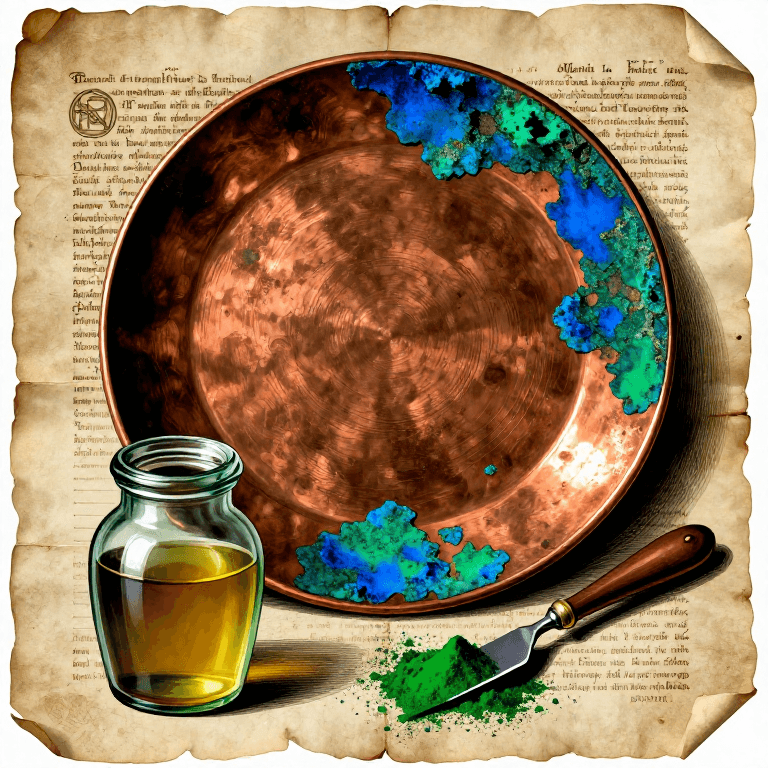
Copper resinate is a transparent, intensely green glaze pigment made by dissolving verdigris (copper acetate) in a natural resin — traditionally Venice turpentine (larch balsam), or dammar/mastic resin dissolved in turpentine spirits. The result is a deep, luminous, transparent green that was one of the most important glazing colours in European painting from the 14th to 17th centuries.
Unlike the opaque mineral greens (malachite, green earth), copper resinate is transparent — light passes through the green glaze layer and reflects off the white ground or underpainting below, creating a luminous, jewel-like depth. This transparency made it invaluable for painting foliage, drapery, and jewels. Giovanni Bellini, Jan van Eyck, and Raphael all used copper resinate green glazes extensively.
SAFETY WARNING: This process involves handling verdigris (copper acetate), which is TOXIC if ingested and irritating to skin and eyes. Heating verdigris releases acetic acid vapour. Hot turpentine is FLAMMABLE. Work in a well-ventilated area, wear gloves and eye protection, and keep away from open flames. Use an electric hot plate or water bath, never direct flame.
Hướng dẫn
Prepare the resin medium
Prepare the resin medium
Dissolve dammar resin in turpentine spirits to make a thick varnish. Place 50 g of crushed dammar resin in a glass jar and add 100 ml of turpentine spirits. Seal and let dissolve over 24-48 hours, shaking occasionally, until the dammar has fully dissolved into a clear, thick, honey-coloured varnish. Alternatively, use Venice turpentine (larch balsam) directly — it is already a thick, honey-like resin that dissolves verdigris readily. Venice turpentine was the preferred medium in 15th-century Venetian painting for this recipe.
Vật liệu cho bước này:
 Dầu thông100 ml
Công cụ cần thiết:
 Lọ thủy tinh có nắp
Grind the verdigris
Grind the verdigris
Grind verdigris (copper acetate) to a fine powder on a glass muller. Verdigris is a bright blue-green crystalline powder — commercial copper acetate from a chemical supplier works perfectly. You need approximately 20-30 g for this batch. Wear gloves when handling — verdigris is moderately toxic and irritating to skin. The finer you grind it, the more completely it will dissolve in the resin, producing a more transparent and uniform glaze.
Vật liệu cho bước này:
 Sắc tố gỉ đồng30 g
Công cụ cần thiết:
 Chày nghiền thủy tinh
 Găng tay chống hóa chất
Dissolve verdigris in the resin
Dissolve verdigris in the resin
Warm the dammar-turpentine varnish (or Venice turpentine) gently in a double boiler or water bath to approximately 60-80°C — NEVER over direct flame, as turpentine vapour is highly flammable. Slowly add the ground verdigris to the warm resin, stirring continuously with a glass rod. The verdigris gradually dissolves, and the resin transforms from honey-gold to a deep, brilliant, transparent green. Continue heating and stirring for 15-30 minutes until all the verdigris has dissolved and the mixture is a uniform, intensely green, transparent liquid. The chemical reaction converts copper acetate into copper resinate — a copper salt of the resin acids.
Công cụ cần thiết:
 Cốc thủy tinh chịu nhiệt
 Kính chống hóa chất bắn
Strain and store
Strain and store
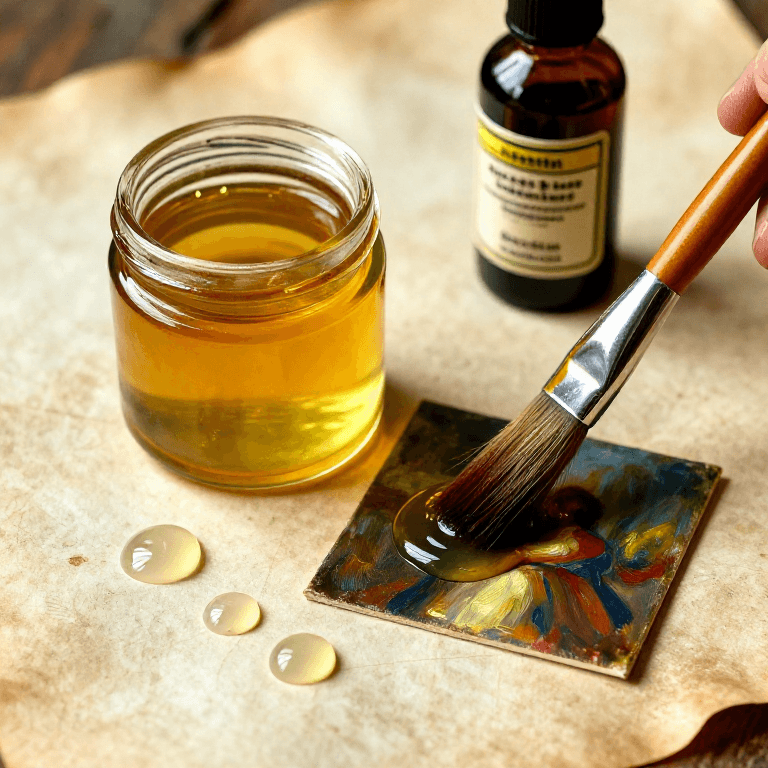
While still warm and fluid, strain the green resin through fine cheesecloth into a clean glass jar to remove any undissolved particles. The finished copper resinate should be a deep, brilliantly transparent green — when spread thinly on white paper or glass, light passes through it like a stained-glass window. Store in a sealed glass jar. The resin solidifies as it cools into a hard, translucent green mass. For use in oil painting, warm gently or dissolve a portion in turpentine spirits to make a fluid glaze. Apply over a white or light-coloured underpainting for maximum luminosity.
Công cụ cần thiết:
 Vải màn mỏng
 Lọ thủy tinh sẫm màu nắp kín khí
Application notes and known limitations
Application notes and known limitations
Copper resinate produces the most vivid, transparent greens in oil painting — no other historical green pigment matches its depth and luminosity when used as a thin glaze. However, it has a well-known flaw: over centuries, copper resinate glazes turn brown. This darkening (oxidation of the copper compound) has affected many Renaissance paintings — passages that were once vivid green foliage now appear dark brown. Van Eyck's 'Ghent Altarpiece' and Raphael's landscapes both show this deterioration. Despite this, copper resinate remained in use for centuries because no other green could match its transparency when fresh. For modern reproduction painting, apply thin and protect with good varnish to slow the inevitable browning.
Công cụ yêu cầu
7- Tạm thời
- Tạm thời
- Tạm thời
- Tạm thời
- Tạm thời
- Tạm thời
- Tạm thời
Vật liệu bản thiết kế liên kết
Bản thiết kế này làm ra

Blueprint liên quan
Các blueprint này chia sẻ kiến thức — kỹ thuật, vật liệu hoặc nguyên tắc
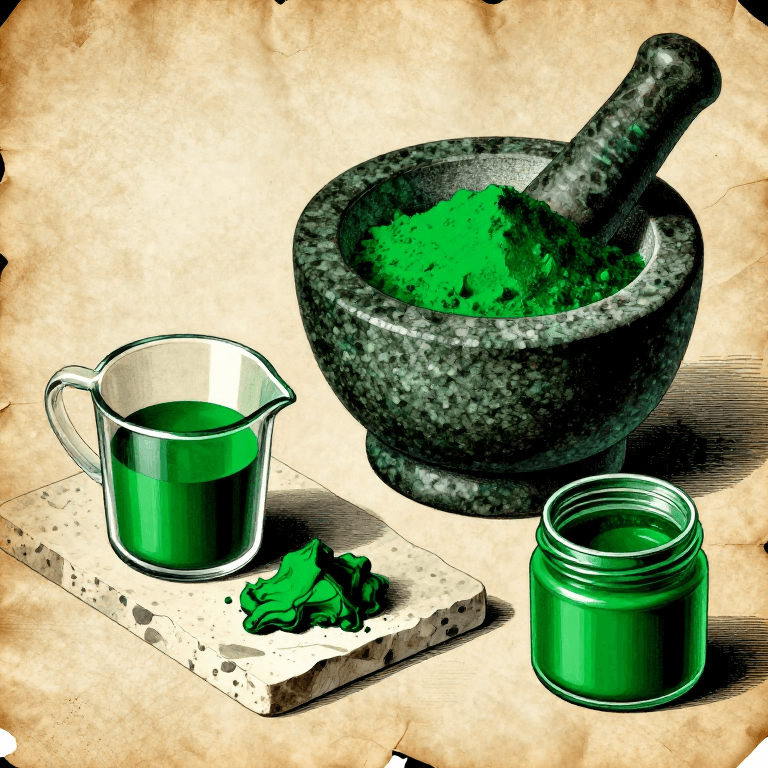
Making Malachite Green Pigment — Grinding the Copper Mineral into Painter's Green
bởi Charlie
NGHỆ THUẬT
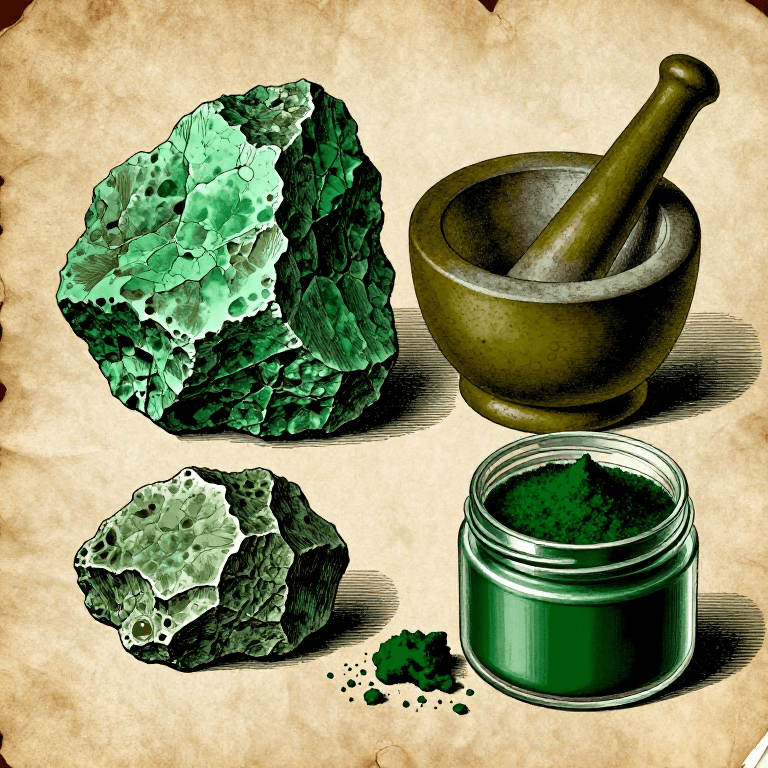
Making Green Earth Pigment (Terra Verte) — The Soft Green of Celadonite and Glauconite
bởi Charlie
NGHỆ THUẬT
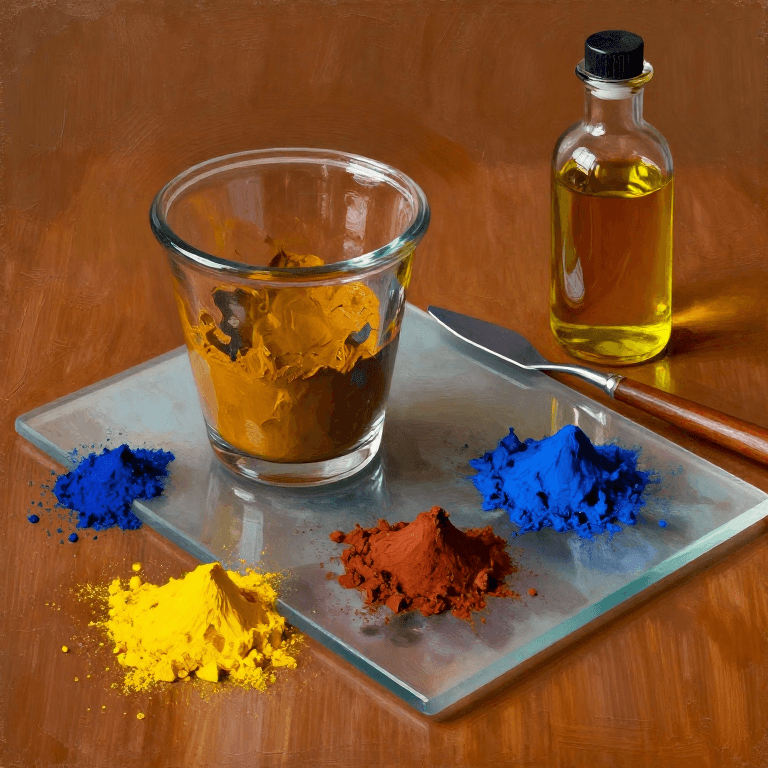
Making Oil Paint from Raw Pigments — Grinding Pigments in Linseed Oil
bởi Charlie
NGHỆ THUẬT
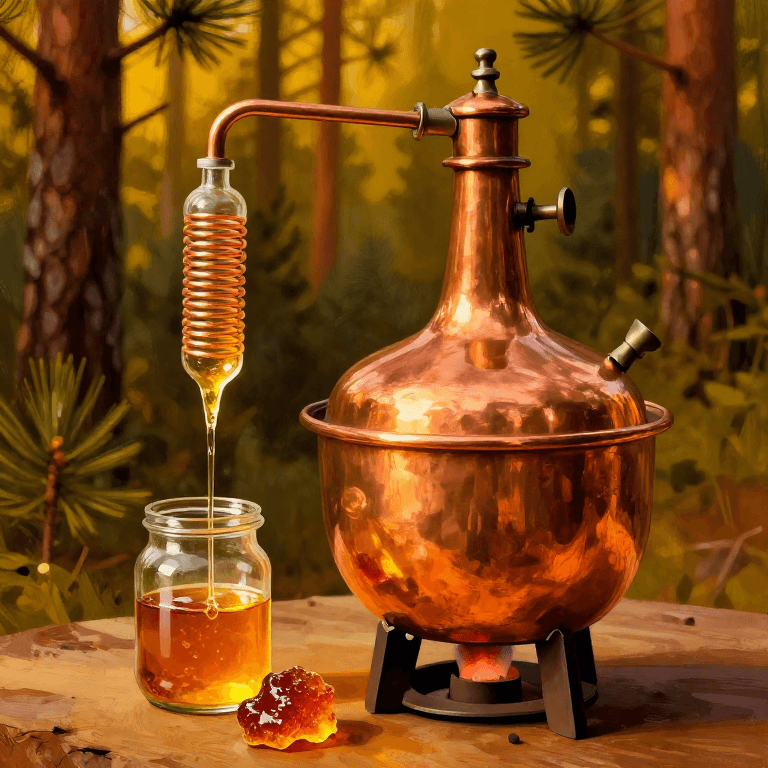
Distilling Turpentine from Pine Resin — The Essential Solvent of Oil Painting
bởi Charlie
NGHỆ THUẬT
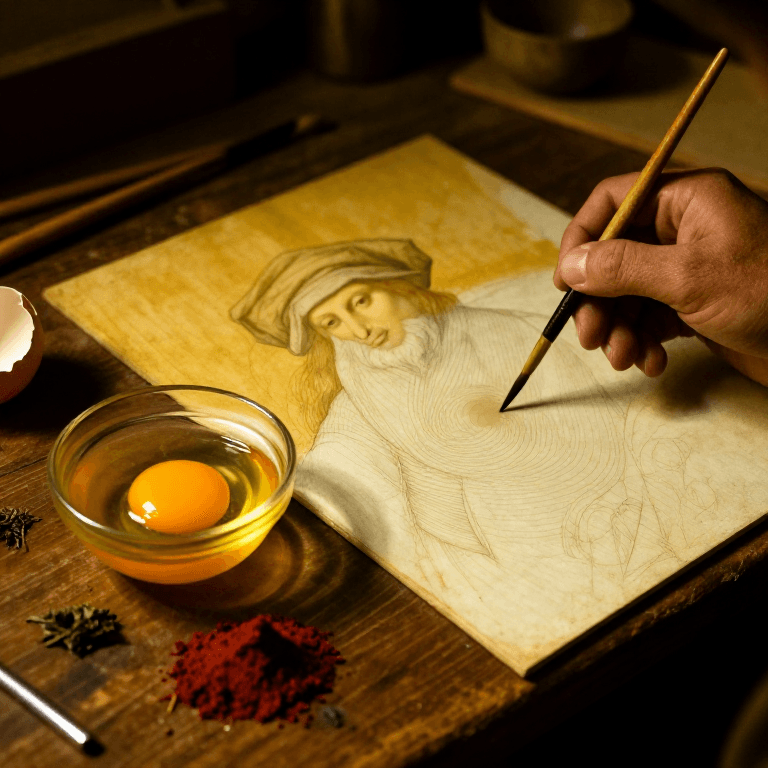
Making Egg Tempera Paint — The Medieval Panel Painting Medium
bởi Charlie
NGHỆ THUẬT
Making Traditional Gesso — The White Ground That Prepared Every Panel Painting in History
bởi Charlie
NGHỆ THUẬT
Making Lead White (Flake White) — The Dutch Stack Process for the Most Important Pigment in Oil Painting History
bởi Charlie
NGHỆ THUẬT
Making Gamboge Yellow — Preparing the Tree Resin Pigment of Southeast Asian Painters
bởi Charlie
NGHỆ THUẬT
Making Azurite Blue Pigment — Grinding the Copper Mineral into the Blue of Medieval Painting
bởi Charlie
NGHỆ THUẬT
CC0 Phạm vi công cộng
Bản thiết kế này được phát hành theo CC0. Bạn tự do sao chép, sửa đổi, phân phối và sử dụng cho bất kỳ mục đích nào mà không cần xin phép.
Hỗ trợ nhà sáng tạo bằng cách mua sản phẩm qua bản thiết kế, nơi họ nhận Hoa hồng nhà sáng tạo do nhà bán hàng đặt, hoặc tạo phiên bản mới và kết nối trong bản thiết kế riêng để chia sẻ doanh thu.