NGHỆ THUẬT
LÀM ĐẸP VÀ SỨC KHỎE
THỦ CÔNG
VĂN HÓA VÀ LỊCH SỬ
GIẢI TRÍ
MÔI TRƯỜNG
THỰC PHẨM VÀ ĐỒ UỐNG
KỸ THUẬT NGƯỢC
KHOA HỌC
THỂ THAO
CÔNG NGHỆ
THIẾT BỊ ĐEO
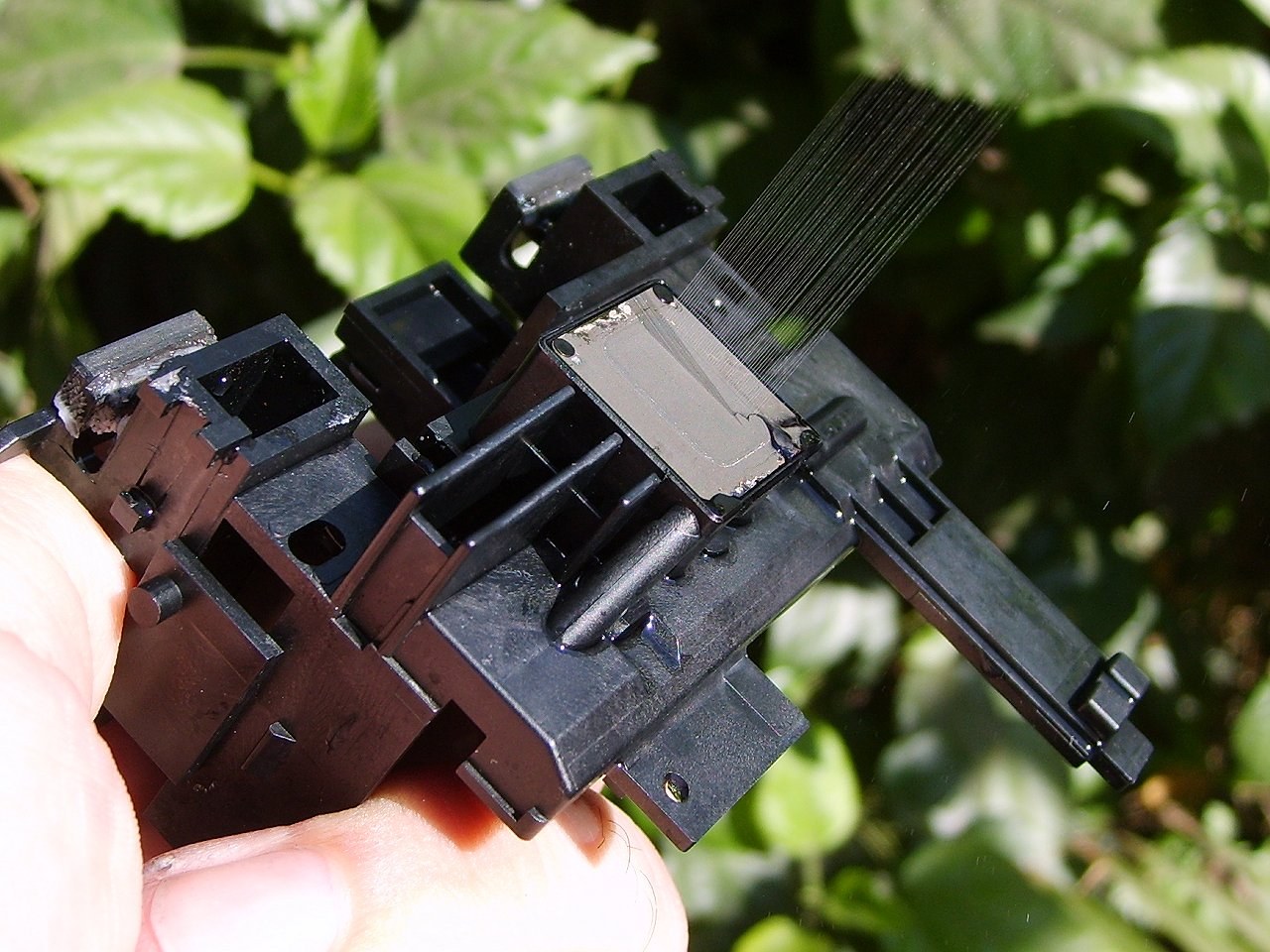

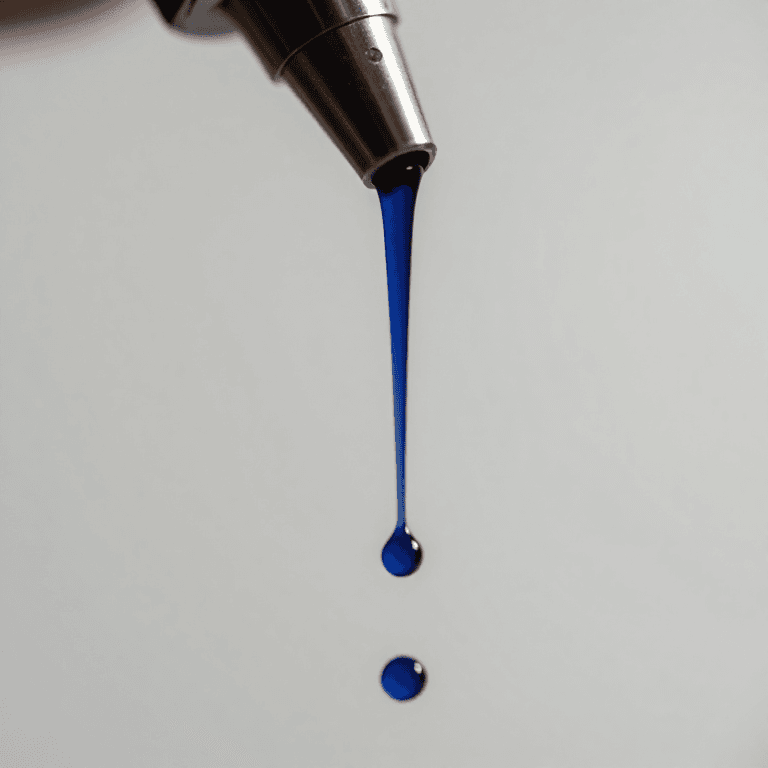
Piezoelectric Drop-on-Demand Inkjet
A continuous inkjet is always firing and throws away the drops it does not want. It buys reliability with a gutter, a pump, a filter and a solvent that evaporates. Drop-on-demand asks the opposite question: can a nozzle sit still and produce exactly one drop when told to?
Steven Zoltan at Clevite and Kyser and Sears at Silonics both answered yes in 1972, with the same component in two arrangements. Zoltan wrapped a tube of piezoelectric ceramic around a glass capillary so it squeezed inward; Kyser and Sears put a piezo diaphragm on the wall of a small chamber so it flexed. Either way, applying a voltage changes the chamber's volume slightly and a drop leaves the nozzle.
Slightly is the word. Work backwards from a thirty-picolitre drop and a one-square-millimetre diaphragm has to move about ninety nanometres - which at four hundred picometres per volt is a couple of hundred volts - which is what the 1972 machines ran on - or a tenth of that once you bond the ceramic to a passive plate so it curls instead of stretching. The whole drive voltage of every piezo head ever built falls out of that one sum.
What is not obvious is that the chamber rings. A pressure wave runs to the far end and back in a few microseconds, so if the next pulse arrives while the ink is still sloshing the drop leaves at the wrong speed and the wrong size. The drive is therefore never a pulse - it is a pull, a push and a damping segment, each timed against that acoustic round trip. Tuning those three numbers is most of what a print head manufacturer actually sells.
And because nothing in the chamber gets hot, the ink only has to flow. UV-curable monomer, solvent, hot wax, conductive silver, live cells in buffer - all of it goes through a piezo head, and none of it through a thermal one.
Nâng cao
4 hours
Hướng dẫn
1
1
Make a squeeze-mode chamber
Make a squeeze-mode chamber
Draw a glass capillary to a 60 micrometre tip over a small flame and break it square. Slide a piezo tube - or wrap a disc element - tightly around the barrel and bond it with a thin film of epoxy so the ceramic really grips the glass.
Back-fill with dyed water and glycerol through a syringe until a meniscus sits flat in the tip. No bubbles, or nothing will eject.
Vật liệu cho bước này:
 Bộ ống thủy tinh1 cái
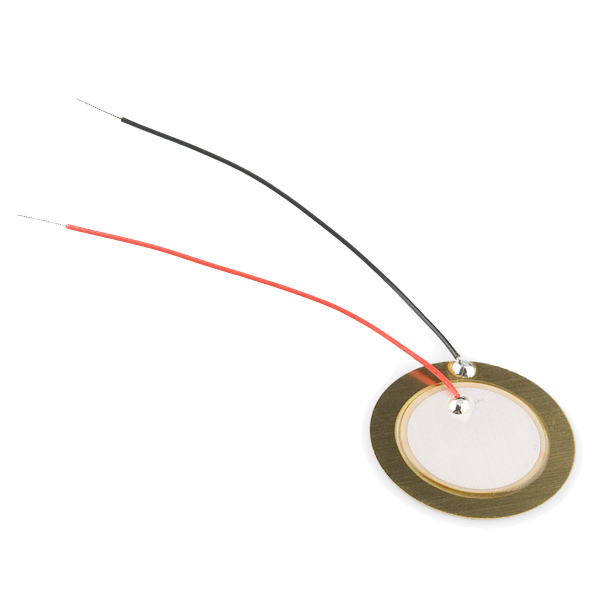 Piezo Element1 cái
 Keo epoxy hai thành phần (đông nhanh)1 tube
 Glyxerol (99 %)20 ml
 Phẩm màu thực phẩm5 ml
Công cụ cần thiết:
 Xi-lanh phòng thí nghiệm
 Đèn Bunsen
 Kính lúp cầm tay 10x
 Kính hiển vi số
2
2
Shape the waveform until the satellites stop
Shape the waveform until the satellites stop
Drive the element from the arbitrary generator through the amplifier, starting with a single 100 V push a few microseconds long. Catch the drops on a slide and look at them.
Now add a pull before the push and a small reverse pulse after it, and sweep each segment length through a few microseconds. There is a setting where the trailing satellite drops merge back into the main drop. That setting is the chamber's acoustic round trip, measured.
Vật liệu cho bước này:
 Lam kính10 cái
Công cụ cần thiết:
 Máy phát hàm
 Bộ khuếch đại cao áp (để bàn)
 Máy hiện sóng sốKính hiển vi số
 Kính bảo hộ kín
3
3
Drop volume to drive volts, ringing, and three ejectors
Drop volume to drive volts, ringing, and three ejectors
Đang tải sổ tay Jupyter…
Công cụ cần thiết:
 Máy tính để bàn
4
4
Compendium: four modes, and the nozzle plate
Compendium: four modes, and the nozzle plate
The 1972 pair became four modes, all the same trick in different geometry. SQUEEZE is Zoltan's tube round a capillary, easy to build one of and impossible to build a thousand of side by side. BEND is Kyser and Sears' diaphragm, and it is what nearly every desktop piezo head uses because it photolithographs into a silicon plate. PUSH drives a rod into the chamber end-on. SHEAR uses poled ceramic walls between adjacent chambers that rock sideways, so the wall between two nozzles does the work for both - the densest arrangement, and the one industrial heads use.
The nozzle plate is the part nobody expects to matter. Ink must not wet the outside face, or a film creeps across and pulls the next drops off-axis, so the plate carries a fluoropolymer coating and a wiper cleans it between passes. Everything that goes wrong with a working head - drops landing left of where they should, a nozzle that fires weakly, a sudden band across the page - is usually the last micrometre of that face rather than anything happening inside the chamber.
Vật liệu
6- 1 cáiTạm thời
- Piezo ElementHoa hồng 10%1 cái$2.20
- Tạm thời
- 20 mlTạm thời
- Tạm thời
- 10 cáiTạm thời
Công cụ yêu cầu
9- Tạm thời
- Tạm thời
- Tạm thời
- Tạm thời
- Tạm thời
- Tạm thời
- 1 vendor sell this, none ship to you yetTạm thời
- Tạm thời
- Tạm thời
Tổng ước tính
Những gì người làm đã mua. Vật liệu không hiện giá thì bạn mua ở đâu tuỳ bạn.
Blueprint liên quan
Các blueprint này chia sẻ kiến thức — kỹ thuật, vật liệu hoặc nguyên tắc


CC0 Phạm vi công cộng
Bản thiết kế này được phát hành theo CC0. Bạn tự do sao chép, sửa đổi, phân phối và sử dụng cho bất kỳ mục đích nào mà không cần xin phép.
Hỗ trợ nhà sáng tạo bằng cách mua sản phẩm qua bản thiết kế, nơi họ nhận Hoa hồng nhà sáng tạo do nhà bán hàng đặt, hoặc tạo phiên bản mới và kết nối trong bản thiết kế riêng để chia sẻ doanh thu.