NGHỆ THUẬT
LÀM ĐẸP VÀ SỨC KHỎE
THỦ CÔNG
VĂN HÓA VÀ LỊCH SỬ
GIẢI TRÍ
MÔI TRƯỜNG
THỰC PHẨM VÀ ĐỒ UỐNG
KỸ THUẬT NGƯỢC
KHOA HỌC
THỂ THAO
CÔNG NGHỆ
THIẾT BỊ ĐEO
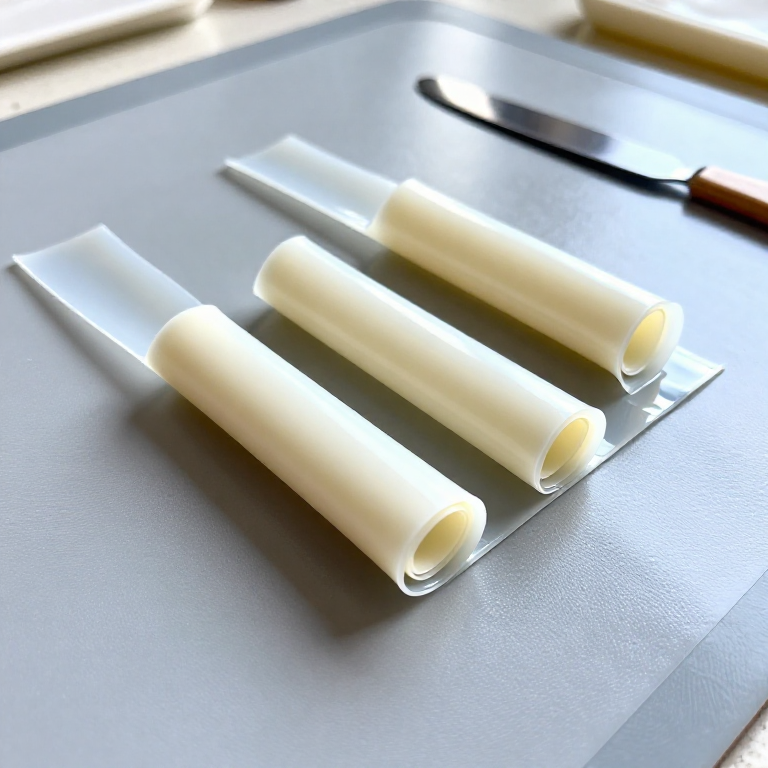


Plasticised PVC (Plastisol)
PVC was known for decades as a hard, brittle powder nobody could use. In 1926 Waldo Semon at B.F. Goodrich found that certain liquids dissolve it only when hot, and that the hot solution sets on cooling into a soft, rubber-like gel - flexible PVC.
**US 1,929,453**, "Synthetic rubber-like composition and method of making same", Semon, assigned to B.F. Goodrich, granted 10. October 1933, claims dissolving "an insoluble polymerized vinyl halide at an elevated temperature" in a liquid that dissolves it only well above room temperature, and gelling it by cooling. One example: 8 parts PVC, 8 parts tricresyl phosphate, 3 parts dibutyl phthalate.
**Plastisol is that idea in a bottle**: PVC grains suspended, undissolved, in plasticiser. Heat makes the liquid dissolve the grains and fuse into solid flexible PVC. You bake test films at three temperatures and pull them apart to find where it truly fuses.
Cơ bản
2 hours
Hướng dẫn
1
1
Ventilate and set the oven
Ventilate and set the oven
Use a toaster oven kept for crafts, never food, by an open window. Put the probe thermometer inside - dial settings are rarely accurate.
Công cụ cần thiết:
 Lò nướng để bàn
 Nhiệt kế đầu dò cắm sẵn
 Khẩu trang N95
2
2
Stir the plastisol
Stir the plastisol
The PVC grains settle. Stir the plastisol from the bottom for 2 minutes until even. Read the label's fusion temperature.
Vật liệu cho bước này:
 Plastisol150 ml
Công cụ cần thiết:
 Đũa khuấy
3
3
Spread three films
Spread three films
On the silicone mat, spread three 100 x 40 mm films about 1.5 mm thick with the palette knife.
Vật liệu cho bước này:
Plastisol50 mlCông cụ cần thiết:
 Tấm lót nướng silicon
 Bộ dao trộn màu
 Thước kẻ
4
4
Bake at three temperatures
Bake at three temperatures
Bake one film 10 minutes each at 130 °C, 150 °C and the label's fusion temperature (commonly 160–180 °C). Never exceed the label maximum.
Công cụ cần thiết:
Lò nướng để bàn Nhiệt kế hồng ngoại
 Găng tay hàn
5
5
Cool and cut strips
Cool and cut strips
Cool 10 minutes. Peel each film and cut a 10 mm strip from its centre. Mark its temperature.
Công cụ cần thiết:
 Dao rọc giấyThước kẻ
6
6
Stretch and pull
Stretch and pull
Clamp one end in the vise. Hook the spring scale to the other and pull slowly. Record the peak force and how it failed.
Công cụ cần thiết:
 Lực kế (cân lò xo)
 Ê tô bàn nguội
 Kính bảo hộ trong suốt
7
7
Recipe, cure curve, siblings
Recipe, cure curve, siblings
Đang tải sổ tay Jupyter…
8
8
History & Context
History & Context
**What the patent specifies:** gelling PVC in high-boiling liquids such as tricresyl phosphate and dibutyl phthalate. **Modern build (derived):** a commercial plastisol; many now use phthalate-free plasticisers.
Flexible PVC became cable insulation, shower curtains, hoses and flooring. Its limits: the plasticiser slowly migrates out, so old soft PVC stiffens and turns sticky; and overheated PVC yellows and releases hydrogen chloride, which is why the label's maximum temperature matters.
Công cụ yêu cầu
13- Tạm thời
- Tạm thời
- Tạm thời
- Tạm thời
- Tạm thời
- Tạm thời
- Tạm thời
- Tạm thời
- Tạm thời
- Tạm thời
- Tạm thời
- Tạm thời
- Tạm thời
Bản thiết kế này làm ra

Blueprint liên quan
Các blueprint này chia sẻ kiến thức — kỹ thuật, vật liệu hoặc nguyên tắc

CC0 Phạm vi công cộng
Bản thiết kế này được phát hành theo CC0. Bạn tự do sao chép, sửa đổi, phân phối và sử dụng cho bất kỳ mục đích nào mà không cần xin phép.
Hỗ trợ nhà sáng tạo bằng cách mua sản phẩm qua bản thiết kế, nơi họ nhận Hoa hồng nhà sáng tạo do nhà bán hàng đặt, hoặc tạo phiên bản mới và kết nối trong bản thiết kế riêng để chia sẻ doanh thu.