NGHỆ THUẬT
LÀM ĐẸP VÀ SỨC KHỎE
THỦ CÔNG
VĂN HÓA VÀ LỊCH SỬ
GIẢI TRÍ
MÔI TRƯỜNG
THỰC PHẨM VÀ ĐỒ UỐNG
KỸ THUẬT NGƯỢC
KHOA HỌC
THỂ THAO
CÔNG NGHỆ
THIẾT BỊ ĐEO
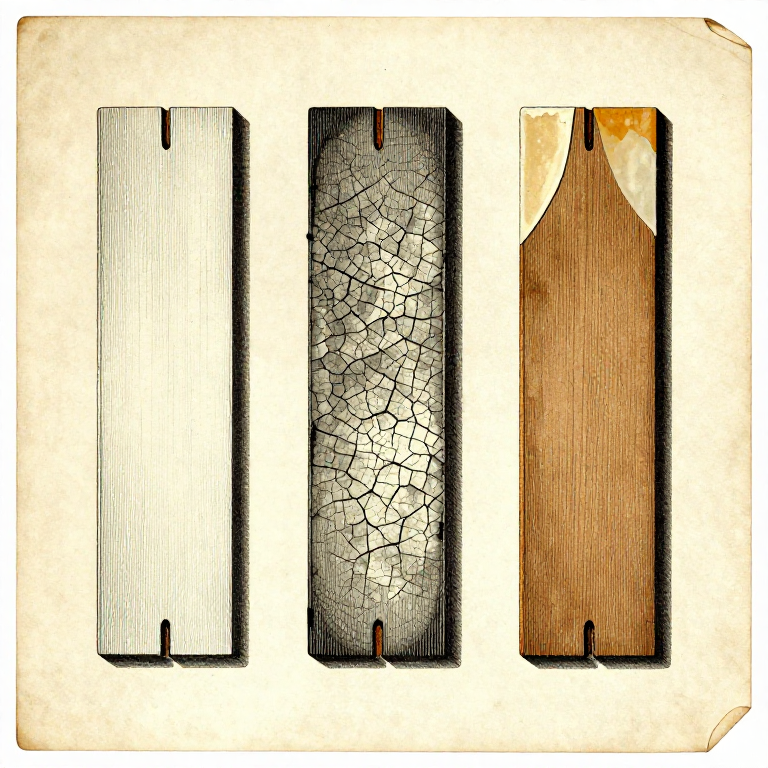


Squeeze-Out, Starvation and Reading a Joint That Failed
A broken joint is evidence. The two faces record exactly what went wrong, and reading them takes a minute and tells you what to change.
Most makers throw the pieces away and try again with more glue and more pressure — which is the wrong response to three of the four common failures, and makes one of them considerably worse.
This rung is the diagnostic table. It pairs with the fault-finding approach used elsewhere on Youblob: look at what the failure actually shows before deciding what to do about it.
Trung cấp
2 hours
Hướng dẫn
1
1
Bare wood on both faces: it never bonded
Bare wood on both faces: it never bonded
Two clean surfaces, little or no glue visible, and the parts separated with much less force than they should have needed.
This is an ADHESION failure and the cause is almost always contamination or a sealed surface: oil, old finish, silicone polish, release agent, or an oily timber like teak that was not wiped with solvent. Occasionally it is an adhesive that simply does not bond that material — PVA on metal or on most plastics will do exactly this.
The fix is in the preparation rung, not in the glue bottle. Clean, abrade, and check that the adhesive is rated for both materials.
Vật liệu cho bước này:
 Tấm gỗ mềm đã khô2 cái
Công cụ cần thiết:
 Kính lúp thợ kim hoàn
 Cồn công nghiệp
2
2
A thick brittle line: too much glue, or it cured wrong
A thick brittle line: too much glue, or it cured wrong
A visible glue line, glue on both faces, and the break running through the adhesive itself. That is a COHESIVE failure.
For PVA it usually means the film was too thick — it shrank as it dried and cracked internally — or it cured too cold and chalked instead of forming a proper film. Chalky white crumbs along the line are the signature of cold curing, and no amount of extra time fixes it.
For epoxy it means the mix was wrong. Two-part epoxy needs its stated ratio measured, not estimated, and thorough mixing including the sides of the pot. An under-mixed epoxy stays tacky or rubbery and never reaches strength.
Vật liệu cho bước này:
 Keo epoxy hai thành phần1 cái
 Keo gỗ PVA1 cái
Công cụ cần thiết:
Kính lúp thợ kim hoàn3
3
Dry patches in a glued area: starvation
Dry patches in a glued area: starvation
Glue around the edges of the joint and dry, unglued wood in the middle. The joint was STARVED — squeezed so hard that the adhesive was driven out before it cured.
This is the failure that punishes the instinct to clamp harder. It also happens with too little glue, with a joint left unclamped so long that the glue skinned before contact, and on end grain that drank the glue away — which the first rung covers.
The fix is more glue and LESS pressure, which is counter-intuitive enough that people rarely try it. A continuous fine bead of squeeze-out along the whole joint is the target; streams of it running down the work mean you have gone past.
Vật liệu cho bước này:
Keo gỗ PVA1 cái Tấm gỗ cứng2 cái
Công cụ cần thiết:
 Chổi quét keo
 Vam chữ CKính lúp thợ kim hoàn
4
4
Cleaning squeeze-out: wet, leathery, or cured
Cleaning squeeze-out: wet, leathery, or cured
There are three moments to deal with squeeze-out and they call for three different methods.
WET: wipe with a barely damp cloth. Tempting, and the trap is that water spreads thinned glue into the surrounding grain where it seals the wood invisibly — and shows up as a pale patch under the finish. Use as little water as possible, or skip this stage.
LEATHERY, after twenty minutes or so: the best moment. The bead has set enough to lift off in one rubbery piece with a chisel or a scraper, and it takes nothing with it. CURED: it has to be pared or scraped off, and you risk digging into the surface. Masking tape applied before assembly avoids the whole question.
Vật liệu cho bước này:
 Băng keo giấy1 cái
Công cụ cần thiết:
 Vải cô tôngKính lúp thợ kim hoàn
 Bộ giấy nhám nhiều loại
Vật liệu
5- 2 cáiTạm thời
- Tạm thời
- 2 cáiTạm thời
- 2 cáiTạm thời
- 1 cáiTạm thời
Công cụ yêu cầu
6- Tạm thời
- Tạm thời
- Tạm thời
- Tạm thời
- Tạm thời
- Tạm thời
Blueprint liên quan
Các blueprint này chia sẻ kiến thức — kỹ thuật, vật liệu hoặc nguyên tắc



CC0 Phạm vi công cộng
Bản thiết kế này được phát hành theo CC0. Bạn tự do sao chép, sửa đổi, phân phối và sử dụng cho bất kỳ mục đích nào mà không cần xin phép.
Hỗ trợ nhà sáng tạo bằng cách mua sản phẩm qua bản thiết kế, nơi họ nhận Hoa hồng nhà sáng tạo do nhà bán hàng đặt, hoặc tạo phiên bản mới và kết nối trong bản thiết kế riêng để chia sẻ doanh thu.