NGHỆ THUẬT
LÀM ĐẸP VÀ SỨC KHỎE
THỦ CÔNG
VĂN HÓA VÀ LỊCH SỬ
GIẢI TRÍ
MÔI TRƯỜNG
THỰC PHẨM VÀ ĐỒ UỐNG
KỸ THUẬT NGƯỢC
KHOA HỌC
THỂ THAO
CÔNG NGHỆ
THIẾT BỊ ĐEO
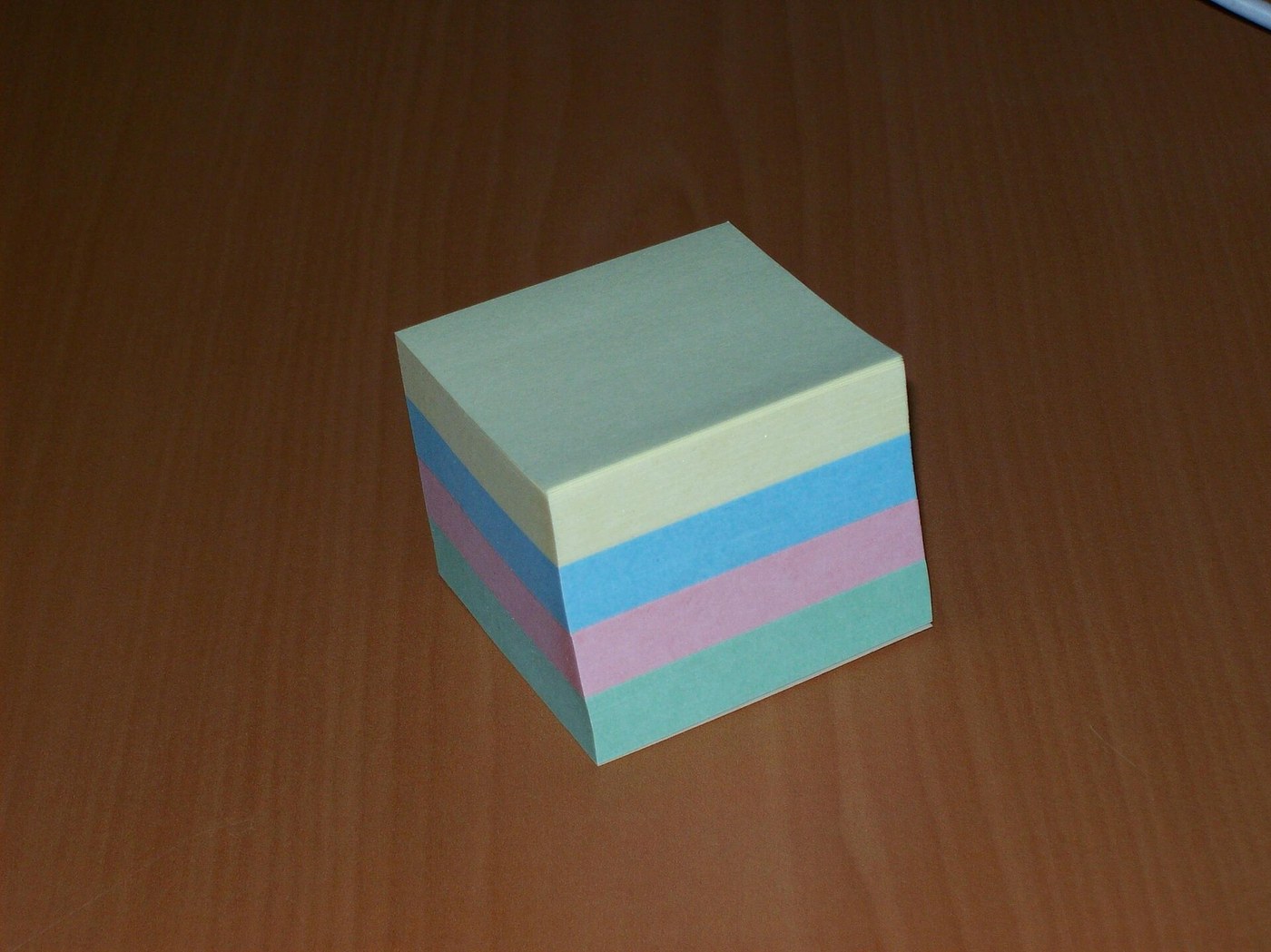


Repositionable Microsphere Adhesive
In 1968 Spencer Silver at 3M, trying to make a very strong adhesive, made the opposite: an acrylate that formed tiny tacky spheres and held only lightly. For years it had no product. In 1974 his colleague Art Fry coated it on bookmarks for his church hymnal so they would stay put without tearing the pages; the sticky note reached shops in 1980.
**US 3,691,140**, "Acrylate copolymer microspheres", Silver, filed 9. March 1970, granted 12. September 1972: "inherently tacky", elastomeric microspheres of an acrylate ester such as iso-octyl acrylate with a small share of an ionic monomer.
**You measure what makes it different from tape**: the peel force over twenty re-sticks, side by side with masking tape, and the spheres themselves under a microscope.
Cơ bản
1 hour
Hướng dẫn
1
1
Look at the stripe
Look at the stripe
Put a sticky note's adhesive stripe under the digital microscope at high magnification. Beside it, a strip of masking tape. Capture both; measure the bead size and spacing on the note.
Vật liệu cho bước này:
 Giấy ghi chú dán lại được1 pad
 Băng keo giấy1 cuộn
Công cụ cần thiết:
 Kính hiển vi số
2
2
Clean the glass
Clean the glass
Wipe a glass sheet with isopropyl alcohol and let it dry. Cut the masking tape to the same 25 mm width and 75 mm length as the note's sticky area.
Vật liệu cho bước này:
 Cồn isopropyl 99 %10 ml
 Khăn giấy1 tờ
Công cụ cần thiết:
 Tấm kính
 Kéo
Kéo Thước kẻ
3
3
Peel at 90 degrees
Peel at 90 degrees
Press the note and the tape onto the glass with one firm thumb stroke each. Clip a paper clip to each free end, hook the spring scale, and peel straight up, slowly. Record the steady force.
Vật liệu cho bước này:
 Kẹp giấy2 cái
Công cụ cần thiết:
 Lực kế (cân lò xo)
4
4
Re-stick and repeat
Re-stick and repeat
Stick the same pieces down again in the same place and peel again. Record peel 1, 2, 5, 10 and 20.
Công cụ cần thiết:
Lực kế (cân lò xo)5
5
Peel ladder and contact area
Peel ladder and contact area
Đang tải sổ tay Jupyter…
6
6
History & Context
History & Context
**What the patent specifies:** inherently tacky, elastomeric, solvent-insoluble acrylate copolymer microspheres made by suspension polymerisation with an ionic comonomer. **Modern build (derived):** a commercial sticky-note pad, tested.
The same idea now holds repositionable labels, wall graphics and removable flags. Its limits: a weak grip by design, fading tack as dust and fibre collect on the spheres, and poor hold on rough or damp surfaces.
Vật liệu
5- Tạm thời
- 1 cuộnTạm thời
- 10 mlTạm thời
- 1 tờTạm thời
- 2 cáiTạm thời
Blueprint liên quan
Các blueprint này chia sẻ kiến thức — kỹ thuật, vật liệu hoặc nguyên tắc


CC0 Phạm vi công cộng
Bản thiết kế này được phát hành theo CC0. Bạn tự do sao chép, sửa đổi, phân phối và sử dụng cho bất kỳ mục đích nào mà không cần xin phép.
Hỗ trợ nhà sáng tạo bằng cách mua sản phẩm qua bản thiết kế, nơi họ nhận Hoa hồng nhà sáng tạo do nhà bán hàng đặt, hoặc tạo phiên bản mới và kết nối trong bản thiết kế riêng để chia sẻ doanh thu.