NGHỆ THUẬT
LÀM ĐẸP VÀ SỨC KHỎE
THỦ CÔNG
VĂN HÓA VÀ LỊCH SỬ
GIẢI TRÍ
MÔI TRƯỜNG
THỰC PHẨM VÀ ĐỒ UỐNG
KỸ THUẬT NGƯỢC
KHOA HỌC
THỂ THAO
CÔNG NGHỆ
THIẾT BỊ ĐEO
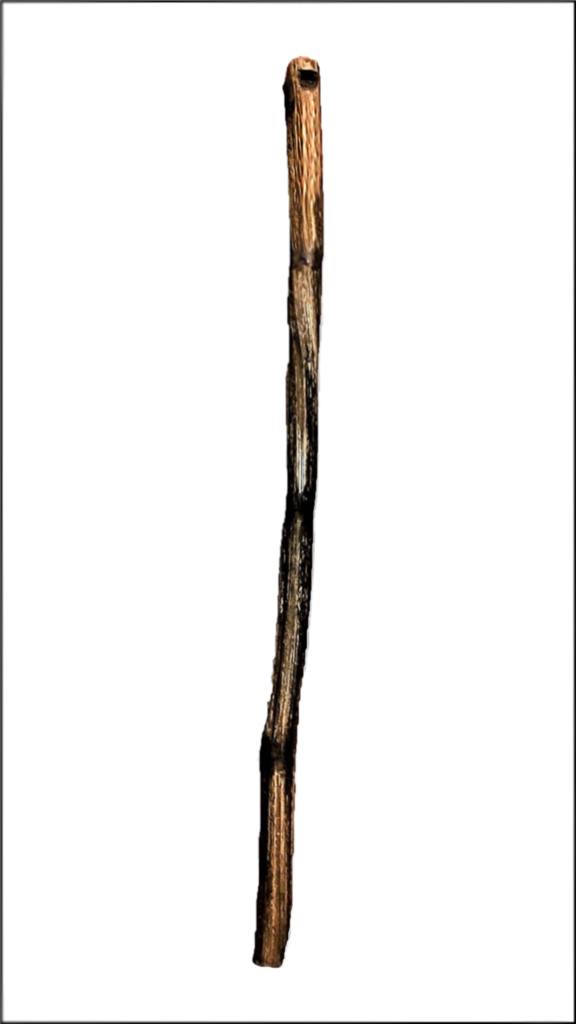


Making a Kalyuka — The Russian Overtone Flute with No Finger Holes
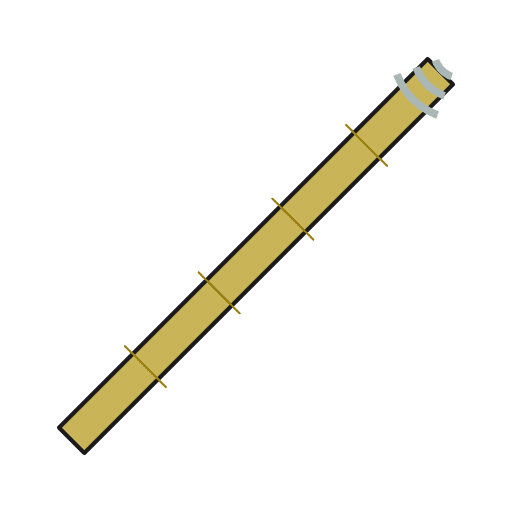
Cut a hollow elder stem into a Russian shepherd's overtone flute that has NO finger holes at all. You play a whole melody just by overblowing the harmonic series and covering the far end with a finger. A buildable school project in the harmonic series and open-versus-stopped pipes.
Cơ bản
30 minutes
Hướng dẫn
1
1
A flute with no finger holes
A flute with no finger holes
The kalyuka is a Russian shepherd's overtone flute. It has NO finger holes — you play a whole tune from the tube's natural harmonics by blowing harder and covering the far end.
2
2
Cut a hollow stem
Cut a hollow stem
Cut a straight hollow stem — elder, willow or reed — about 60 to 70 cm long and a thumb thick. Shepherds cut theirs from tall weeds after the hay harvest.
Vật liệu cho bước này:
 Cành cơm cháy (rỗng ruột)1 cái
Công cụ cần thiết:
 Dao khắc sloyd
3
3
Clear the bore
Clear the bore
Push out all the soft inner pith so the tube is open and smooth from end to end, with both ends fully open.
Công cụ cần thiết:
 Dùi
Dùi4
4
Bevel the blowing rim
Bevel the blowing rim
Shave the top rim thin and clean at a slight angle, so when you blow across it your breath splits into a clear tone, like blowing over a bottle.
Công cụ cần thiết:
Dao khắc sloyd5
5
Find the fundamental
Find the fundamental
Blow gently across the top rim, both ends open, until you get the lowest clear note. This is the tube's fundamental — its slowest natural vibration.
6
6
Overblow to climb the harmonics
Overblow to climb the harmonics
Now blow harder and faster. The note jumps UP to the next harmonic — two, three, four times the fundamental — with no finger holes to change anything.
7
7
Cover the far end
Cover the far end
Cover the bottom end with a finger and blow again. The flute now plays a DIFFERENT set of notes, because a closed-end tube has its own harmonic series.
8
8
Play a melody from overtones
Play a melody from overtones
By choosing how hard you blow AND whether the far end is open or closed, you can pick a whole folk melody out of the overtones alone.
9
9
See the harmonics
See the harmonics
Watch the frequencies on a free tuner app as you overblow. Each note is a whole-number multiple of the fundamental — that is the harmonic series, made visible.
10
10
Compendium — the overtone flute
Compendium — the overtone flute
With no finger holes, the kalyuka can only sound the natural harmonic series of the air column inside it: the fundamental and its whole-number multiples (2x, 3x, 4x, 5x...). You choose which one sounds by how hard and fast you blow — overblowing — the same way a bugle, the conch or the Gjallarhorn leap between harmonics with lip tension, except here it is breath speed that does it. Covering the far end turns the OPEN pipe into a STOPPED pipe: that sounds an octave lower and gives only the ODD harmonics (1x, 3x, 5x...), while the open pipe gives them all. Switching between the two series and picking different overtones fills in a surprisingly complete scale from one plain tube — the 'overtone scale', whose naturally out-of-tune seventh and eleventh harmonics give these flutes their haunting folk sound. It is the exact opposite way of playing to the panpipe or recorder: instead of changing the tube's length with holes to pick a note, you leave the length fixed and hunt through its harmonics. Russian and Ukrainian shepherds cut kalyukas from hollow weeds like angelica and motherwort; the Slovak fujara and the Norwegian willow flute (seljefloyte) are close cousins.
Vật liệu
1- Tạm thời
Bản thiết kế này làm ra
Blueprint liên quan
Các blueprint này chia sẻ kiến thức — kỹ thuật, vật liệu hoặc nguyên tắc

CC0 Phạm vi công cộng
Bản thiết kế này được phát hành theo CC0. Bạn tự do sao chép, sửa đổi, phân phối và sử dụng cho bất kỳ mục đích nào mà không cần xin phép.
Hỗ trợ nhà sáng tạo bằng cách mua sản phẩm qua bản thiết kế, nơi họ nhận Hoa hồng nhà sáng tạo do nhà bán hàng đặt, hoặc tạo phiên bản mới và kết nối trong bản thiết kế riêng để chia sẻ doanh thu.