NGHỆ THUẬT
LÀM ĐẸP VÀ SỨC KHỎE
THỦ CÔNG
VĂN HÓA VÀ LỊCH SỬ
GIẢI TRÍ
MÔI TRƯỜNG
THỰC PHẨM VÀ ĐỒ UỐNG
KỸ THUẬT NGƯỢC
KHOA HỌC
THỂ THAO
CÔNG NGHỆ
THIẾT BỊ ĐEO
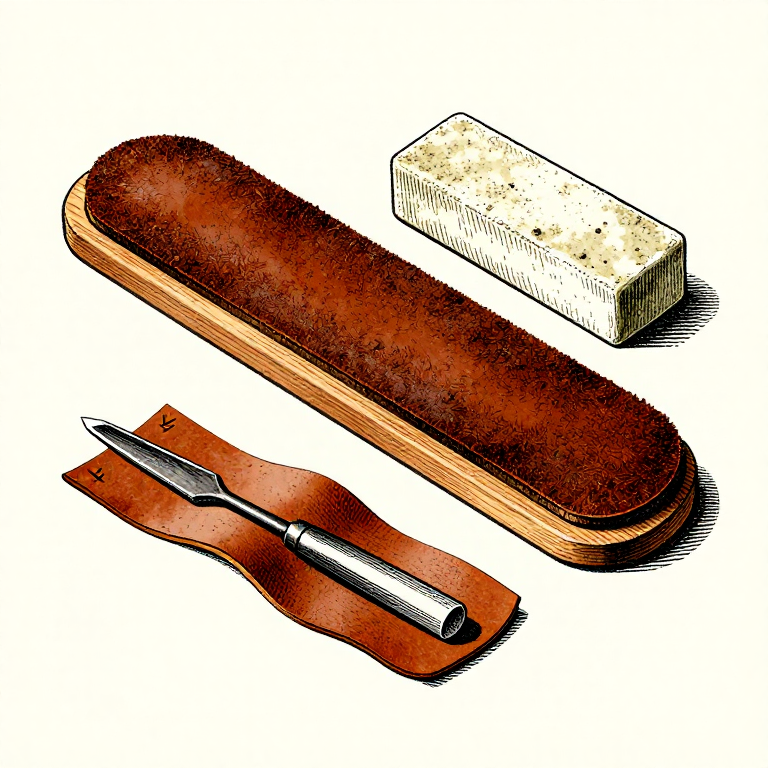


Stropping: A Strip of Leather That Outperforms Another Stone
A strop is leather charged with a fine abrasive compound, and it does two jobs no stone does well: it removes the last remnant of the wire edge without tearing it, and it brings a working edge back to sharp without removing measurable metal.
The second is what makes it valuable. A carver who strops every few minutes may go weeks between stones, because the edge never gets far enough from sharp to need one. The tool lasts decades longer for exactly the same reason.
This rung makes a strop — the whole thing is a board, a piece of leather and some compound — and covers the one rule that matters: strop AWAY from the edge, always.
Cơ bản
3 hours
Hướng dẫn
1
1
Make the strop
Make the strop
Glue a strip of vegetable-tanned leather, rough side up, to a flat hardwood board about 300 x 60 mm. Press it flat under weights until the glue cures.
Rough side up because the nap holds the compound. Vegetable-tanned because chrome-tanned leather carries salts that will spot a carbon steel blade. The board matters as much as the leather — a strop that flexes is a strop that rounds your edge, which is the one thing stropping must not do.
Leave the other face bare. A clean, uncharged leather surface is useful for the final few passes once the compound has done its work.
Vật liệu cho bước này:
 Da thuộc1 cái
 Tấm gỗ cứng1 cái
 Keo dán gỗ1 cái
Công cụ cần thiết:
 Vải cô tông
2
2
Charge it, and do not overdo it
Charge it, and do not overdo it
Rub the compound bar across the leather until the surface is evenly coloured, then work it in with a finger or a smooth offcut. A charged strop looks uniformly tinted, not caked.
Too much compound builds a soft layer that the edge sinks into, and that layer rounds the apex — the exact failure stropping is supposed to avoid. Recharge when the surface goes shiny and stops cutting, which on a hand-tool strop is every few months, not every session.
Compound grades run from coarse to fine; a single fine compound around one micrometre is enough for nearly all workshop tools. Keep one strop per grade if you use more than one, and never mix them on one surface.
Vật liệu cho bước này:
 Kem đánh bóng1 cái
Công cụ cần thiết:
 Dây da liếc daoVải cô tông
3
3
Stroke away from the edge — every time, without exception
Stroke away from the edge — every time, without exception
Lay the bevel flat on the leather and draw the blade BACKWARDS, spine first, away from the cutting edge. Then turn it over and do the same on the other side. Light pressure, ten to twenty passes a side.
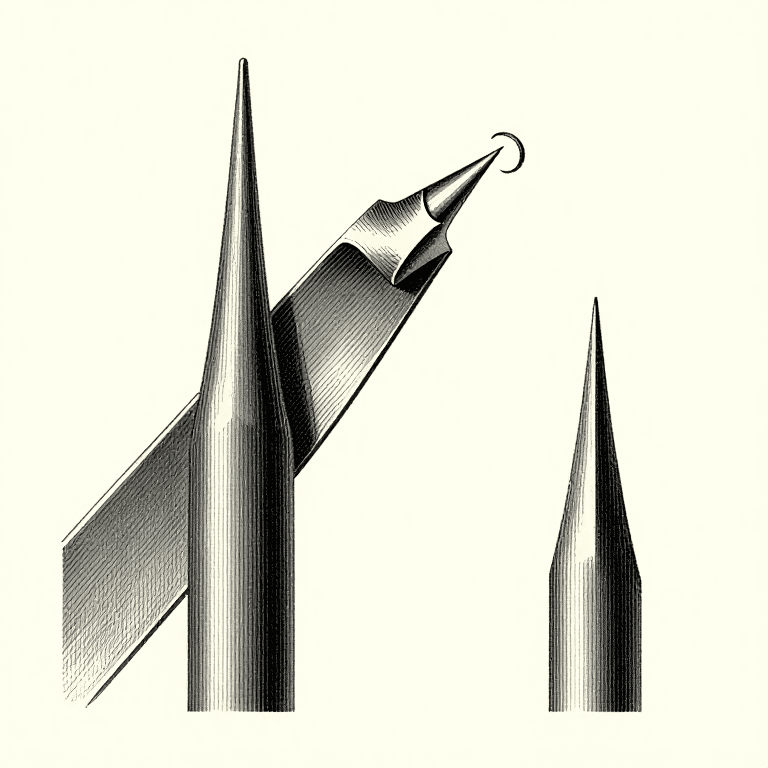
Pushing edge-first into leather does two things and both are bad: the edge digs in and cuts the strop, and the leather rolls up ahead of it and folds the apex over. A blade that came off the finish stone sharp will come off a wrongly-stropped strop blunt.
Keep the bevel flat. Lifting the spine as you draw back is the other common fault; it rounds the edge into a convex profile a little more with every pass, and after a few months the tool needs a full regrind to recover.
Công cụ cần thiết:
Dây da liếc dao Bộ đục - lưỡi vát cạnh
 Dao bếp
4
4
Strop often, sharpen seldom
Strop often, sharpen seldom
Make stropping the thing you do between cuts rather than a stage of sharpening. Twenty passes takes fifteen seconds and restores an edge that has only just started to dull.
The economics are plain: a strop removes a fraction of a micrometre and a coarse stone removes tens of micrometres. Every trip to the stone shortens the tool. A chisel kept sharp by stropping will outlive the maker; one allowed to go blunt and then reground each time will be worn out in a career.
It stops working when the edge has real damage — a nick, a rolled section, a flat you can see under the lamp. At that point go back to the stone and follow the progression. Stropping maintains an edge; it does not create one.
Công cụ cần thiết:
Dây da liếc dao Dây liếc dao và bột mài
 Kính lúp thợ kim hoàn
Vật liệu
4- 1 cáiTạm thời
- 1 cáiTạm thời
- 1 cáiTạm thời
- 1 cáiTạm thời
Công cụ yêu cầu
6- Tạm thời
- Tạm thời
- Tạm thời
- Tạm thời
- Tạm thời
- Tạm thời
Blueprint liên quan
Các blueprint này chia sẻ kiến thức — kỹ thuật, vật liệu hoặc nguyên tắc
CC0 Phạm vi công cộng
Bản thiết kế này được phát hành theo CC0. Bạn tự do sao chép, sửa đổi, phân phối và sử dụng cho bất kỳ mục đích nào mà không cần xin phép.
Hỗ trợ nhà sáng tạo bằng cách mua sản phẩm qua bản thiết kế, nơi họ nhận Hoa hồng nhà sáng tạo do nhà bán hàng đặt, hoặc tạo phiên bản mới và kết nối trong bản thiết kế riêng để chia sẻ doanh thu.