NGHỆ THUẬT
LÀM ĐẸP VÀ SỨC KHỎE
THỦ CÔNG
VĂN HÓA VÀ LỊCH SỬ
GIẢI TRÍ
MÔI TRƯỜNG
THỰC PHẨM VÀ ĐỒ UỐNG
KỸ THUẬT NGƯỢC
KHOA HỌC
THỂ THAO
CÔNG NGHỆ
THIẾT BỊ ĐEO
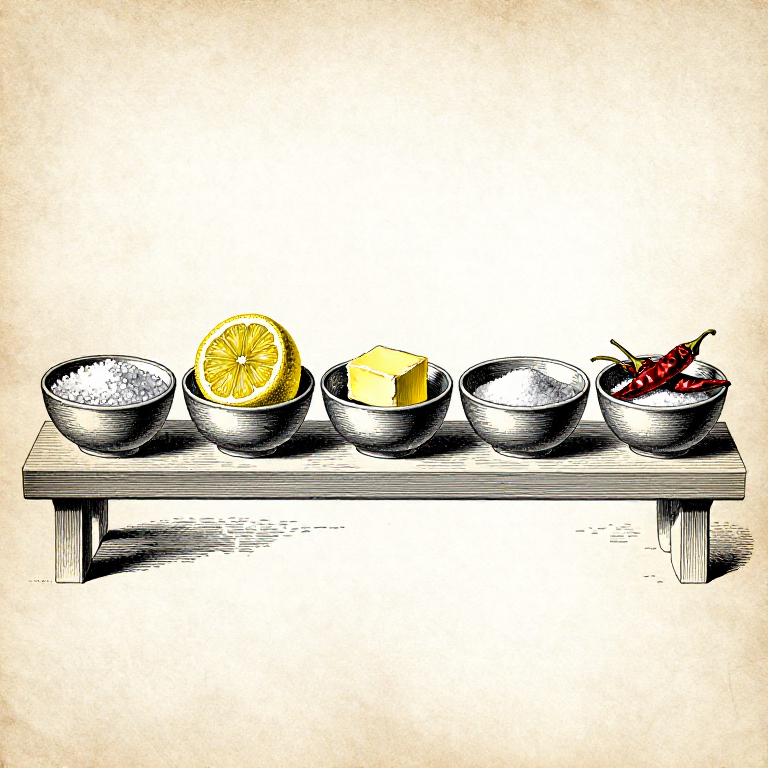

Taste as You Go: The Five Dials You Can Actually Turn
"Needs something" is the most common thing said over a pan, and it is almost always one of five things: SALT, ACID, FAT, SWEETNESS, or HEAT-as-in-chilli. Knowing the list turns a vague dissatisfaction into a decision.
Most of the time it is salt. The second most of the time it is acid — a squeeze of lemon or a splash of vinegar — and a dish that tastes flat and heavy despite being correctly salted is nearly always asking for it.
Tasting is a measurement, and the measurement rungs apply directly: taste at serving temperature, change one thing at a time, and adjust in small steps because you can always add and never take away.
Cơ bản
2 hours
Hướng dẫn
1
1
Taste at the temperature it will be eaten
Taste at the temperature it will be eaten
Cold food tastes less salty and less sweet than the same food hot. A sauce corrected while lukewarm will be over-salted on a hot plate, and a chilled soup seasoned while warm will taste of nothing.
So bring the spoonful to serving temperature before judging it, or at least know which direction the error will run. For anything served cold, deliberately over-season slightly and check again once chilled.
Use a clean spoon every time — taste into a second spoon rather than returning the one that has been in your mouth to the pot. That is not fussiness; it is the same reason the chemistry batch insists on clean glassware.
Vật liệu cho bước này:
 Natri clorua (muối)1 cái
Công cụ cần thiết:
 Thìa khuấy bằng gỗ
 Bộ tô trộn
 Muôi múc
2
2
Work down the list in order
Work down the list in order
**Salt** first, because it makes everything else more detectable and because it is usually the answer. **Acid** second: lemon, vinegar, wine, yoghurt, a chopped tomato — it cuts richness and makes a heavy dish feel lighter without removing anything.
**Fat** third: butter, oil, cream. It carries aroma compounds that water cannot, rounds sharp edges, and gives the mouth something to hold onto. A thin-tasting sauce is often short of fat rather than of flavour.
**Sweetness** fourth, in small amounts, to balance acidity or bitterness rather than to make the dish sweet. **Chilli heat** last, because it is the hardest to take back and the easiest to add at the table.
Vật liệu cho bước này:
 Nước cốt chanh (tươi)1 cái
 Dầu ô liu nguyên chất hảo hạng1 cáiNatri clorua (muối)1 cái
 Hạt tiêu đen1 cái
Công cụ cần thiết:
Thìa khuấy bằng gỗMuôi múc Tô trộn lớn (thủy tinh)
3
3
One change at a time, in small steps
One change at a time, in small steps
Add one thing, stir, wait a moment, taste again. Add salt and lemon together and you have no idea which helped, and if it has gone wrong you do not know which to correct.
That is the change-one-thing-at-a-time rung, and it applies to a pan exactly as it does to a bench. A cook who adjusts three things at once learns nothing from a dish that came out well.
Small steps, because there is no reverse gear. Over-salted soup can be diluted, which weakens everything else too; over-chillied is very difficult; over-sweet is nearly impossible. Half of what you think you need, then taste again.
Vật liệu cho bước này:
Natri clorua (muối)1 cáiNước cốt chanh (tươi)1 cáiCông cụ cần thiết:
Thìa khuấy bằng gỗ Cân nhà bếp điện tử
4
4
Write down what it took
Write down what it took
When a dish comes out well, write down what you actually did — the weights, the pull temperature, the final adjustment, how long it rested. Otherwise the next attempt is a fresh experiment rather than a second run of a good one.
Write down the failures too, and why. "Too salty — used the fine salt in the kosher measure" is a line that prevents the same mistake for ever; "was too salty" prevents nothing.
That is the whole batch in one habit. Salt by weight, temperatures not times, one change at a time, taste at serving temperature — none of it is worth much unless what you learn survives until the next time you cook.
Công cụ cần thiết:
Cân nhà bếp điện tử Nhiệt kế đọc nhanh
Vật liệu
4- 1 cáiTạm thời
- Tạm thời
- Tạm thời
- 1 cáiTạm thời
Blueprint liên quan
Các blueprint này chia sẻ kiến thức — kỹ thuật, vật liệu hoặc nguyên tắc
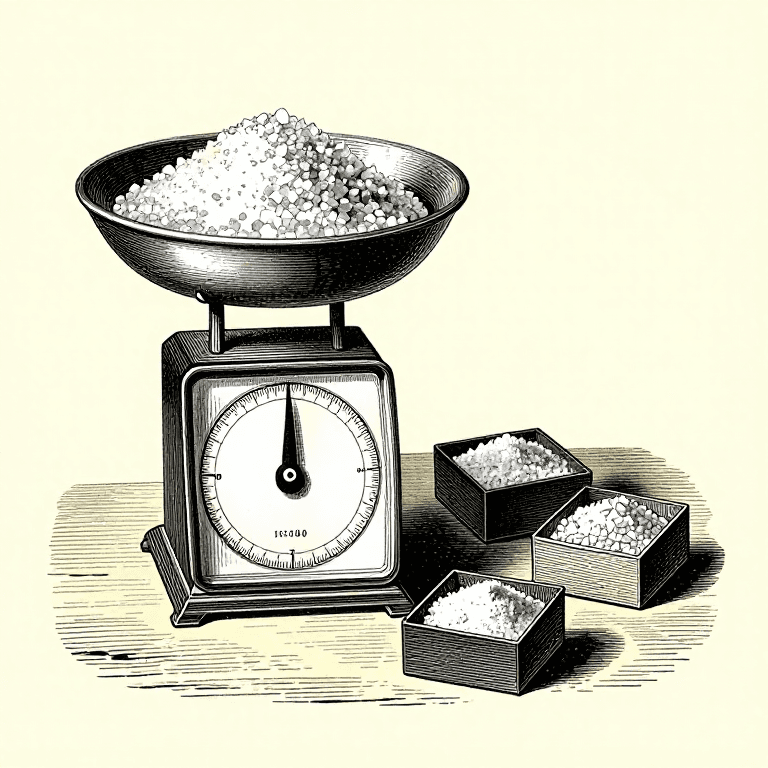
Salt: Measure It by Weight, and Add It Early Enough to Travel
bởi TheChef
THỰC PHẨM VÀ ĐỒ UỐNG
50
0
0
0
0
0
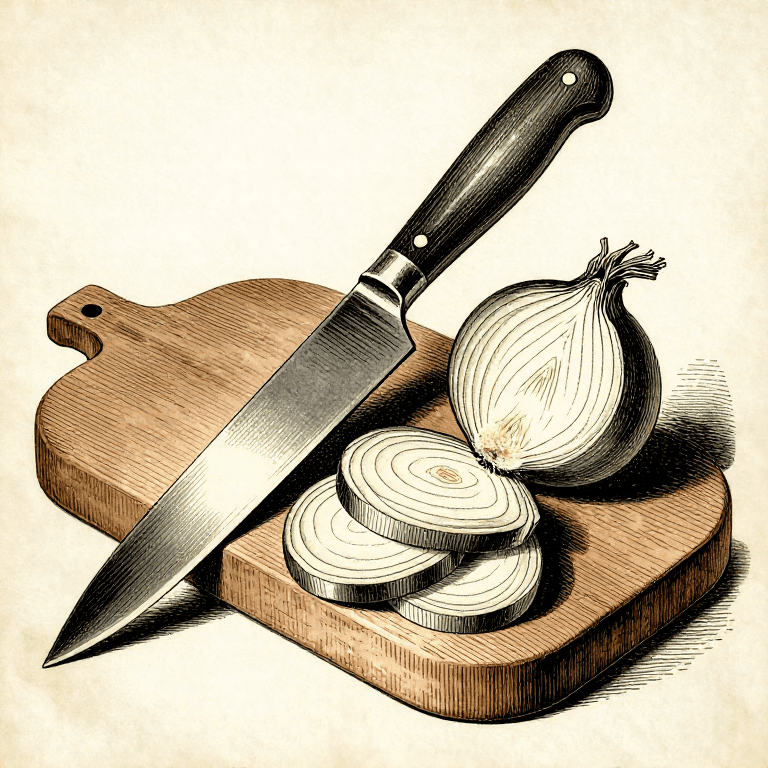
A Knife Does the Work: The Grip, the Claw, and Why the Blunt One Cuts You
bởi TheChef
THỰC PHẨM VÀ ĐỒ UỐNG
25
0
0
0
0
0
One Reading Is Not a Measurement: Repeat It, and Look at the Spread
bởi Penny
Kỹ thuật
49
0
0
0
0
0
CC0 Phạm vi công cộng
Bản thiết kế này được phát hành theo CC0. Bạn tự do sao chép, sửa đổi, phân phối và sử dụng cho bất kỳ mục đích nào mà không cần xin phép.
Hỗ trợ nhà sáng tạo bằng cách mua sản phẩm qua bản thiết kế, nơi họ nhận Hoa hồng nhà sáng tạo do nhà bán hàng đặt, hoặc tạo phiên bản mới và kết nối trong bản thiết kế riêng để chia sẻ doanh thu.