NGHỆ THUẬT
LÀM ĐẸP VÀ SỨC KHỎE
THỦ CÔNG
VĂN HÓA VÀ LỊCH SỬ
GIẢI TRÍ
MÔI TRƯỜNG
THỰC PHẨM VÀ ĐỒ UỐNG
KỸ THUẬT NGƯỢC
KHOA HỌC
THỂ THAO
CÔNG NGHỆ
THIẾT BỊ ĐEO
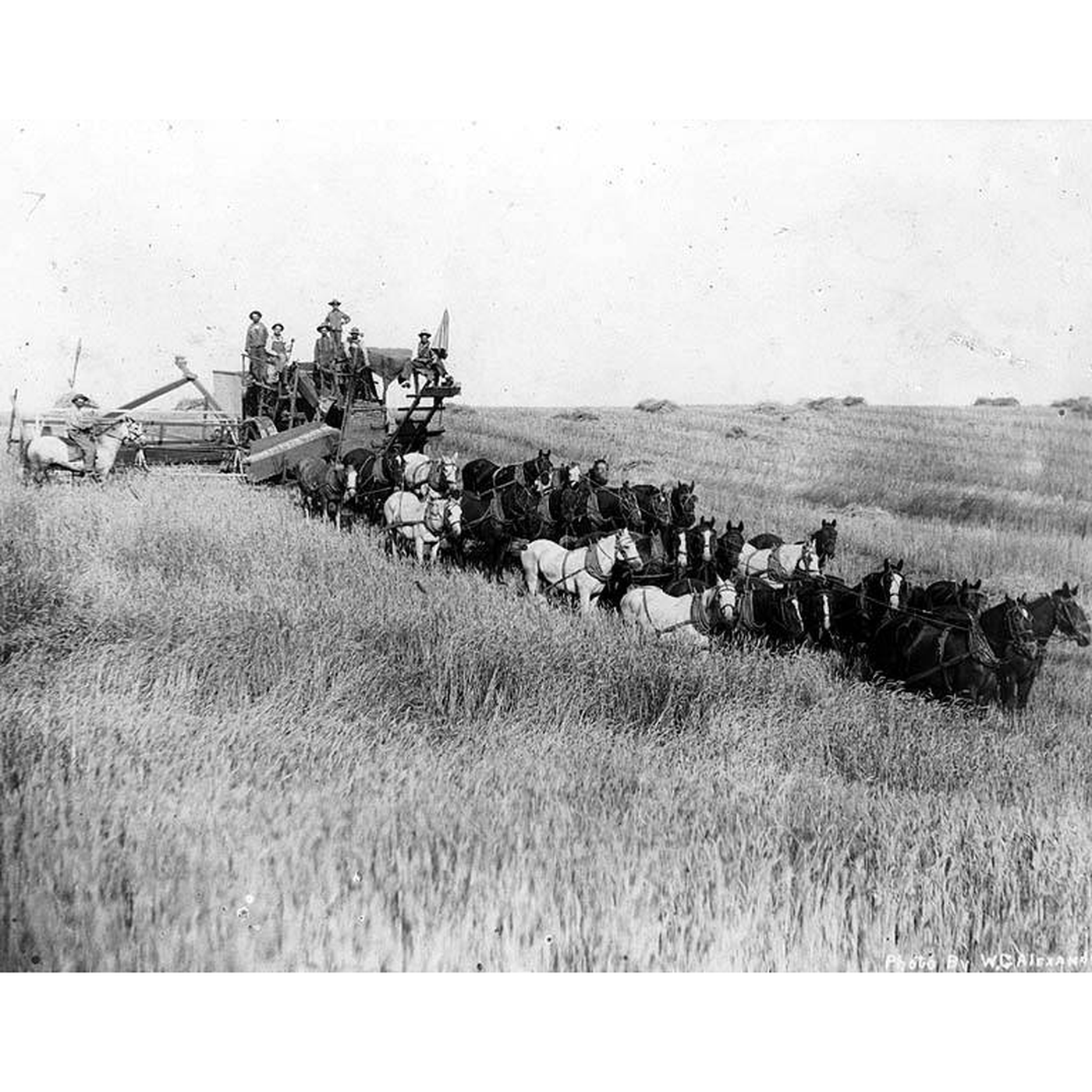

The Combine Harvester: Cut, Thresh, Separate and Clean in One Pass
Grain harvest was once a chain of separate jobs: cut with the reaper, bind and stook the sheaves, carry them to the threshing machine, winnow what it gave. The combine joins them: it cuts the standing crop, threshes the grain out, separates it from the straw, cleans off the chaff and carries the grain to a tank, while the straw goes out of the back.
Hiram Moore of Kalamazoo County, Michigan, backed by his neighbour John Hascall, built a working combined harvester in the mid-1830s and patented it in 1836. In California, Benjamin Holt's combines of 1886 drove their mechanisms by link belts rather than gears, so a jolt broke a belt instead of stripping a gear; the machine cut, threshed, cleaned and bagged the grain.
This rung works out the threshing impact and the air speed that cleans, and separates grain from straw and chaff with a fan on the bench.
Trung cấp
About 4 hours
Hướng dẫn
1
1
Threshing speed and cleaning air
Threshing speed and cleaning air
Đang tải sổ tay Jupyter…
2
2
What happens to one handful of crop
What happens to one handful of crop
Không gian làm việc Blockly
Loading Blockly workspace...
3
3
Cleaning by air, before the combine
Cleaning by air, before the combine
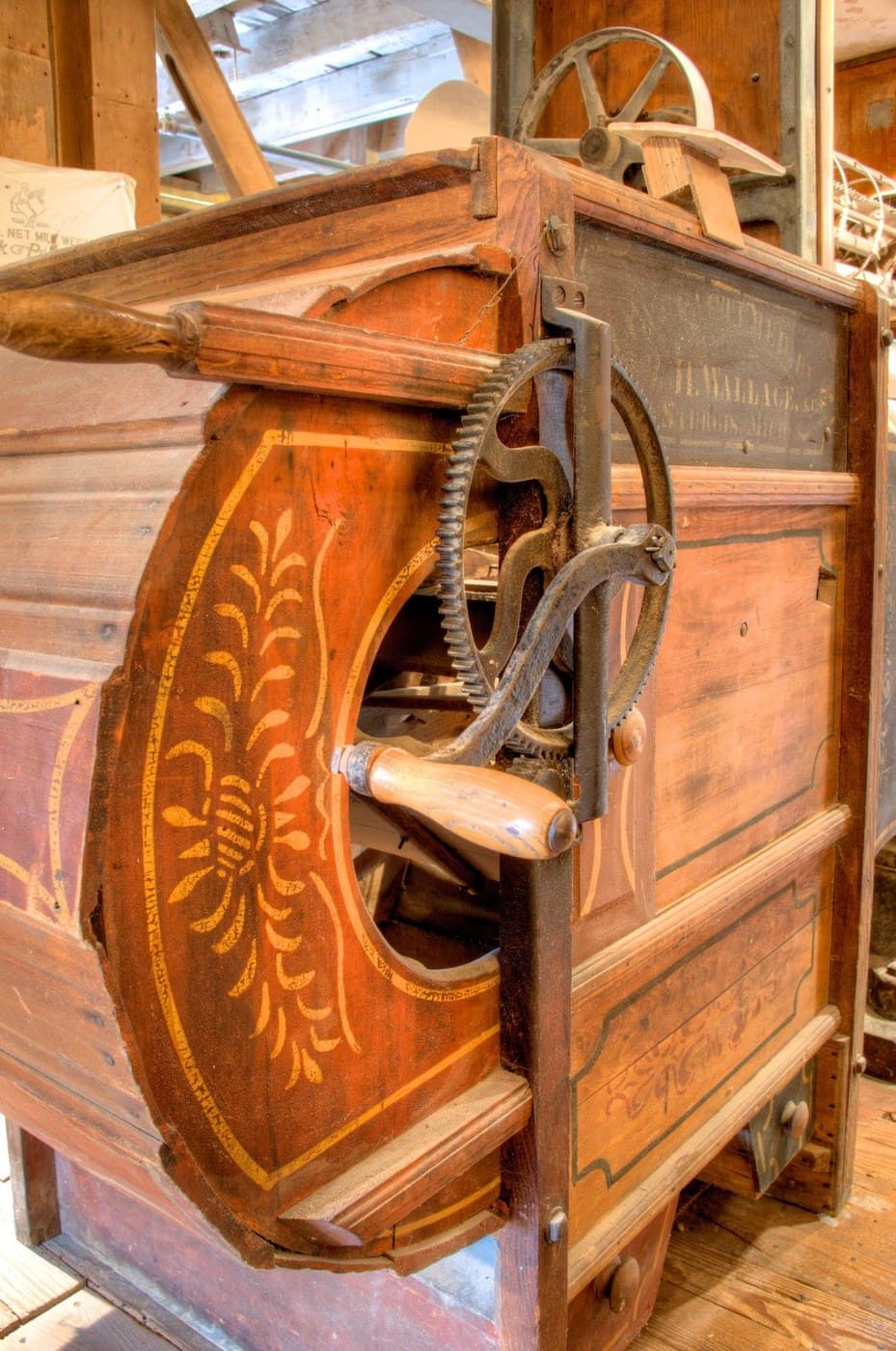
The combine's cleaning shoe is a winnowing machine built in. The embedded blueprint shows the fan-and-riddle cleaner it descends from.
4
4
Separate grain from straw and chaff by air
Separate grain from straw and chaff by air
Mix 200 g of wheat berries with 20 g of chopped straw and 10 g of wheat bran, which stands in here for chaff (both are light, flat husk). Stand a variable-speed box fan on its back so it blows straight up, and fit a 300 mm cardboard chimney on top so the air rises evenly. Measure the air speed at the top of the chimney with the anemometer at each fan setting.
Hold a sieve over the chimney and trickle the mix slowly into the rising air from 200 mm above it. Catch what falls onto the sieve and what blows away on a sheet of paper downwind. Weigh each fraction at each fan speed.
Plot the percentage of grain lost and of chaff left against air speed. Find the band where the chaff goes and the grain stays, and compare it with the notebook's terminal velocities.
Vật liệu cho bước này:
 Hạt lúa mì nguyên1 kilogram
 Rơm băm1 cái
 Cám lúa mì1 cái
 Tấm bìa sóng1 cái
Công cụ cần thiết:
 Quạt hộp (nhiều tốc độ)
 Máy đo gió cầm tay
 Cân nhà bếp điện tử
 Rây 60 mesh
 Thước kẻ
5
5
A combine losing grain
A combine losing grain
Where the grain goes when it is not in the tank.
Flow
Loading...
6
6
History and honest limits
History and honest limits
**Hiram Moore** and **John Hascall** of Michigan built a combined harvester in the mid-1830s, patented in 1836; the Smithsonian holds Moore's papers. **Benjamin Holt**'s combine of 1886 used link belts instead of gears; Holt went on to build the crawler tractor. Horse-drawn combines needed large teams; tractor-drawn and then self-propelled combines made them a machine for every grain farm.
**Honest limits.** The notebook's particle masses and shapes are illustrative — real chaff, straw and grain vary widely, and the fan is set by watching losses, not by calculation. A combine is the most dangerous machine on many farms: never clear a blockage with the machine running.
Vật liệu
4- 1 kilogramTạm thời
- 1 cáiTạm thời
- 1 cáiTạm thời
- 1 cáiTạm thời
Công cụ yêu cầu
5- Tạm thời
- Tạm thời
- Tạm thời
- Tạm thời
- Tạm thời
Blueprint liên quan
Các blueprint này chia sẻ kiến thức — kỹ thuật, vật liệu hoặc nguyên tắc
McCormick Reaper
bởi Martin
MÔI TRƯỜNG
45
0
0
0
0
0
Threshing Machine
bởi Martin
Cơ học
29
0
0
0
0
0
Winnowing Machine
bởi Karen
MÔI TRƯỜNG
51
0
0
0
0
0
Building a Viking Threshing Flail — Separating Grain from Husk
bởi Woody
Mộc
72
0
0
0
0
0

The Sirocco Fan: Many Shallow Forward-Curved Blades
bởi Emma
Cơ học
29
0
0
0
0
0
The Bucket Elevator: Lifting Grain by the Bucketful, and Where It Lands
bởi Martin
Cơ học
31
0
0
0
0
0
CC0 Phạm vi công cộng
Bản thiết kế này được phát hành theo CC0. Bạn tự do sao chép, sửa đổi, phân phối và sử dụng cho bất kỳ mục đích nào mà không cần xin phép.
Hỗ trợ nhà sáng tạo bằng cách mua sản phẩm qua bản thiết kế, nơi họ nhận Hoa hồng nhà sáng tạo do nhà bán hàng đặt, hoặc tạo phiên bản mới và kết nối trong bản thiết kế riêng để chia sẻ doanh thu.