NGHỆ THUẬT
LÀM ĐẸP VÀ SỨC KHỎE
THỦ CÔNG
VĂN HÓA VÀ LỊCH SỬ
GIẢI TRÍ
MÔI TRƯỜNG
THỰC PHẨM VÀ ĐỒ UỐNG
KỸ THUẬT NGƯỢC
KHOA HỌC
THỂ THAO
CÔNG NGHỆ
THIẾT BỊ ĐEO
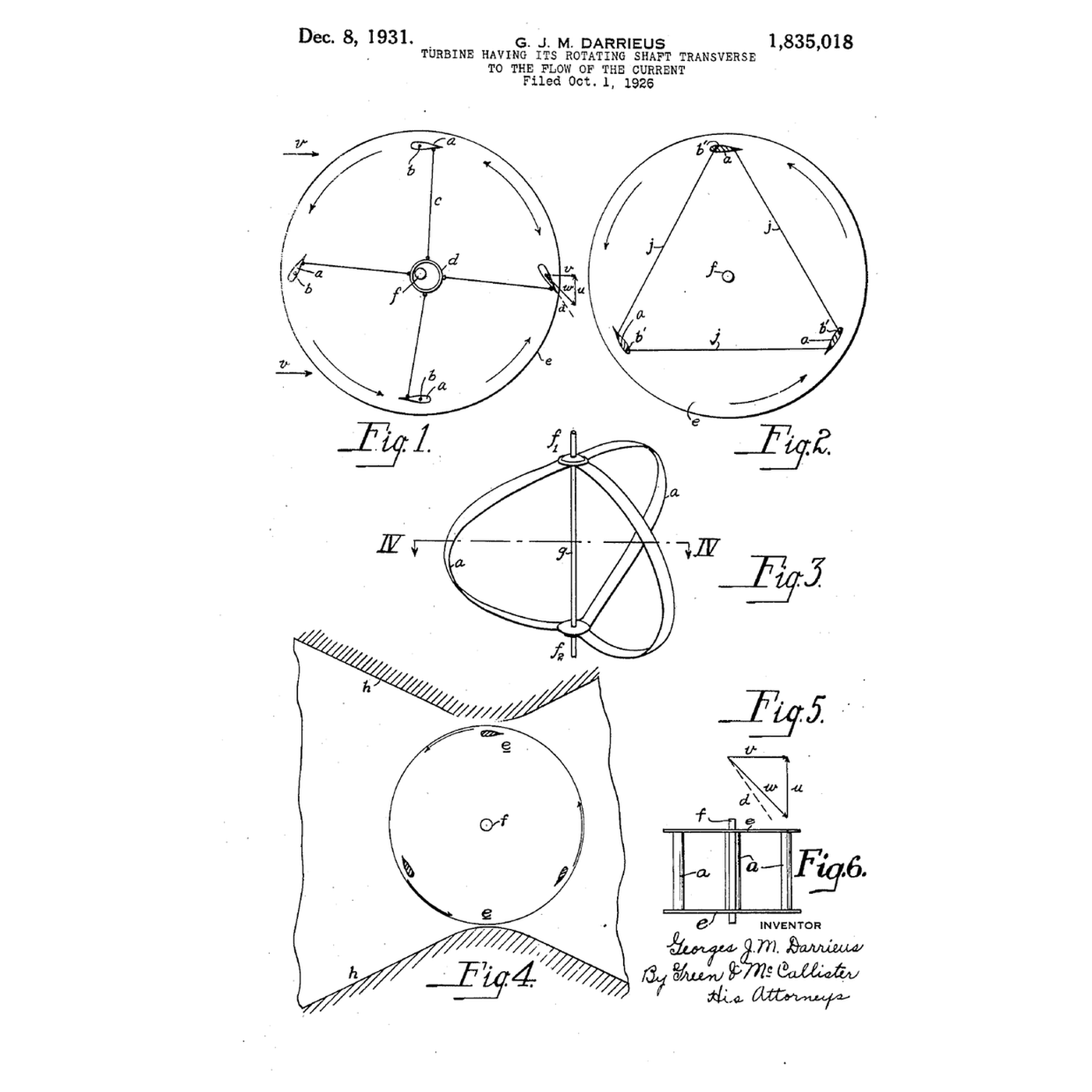
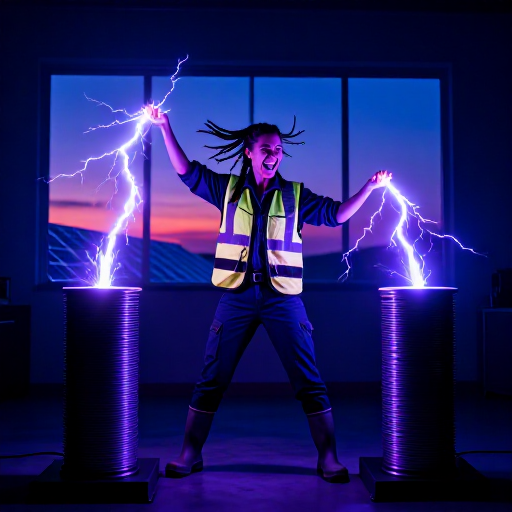
The Darrieus Rotor: Wings Round a Vertical Shaft
Georges Darrieus, an engineer in Paris, patented in 1926–31 a turbine whose shaft stands across the wind and whose blades are wings. Each blade meets the combined flow of the wind and its own motion at a small angle, and lift pulls it round — so the blades can move several times faster than the wind itself.
That makes it far more efficient than a drag machine like the Savonius, and it takes wind from any direction without steering. But a stopped Darrieus meets the wind at angles where its wings are stalled, and it cannot start itself.
This rung computes the angle of attack round a turn, builds a small straight-bladed Darrieus, and cures its starting problem with a Savonius on the same shaft.
Trung cấp
About 6 hours
Hướng dẫn
1
1
Read Darrieus's claim
Read Darrieus's claim
US 1,835,018, 'Turbine Having Its Rotating Shaft Transverse to the Flow of the Current', Georges Jean Marie Darrieus of Paris, assignor to the Société Anonyme pour l'Exploitation des Procédés Maurice Leblanc-Vickers.
The blades have a *"stream line section analogous to that of the wings of birds"*, and the machine is built *"to offer a speed which much exceeds the speed of the current"*. Darrieus cites *"the modern theory of the Lanchester-Prandtl lifting wing"* — the blade is a wing, pulled by lift. The blades may be straight, or *"curved or twisted in the form of a skipping rope"* — the 'eggbeater' — *"in order to reduce or annul the bending stresses due to centrifugal force"*. This rung builds the straight-bladed form.
2
2
Angle of attack round a turn
Angle of attack round a turn
Đang tải sổ tay Jupyter…
3
3
Build a straight-bladed rotor
Build a straight-bladed rotor
Print three straight blades 300 mm long of a symmetrical wing section with a 40 mm chord (a NACA 0018 profile prints well), with a hole through each near the quarter chord. Mount each on a pair of arms of balsa or printed PETG at a radius of 150 mm, blades vertical and set with their chord exactly tangent to the circle.
Carry the shaft vertically in two skateboard bearings in a plywood frame, and couple a hobby motor to the bottom as a generator with a 330 Ω load.
Vật liệu cho bước này:
 Sợi in PETG120 g
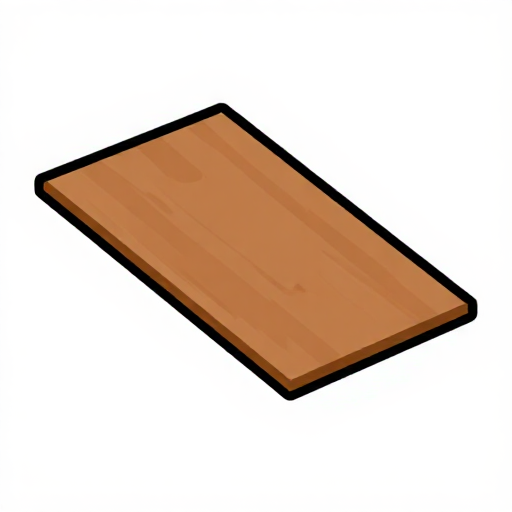 Tấm gỗ balsa1 tờ
 Ty ren1 cái
 Vòng bi ván trượt2 cái
 Tấm gỗ dán1 tờ
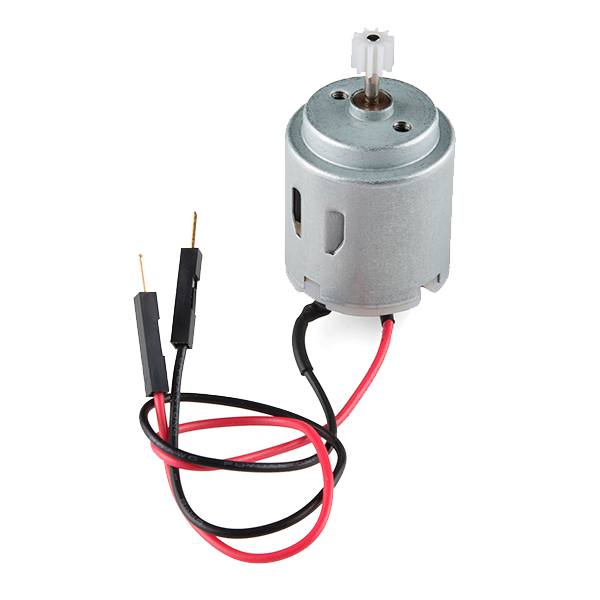 Hobby Motor - Gear1 cái
 Điện trở 330 ohm1 cái
Công cụ cần thiết:
 Máy in 3D sợi nhựa (FDM)
 Máy khoan pin
 Bộ mũi khoan
 Thước đo góc
 Mỏ lết
4
4
It will not start — then add a Savonius
It will not start — then add a Savonius
Put the rotor in front of the box fan at its highest setting. It sits still or rocks. Flick it round hard by hand: if you get it fast enough it catches, accelerates and runs on its own. Measure its speed with the tachometer and the wind with the anemometer; the tip-speed ratio is (rpm × 2π ÷ 60 × 0.15) ÷ wind speed. Compare with the notebook.
Now fix a small Savonius rotor (from the previous rung, half size) on the same shaft inside the circle of blades. Stop everything and start the fan: the Savonius starts the shaft turning, the Darrieus blades gather speed and take over. Hybrid rotors like this are built for exactly that reason.
Công cụ cần thiết:
 Quạt hộp (nhiều tốc độ)
 Máy đo gió cầm tay
 Máy đo tốc độ vòng quay
 Đồng hồ vạn năng
 Kính bảo hộ trong suốt
5
5
History and context
History and context
**US 1,835,018, 'Turbine Having Its Rotating Shaft Transverse to the Flow of the Current', Georges Jean Marie Darrieus, Paris; filed 1 October 1926 (Serial 138,844), claiming a French filing of 9 October 1925; granted 8 December 1931.** The idea was little used until the 1970s, when vertical-axis turbines were revived for research and small power.
**Honest limits.** It does not start itself. Its blades are loaded and unloaded twice every turn, which fatigues them and the shaft. Near the ground the wind is slow and turbulent, where a vertical-axis rotor usually sits. And a blade that leaves its arm at speed travels a long way: run the model behind a guard.
Vật liệu
7- 120 gTạm thời
- 1 tờTạm thời
- 1 cáiTạm thời
- Vòng bi ván trượtHoa hồng 10%2 cáiTạm thời
- 1 tờTạm thời
- Hobby Motor - GearHoa hồng 10%1 cái$2.52
- 1 cáiTạm thời
Công cụ yêu cầu
10- Tạm thời
- 1 vendor sell this, none ship to you yetTạm thời
- Tạm thời
- Tạm thời
- Tạm thời
- Tạm thời
- Tạm thời
- Tạm thời
- Tạm thời
- Tạm thời
Tổng ước tính
Những gì người làm đã mua. Vật liệu không hiện giá thì bạn mua ở đâu tuỳ bạn.
Blueprint liên quan
Các blueprint này chia sẻ kiến thức — kỹ thuật, vật liệu hoặc nguyên tắc
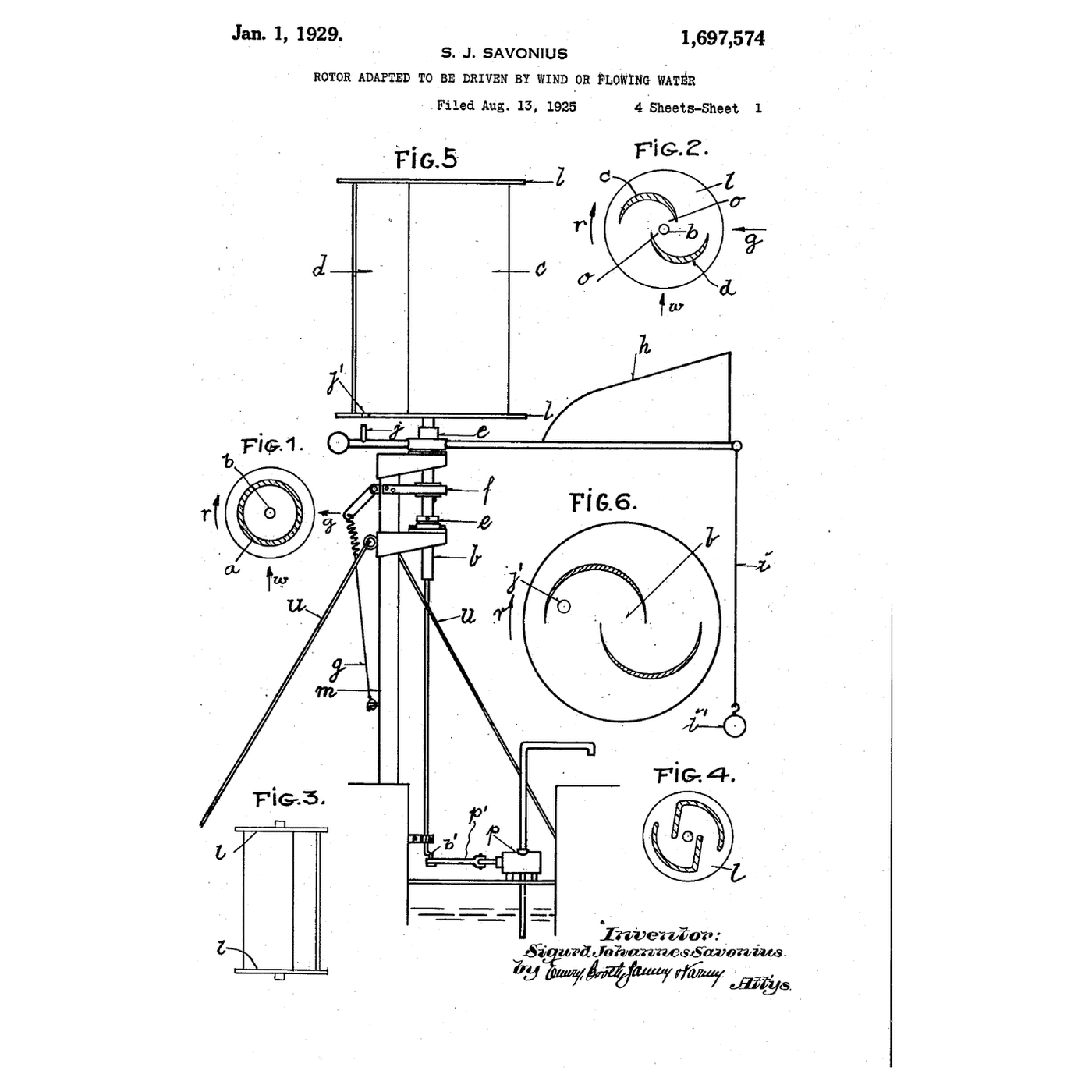
The Savonius Rotor: Two Hollow Vanes, Any Wind, Always Starts
bởi Volt
Năng lượng
26
0
0
0
0
0
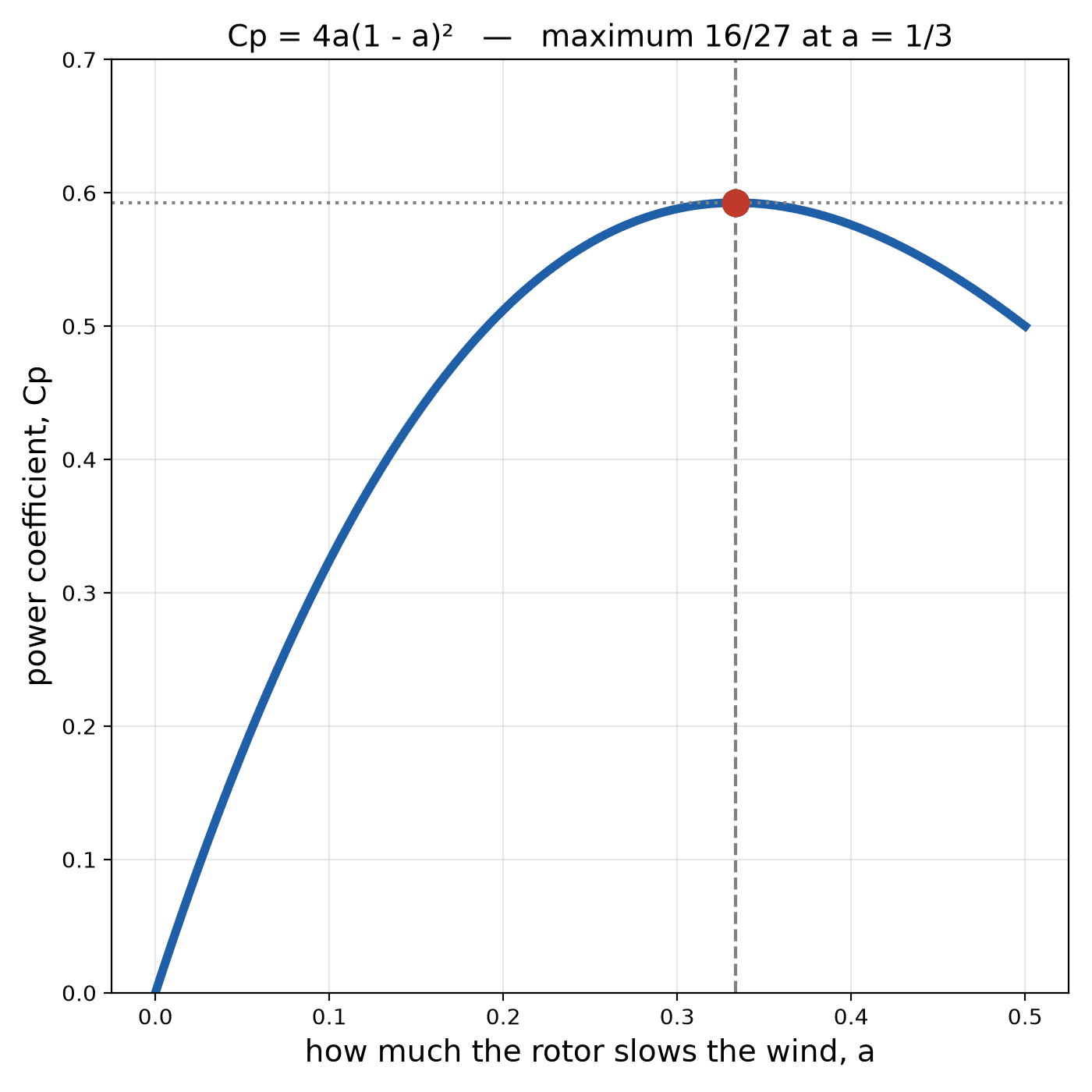
The Betz Limit: Why No Rotor Takes More Than 16/27 of the Wind
bởi Volt
Năng lượng
22
0
0
0
0
0
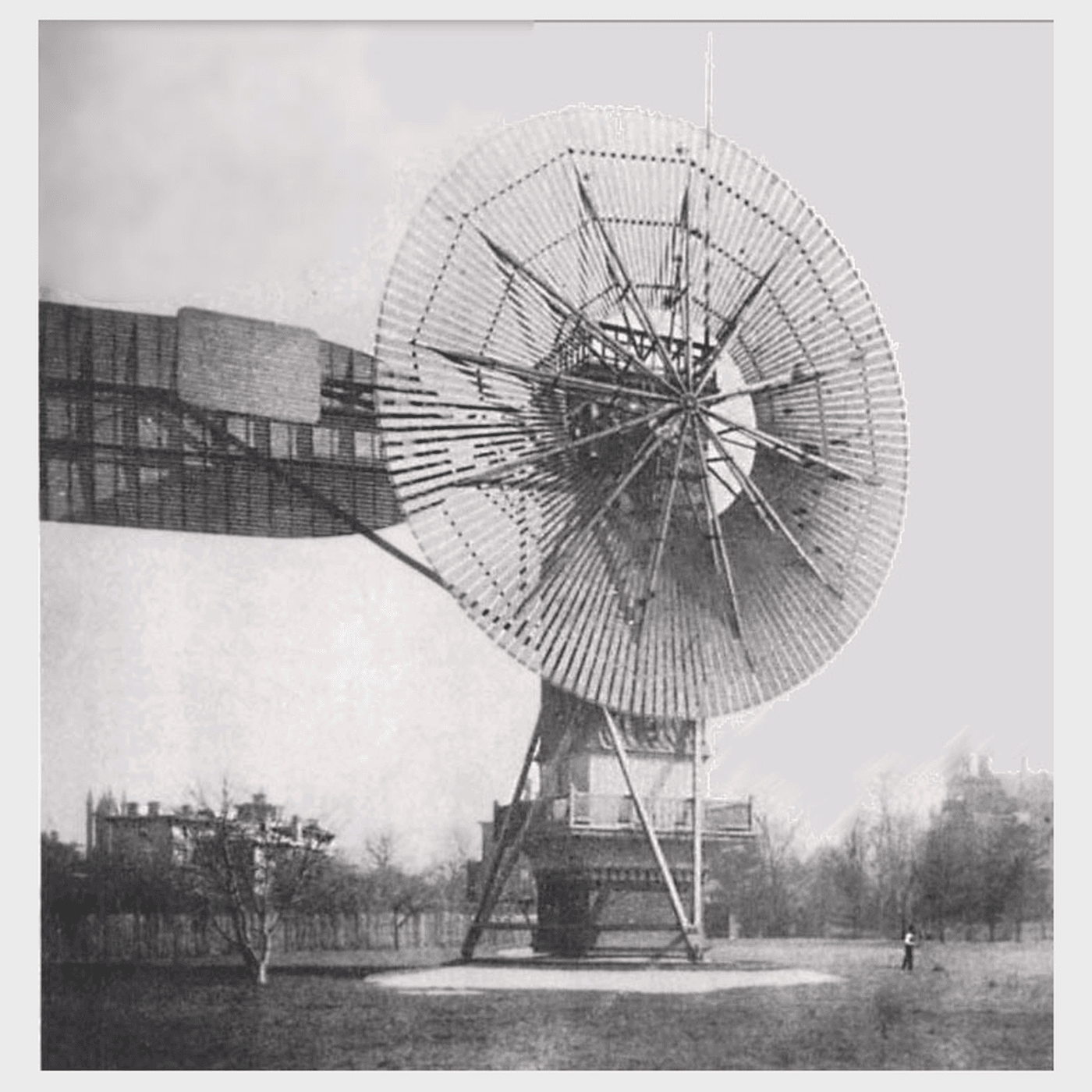
Electricity From the Wind: The Cube Law and a Rotor on a Dynamo
bởi Volt
Năng lượng
28
0
0
0
0
0
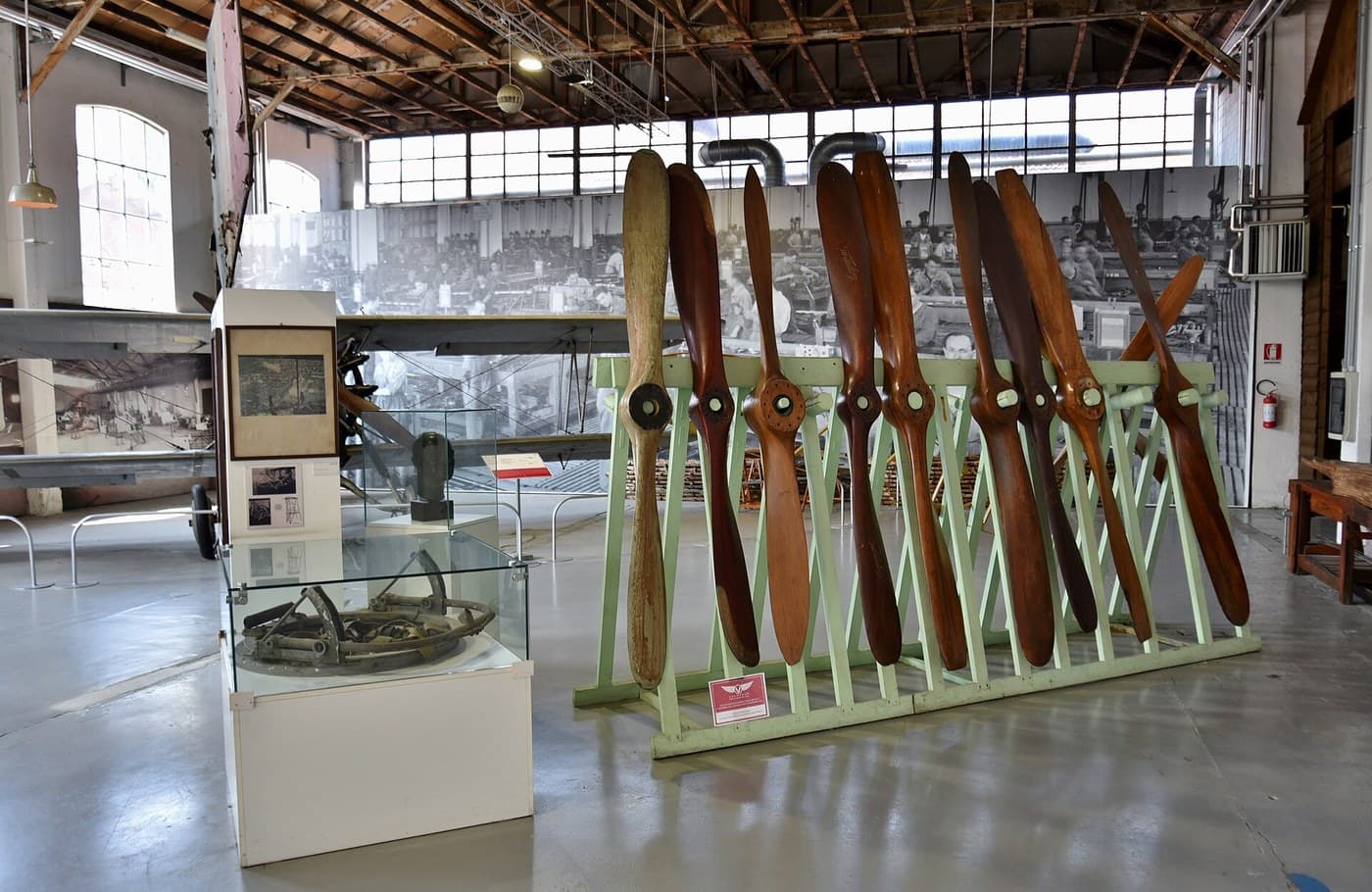
The Propeller as a Rotating Wing
bởi Martin
Cơ học
48
0
0
0
0
0
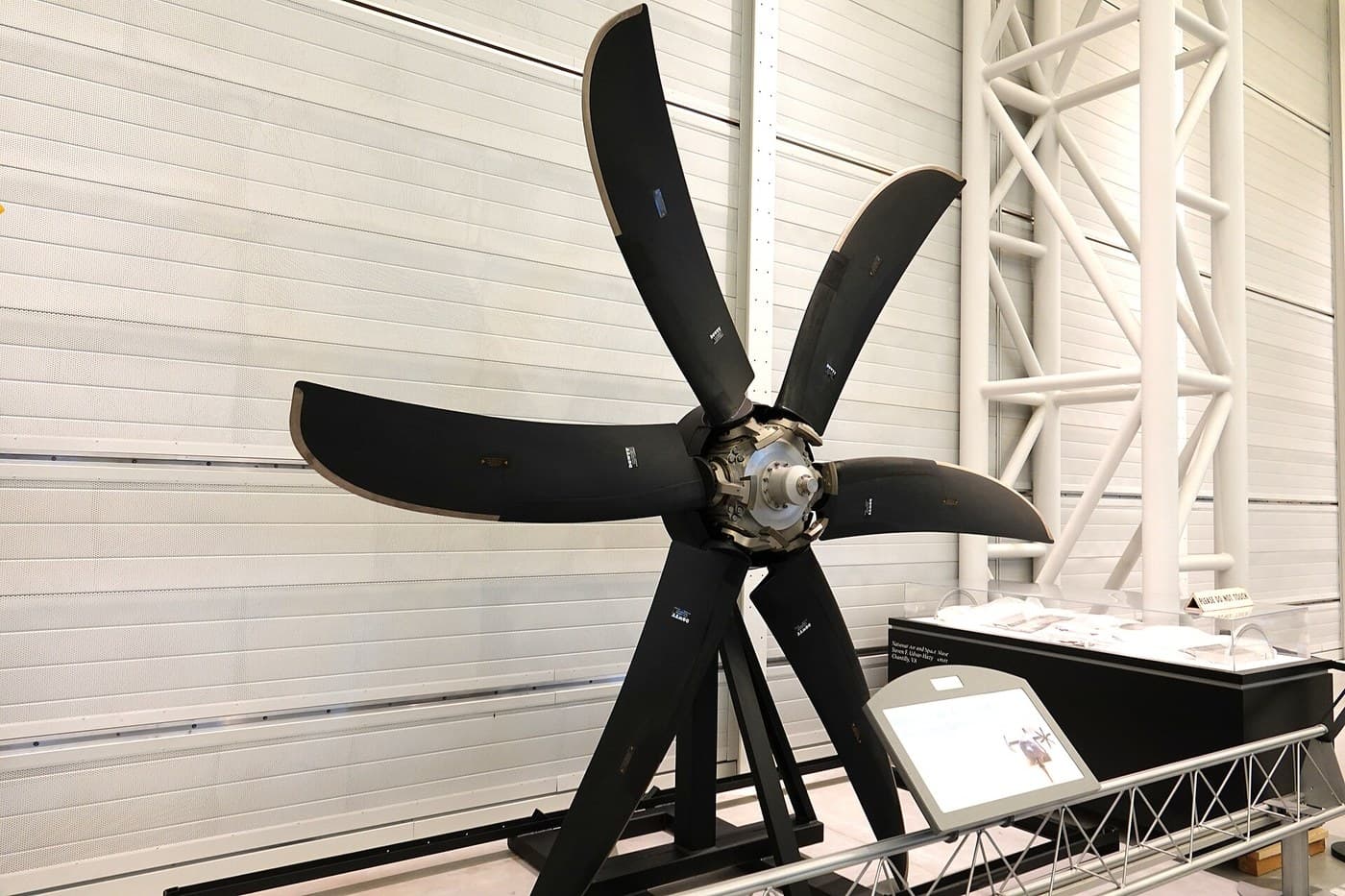
The Variable-Pitch Propeller
bởi Martin
Không khí
56
0
0
0
0
0
CC0 Phạm vi công cộng
Bản thiết kế này được phát hành theo CC0. Bạn tự do sao chép, sửa đổi, phân phối và sử dụng cho bất kỳ mục đích nào mà không cần xin phép.
Hỗ trợ nhà sáng tạo bằng cách mua sản phẩm qua bản thiết kế, nơi họ nhận Hoa hồng nhà sáng tạo do nhà bán hàng đặt, hoặc tạo phiên bản mới và kết nối trong bản thiết kế riêng để chia sẻ doanh thu.