NGHỆ THUẬT
LÀM ĐẸP VÀ SỨC KHỎE
THỦ CÔNG
VĂN HÓA VÀ LỊCH SỬ
GIẢI TRÍ
MÔI TRƯỜNG
THỰC PHẨM VÀ ĐỒ UỐNG
KỸ THUẬT NGƯỢC
KHOA HỌC
THỂ THAO
CÔNG NGHỆ
THIẾT BỊ ĐEO
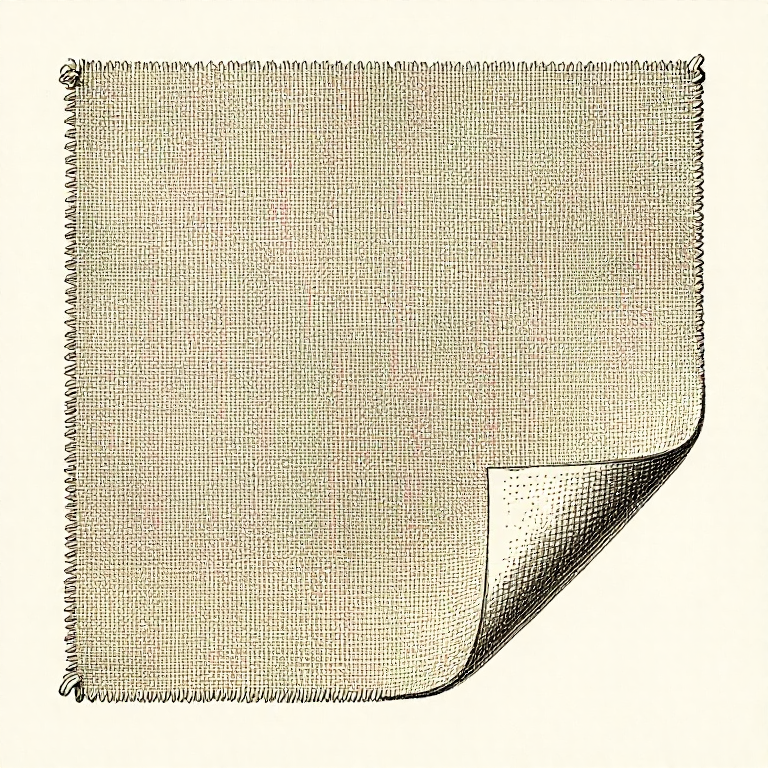


The Grain of Cloth: Three Directions, Three Different Materials
Woven cloth is made of threads at right angles, and it behaves completely differently depending on which way you pull it. Along the WARP it barely stretches. Across the WEFT it gives a little. At 45 degrees — the BIAS — it stretches a great deal and drapes like something else entirely.
That is why every pattern piece carries a grainline arrow, and why ignoring it produces a garment that twists on the body, hangs crooked, and cannot be fixed by altering it.
It is also a tool. A bias-cut strip stretches round a curve where a straight strip buckles, which is the entire reason bias binding exists, and a bias-cut skirt hangs in a way a straight-cut one never will.
Cơ bản
2 hours
Hướng dẫn
1
1
Find the grain: the selvedge is the reference
Find the grain: the selvedge is the reference
The SELVEDGE is the finished edge running down both sides of the cloth as it comes off the loom, and it runs parallel to the warp. That makes it the reference for everything else — the face side and face edge of a piece of cloth.
The WARP (or lengthwise grain) runs parallel to the selvedge. The WEFT (or crosswise grain) runs from selvedge to selvedge. The BIAS is any diagonal, and TRUE bias is exactly 45 degrees to both.
Test it by pulling. Tug along the selvedge and the cloth hardly moves; tug selvedge to selvedge and it gives a little; tug diagonally and it stretches noticeably and narrows as it does. Ten seconds with any scrap teaches this better than any diagram.
Vật liệu cho bước này:
 Vải cô tông1 cái
 Vải lanh1 cái
Công cụ cần thiết:
 Thước kẻ
 Phấn thợ may
2
2
Straighten the grain before cutting anything
Straighten the grain before cutting anything
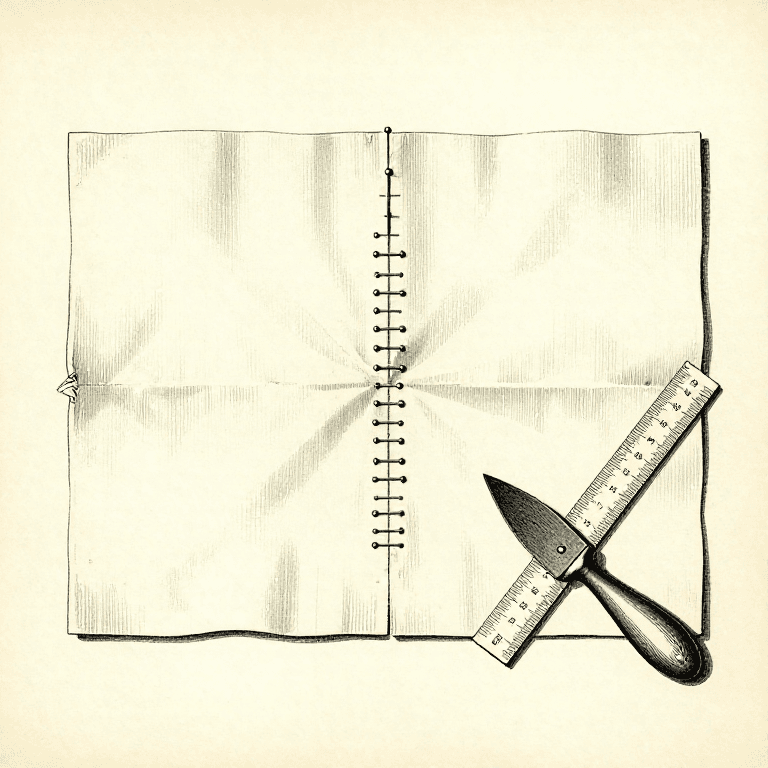
Cloth is often stored and sold off-grain — pulled skew on the bolt, so the weft is not at right angles to the selvedge. Cut a piece from it and the piece is born crooked.
Find the true crosswise line by snipping the selvedge and TEARING across, or by pulling one weft thread out and cutting along the gap it leaves. Either gives a line that follows the weave rather than the edge of the bolt.
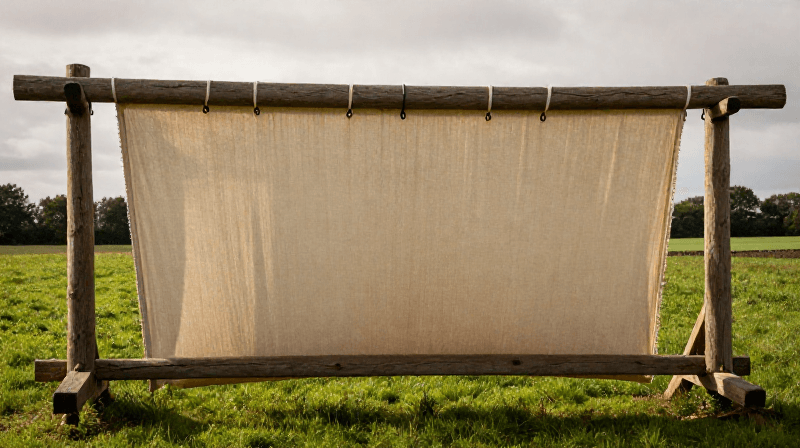
If the two ends are not square to the selvedges, pull the cloth firmly on the bias in the opposite direction, or press it back square with steam. That is the same operation as tentering woollen cloth on a frame, done at a small scale.
Vật liệu cho bước này:
Vải cô tông1 cáiCông cụ cần thiết:
 Kéo
Kéo Bàn là hơi nước
 Bàn làThước kẻ
3
3
The grainline arrow is an instruction, not a hint
The grainline arrow is an instruction, not a hint
Every pattern piece has an arrow. Lay the piece so that arrow is exactly parallel to the selvedge — measure from the arrow to the selvedge at both ends of the arrow and make the two measurements equal.
Both ends is the whole technique. Eyeballing it gets you within a few degrees, and a few degrees on a trouser leg is a leg that spirals round the body over a day's wear.
Pieces cut on the FOLD have the fold line marked instead, and that line must also lie on grain. A fold that is not on grain produces a piece that is not symmetrical, which is worse than merely being off-grain.
Vật liệu cho bước này:
 Giấy1 cáiVải cô tông1 cái
Công cụ cần thiết:
 Thước dây cuộn
 Kim ghim khâuPhấn thợ mayThước kẻ
4
4
Using the bias on purpose
Using the bias on purpose
Cut a strip at 45 degrees and it will stretch round an outside curve and ease round an inside one without a single pleat. That is why a neckline is bound with bias strips, and why a straight strip put there ripples however carefully it is sewn.
Bias also drapes. A bias-cut skirt falls in soft folds and follows the body because the cloth can extend where it needs to, which no amount of shaping on the straight grain reproduces.
The cost is that bias grows. A bias-cut garment hangs and lengthens for a day or two before it settles, so it is left hanging before the hem is marked — and a hem marked immediately after cutting will be uneven by the time it is worn.
Vật liệu cho bước này:
Vải cô tông1 cái Chỉ cô tông1 cái
Công cụ cần thiết:
KéoThước kẻKim ghim khâuVật liệu
4- 4 cáiTạm thời
- 1 cáiTạm thời
- 1 cáiTạm thời
- 1 cáiTạm thời
Blueprint liên quan
Các blueprint này chia sẻ kiến thức — kỹ thuật, vật liệu hoặc nguyên tắc
CC0 Phạm vi công cộng
Bản thiết kế này được phát hành theo CC0. Bạn tự do sao chép, sửa đổi, phân phối và sử dụng cho bất kỳ mục đích nào mà không cần xin phép.
Hỗ trợ nhà sáng tạo bằng cách mua sản phẩm qua bản thiết kế, nơi họ nhận Hoa hồng nhà sáng tạo do nhà bán hàng đặt, hoặc tạo phiên bản mới và kết nối trong bản thiết kế riêng để chia sẻ doanh thu.