NGHỆ THUẬT
LÀM ĐẸP VÀ SỨC KHỎE
THỦ CÔNG
VĂN HÓA VÀ LỊCH SỬ
GIẢI TRÍ
MÔI TRƯỜNG
THỰC PHẨM VÀ ĐỒ UỐNG
KỸ THUẬT NGƯỢC
KHOA HỌC
THỂ THAO
CÔNG NGHỆ
THIẾT BỊ ĐEO
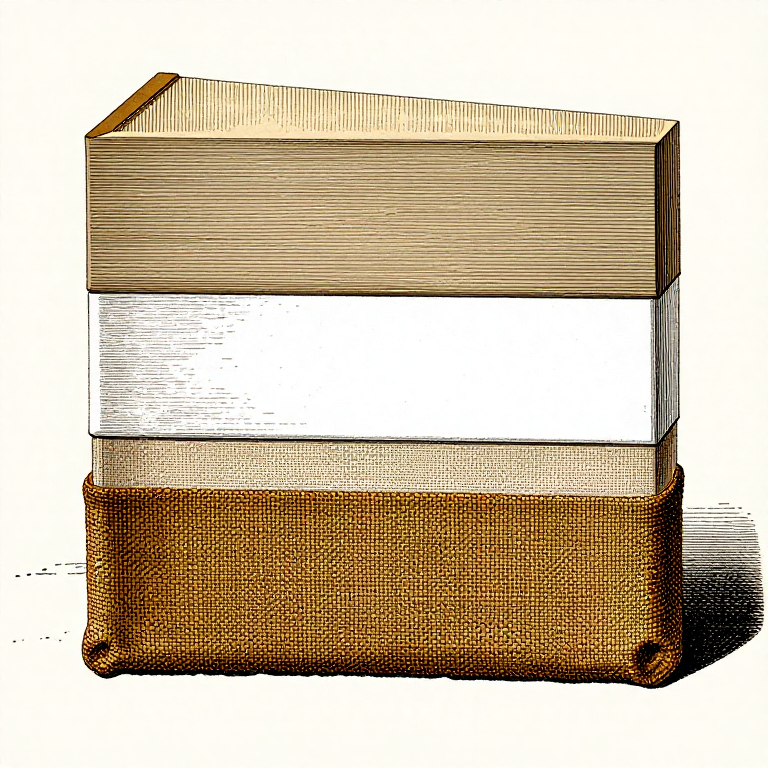


The Ground: Paint Needs Something to Hold On To, and Not Sink Into
Paint applied straight onto bare canvas or wood does two bad things at once: the binder soaks into the support, leaving the pigment under-bound on the surface, and the acid in the oil attacks the fibres underneath.
A GROUND sits between them. It seals the support so the binder stays where it belongs, gives the paint a surface with enough tooth to grip, and provides a consistent colour and absorbency to work on.
Traditional grounds are two layers doing two jobs: a SIZE that seals, then a GROUND that provides the working surface. Modern acrylic gesso tries to do both at once, which works and is a compromise worth understanding rather than assuming.
Trung cấp
3 hours
Hướng dẫn
1
1
Size first: seal the fibres
Size first: seal the fibres
Size is a thin glue layer applied to bare canvas or panel. Its only job is to stop what comes next soaking in, and to protect the fibres from the oil.
Traditional size is animal glue — rabbit skin glue — applied warm and thin. It works beautifully and it has one serious flaw: it absorbs and releases moisture with the weather, so it swells and shrinks for ever, and that movement is transmitted to every layer above.
Modern practice often uses an acrylic medium or PVA size instead, which does not respond to humidity. That is a genuine improvement, and it is why a 400-year-old painting and a modern one crack in different patterns.
Vật liệu cho bước này:
 Toan vẽ (căng khung)1 cái
 Nước1 lít
Công cụ cần thiết:
 Bộ cọ vẽ
 Cốc thủy tinh (becher)
 Cân chính xác
2
2
Ground second: colour, tooth and absorbency
Ground second: colour, tooth and absorbency
The ground is the surface you actually paint on, and it has three properties worth choosing deliberately. Its COLOUR shows through thin paint and affects every mixture laid over it — which is why a toned ground is a technique rather than a shortcut.
Its TOOTH is the microscopic roughness that gives the paint something to key into. A ground sanded perfectly smooth has very little, and paint on it can be scraped off years later with a fingernail.
Its ABSORBENCY decides how much binder the ground takes from the first paint layer. A very absorbent ground makes that layer lean and matt — which is useful deliberately, and a problem if it was not intended.
Vật liệu cho bước này:
Toan vẽ (căng khung)1 cái Bộ bột màu khoáng đất1 cái
Công cụ cần thiết:
Bộ cọ vẽ Thước kẻ
 Kính lúp thợ kim hoàn
3
3
Traditional gesso is not acrylic gesso
Traditional gesso is not acrylic gesso
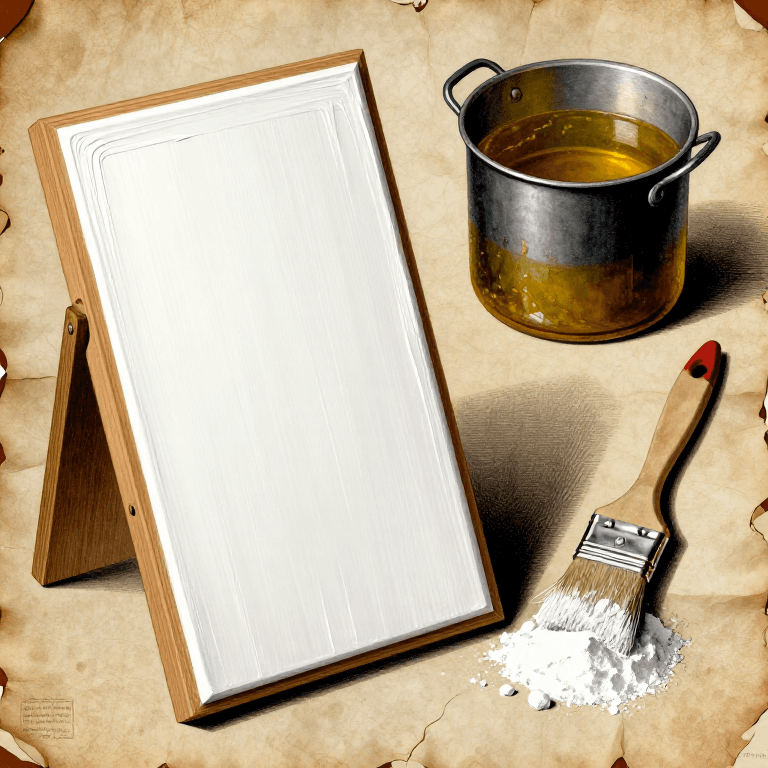
TRUE GESSO is chalk or gypsum in animal glue. It dries brittle, sands to a glass-smooth surface, and is used on rigid panels only — flexed on canvas it cracks immediately.
ACRYLIC 'gesso' shares the name and almost nothing else. It is titanium white and filler in acrylic dispersion: flexible, water-resistant, usable on canvas, and much less absorbent. It cannot be sanded to the same polish and it does not take egg tempera well.
So the choice follows the support and the medium. A rigid panel for tempera or gilding wants true gesso; a stretched canvas for oil or acrylic wants the acrylic kind. Putting true gesso on canvas is a known and avoidable failure.
Vật liệu cho bước này:
 Tấm gỗ cứng1 cáiToan vẽ (căng khung)1 cái
Công cụ cần thiết:
Bộ cọ vẽThước kẻKính lúp thợ kim hoàn4
4
Match the layers, or build in a failure
Match the layers, or build in a failure
Every layer in the stack expands, contracts and flexes at its own rate. Where two neighbouring layers differ a lot, the interface between them is where the painting will fail — which is the same mismatch argument as glaze fit on a pot and wood movement in a joint.
The rule that follows: each layer should be no more rigid than the one beneath it. A brittle ground on a flexible support, or a hard fast-drying paint over a soft one, is a crack scheduled for later.
Oil paint over acrylic ground is fine and standard. Acrylic over dried OIL is not: acrylic does not bond to an oily surface and will eventually peel off in sheets. That one is worth remembering as an absolute.
Vật liệu cho bước này:
Toan vẽ (căng khung)1 cái Dầu lanh1 cái
Công cụ cần thiết:
Bộ cọ vẽKính lúp thợ kim hoànVật liệu
5- 4 cáiTạm thời
- 1 lítTạm thời
- Tạm thời
- 1 cáiTạm thời
- 1 cáiTạm thời
Blueprint liên quan
Các blueprint này chia sẻ kiến thức — kỹ thuật, vật liệu hoặc nguyên tắc
Making Traditional Gesso — The White Ground That Prepared Every Panel Painting in History
bởi Charlie
NGHỆ THUẬT
59
0
0
0
8
0
Making Oil Paint from Raw Pigments — Grinding Pigments in Linseed Oil
bởi Charlie
NGHỆ THUẬT
136
0
0
0
5
0
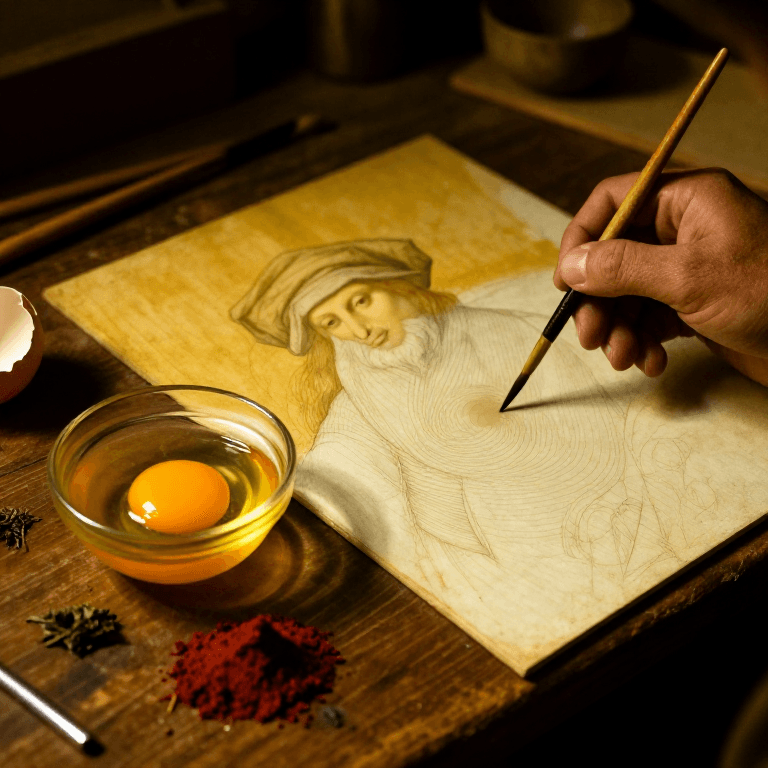
Making Egg Tempera Paint — The Medieval Panel Painting Medium
bởi Charlie
NGHỆ THUẬT
214
0
0
0
4
0
CC0 Phạm vi công cộng
Bản thiết kế này được phát hành theo CC0. Bạn tự do sao chép, sửa đổi, phân phối và sử dụng cho bất kỳ mục đích nào mà không cần xin phép.
Hỗ trợ nhà sáng tạo bằng cách mua sản phẩm qua bản thiết kế, nơi họ nhận Hoa hồng nhà sáng tạo do nhà bán hàng đặt, hoặc tạo phiên bản mới và kết nối trong bản thiết kế riêng để chia sẻ doanh thu.