NGHỆ THUẬT
LÀM ĐẸP VÀ SỨC KHỎE
THỦ CÔNG
VĂN HÓA VÀ LỊCH SỬ
GIẢI TRÍ
MÔI TRƯỜNG
THỰC PHẨM VÀ ĐỒ UỐNG
KỸ THUẬT NGƯỢC
KHOA HỌC
THỂ THAO
CÔNG NGHỆ
THIẾT BỊ ĐEO



The Hand-Housing Rubber Brush: Back, Teeth and a Hood for the Hand in One Moulding
A horse brush held by a strap or a handle slips in a wet hand, and knuckles are knocked against the stall.
John S. Hickson of Charlottesville, Virginia, received US 840,328, patented 1 January 1907, for a horse brush "preferably formed of rubber molded or otherwise formed into the desired shape" in one piece: a back, tapering teeth, and a retainer that houses the hand. The retainer's edges are thick where they join the back and taper to a thin, flexible crown, and its entrance is cut away on an incline so the mouth closes about the wrist.
This rung compares the stiffness of the thick edges and the thin crown, then casts the whole brush in one pour of silicone rubber in a printed three-part mould.
Nâng cao
About 8 hours plus curing
Hướng dẫn
1
1
Stiff edges, yielding crown
Stiff edges, yielding crown
Đang tải sổ tay Jupyter…
2
2
A rubber brush before it
A rubber brush before it
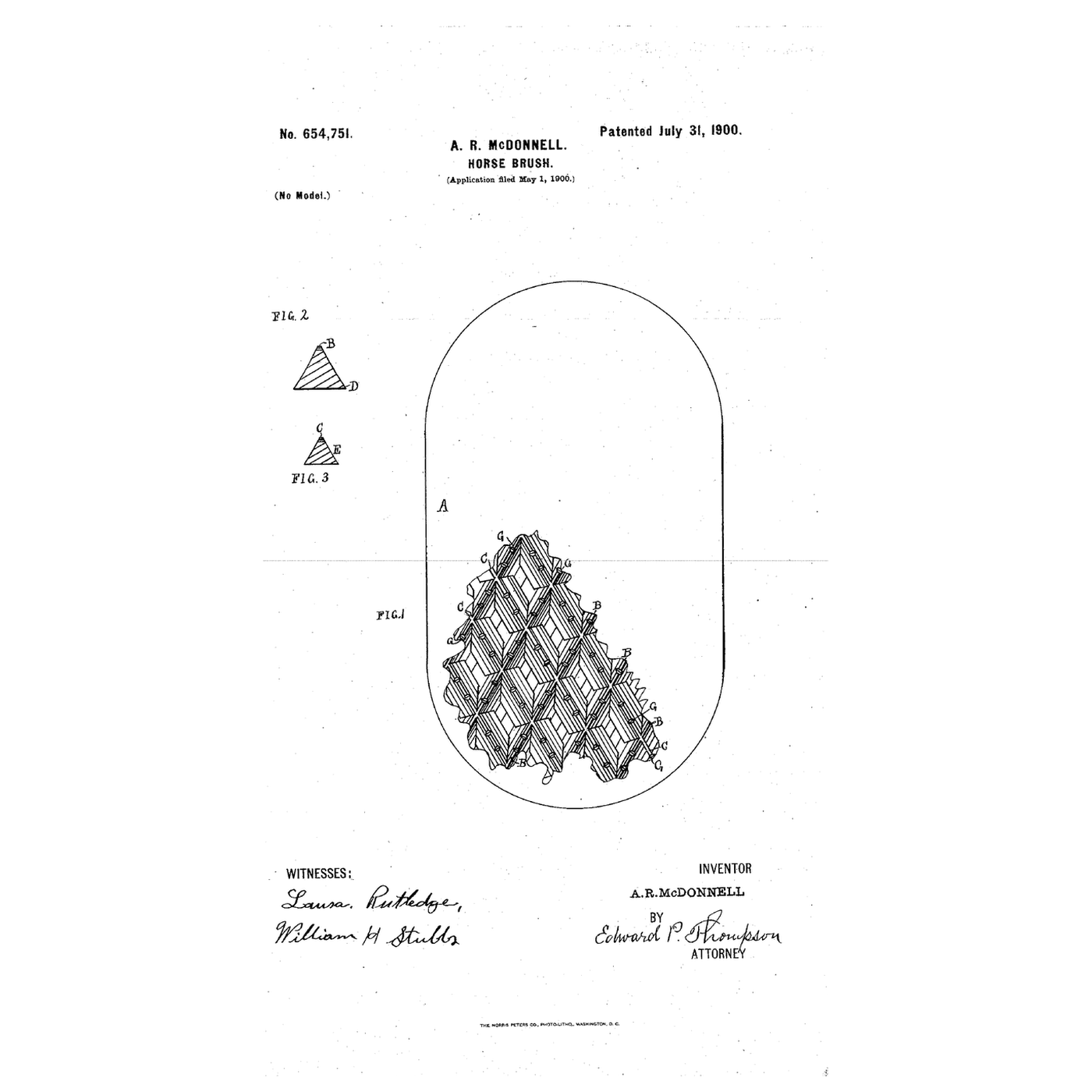
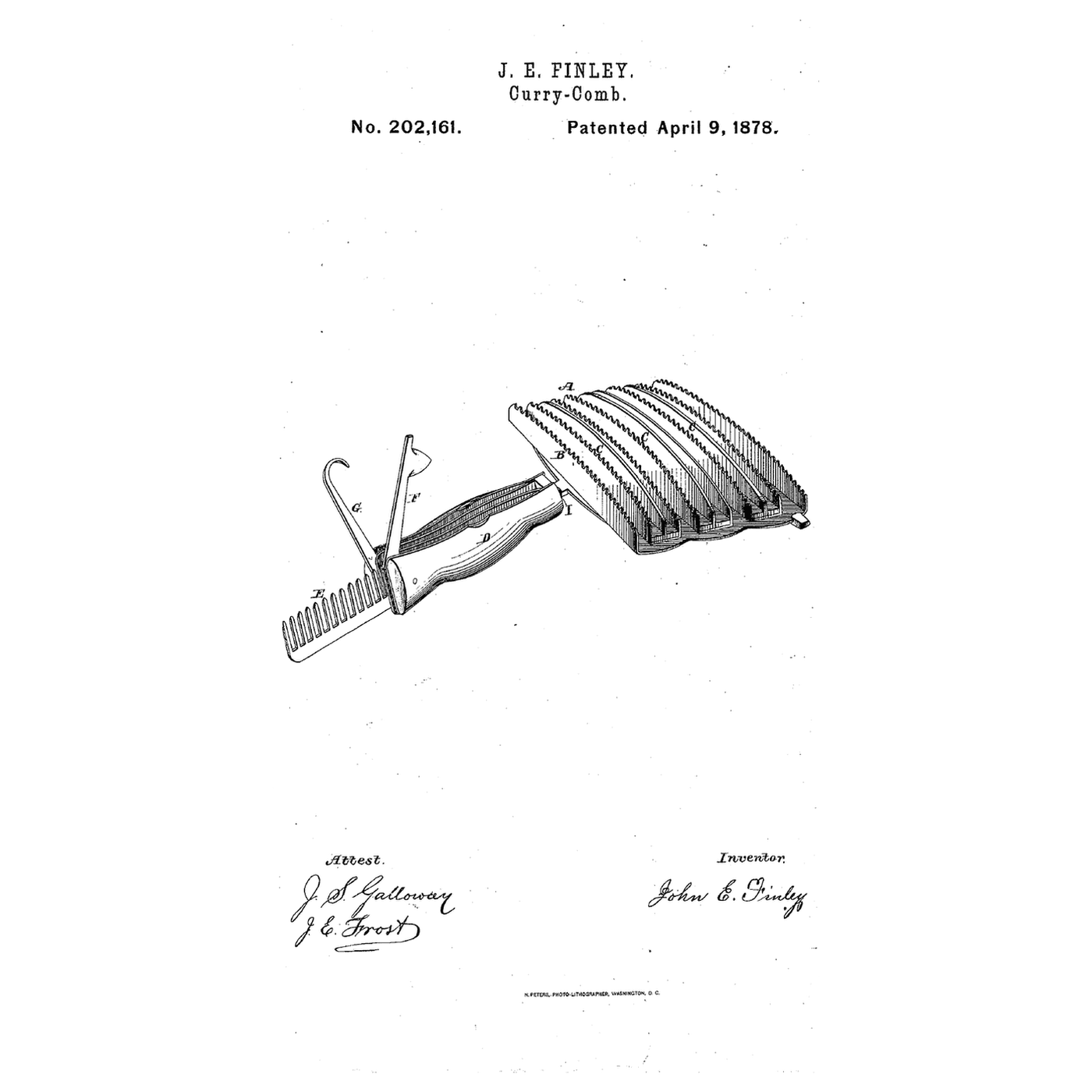
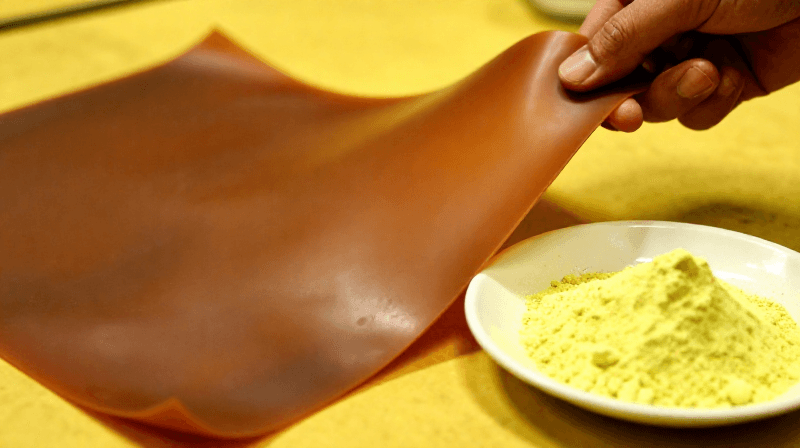
The embedded blueprint casts a ridged rubber pad and glues it to a leather plate. Hickson moulds the teeth, the back and a hood for the hand as one piece of rubber.
3
3
Read US 840,328
Read US 840,328
"As stated, the brush comprising the back 1, teeth 2, and retainer 3, is a one-piece structure and is preferably formed of rubber molded or otherwise formed into the desired shape."
"The edge portions of the retainer at their juncture of the back 1 are made thicker than the remaining portion and gradually taper in thickness as they recede from their juncture with the back, leaving the center portion comparatively thin and flexible, so as to yield slightly when a large hand is thrust into the retainer."
"The thickened edge portions of the retainer provide ample protection against injury and resist wear incident to the striking of the edge portion of the retainer against any part of the stall or other object."
4
4
Print the mould and cast the brush
Print the mould and cast the brush
**Mould.** In CAD draw three parts and print them in PLA. A tray 16 × 10 cm oval inside, its floor pitted with tapering pockets 8 mm deep every 8 mm for the teeth. A core the shape of the space a flat hand fills: a half-oval dome 13 cm long, 8.5 cm wide and 3.5 cm high with a flat underside, standing 4 mm above the tray floor on a tab that runs out through the mouth. A shell whose inside follows the core 6 mm away at the edges, narrowing to 2.5 mm at the crown, with its open end cut on a slant toward the closed end, a pour hole at the crown and a vent at the closed end.
**Cast.** Wipe every face with a thin film of petroleum jelly. Assemble tray, core and shell and clamp the core's tab. In gloves, weigh and mix the silicone rubber by its maker's instructions, stir slowly with a dowel, and pour in a thin stream into the pour hole until it rises in the vent. Leave it to cure as long as its maker says. Take off the shell, stretch the mouth and draw the core out, and peel the brush from the tray.
**Test.** Slide your hand in and check that the mouth closes about the wrist. Dust a piece of wool felt with flour and count the strokes it takes to lift it.
Vật liệu cho bước này:
 Cao su silicon làm khuôn1 cái
 Sợi nhựa PLA1 cái
 Vaseline1 cái
 Cốc1 cái
 Chốt gỗ cứng1 cái
 Tấm nỉ len1 cái
 Bột mì1 cái
Công cụ cần thiết:
 Máy in 3D sợi nhựa (FDM)
 Cân nhà bếp điện tử
 Kẹp
Kẹp Thước cặp điện tử 6 inch
 Dao rọc thủ công
 Găng tay nitrile
 Kính bảo hộ trong suốt
5
5
A brush with holes, thin spots or a stuck core
A brush with holes, thin spots or a stuck core
Hand-housing rubber brush troubleshooting.
Flow
Loading...
6
6
History and honest limits
History and honest limits
**John S. Hickson** of Charlottesville, Albemarle County, Virginia, filed US 840,328 on 29 January 1906; it was patented 1 January 1907. The retainer 3's middle is spaced from the back 1 and joined to it at its edges, making a housing that completely encompasses the hand. In the most general construction the brush is oblong, and the teeth may be of any length and number. His claim covers a new rubber article of manufacture: a back with integral tapering teeth, a retainer integral with it that houses the hand, thickened at the joint with the back, and an entrance cut away on an incline toward the closed end, giving a contracted mouth and free play for the wrist.
**Honest limits.** Cast silicone rubber in a printed mould stands in for his moulded rubber. The notebook compares stiffness only through thickness, for one rubber; its thicknesses are examples. The fit on your hand and your stroke counts are the result.
Vật liệu
7- Tạm thời
- 1 cáiTạm thời
- 1 cáiTạm thời
- 1 cáiTạm thời
- 1 cáiTạm thời
- 1 cáiTạm thời
- 1 cáiTạm thời
Công cụ yêu cầu
7- Tạm thời
- Tạm thời
- Tạm thời
- Tạm thời
- Tạm thời
- Tạm thời
- Tạm thời
Blueprint liên quan
Các blueprint này chia sẻ kiến thức — kỹ thuật, vật liệu hoặc nguyên tắc


CC0 Phạm vi công cộng
Bản thiết kế này được phát hành theo CC0. Bạn tự do sao chép, sửa đổi, phân phối và sử dụng cho bất kỳ mục đích nào mà không cần xin phép.
Hỗ trợ nhà sáng tạo bằng cách mua sản phẩm qua bản thiết kế, nơi họ nhận Hoa hồng nhà sáng tạo do nhà bán hàng đặt, hoặc tạo phiên bản mới và kết nối trong bản thiết kế riêng để chia sẻ doanh thu.