NGHỆ THUẬT
LÀM ĐẸP VÀ SỨC KHỎE
THỦ CÔNG
VĂN HÓA VÀ LỊCH SỬ
GIẢI TRÍ
MÔI TRƯỜNG
THỰC PHẨM VÀ ĐỒ UỐNG
KỸ THUẬT NGƯỢC
KHOA HỌC
THỂ THAO
CÔNG NGHỆ
THIẾT BỊ ĐEO

The Heat Pipe: Evaporation, Condensation and a Wick That Pumps
A sealed copper tube with the air pumped out, a few millilitres of water, and a wick lining the wall. Heat one end and the water there boils even at room temperature; the vapour rushes to the cool end, condenses and gives up its heat; the wick soaks the liquid back. It carries heat many times better than a solid copper rod of the same size, with nothing moving.
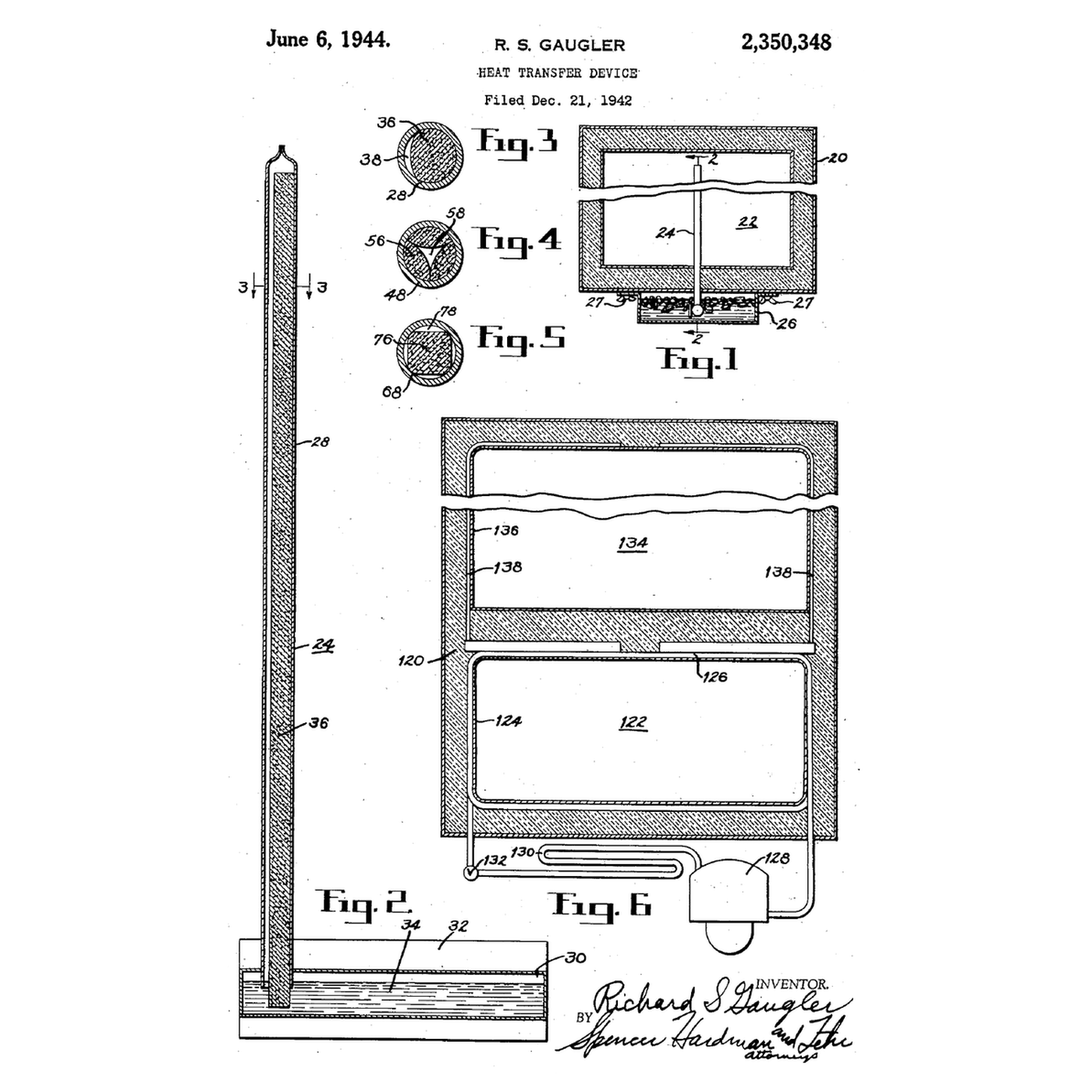
Richard Gaugler of General Motors patented the capillary-wick heat transfer device in 1944, for a refrigerator; George Grover at Los Alamos filed the patent that named and developed the heat pipe in 1963, with sodium pipes running near 1,100 K. Today one sits in almost every laptop.
This rung works out what a wick can lift, and builds a water heat pipe from copper tube and stainless mesh to race against an empty tube.
Nâng cao
About 5 hours
Hướng dẫn
1
1
The cycle
The cycle
Không gian làm việc Blockly
Loading Blockly workspace...
2
2
What the wick can lift, and what copper cannot carry
What the wick can lift, and what copper cannot carry
Đang tải sổ tay Jupyter…
3
3
Make the pipe
Make the pipe
Cut 300 mm of 10 mm copper tube and two 300 mm strips of fine stainless mesh. Roll the mesh into a sleeve that springs out against the inside wall — two layers — so it touches the wall everywhere and leaves the core open.
Crimp one end flat in the vise, fold it, and seal it with solder and plumbing flux. Add about 3 ml of distilled water with a syringe: enough to wet the wick, not to fill the tube.
**Purge the air:** clamp the tube upright in the vise, open end up, and heat the bottom gently with the torch until steam jets steadily out of the top for half a minute — the steam carries the air out. Wearing gloves and goggles, crimp the open end shut in the vise while it is still steaming, then solder it. Air left inside is the commonest reason a home-made heat pipe fails (Grover's own sodium pipes had to be baked to drive out hydrogen).
Make a second tube identical in every way but empty of water — the control.
Vật liệu cho bước này:
 Ống đồng 10 mm0.6 mét
 Lưới thép không gỉ cấp thực phẩm0.02 sqm
 Nước cất10 ml
 Thiếc hàn chì30 g
 Thuốc trợ hàn ống nước1 cái
Công cụ cần thiết:
 Dao cắt ống
 Ê tô bàn nguội
 Đèn khò propan
 Găng tay da bảo hộ
 Kính bảo hộ trong suốt
4
4
Race it against the empty tube
Race it against the empty tube
Tape a temperature probe to the top end of each tube. Stand both tubes upright with their bottom 50 mm in a jug of hot water at about 70 °C — never heat a sealed pipe with a flame again: its pressure climbs steeply above 100 °C.
Watch the two top ends. The heat pipe's top rises within seconds to within a few degrees of the water; the empty tube's top barely moves. That is the notebook's comparison, in your hand.
Now turn the heat pipe over: hot end at the TOP, dipping the upper end into a shallow tray of hot water, cold end below. The wick must now lift the liquid against gravity. Its performance drops, and if your wick is coarse or poorly seated it stops — the dry-out in the cycle's last line.
Vật liệu cho bước này:
 Nước2 lít
Công cụ cần thiết:
 Ấm đun nước điện thủy tinh
 Ca đong
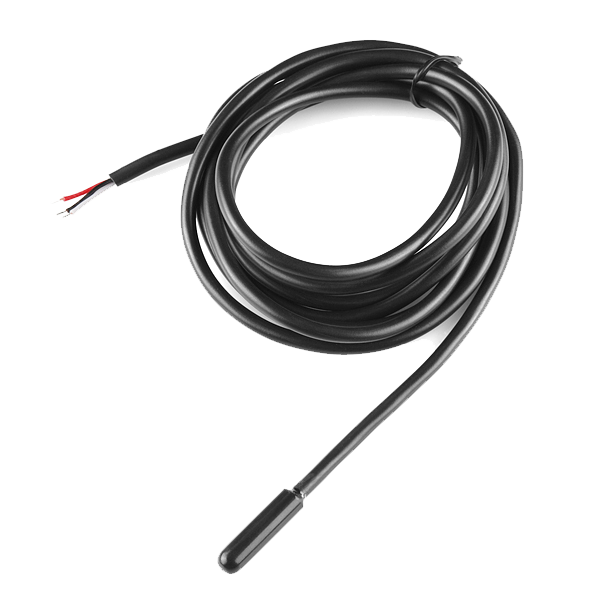 Temperature Sensor - Waterproof (DS18B20)
 Nhiệt kế nhà bếp
 Đồng hồ bấm giờ
5
5
It carries no better than copper: find out why
It carries no better than copper: find out why
The usual reasons a heat pipe does not work, in order.
Flow
Loading...
6
6
History and context
History and context
**US 2,350,348, 'Heat Transfer Device', Richard S. Gaugler of Dayton, Ohio, assignor to General Motors; filed 21 December 1942, granted 6 June 1944.** A sealed tube with a sintered *"porous capillary structure"* that carries the liquid *"upwardly or in any direction without any forced circulation and without any moving parts"* — proposed to cool the inside of a refrigerator.
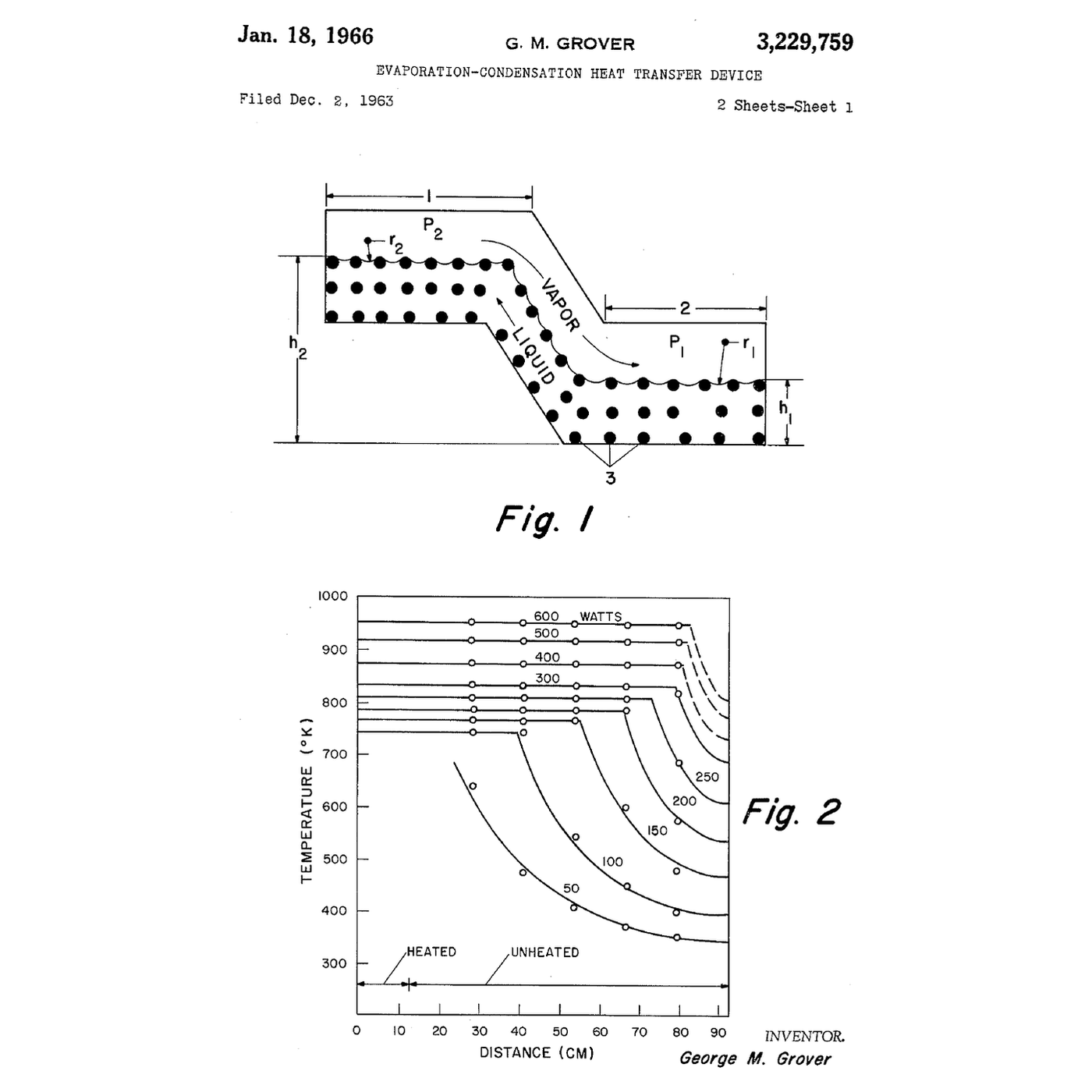
**US 3,229,759, 'Evaporation-Condensation Heat Transfer Device', G. M. Grover; filed 2 December 1963, granted 18 January 1966.** Grover's specification describes a sodium pipe of 347 stainless steel, 3/4 inch outside and 5/8 inch inside, 12 inches long, with a wick of five layers of 100-mesh 304 screen and 15 g of sodium, run at about 1,100 K; it also sets out the capillary pumping condition the notebook uses.
**Honest limits.** A heat pipe works only between the freezing point and the critical point of its fluid, and best in a narrower band. It has a maximum heat load, set by the wick, above which it dries out. It fails silently if it leaks or holds air. And it moves heat; it does not get rid of it — the cold end still needs a fin or a fan.
Vật liệu
6- 0.6 métTạm thời
- 0.02 sqmTạm thời
- 10 mlTạm thời
- 30 gTạm thời
- Tạm thời
- 2 lítTạm thời
Công cụ yêu cầu
10- Tạm thời
- Tạm thời
- Tạm thời
- Tạm thời
- Tạm thời
- Tạm thời
- Tạm thời
- Temperature Sensor - Waterproof (DS18B20)Hoa hồng 10%$9.43
- Tạm thời
- Tạm thời
Blueprint liên quan
Các blueprint này chia sẻ kiến thức — kỹ thuật, vật liệu hoặc nguyên tắc
Counterflow: The Same Area Does More When the Streams Run Opposite
bởi Emma
Cơ học
5
0
0
0
0
0
The Water-Tube Boiler: Put the Water in the Tubes
bởi Martin
Cơ học
5
0
0
0
0
0
Vapour-Compression Refrigeration
bởi Emma
CÔNG NGHỆ
34
0
0
0
5
0
Absorption Refrigerator
bởi Volt
CÔNG NGHỆ
46
0
0
0
0
0
Soldering a Wire Joint: Not the Same Job as Soldering a Board
bởi Volt
CÔNG NGHỆ
18
0
0
0
0
0
Regenerative Cooling
bởi Emma
Không gian
53
0
0
0
0
0
CC0 Phạm vi công cộng
Bản thiết kế này được phát hành theo CC0. Bạn tự do sao chép, sửa đổi, phân phối và sử dụng cho bất kỳ mục đích nào mà không cần xin phép.
Hỗ trợ nhà sáng tạo bằng cách mua sản phẩm qua bản thiết kế, nơi họ nhận Hoa hồng nhà sáng tạo do nhà bán hàng đặt, hoặc tạo phiên bản mới và kết nối trong bản thiết kế riêng để chia sẻ doanh thu.