NGHỆ THUẬT
LÀM ĐẸP VÀ SỨC KHỎE
THỦ CÔNG
VĂN HÓA VÀ LỊCH SỬ
GIẢI TRÍ
MÔI TRƯỜNG
THỰC PHẨM VÀ ĐỒ UỐNG
KỸ THUẬT NGƯỢC
KHOA HỌC
THỂ THAO
CÔNG NGHỆ
THIẾT BỊ ĐEO
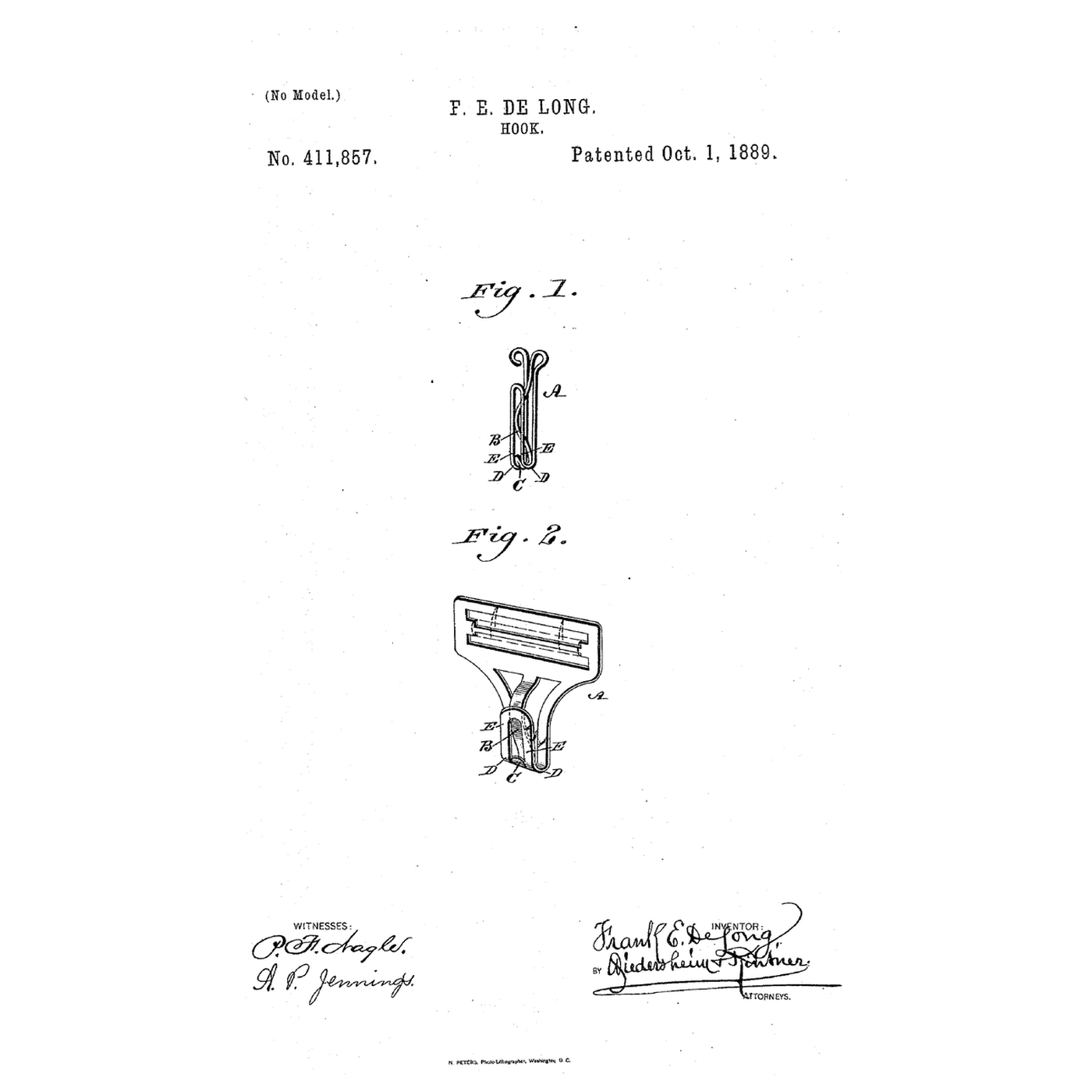

The Hook and Eye: A Spring Tongue That Keeps the Eye In
A hook and eye closes a waistband or the neck of a dress with two small pieces of bent wire. Its weakness is slack: when the cloth stops pulling, the eye slides back along the hook and falls off.
Frank E. De Long of Philadelphia patented a hook with a spring tongue inside it: US 411,857, filed 18 March 1889 and dated 1 October 1889, half assigned to Charles F. De Long. The hook proper and its shank are made of parallel side bars, and between them a tongue, bowed out towards the front of the hook, ends in a loop that sits in the bend. An eye pushed in forces the tongue back and passes; the tongue then closes behind it.
This rung works out how to size a wire tongue so it springs back instead of bending for good, and makes and tests hooks with and without one.
Cơ bản
About 2 hours
Hướng dẫn
1
1
Sizing a wire spring tongue
Sizing a wire spring tongue
Đang tải sổ tay Jupyter…
2
2
A wire spring that guards a point
A wire spring that guards a point
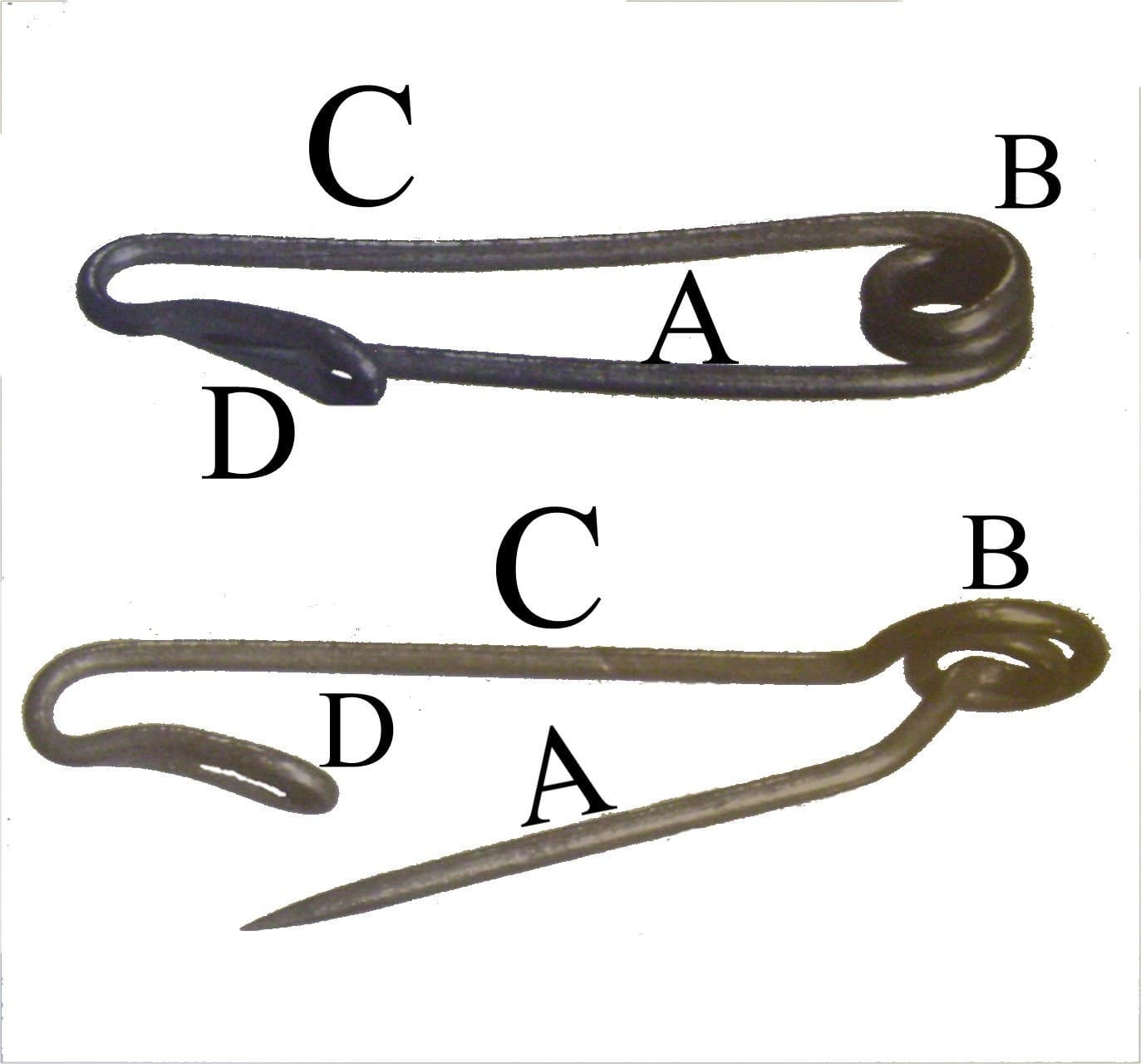
The safety pin bends one wire into a spring and a clasp. The embedded blueprint shows the older closure the hook-and-eye stands beside.
3
3
Read US 411,857
Read US 411,857
De Long describes "a hook or fastening for a garment, composed of front and rear portions or the hook proper and the shank formed of substantially parallel sides or bars, and a tongue having its free end forming a loop coincident with the bend of the hook". Fig. 1 is a hook for "a hook and eye"; Fig. 2 shows the same hook on the frame of a suspender buckle or slide.
The spring-tongue B "is bowed or swelled outwardly so as to approach the front portion." An eye drawn between the front and rear of the hook "bears against the tongue and rides over the same, forcing it backward", reaches the bend D, and the tongue returns, "serving to retain the eye". The eye then sits in both the bend D and the loop C; the loop strengthens the hook and stops the eye "from slipping behind the tongue". Both tongue and loop lie between the side pieces, so they are "laterally restrained" when the hook is under strain.
4
4
Bend hooks with and without a tongue
Bend hooks with and without a tongue
With round-nose and flat-nose pliers, bend two plain hooks and two eyes from steel wire about 0.6 mm thick. For two more hooks, bend the wire back on itself so the hook has two parallel side bars, and form a tongue from finer wire (about 0.3–0.4 mm) that runs inside the hook, bowed towards the front, with its end curled into the bend.
Sew one of each onto two scraps of cotton fabric, with eyes on the facing edges. Hook them up, then shake and flex the fabric with no tension on it for a minute. Count how often each pair comes apart. Check the tongues under a hand lens afterwards: a tongue that no longer touches the front of the hook has taken a set — make it longer or thinner, as the notebook says.
Vật liệu cho bước này:
 Dây thép1 cái
 Vải bông (mỏng)1 cái
 Chỉ1 cái
 Móc cài (móc và khuy)2 cái
Công cụ cần thiết:
 Kìm mỏ tròn
 Kìm mỏ dẹt
 Kìm cắt chéo
 Kim khâu tay
 Kính lúp cầm tay 10x
 Thước cặp điện tử 6 inch
5
5
A hook and eye that will not stay closed
A hook and eye that will not stay closed
Hook-and-eye troubleshooting.
Flow
Loading...
6
6
History and honest limits
History and honest limits
**Frank E. De Long** of Philadelphia filed US 411,857 on 18 March 1889; it is dated 1 October 1889, with one-half assigned to Charles F. De Long. The claim is the hook of parallel bars with a tongue whose free end forms a loop in the bend, both lying between the side bars.
**Honest limits.** The wire modulus and working stress in the notebook are assumed values; the patent gives no dimensions.
Vật liệu
4- 1 cáiTạm thời
- 1 cáiTạm thời
- 1 cáiTạm thời
- Tạm thời
Công cụ yêu cầu
6- Tạm thời
- Tạm thời
- Tạm thời
- Tạm thời
- Tạm thời
- Tạm thời
Blueprint liên quan
Các blueprint này chia sẻ kiến thức — kỹ thuật, vật liệu hoặc nguyên tắc
Safety Pin
bởi Tex
THỦ CÔNG
33
0
0
0
0
0
Greek Bronze Fibula — Bending a Bronze Fibula Brooch
bởi Forge
Gia công kim loại
81
0
0
0
1
0

Sewing On a Button So It Stays On: The Shank Is the Whole Trick
bởi Tex
THỦ CÔNG
19
0
0
0
0
0
Drawing Wire Through a Drawplate — Reducing Iron Rod to Fine Wire
bởi Forge
Gia công kim loại
48
0
0
0
3
0
Hooke's Law — Stretch a Spring and Find Its Stiffness
bởi Penny
Vật lý học
37
0
0
0
0
0
CC0 Phạm vi công cộng
Bản thiết kế này được phát hành theo CC0. Bạn tự do sao chép, sửa đổi, phân phối và sử dụng cho bất kỳ mục đích nào mà không cần xin phép.
Hỗ trợ nhà sáng tạo bằng cách mua sản phẩm qua bản thiết kế, nơi họ nhận Hoa hồng nhà sáng tạo do nhà bán hàng đặt, hoặc tạo phiên bản mới và kết nối trong bản thiết kế riêng để chia sẻ doanh thu.