NGHỆ THUẬT
LÀM ĐẸP VÀ SỨC KHỎE
THỦ CÔNG
VĂN HÓA VÀ LỊCH SỬ
GIẢI TRÍ
MÔI TRƯỜNG
THỰC PHẨM VÀ ĐỒ UỐNG
KỸ THUẬT NGƯỢC
KHOA HỌC
THỂ THAO
CÔNG NGHỆ
THIẾT BỊ ĐEO
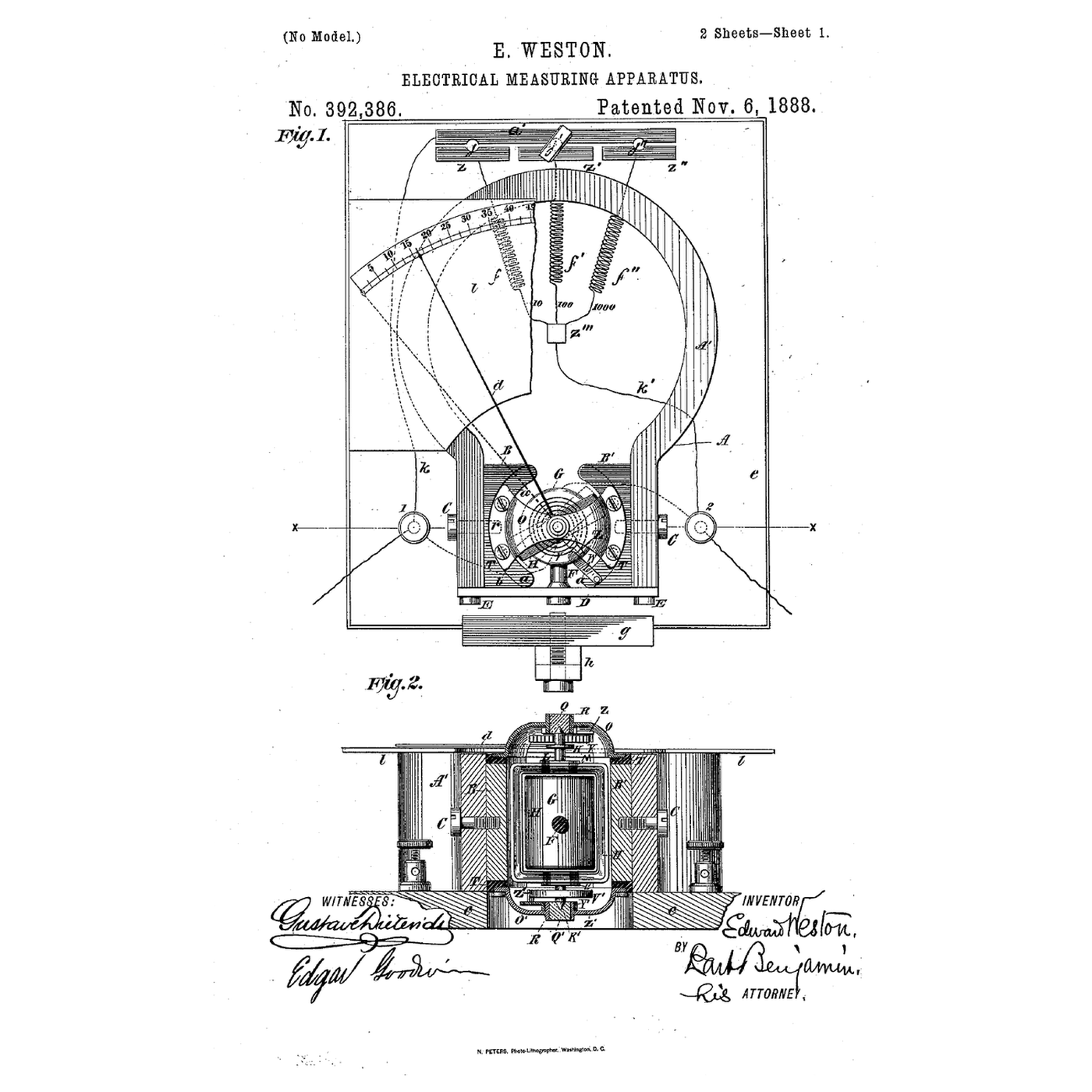


The Moving-Coil Meter: A Coil, a Spring and a Radial Field
A needle that swings across a scale in proportion to the current: the moving-coil meter was the standard electrical instrument for a century. Edward Weston's patents of 1888 made it portable and accurate. A light coil of fine wire on jewelled pivots sits between the poles of a permanent magnet, around a fixed iron cylinder; hair springs hold it at zero and carry the current in; the coil is wound on a copper frame that damps its swing so the needle settles instead of oscillating.
The iron cylinder is the clever part. It makes the magnetic field in the gap radial, so the coil's torque does not change as it turns, and the scale comes out evenly spaced.
This rung shows why in a notebook, then builds a thread-suspended galvanometer and demonstrates the damping.
Trung cấp
About 5 hours
Hướng dẫn
1
1
Read Weston's patent
Read Weston's patent
US 392,386 and US 392,387, 'Electrical Measuring Apparatus', Edward Weston, dated 6 November 1888 (the second a division of an application filed 17 March 1888). The current circulates *"through a coil or loop in the circuit, which coil is supported so as to be free"* to turn against *"a uniform resilient resistance"*, so that its movement *"shall be directly proportional"* to the current. The coil *"incloses a frame … of copper"*, and the patent explains that combining a *"diamagnetic mass with the said coil"* prevents *"undue oscillation"* — eddy-current damping.
2
2
Why the scale is linear
Why the scale is linear
Đang tải sổ tay Jupyter…
3
3
Build a thread-suspended galvanometer
Build a thread-suspended galvanometer
Print a rectangular coil former 20 × 20 mm and wind 50 turns of enamelled copper wire on it. Hang it by a single cotton thread from a bracket, so it can twist freely; bring the two wire ends down as fine, loose flexible leads. Glue a drinking-straw pointer to the top and a paper protractor scale behind it.
Place two neodymium magnets either side of the coil, one north-facing, one south-facing. Connect a 1.5 V cell through a resistor from the resistor kit (a few hundred ohms) and the multimeter in series. The coil turns until the thread's twist balances it. Try four resistors: deflection against current should be close to a straight line while the angle is small.
Vật liệu cho bước này:
 Dây đồng tráng men1 cuộn
 Sợi in PETG10 g
 Chỉ cô tông1 cuộn
 Bộ nam châm neodymi1 bộ
 Bộ điện trở1 bộ
 Dây thử có kẹp cá sấu1 bộ
Công cụ cần thiết:
 Máy in 3D sợi nhựa (FDM)
 Đồng hồ vạn năng
 Thước đo góc
4
4
Damp it by shorting the coil
Damp it by shorting the coil
Disconnect the cell and give the coil a small twist by hand. It swings back and forth many times before settling.
Now join the two coil leads together with a clip and twist it again. It settles almost at once. Moving through the field, the coil generates a current in its own shorted circuit, and that current's force opposes the motion — the same effect Weston got from the copper frame, and the same one the eddy-current brake in this catalogue uses.
Công cụ cần thiết:
Dây thử có kẹp cá sấu5
5
History and context
History and context
**US 392,386 and US 392,387, 'Electrical Measuring Apparatus', Edward Weston, dated 6 November 1888.** Arsène d'Arsonval had built a moving-coil galvanometer with a suspended coil in 1882; Weston made it robust and portable with pivots, springs, a permanent magnet and the radial field. Weston's company made the instruments that measured the electrical industry for decades.
**Honest limits.** A moving-coil movement responds only to direct current — on AC it needs a rectifier. It draws current from the circuit it measures (the next rung). Pivots wear, springs age, and a strong knock or overload bends the needle.
Vật liệu
6- 1 cuộnTạm thời
- 10 gTạm thời
- 1 cuộnTạm thời
- Tạm thời
- từ$5.64
- Tạm thời
Công cụ yêu cầu
4- Tạm thời
- Tạm thời
- Tạm thời
- Tạm thời
Blueprint liên quan
Các blueprint này chia sẻ kiến thức — kỹ thuật, vật liệu hoặc nguyên tắc
The String Galvanometer and the ECG
bởi Ed
Điện tử
37
0
0
0
0
0
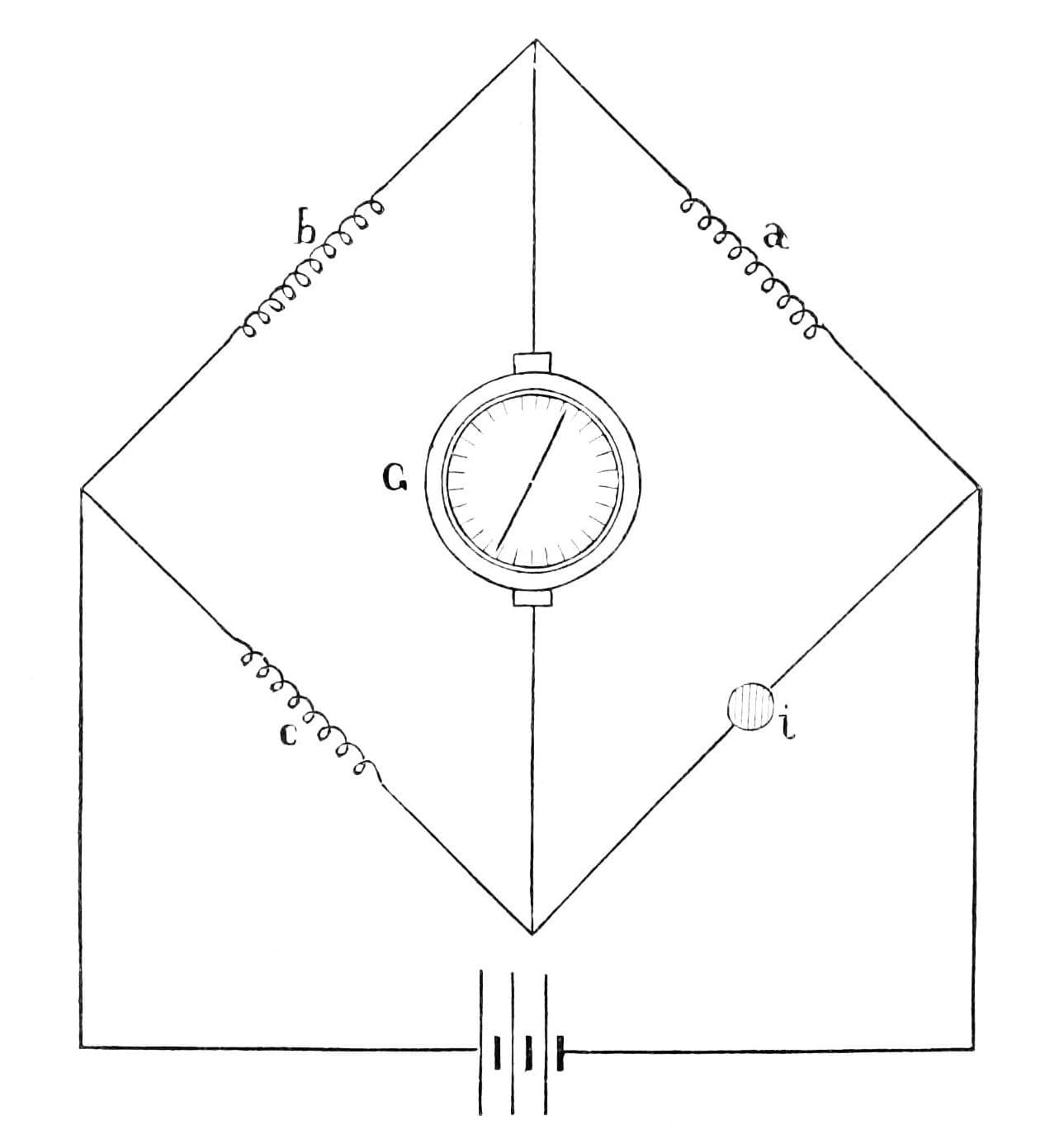
Wheatstone Bridge
bởi Ed
CÔNG NGHỆ
38
0
0
0
0
0
Using a Multimeter: Continuity, Volts, Ohms — and the Setting That Blows the Fuse
bởi Ed
Điện tử
17
0
0
0
0
0
The Eddy Current Brake
bởi Emma
Lực từ
32
0
0
0
0
0

Ohm's Law at the Bench: Picking the Resistor That Saves the LED
bởi Volt
Điện tử
23
0
0
0
0
0
CC0 Phạm vi công cộng
Bản thiết kế này được phát hành theo CC0. Bạn tự do sao chép, sửa đổi, phân phối và sử dụng cho bất kỳ mục đích nào mà không cần xin phép.
Hỗ trợ nhà sáng tạo bằng cách mua sản phẩm qua bản thiết kế, nơi họ nhận Hoa hồng nhà sáng tạo do nhà bán hàng đặt, hoặc tạo phiên bản mới và kết nối trong bản thiết kế riêng để chia sẻ doanh thu.