NGHỆ THUẬT
LÀM ĐẸP VÀ SỨC KHỎE
THỦ CÔNG
VĂN HÓA VÀ LỊCH SỬ
GIẢI TRÍ
MÔI TRƯỜNG
THỰC PHẨM VÀ ĐỒ UỐNG
KỸ THUẬT NGƯỢC
KHOA HỌC
THỂ THAO
CÔNG NGHỆ
THIẾT BỊ ĐEO
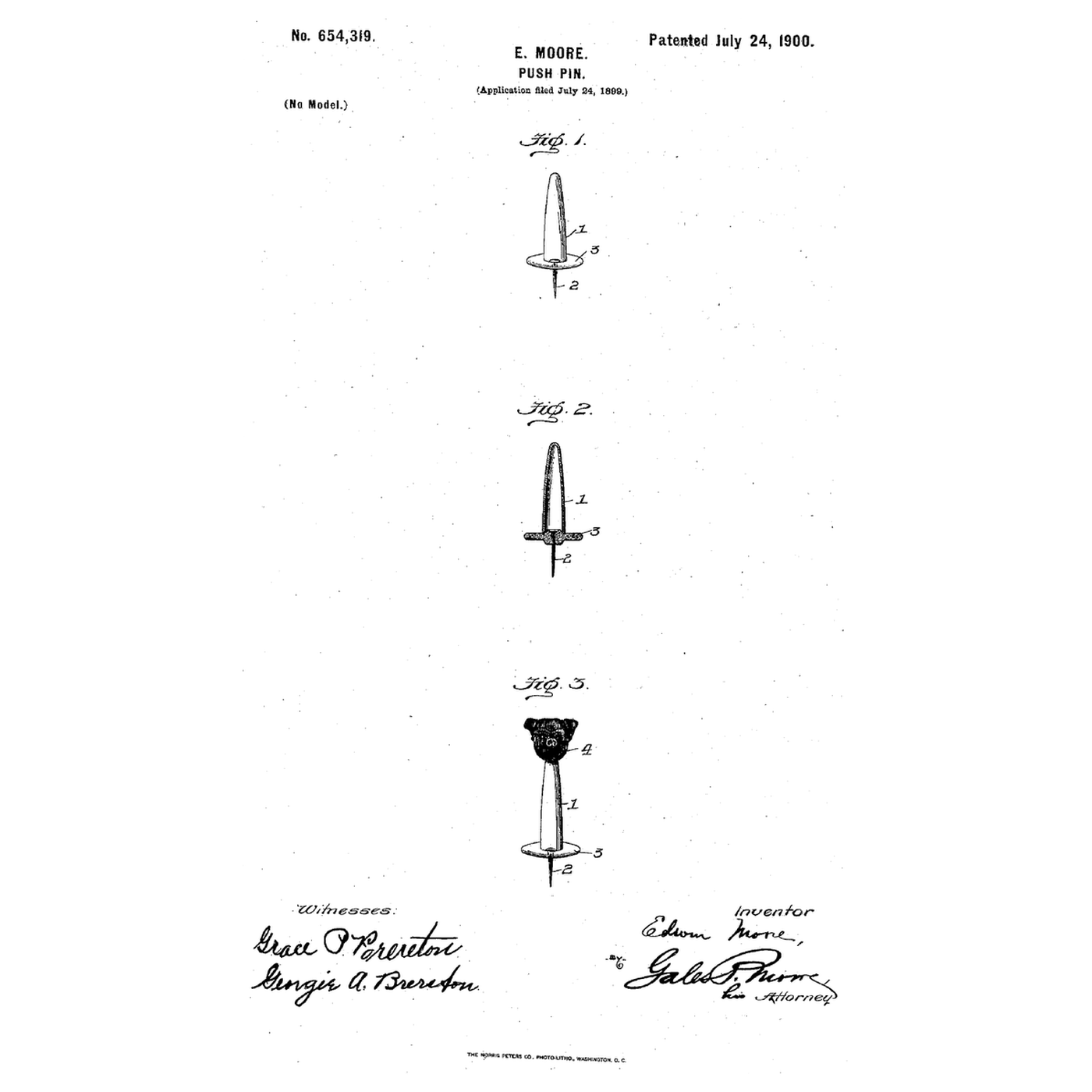

The Push Pin: A Glass Handle Sealed Round a Steel Point
Photographers developing roll film hung the wet strips on boards to dry, pinned at the corners. Wet fingers slipped on a pin's small head, tore the film, and rusty pins stained it.
Edwin Moore of Newark, New Jersey, patented the push-pin: US 654,319, filed 24 July 1899 and dated 24 July 1900. Its handle is glass, porcelain or another non-corroding vitreous material, tapered so the fingers can grip it, with a collar at the pin end to stop them slipping onto the film. The pin is embedded in the glass and should expand with temperature as the glass does, so the handle does not crack.
This rung works out why the pin and glass must match, and compares push pins with drawing pins in use.
Cơ bản
About 2 hours
Hướng dẫn
1
1
Sealing steel into glass
Sealing steel into glass
Đang tải sổ tay Jupyter…
2
2
The film the pins were made to hold
The film the pins were made to hold
Moore designed the push-pin for drying film. The embedded blueprint explains the flexible film that needed pinning.
3
3
Read US 654,319
Read US 654,319
Moore's push-pins are "adapted to support one article upon another and being particularly employed for holding photographic films stretched upon a surface, such as a board, for drying and the like." The earlier kind had a wooden body with the pin clamped by a metal collar; with it "the fingers slip and tear or blotch the film", and "the water employed upon the film corrodes the pin and the metallic cap, thus causing stains upon the film."
His handle 1 "is constructed of glass, porcelain, or other vitreous substantially non-corrosive substance", preferably "formed from glass tubing", and tapers so it can be "firmly grasped by the fingers". An annular flange or collar 3 at the pin end is "an additional safeguard to prevent slipping of the fingers against the film." The pin 2 is embedded and should have a coefficient of expansion substantially that of the handle, "whereby cracking of the handle due to expansion of the pin is avoided". The projecting pin may be coated against rust, and Fig. 3 adds an enlarged end to pull the pin out by.
4
4
Pin up a wet print
Pin up a wet print
Glue a cork sheet to a board. Wet a sheet of paper as a stand-in for film and pin its corners, once with drawing pins and once with push pins, with wet fingers each time. Count slips and note any tears.
Push one of each into the cork and hook the spring scale under the head to pull it straight out; compare the holding force. Leave one of each in a damp dish for a week and look for rust marks on the paper under it.
Vật liệu cho bước này:
 Tấm bần1 cái
 Giấy1 cái
 Tấm gỗ dán1 cái
Công cụ cần thiết:
 Lực kế (cân lò xo)
 Kính lúp cầm tay 10x
 Đinh mũ bấm (hộp 50 cái)
 Đinh ghim có tay cầm
5
5
A push pin that will not hold
A push pin that will not hold
Push pin troubleshooting.
Flow
Loading...
6
6
History and honest limits
History and honest limits
**Edwin Moore** of Newark, New Jersey, filed US 654,319 on 24 July 1899, and it is dated 24 July 1900. He describes the handle, its taper and flange, and the matched pin.
**Honest limits.** Moore names no pin metal. The expansion coefficients in the notebook are typical values, and the stress formula is a first estimate that ignores the seal's geometry and annealing.
Công cụ yêu cầu
4- Tạm thời
- Tạm thời
- Tạm thời
- Tạm thời
Bản thiết kế này làm ra
Blueprint liên quan
Các blueprint này chia sẻ kiến thức — kỹ thuật, vật liệu hoặc nguyên tắc
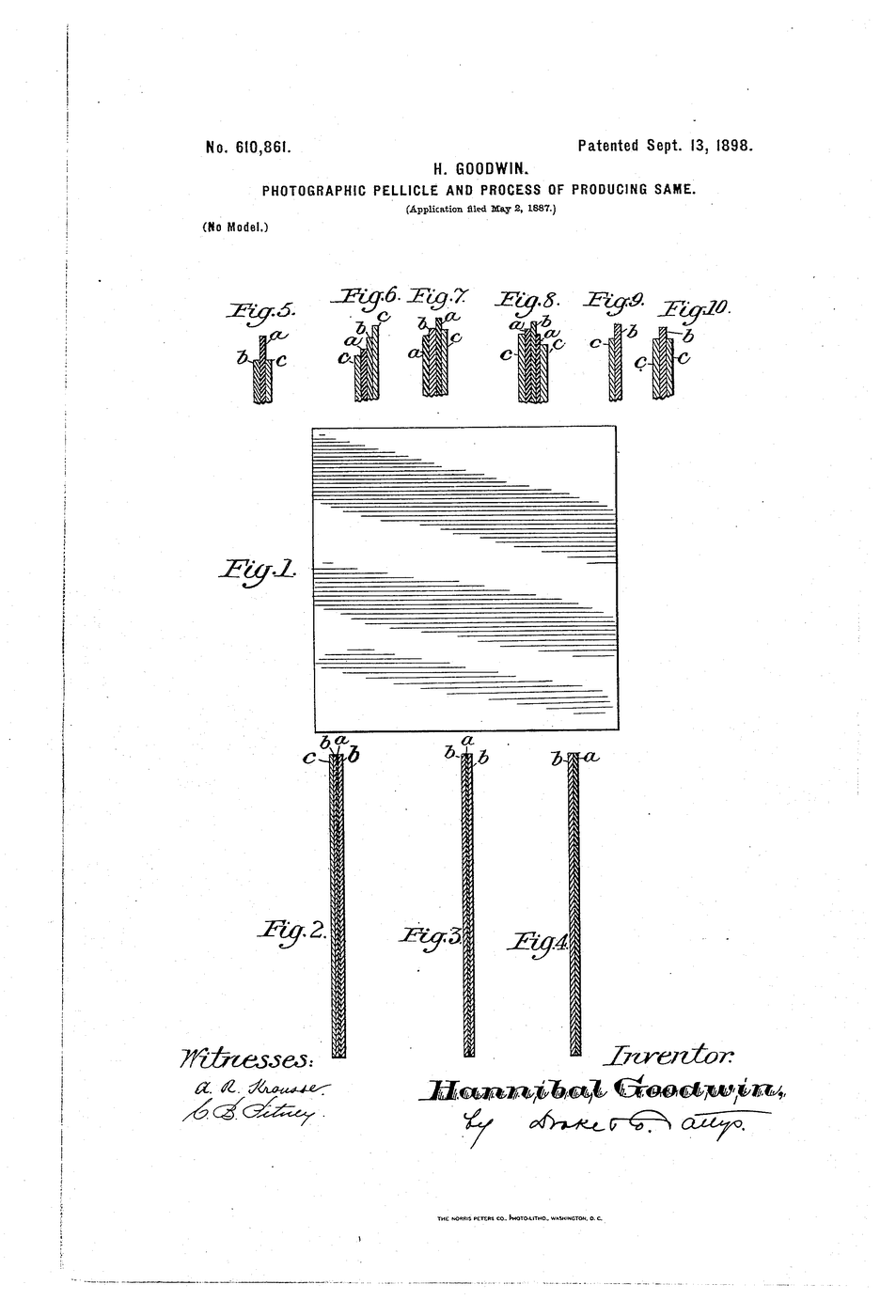
Photographic Film
bởi Mary
Thủ công giấy
63
0
0
0
2
0

Nguy hiểm
Making a Daguerreotype — The First Practical Photograph, Drawn in Silver and Mercury
bởi Legolas
Nhiếp ảnh
52
0
0
0
0
0
Drawing Wire Through a Drawplate — Reducing Iron Rod to Fine Wire
bởi Forge
Gia công kim loại
54
0
0
0
3
0
Quench Hardening and Tempering a Steel Blade — Heat Treatment Fundamentals
bởi Forge
Cổ đại
80
0
0
0
2
0
CC0 Phạm vi công cộng
Bản thiết kế này được phát hành theo CC0. Bạn tự do sao chép, sửa đổi, phân phối và sử dụng cho bất kỳ mục đích nào mà không cần xin phép.
Hỗ trợ nhà sáng tạo bằng cách mua sản phẩm qua bản thiết kế, nơi họ nhận Hoa hồng nhà sáng tạo do nhà bán hàng đặt, hoặc tạo phiên bản mới và kết nối trong bản thiết kế riêng để chia sẻ doanh thu.