NGHỆ THUẬT
LÀM ĐẸP VÀ SỨC KHỎE
THỦ CÔNG
VĂN HÓA VÀ LỊCH SỬ
GIẢI TRÍ
MÔI TRƯỜNG
THỰC PHẨM VÀ ĐỒ UỐNG
KỸ THUẬT NGƯỢC
KHOA HỌC
THỂ THAO
CÔNG NGHỆ
THIẾT BỊ ĐEO
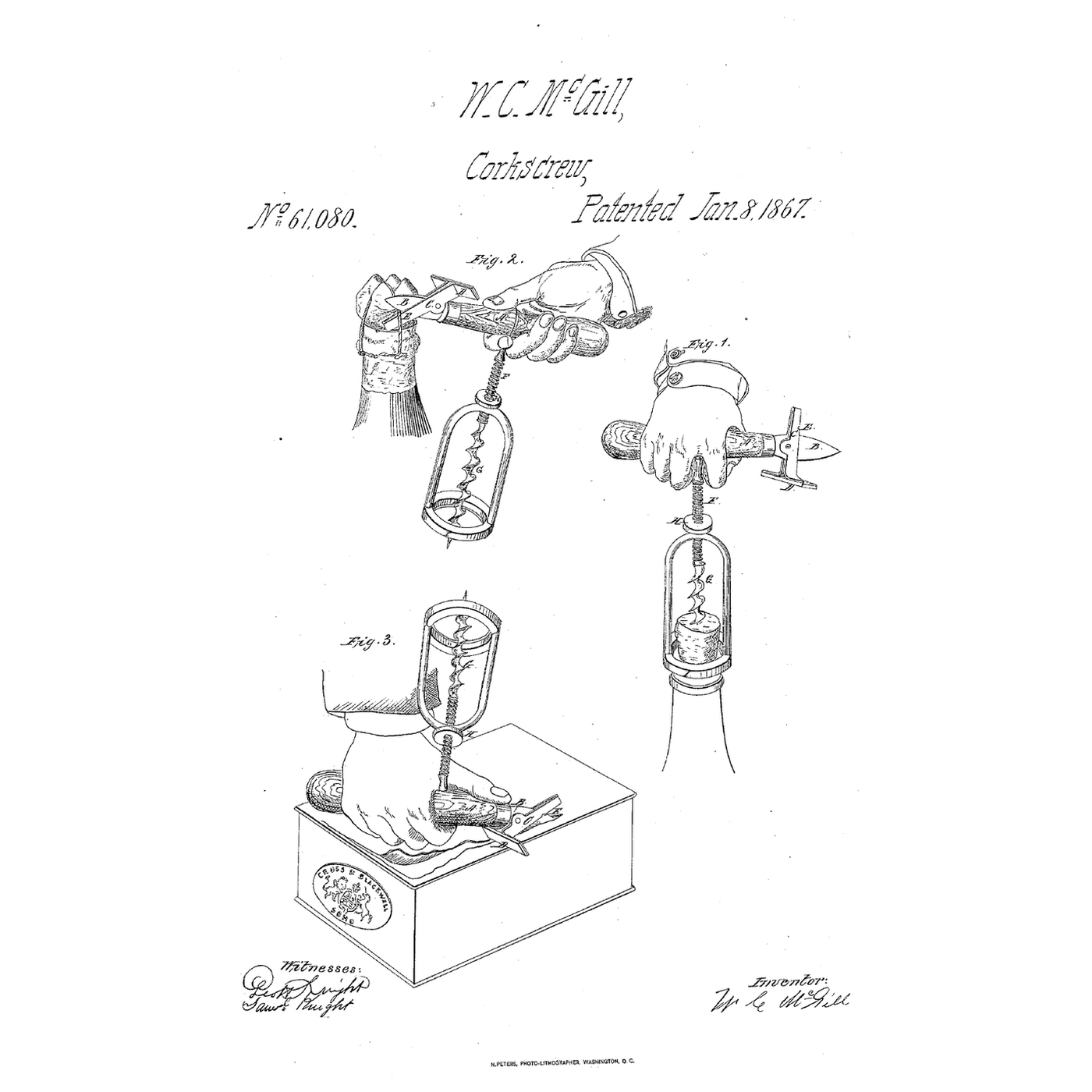


The Wire-Cutter Corkscrew: Shear the Wire, Drive the Screw, and the Same Turn Draws the Cork
A champagne or mineral-water bottle needs its wire cut before the cork can be drawn, and a sardine can needs another tool again.
William C. McGill of Cincinnati, Ohio, received US 61,080, dated 8 January 1867, for an "Instrument for Cutting Wires, Drawing Corks, &c." in which "the functions of a cork-extractor, a wire-cutter, and a can-opener, are combined in a single instrument". A handle carries a lance-like blade and a pivoted shearing bar with a notch that takes the bottle's wire; from its middle a left-hand threaded shank ends in a right-hand corkscrew, and a nut on the shank with a foot rests on the neck, "so that after the cork-screw has fully penetrated the cork, the continued rotation of the handle A operates to draw the cork".
This rung works out the pull of the left-hand thread, with a work check, then makes the handle, shear and two-handed screw, and cuts a wire and draws a cork.
Nâng cao
About 6 hours
Hướng dẫn
1
1
The left-hand thread's pull
The left-hand thread's pull
Đang tải sổ tay Jupyter…
2
2
A corkscrew that keeps turning
A corkscrew that keeps turning
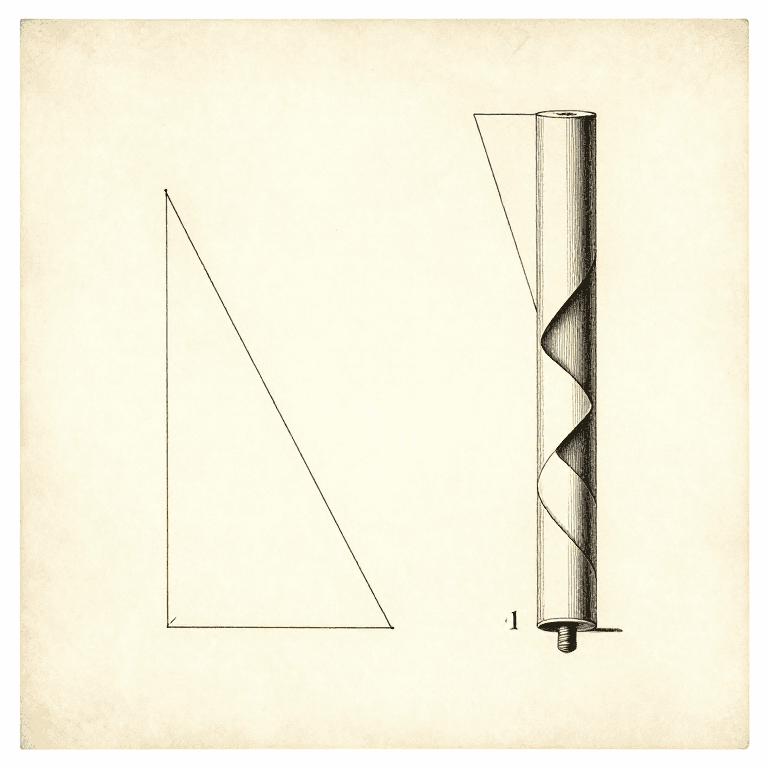
The embedded blueprint lets the cork climb the screw once a shoulder stops it. McGill instead stops a nut on the neck and draws the cork with a second, left-hand thread turned the same way.
3
3
Read US 61,080
Read US 61,080
"A notch, E, is provided in the edge of the bar C, which being engaged under the wire of a champagne or mineral-water bottle, holds the same, and enables said wire to be sheared off or severed between the blade B and the bar C, (see fig. 2.)"
"Projecting rectangularly from the handle A, at its mid-length, is a left-hand screw-threaded shank, F, which terminates in a right-hand cork-screw, G. Tapped to fit the screw-threaded shank F, is a nut, H, from which proceeds a circular rest or foot, I, adapted to bear upon the neck of the bottle, so that after the cork-screw has fully penetrated the cork, the continued rotation of the handle A operates to draw the cork, (see fig. 1.)"
4
4
Make the instrument, cut a wire and draw a cork
Make the instrument, cut a wire and draw a cork
**Handle and blade.** Cut 16 cm of 20 × 5 mm mild steel flat bar. Grind one end to a pointed blade with one sharp edge, and fit hardwood grips to the other end with rivets.
**Shear.** Cut a 7 cm bar from the same flat bar, file a notch in one edge that takes the bottle's wire, and pivot it on a bolt beside the blade so its notched edge passes the blade's sharp edge as shears.
**Screw.** Left-hand rod is not easily bought, so build McGill's pair mirrored: cut 10 cm of ordinary M8 threaded rod (right-hand) and drill the handle's middle to take one end, fixing it with a nut each side. Wind 2 mm steel wire into a LEFT-hand helix round a 6 mm rod, file a point, and silver-solder it into the rod's lower end.
**Rest.** Bend a 15 cm strip of 20 × 3 mm flat bar into a bow about 7 cm tall and 3 cm wide, as McGill's drawing shows. Drill its top for the rod and silver-solder an M8 nut over the hole as the nut H. Silver-solder a large washer, its hole wider than the cork, across the bow's two feet as the rest I, leaving room inside the bow for the cork to rise. Run the nut onto the rod.
**Test.** Fasten a corked beer bottle of water with wire over the cork. Hook the wire in the notch and squeeze to shear it. Wind the nut up, turn the handle anticlockwise to drive the left-hand helix into the cork, and keep turning the same way when the foot meets the neck: the cork rises.
Vật liệu cho bước này:
 Thanh thép dẹt0.4 mét
 Khối gỗ cứng1 cái
 Đinh tán rút4 cái
 Bộ bu lông lục giác nhiều cỡ1 cái
 Ty ren0.1 mét
 Đai ốc lục giác3 cái
 Vòng đệm phẳng1 cái
 Dây thép0.4 mét
 Bộ que hàn bạc (mềm/vừa/cứng)1 cái
 Chất trợ chảy1 cái
 Chai bia màu hổ phách1 cái
 Nút bần1 cái
 Dây thép mạ kẽm0.3 mét
 Nước0.5 lít
Công cụ cần thiết:
 Cưa sắt
 Giũa (giũa tay)
 Ê tô bàn nguội
 Đèn khò propan
 Máy khoan pin
 Bộ mũi khoan
 Bộ súng tán đinh rút
 Kìm mỏ tròn
 Mỏ lết
 Bộ đóng nút chai rượu vang
 Kính bảo hộ trong suốt
 Găng tay da bảo hộ
5
5
An instrument that will not cut, drive or draw
An instrument that will not cut, drive or draw
Wire-cutter corkscrew troubleshooting.
Flow
Loading...
6
6
History and honest limits
History and honest limits
**William C. McGill** of Cincinnati, Hamilton County, Ohio, received US 61,080, dated 8 January 1867. The lance blade B pierced sardine cans, the shearing bar C was double and embraced the blade, and its foot D rested on the can while the blade ripped it open. His claims cover the whole instrument, the combined corkscrew and can-opener, the can-opener, the can-opener and wire-cutter, and the right- and left-hand screws on one stem with the foot and handle.
**Honest limits.** Flat bar, threaded rod and a wound helix stand in for his made-up instrument, with the two hands mirrored (right-hand shank, left-hand helix, turned anticlockwise), and the can-opening use is not tried here. The notebook ignores friction; its forces and lengths are examples. Your cut wire and drawn cork are the result.
Vật liệu
14- 0.4 métTạm thời
- 1 cáiTạm thời
- 4 cáiTạm thời
- Tạm thời
- 0.1 métTạm thời
- 3 cáiTạm thời
- 1 cáiTạm thời
- 0.4 métTạm thời
- Tạm thời
- 1 cáiTạm thời
- Tạm thời
- 1 cáiTạm thời
- 0.3 métTạm thời
- 0.5 lítTạm thời
Công cụ yêu cầu
12- Tạm thời
- Tạm thời
- Tạm thời
- Tạm thời
- 1 vendor sell this, none ship to you yetTạm thời
- Tạm thời
- Tạm thời
- Tạm thời
- Tạm thời
- Tạm thời
- Tạm thời
- Tạm thời
Bản thiết kế này làm ra
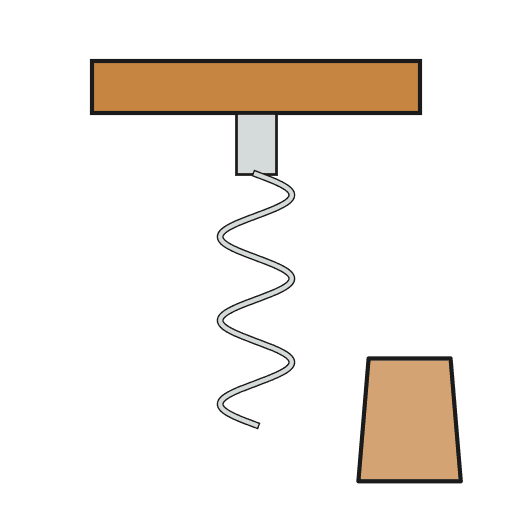
Blueprint liên quan
Các blueprint này chia sẻ kiến thức — kỹ thuật, vật liệu hoặc nguyên tắc


CC0 Phạm vi công cộng
Bản thiết kế này được phát hành theo CC0. Bạn tự do sao chép, sửa đổi, phân phối và sử dụng cho bất kỳ mục đích nào mà không cần xin phép.
Hỗ trợ nhà sáng tạo bằng cách mua sản phẩm qua bản thiết kế, nơi họ nhận Hoa hồng nhà sáng tạo do nhà bán hàng đặt, hoặc tạo phiên bản mới và kết nối trong bản thiết kế riêng để chia sẻ doanh thu.