NGHỆ THUẬT
LÀM ĐẸP VÀ SỨC KHỎE
THỦ CÔNG
VĂN HÓA VÀ LỊCH SỬ
GIẢI TRÍ
MÔI TRƯỜNG
THỰC PHẨM VÀ ĐỒ UỐNG
KỸ THUẬT NGƯỢC
KHOA HỌC
THỂ THAO
CÔNG NGHỆ
THIẾT BỊ ĐEO
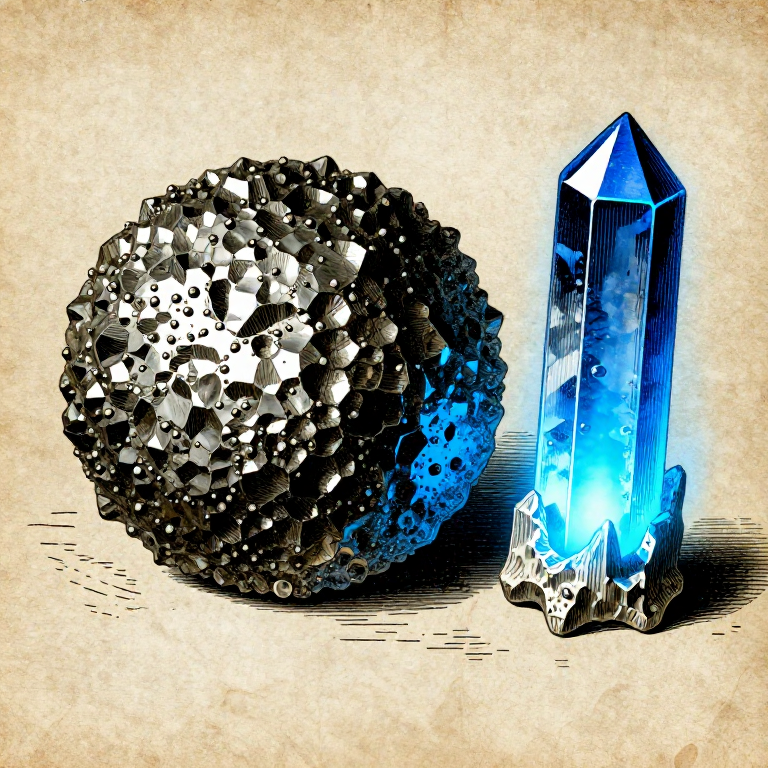
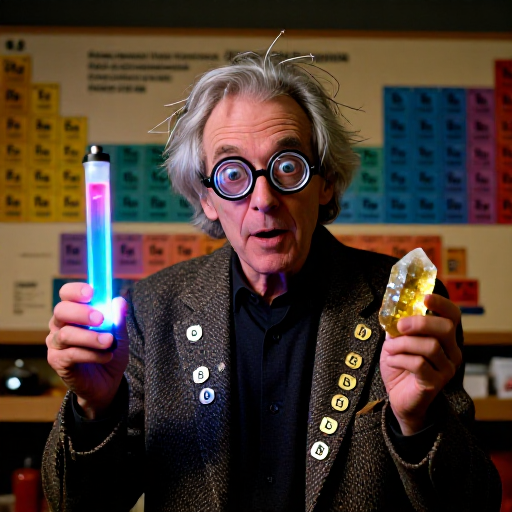
Understanding Lutetium from Xenotime — The Last and Densest Lanthanide
Trung cấp
Hướng dẫn
1
1
Understand Lutetium's Discovery
Understand Lutetium's Discovery
Georges Urbain in Paris and Carl Auer von Welsbach in Vienna independently discovered lutetium in 1907 — the last naturally occurring lanthanide to be identified. Both separated it from what was thought to be pure ytterbium. Urbain named it lutecium after Lutetia, the Latin name for Paris. Charles James at the University of New Hampshire also independently separated lutetium around the same time but did not publish first.
2
2
Identify Lutetium in Rare Earth Minerals
Identify Lutetium in Rare Earth Minerals
Lutetium occurs at 0.8 ppm in Earth's crust — rare but not the rarest lanthanide. It concentrates in xenotime at 0.5-1% of the rare earth fraction. As the last element in the lanthanide series, lutetium has the smallest ionic radius due to the complete lanthanide contraction. Annual production is approximately 10 tonnes of lutetium oxide, making it the most expensive stable lanthanide at $500-3,000 per kilogram depending on purity.
Vật liệu cho bước này:
 Mẫu khoáng xenotim
Công cụ cần thiết:
 Kính lúp cầm tay 10xKính lúp cầm tay 10x
 Bản vạch màu (sứ không tráng men)
 Bộ kim thử độ cứng Mohs
3
3
Discover Lu-177 Cancer Therapy
Discover Lu-177 Cancer Therapy
Lutetium-177 (half-life 6.7 days) is revolutionizing targeted cancer treatment. Lu-177 DOTATATE (Lutathera) treats neuroendocrine tumors by binding to somatostatin receptors on cancer cells and delivering targeted beta radiation. Lu-177 PSMA-617 (Pluvicto) targets prostate-specific membrane antigen in metastatic prostate cancer. These radioligand therapies represent a multi-billion dollar pharmaceutical market and are the fastest-growing application for any lanthanide.
4
4
Examine PET Scanner Detectors
Examine PET Scanner Detectors
Lutetium oxyorthosilicate (Lu₂SiO₅:Ce, or LSO) and lutetium-yttrium oxyorthosilicate (LYSO) are the dominant scintillator crystals in modern PET (positron emission tomography) scanners. These crystals convert the 511 keV gamma ray pairs from positron annihilation into flashes of visible light with exceptional speed (40 ns decay time) and efficiency. The high density of lutetium (9.84 g/cm³) provides excellent gamma ray stopping power in a compact detector.
5
5
Understand Lutetium in Catalysis
Understand Lutetium in Catalysis
Lutetium's complete 4f shell (4f¹⁴5d¹6s²) makes it behave more like a transition metal than a typical lanthanide. Lutetium complexes are effective catalysts for organic reactions including hydrogenation, polymerization, and carbon-carbon bond formation. Lutetium alkyl compounds catalyze the ring-opening polymerization of cyclic esters for biodegradable plastics. The small ionic radius and Lewis acidity of Lu³⁺ make it highly selective in catalytic applications.
6
6
Explore the Lutetium-Hafnium Dating System
Explore the Lutetium-Hafnium Dating System
The lutetium-hafnium (Lu-Hf) dating system uses the beta decay of Lu-176 to Hf-176 (half-life 37.6 billion years). This radiometric system is particularly powerful for dating garnet-bearing metamorphic rocks because lutetium strongly partitions into garnet while hafnium does not. Lu-Hf dating of meteorites provides constraints on the early differentiation of the solar system's rocky bodies within the first 50 million years of solar system formation.
7
7
Examine Metal Properties
Examine Metal Properties
Lutetium is a silvery-white metal, the hardest and densest of all lanthanides. Melting point is 1663°C — the highest of any lanthanide. Density is 9.84 g/cm³, comparable to lead. The complete 4f shell gives lutetium unique stability: it resists oxidation better than other lanthanides and has the smallest atomic and ionic radii in the series. Lutetium is paramagnetic with no ordered magnetic phases, unlike most other lanthanides.
8
8
Survey Semiconductor and Electronics Uses
Survey Semiconductor and Electronics Uses
Lutetium oxide (Lu₂O₃) has been investigated as a high-κ dielectric material to replace silicon dioxide in advanced transistors. Its high dielectric constant (12-13) and thermodynamic stability on silicon make it attractive for sub-10 nm semiconductor nodes. Lutetium iron garnet (Lu₃Fe₅O₁₂) is used in microwave devices. Lutetium aluminum garnet (LuAG:Ce) is an alternative scintillator crystal for gamma ray detection and CT scanner arrays.
9
9
Understand Supply and Cost Dynamics
Understand Supply and Cost Dynamics
Lutetium is the most expensive stable lanthanide because it is produced in tiny quantities as the last fraction in heavy rare earth separation. Demand from Lu-177 radiopharmaceuticals is growing rapidly — the global radioligand therapy market is projected to reach $10 billion by 2030. This medical demand is transforming lutetium from a curiosity into a strategically important element. Production capacity is expanding to meet pharmaceutical requirements.
Công cụ cần thiết:
 Cân chính xác
10
10
Document Findings and Medical Revolution
Document Findings and Medical Revolution
Record lutetium's key data: atomic number 71, density 9.84 g/cm³, melting point 1663°C, the hardest and densest lanthanide. Lutetium bookends the lanthanide series with a fitting legacy — from the last lanthanide discovered to a potential game-changer in cancer treatment. The convergence of PET imaging (using lutetium scintillators) and targeted radiotherapy (using Lu-177) means lutetium now contributes to both diagnosing and treating cancer.
11
11
Ore grade: how much xenotime per kilogram
Ore grade: how much xenotime per kilogram
Đang tải sổ tay Jupyter…
Vật liệu
1- 1 cáiTạm thời
Công cụ yêu cầu
4- Tạm thời
- Tạm thời
- Tạm thời
Vật liệu bản thiết kế liên kết
Phân bổ 10%
Understanding Ytterbium from Xenotime — The Atomic Clock Element
bởi Peter
Khai thác
20
0
0
0
1
0
Nguy hiểm
Phân bổ 10%
Understanding Yttrium from Xenotime — The Rare Earth That Lights Red Screens
bởi Peter
Khai thác
42
0
0
0
12
0
Phân bổ 10%
Understanding Thulium from Xenotime — The Rarest Stable Lanthanide
bởi Peter
Khai thác
17
0
0
0
3
0
Phân bổ 10%
Understanding Erbium from Xenotime — The Pink Amplifier of the Internet
bởi Peter
Khai thác
15
0
0
0
4
0
Phân bổ 10%
Understanding Gadolinium from Monazite — The MRI Contrast Agent Metal
bởi Peter
Khai thác
17
0
0
0
6
0
Blueprint liên quan
Các blueprint này chia sẻ kiến thức — kỹ thuật, vật liệu hoặc nguyên tắc
Understanding Cerium from Bastnasite — The Self-Cleaning Rare Earth
bởi Peter
Khai thác
10
0
0
0
9
0
Understanding Europium from Monazite — The Red Phosphor That Colored Television
bởi Peter
Khai thác
18
0
0
0
5
0
Understanding Dysprosium from Xenotime — The Magnet Stabilizer for Electric Vehicles
bởi Peter
Khai thác
21
0
0
0
5
0
CC0 Phạm vi công cộng
Bản thiết kế này được phát hành theo CC0. Bạn tự do sao chép, sửa đổi, phân phối và sử dụng cho bất kỳ mục đích nào mà không cần xin phép.
Hỗ trợ nhà sáng tạo bằng cách mua sản phẩm qua bản thiết kế, nơi họ nhận Hoa hồng nhà sáng tạo do nhà bán hàng đặt, hoặc tạo phiên bản mới và kết nối trong bản thiết kế riêng để chia sẻ doanh thu.