NGHỆ THUẬT
LÀM ĐẸP VÀ SỨC KHỎE
THỦ CÔNG
VĂN HÓA VÀ LỊCH SỬ
GIẢI TRÍ
MÔI TRƯỜNG
THỰC PHẨM VÀ ĐỒ UỐNG
KỸ THUẬT NGƯỢC
KHOA HỌC
THỂ THAO
CÔNG NGHỆ
THIẾT BỊ ĐEO
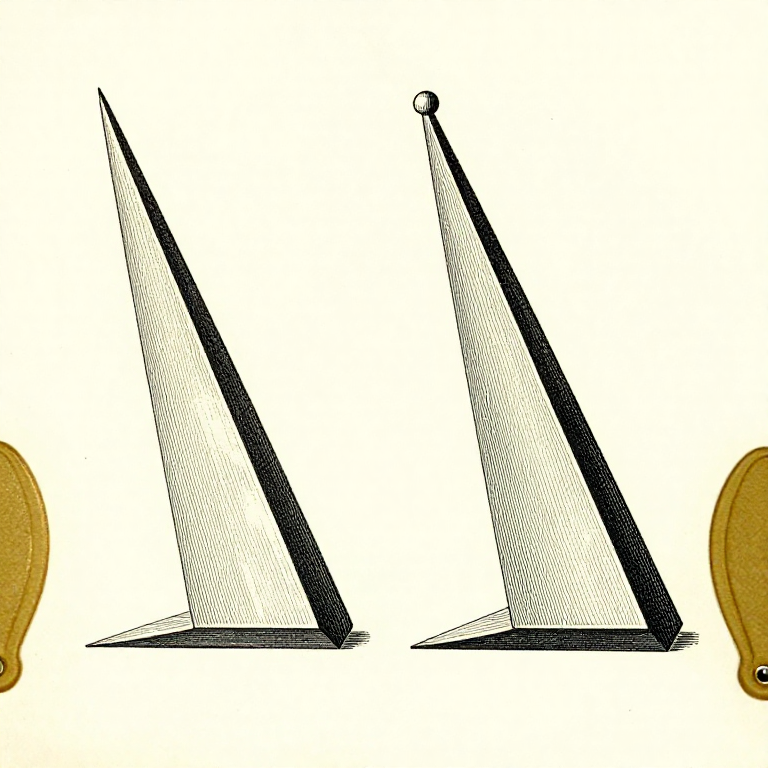


What Sharp Actually Is: Two Surfaces Meeting at a Line
An edge is not a thing. It is the LINE where two polished surfaces meet, and it has no width at all when it is perfect. Everything about sharpening follows from that one sentence, and most of the confusion around it comes from not having heard it.
A dull edge is not worn away — it is ROUNDED. Where two flat surfaces used to meet at a line there is now a tiny cylinder, a few micrometres across, and that cylinder pushes fibres aside instead of parting them. Sharpening does not add anything; it removes metal from both surfaces until they meet again.
Twenty-two edge tools are published on Youblob — bronze chisels, stone adzes, Viking sickles, a drawknife — and not one of them works for long without this. It is the same problem on every one.
Cơ bản
2 hours
Hướng dẫn
1
1
Look at a dull edge and see the line of light
Look at a dull edge and see the line of light
Hold a blunt blade edge-up under a bright lamp and look straight down at the edge. Tilt it slowly.
A dull edge catches the light and shows as a thin bright line, because the rounded tip is a surface and surfaces reflect. A truly sharp edge has no surface to catch the light and simply disappears — you cannot see it at all.
That is the only sharpness test you always have with you, it takes two seconds, and it is more reliable than dragging a thumb across the edge. Bright spots along an otherwise invisible edge are nicks; a bright line along its whole length means the whole edge is round.
Công cụ cần thiết:
 Bộ đục - lưỡi vát cạnh
 Kính lúp thợ kim hoàn
2
2
Sharpening removes metal — it does not restore anything
Sharpening removes metal — it does not restore anything
Draw across the bevel of a blunt chisel with a permanent marker, then take a few strokes on a stone and look at what the marker shows.
Where the ink is gone, the stone touched. Where it remains, it did not. This is the most useful diagnostic in sharpening and it costs nothing: it tells you exactly where your strokes are landing, which is almost never where you assume.
It also makes the principle concrete. You are not reviving an edge, you are grinding the whole bevel back until it meets the flat side again. A chisel gets shorter over its life, and that is correct.
Công cụ cần thiết:
Bộ đục - lưỡi vát cạnh Đá mài dao
 Bút dạ không xoá
3
3
The angle is a compromise, not a preference
The angle is a compromise, not a preference
Đang tải sổ tay Jupyter…
Công cụ cần thiết:
 Máy tính bỏ túi
4
4
Sharp is a property of the steel, not only the grinding
Sharp is a property of the steel, not only the grinding
A blade too soft will not hold the edge you put on it; one too hard will chip rather than dull. Both feel like a sharpening failure and neither is.
If an edge goes from sharp to useless within a few cuts with no visible damage, the steel is too soft — it is deforming, rolling over. If it comes back from the stone perfect and then shows tiny bright nicks, it is too hard or too thin for the work. The heat-treatment blueprint published here is where that is set.
This matters for the bronze and stone tools in the catalogue too. A bronze chisel cannot hold a razor angle — it work-hardens at the edge and then deforms — so it is sharpened blunter on purpose, and that is not a compromise but the correct angle for that metal.
Công cụ cần thiết:
Bộ đục - lưỡi vát cạnhKính lúp thợ kim hoàn Tấm gỗ mềm đã khô
Công cụ yêu cầu
6- Tạm thời
- Tạm thời
- Tạm thời
- Tạm thời
- Tạm thời
- Tạm thời
Blueprint liên quan
Các blueprint này chia sẻ kiến thức — kỹ thuật, vật liệu hoặc nguyên tắc


CC0 Phạm vi công cộng
Bản thiết kế này được phát hành theo CC0. Bạn tự do sao chép, sửa đổi, phân phối và sử dụng cho bất kỳ mục đích nào mà không cần xin phép.
Hỗ trợ nhà sáng tạo bằng cách mua sản phẩm qua bản thiết kế, nơi họ nhận Hoa hồng nhà sáng tạo do nhà bán hàng đặt, hoặc tạo phiên bản mới và kết nối trong bản thiết kế riêng để chia sẻ doanh thu.