NGHỆ THUẬT
LÀM ĐẸP VÀ SỨC KHỎE
THỦ CÔNG
VĂN HÓA VÀ LỊCH SỬ
GIẢI TRÍ
MÔI TRƯỜNG
THỰC PHẨM VÀ ĐỒ UỐNG
KỸ THUẬT NGƯỢC
KHOA HỌC
THỂ THAO
CÔNG NGHỆ
THIẾT BỊ ĐEO
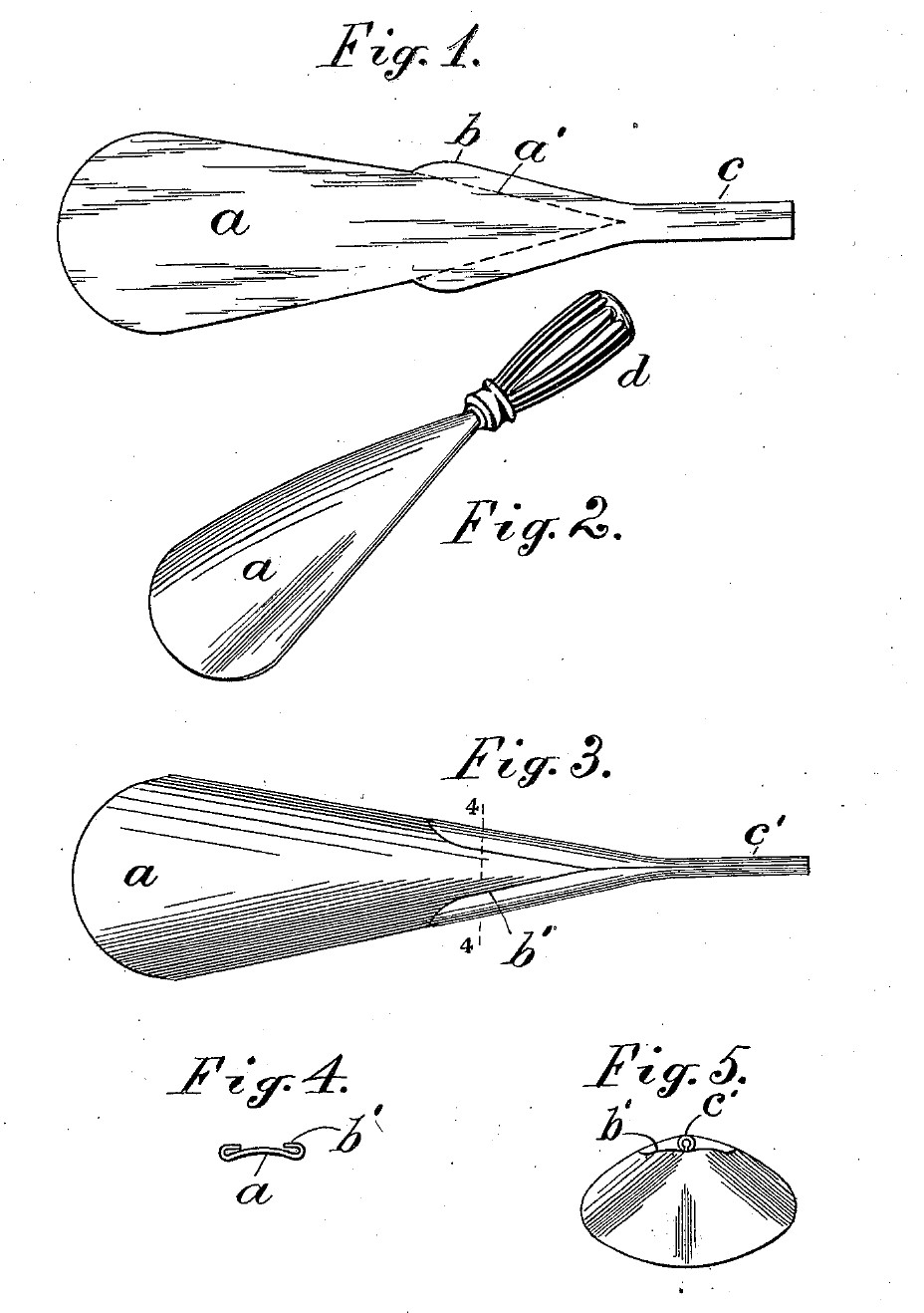


Shoe Horn With a Rolled Tubular Tang, Cut From One Sheet (Williams, 1901)
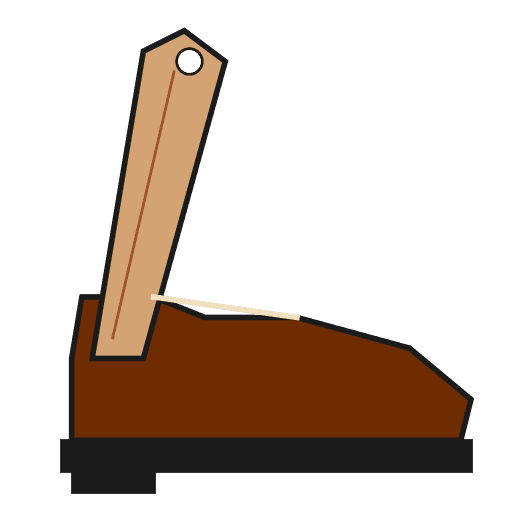
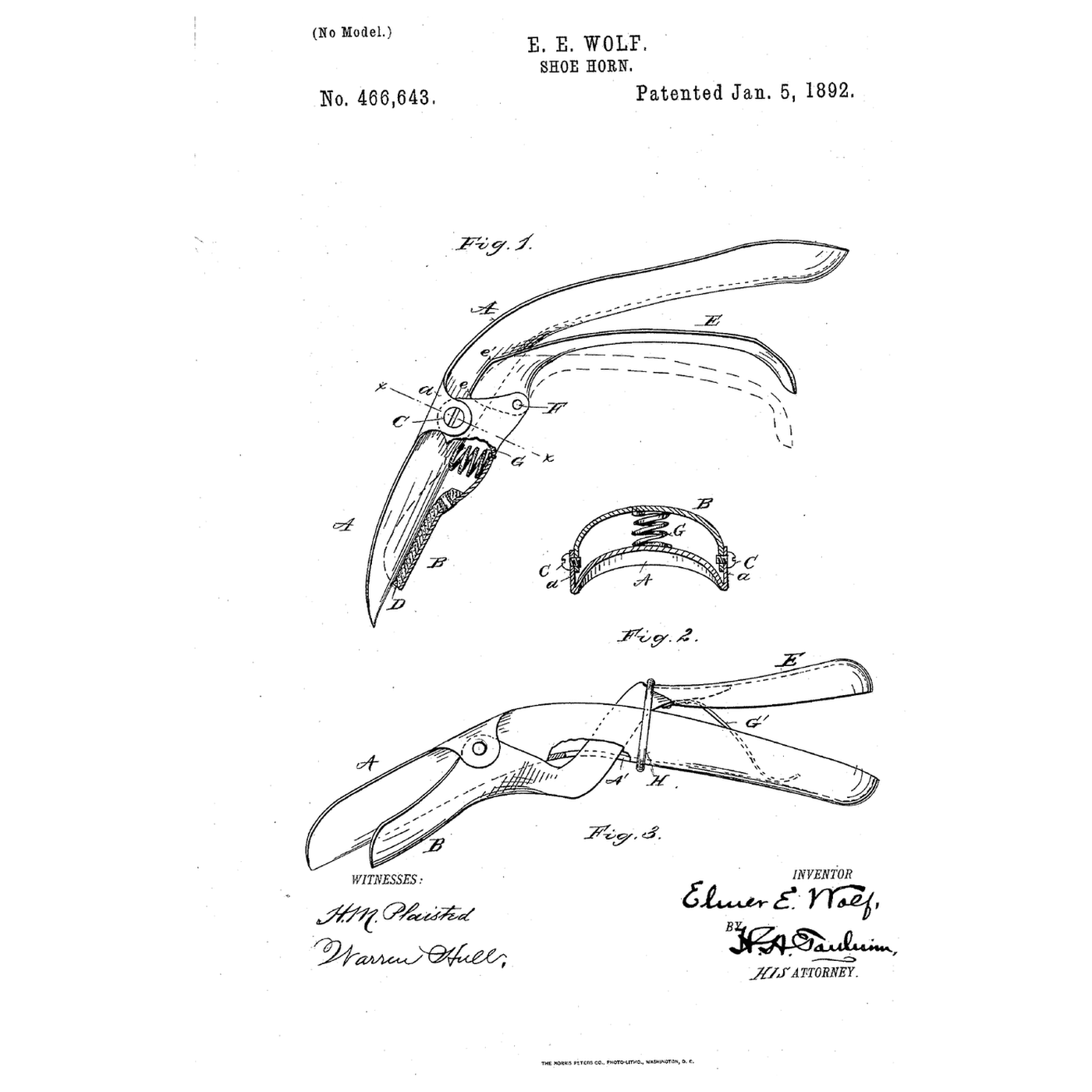
Alfred G. Williams of Newark received US 685,548, dated 29 October 1901, for a sheet-metal shoe horn whose handle tang is part of the same blank. A tongue at the narrow end is rolled into a close tube, and two wings beside it are folded over the edges of the horn, so the weak neck is stiffened where it meets the tang. A handle fits on the tang.
We cut it from brass sheet with a 1:1 template and fit a hardwood handle. All sizes are ours.
Cơ bản
About 3 hours
Hướng dẫn
1
1
How wide to cut the tongue
How wide to cut the tongue
Đang tải sổ tay Jupyter…
2
2
Read US 685,548
Read US 685,548
"I construct the tang by extending the sheet metal from the upper or smaller end of the horn in a tongue of suitable width to roll into a tubular tang and form integral with such tongue lateral wings or flanges upon the upper end of the horn, which can be folded or curved upon the edges of the horn to stiffen the same at its junction with the tang."
3
3
Print the template
Print the template
The blank at 1:1 as his Fig. 1: body a, wings b, tongue c, with the fold lines a' dashed: they run from where each wing starts in to the root of the tongue. print at 100 % (check the 50 mm bar).
4
4
Cut the blank
Cut the blank
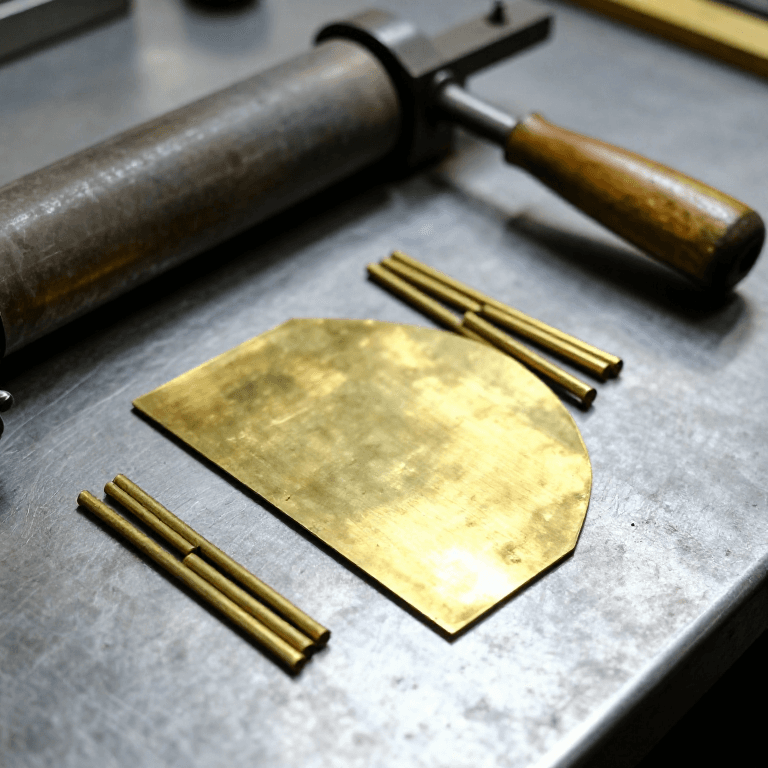
Cut the paper blank out and lay it on 0.8 mm brass sheet. Scribe round it. Cut just outside the line with tin snips, then file to the line. Keep the tongue an even 15 mm wide.
Vật liệu cho bước này:
 Tấm đồng thau1 cái
Công cụ cần thiết:
 Mũi vạch dấu
 Kéo cắt tôn
 Bộ giũa
 Ê tô bàn nguội
5
5
Smooth the edges
Smooth the edges
Round every edge of the body with a file and sandpaper. The mouth slides against the heel and the sock, so it must be smooth all round.
Công cụ cần thiết:
Bộ giũa Giấy nhám
6
6
Roll the tang
Roll the tang
Lay a 4 mm rod along the middle of the tongue. With round-nose pliers, curl one edge of the tongue up round the rod, then the other, a little at a time along its length, until the edges meet: his "close-rolled cylindrical" tang c'. Slide the rod out.
Công cụ cần thiết:
 Kìm mỏ tròn
 Kìm mỏ dẹt
 Thanh thép mềm
7
7
Fold the wings
Fold the wings
Fold each wing b along its dashed line a' over the edge of the horn, onto the underside, with the flat-nose pliers and then light taps of the rubber mallet, until it lies close. His Figs. 3 and 4 show the horn turned over, with the wings b' lying on the edges and running into the tang.
Công cụ cần thiết:
Kìm mỏ dẹt Búa cao su
8
8
Dish the body
Dish the body
His body is "slightly concave transversely". Lay it, inside up, across a rod held in the vice and tap the edges down with the rubber mallet, working from the neck to the mouth, until it is evenly hollow across its width. Keep the curve slight; it should still lie nearly flat on the bench along its length.
Công cụ cần thiết:
Búa cao su Thanh tròn thép mềmÊ tô bàn nguội
9
9
Make the handle
Make the handle
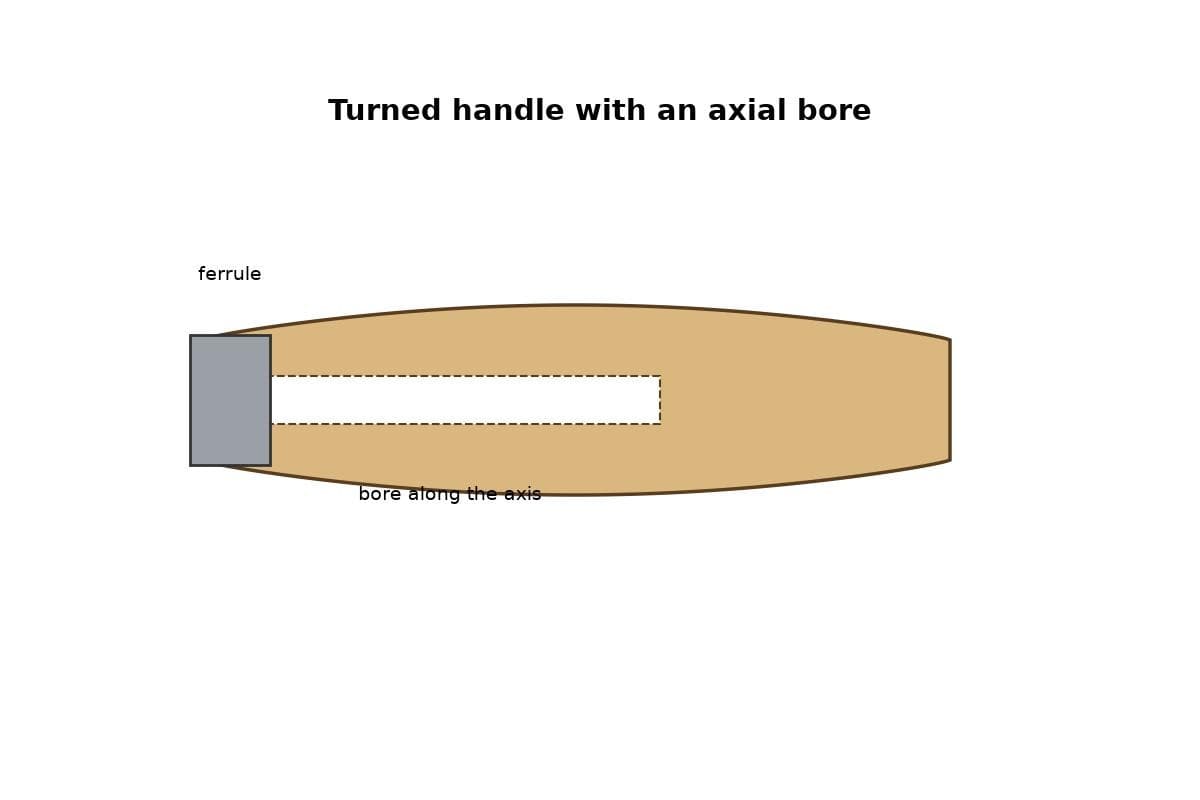
Saw 75 mm of hardwood handle stock (ours) and shape it with a rasp and sandpaper. Drill a 6 mm hole 40 mm deep in one end, straight down the middle, to take the tang. His handle is "more for ornament than for support", so any shape you like will do.
Vật liệu cho bước này:
 Phôi gỗ cứng làm cán1 cái
Công cụ cần thiết:
 Cưa sắt
 Giũa thô cho gỗGiấy nhám
 Khoan tayÊ tô bàn nguội
10
10
Fit the handle
Fit the handle
Roughen the tang with sandpaper, mix the epoxy, fill the hole and push the handle onto the tang until it meets the wings. Line the handle up with the horn and leave it to set as the epoxy's label says.
Vật liệu cho bước này:
 Keo epoxy hai thành phần1 cái
Công cụ cần thiết:
Giấy nhám11
11
Polish
Polish
Polish the horn with polishing compound on a soft cloth.
Công cụ cần thiết:
 Kem đánh bóng
12
12
Troubleshooting
Troubleshooting
Tubular-tang shoe horn troubleshooting.
Flow
Loading...
13
13
History and honest limits
History and honest limits
**Alfred G. Williams** of Newark, New Jersey, assignor to Havell Manufacturing Company, US 685,548, dated 29 October 1901, filed 26 June 1901. He claimed "the shoe-horn having integral tang c', of close-rolled cylindrical form, with integral wings b' extended from such tang and folded over upon the edges of the horn". He meant it for "ornamented handles" in "mounted toilet sets". He gives no sizes, no metal and no way of fixing the handle: the brass, all sizes, the hardwood handle, the epoxy and the order of work are ours.
Vật liệu
3- 1 cáiTạm thời
- 1 cáiTạm thời
- Tạm thời
Công cụ yêu cầu
14- Tạm thời
- Tạm thời
- Tạm thời
- Tạm thời
- Tạm thời
- Tạm thời
- Tạm thời
- Tạm thời
- Tạm thời
- Tạm thời
- Tạm thời
- Tạm thời
- Tạm thời
- Tạm thời
Tệp thiết kế
1Bản thiết kế này làm ra
Blueprint liên quan
Các blueprint này chia sẻ kiến thức — kỹ thuật, vật liệu hoặc nguyên tắc
CC0 Phạm vi công cộng
Bản thiết kế này được phát hành theo CC0. Bạn tự do sao chép, sửa đổi, phân phối và sử dụng cho bất kỳ mục đích nào mà không cần xin phép.
Hỗ trợ nhà sáng tạo bằng cách mua sản phẩm qua bản thiết kế, nơi họ nhận Hoa hồng nhà sáng tạo do nhà bán hàng đặt, hoặc tạo phiên bản mới và kết nối trong bản thiết kế riêng để chia sẻ doanh thu.