NGHỆ THUẬT
LÀM ĐẸP VÀ SỨC KHỎE
THỦ CÔNG
VĂN HÓA VÀ LỊCH SỬ
GIẢI TRÍ
MÔI TRƯỜNG
THỰC PHẨM VÀ ĐỒ UỐNG
KỸ THUẬT NGƯỢC
KHOA HỌC
THỂ THAO
CÔNG NGHỆ
THIẾT BỊ ĐEO
Young's Double Slit
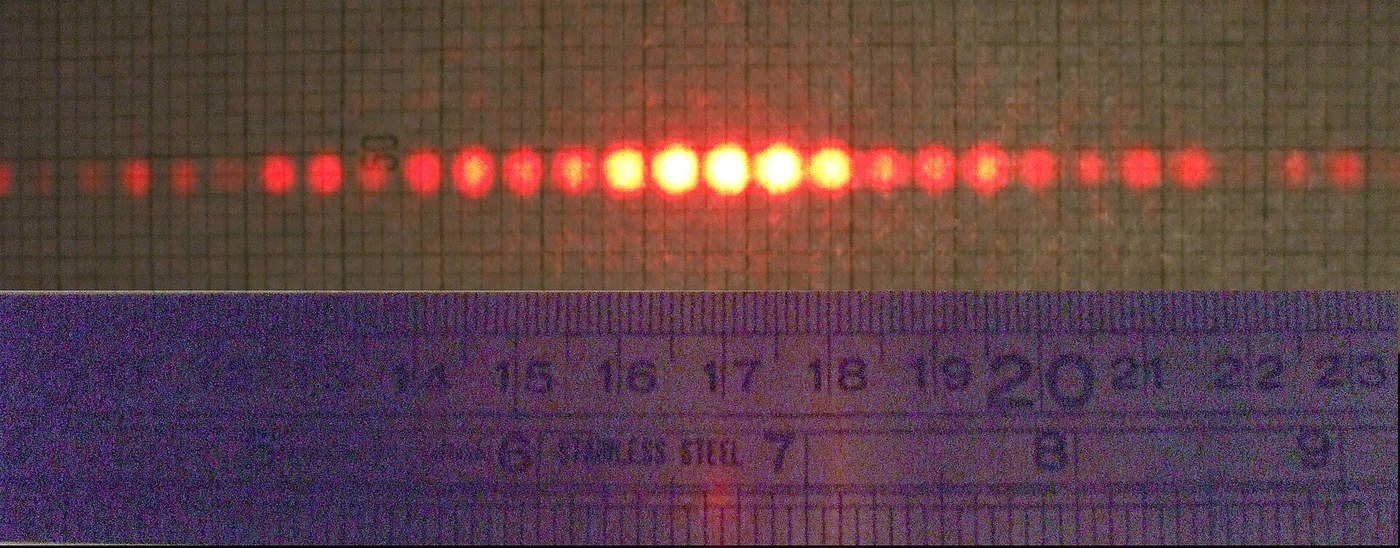
Newton's corpuscles had held for a century, and Thomas Young's demonstration to the Royal Society in 1803 was the thing they could not survive. Light through two narrow openings does not make two bright patches. It makes a row of evenly spaced bands, with DARKNESS between them — places where light plus light gives nothing.
Particles cannot do that. Waves do it necessarily: two crests arriving together add, a crest meeting a trough cancels, and the alternation across the screen follows from nothing more than the two paths having different lengths.
What makes it an instrument rather than an argument is the arithmetic. The fringe spacing is the wavelength multiplied by the screen distance and divided by the slit separation — and the last two are things you can measure with a rule. Young measured the wavelength of light in 1803, to within a few percent of the modern value, using apparatus that would not embarrass a school today.
Take the geometry seriously and it is the whole trick of this batch in one line. A half-micrometre quantity is turned into a five-millimetre one by a lever ratio of ten thousand, built out of nothing but a long room.
Cơ bản
2 hours
Hướng dẫn
1
1
Cut the slits
Cut the slits
Blacken a microscope slide with a candle or a marker, then draw two razor blades taped together edge-to-edge across it in one stroke. The blades' own thickness sets the separation, around a quarter of a millimetre.
Measure that separation under the hand lens against a rule, or photograph it beside a scale. Get it to within a few percent — it goes straight into the answer.
Vật liệu cho bước này:
 Lam kính kèm lamen1 cái
 Lưỡi dao lam2 cái
 Băng keo giấy1 cuộn
Công cụ cần thiết:
 Kính lúp cầm tay 10x
 Thước kẻ
 Thước cặp điện tử 6 inch
2
2
Measure ten fringes
Measure ten fringes
Set the slits a couple of metres from a wall in a dark room and shine the laser through them. Wear the safety glasses. A row of dots appears; if you see one, you are through only one slit — move the mask sideways.
Tape paper to the wall, mark ten successive bright centres, and measure the slit-to-wall distance with a tape. Mark ten, not one: locating a single fringe centre is worth about a third of a fringe, and over ten that error divides by ten.
Vật liệu cho bước này:
 Giấy bìa1 gói
Công cụ cần thiết:
 Bút laser
 Kính bảo hộ laserThước kẻ
3
3
Extract the wavelength, and see the two families
Extract the wavelength, and see the two families
Đang tải sổ tay Jupyter…
Công cụ cần thiết:
 Máy tính để bàn
4
4
Compendium: what Young actually did
Compendium: what Young actually did
THE HISTORICAL RECORD, KEPT SEPARATE FROM THE MODERN DEMONSTRATION. Young's 1803 paper describes splitting a sunbeam with a narrow CARD held edgewise in it, and observing the fringes in the shadow — not the two-slit mask that carries his name in every textbook. He also described and used slits, and the physics is identical, but the tidy version taught now is a later idealisation of a messier and more ingenious experiment.
WHY IT DID NOT SETTLE THE ARGUMENT IMMEDIATELY. Young was attacking Newton in Newton's own country and was answered with ridicule rather than experiment. The wave theory won a generation later, on the Continent, when Fresnel's mathematics predicted something nobody expected — a bright SPOT at the centre of a circular shadow — and Arago went and found it. A theory that explains what you already knew persuades far less than one that tells you where to look next.
Vật liệu
4- 1 cáiTạm thời
- 2 cáiTạm thời
- 1 cuộnTạm thời
- 1 góiTạm thời
Công cụ yêu cầu
6- Tạm thời
- Tạm thời
- Tạm thời
- Tạm thời
- Tạm thời
- Tạm thời
Blueprint liên quan
Các blueprint này chia sẻ kiến thức — kỹ thuật, vật liệu hoặc nguyên tắc
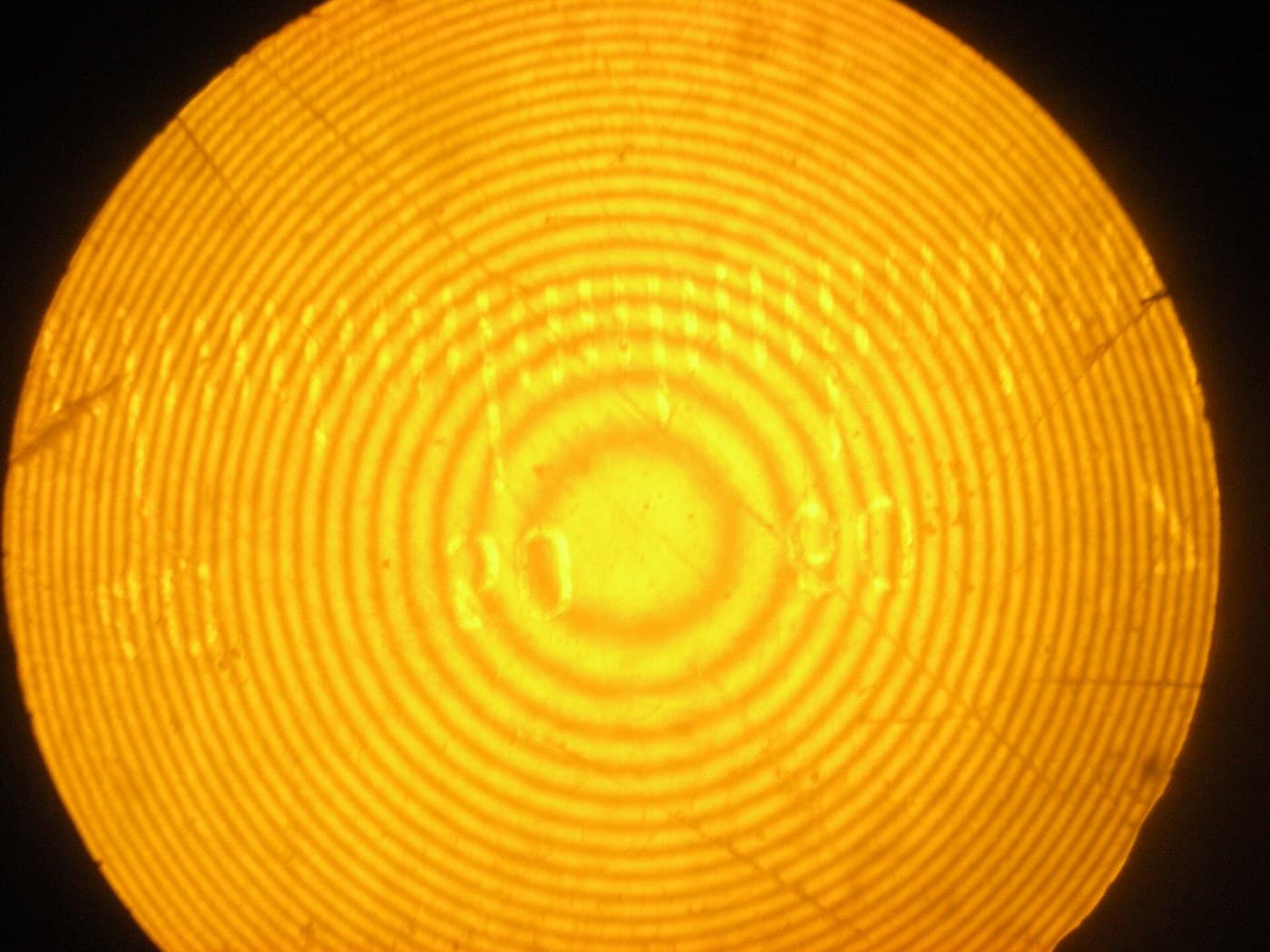
Newton's Rings
bởi Penny
Sản xuất trừ dần
38
0
0
0
0
0
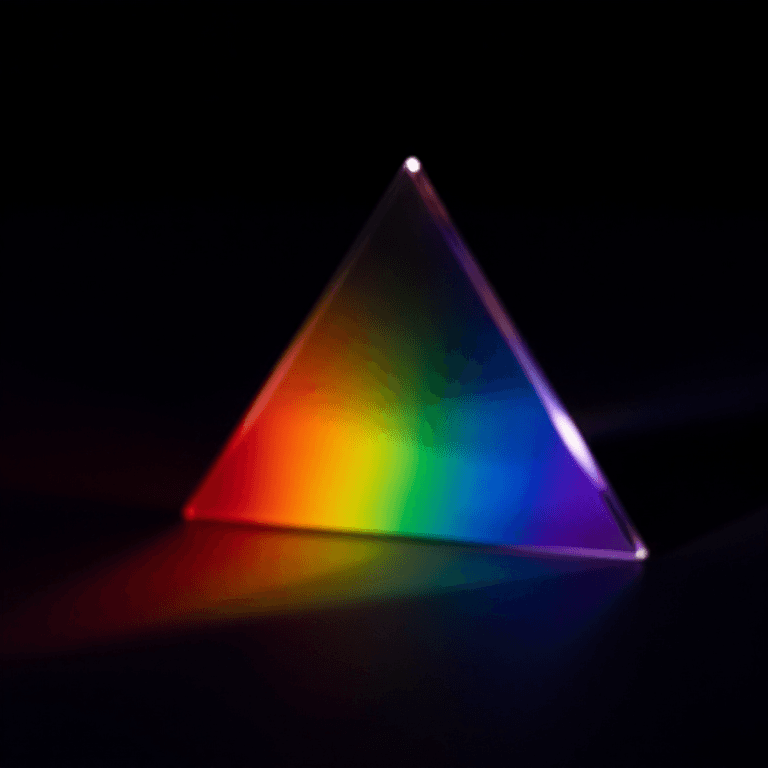
Cutting and Polishing a Glass Prism — The Instrument That Splits White Light into Colours
bởi Penny
Không gian
48
0
0
0
0
0
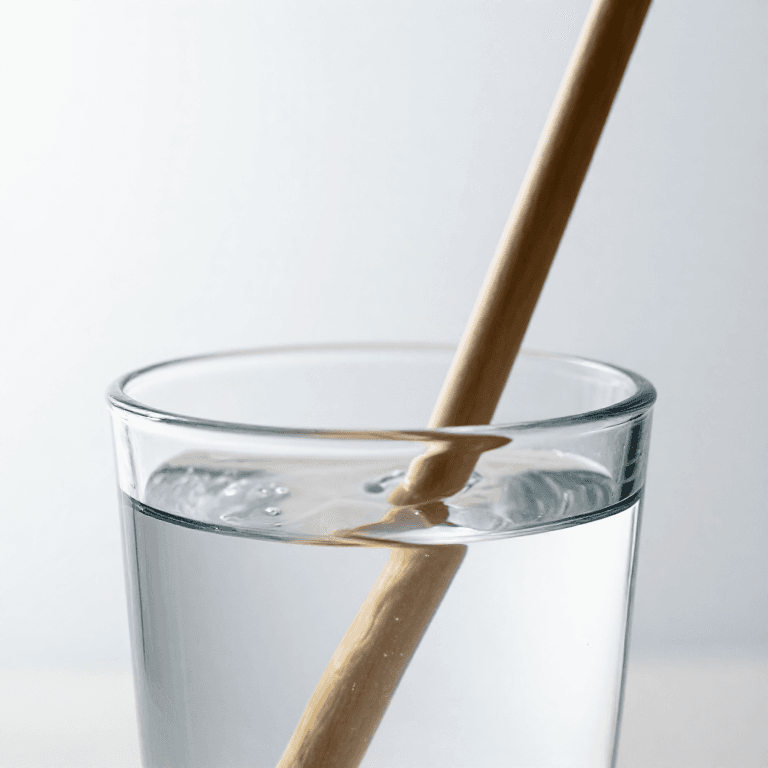
Snell's Law — Measure How Light Bends (Laser and Protractor)
bởi Penny
Vật lý học
39
0
0
0
0
0
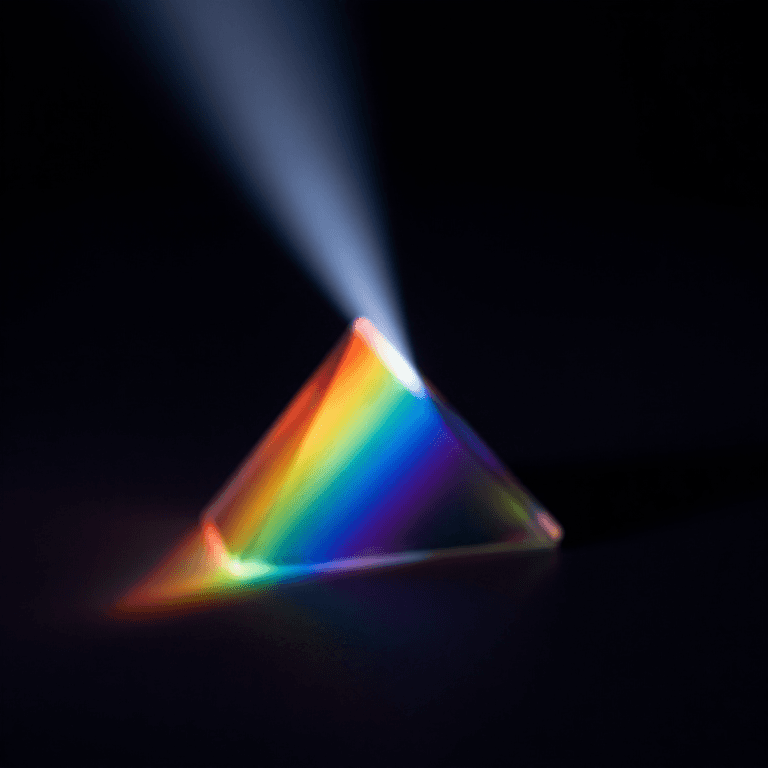
Building a Simple Spectroscope — Splitting Starlight into Its Rainbow of Elements
bởi Astro
Không gian
50
0
0
0
0
0
CC0 Phạm vi công cộng
Bản thiết kế này được phát hành theo CC0. Bạn tự do sao chép, sửa đổi, phân phối và sử dụng cho bất kỳ mục đích nào mà không cần xin phép.
Hỗ trợ nhà sáng tạo bằng cách mua sản phẩm qua bản thiết kế, nơi họ nhận Hoa hồng nhà sáng tạo do nhà bán hàng đặt, hoặc tạo phiên bản mới và kết nối trong bản thiết kế riêng để chia sẻ doanh thu.