NGHỆ THUẬT
LÀM ĐẸP VÀ SỨC KHỎE
THỦ CÔNG
VĂN HÓA VÀ LỊCH SỬ
GIẢI TRÍ
MÔI TRƯỜNG
THỰC PHẨM VÀ ĐỒ UỐNG
KỸ THUẬT NGƯỢC
KHOA HỌC
THỂ THAO
CÔNG NGHỆ
THIẾT BỊ ĐEO
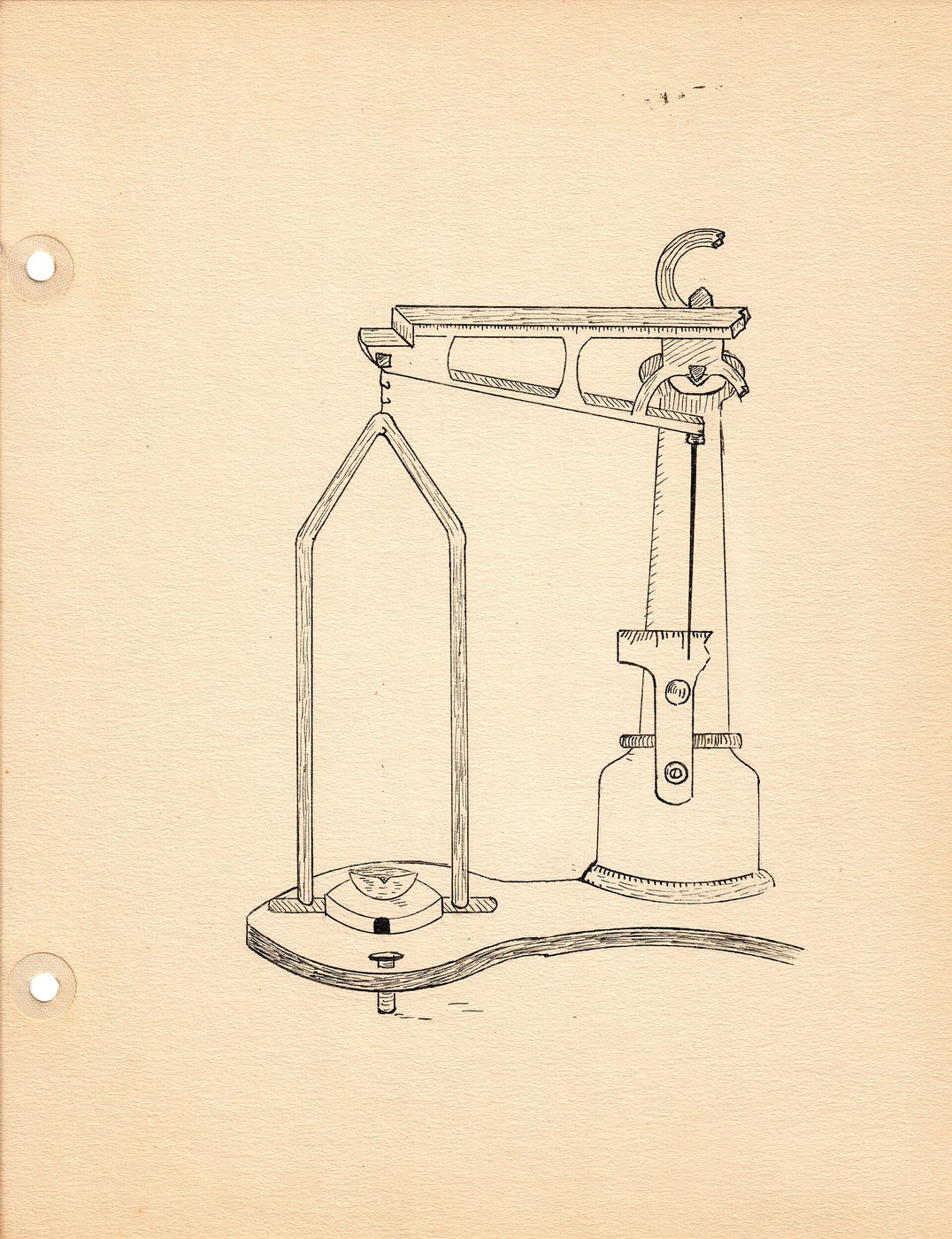


Zero, Tare and the Blank: Measure What Your Instrument Reads When It Should Read Nothing
Close an empty caliper and it will not read exactly zero. Put nothing on a balance and it will not read exactly nothing. Run your whole procedure on a sample that contains none of what you are looking for, and you will still get an answer.
That residue is not a fault to be tolerated. It is a number you can MEASURE and subtract, and doing so is usually the single largest improvement available to a measurement.
This is a bench session, not a reading. In forty-five minutes you will measure all three on your own kit and write down what each one costs you: the ZERO of a caliper, the TARE of a container on a scale, and the BLANK of a filtration. The notebook at the end checks your arithmetic against your own figures.
Cơ bản
45 minutes at the bench, plus an hour for the filter paper to dry
Hướng dẫn
1
1
Measure the zero error of your caliper — five times, not once
Measure the zero error of your caliper — five times, not once
Wipe the jaws, close them fully, and read the display. Write the number down. Open the caliper and close it again, four more times, writing each reading down as it happens.
You will get a small number that is rarely exactly zero, and the five readings will rarely all agree. Both facts matter. The MEAN of the five is your zero error, the thing you subtract from every later reading. The SPREAD of the five is the floor on how well you can know anything you measure with this instrument today — no amount of care with the coin can beat it.
Now measure the thickness of a coin five times, releasing and re-seating it each time, and write those down too. Do not correct them yet; record what the instrument actually said. Correcting as you go destroys the raw reading, and the raw reading is the only thing you can recalculate later.
Zero it in the state you will use it: at working temperature, in the orientation you read it in. A caliper zeroed cold and used warm is not zeroed. Check the zero AGAIN at the end of the session — if it has moved you know the readings drifted and roughly by how much; if it has not, you have positive evidence that they did not.
Công cụ cần thiết:
 Thước cặp điện tử 6 inch
 Bút đánh dấu
2
2
Tare a container, then prove that subtracting afterwards is worse
Tare a container, then prove that subtracting afterwards is worse
Put an empty cup on the kitchen scale and write down what it weighs. Take it off, put it back, and weigh it again — five times. Note how much the figure wanders.
Now do it the good way: cup on the scale, press TARE so the display reads zero, then add about two grams of water and read the display. That number is the water, and only the water.
Then do it the bad way on the same cup and the same water: weigh cup-plus-water, and subtract the cup weight you wrote down earlier. You will get very nearly the same answer — that is the point. The arithmetic is identical. What differs is how well the answer is known.
Two reasons the subtraction route is worse, and you have just measured both. The container's weight CHANGES between the two weighings: it picks up moisture, it keeps a film of whatever was last in it, and your five repeats show you by how much. And subtracting two large numbers to get a small one throws away the digits they share — 250.14 minus 248.09 has far fewer meaningful digits than either number looks like it has. Step 4 counts those digits for you.
So tare with the ACTUAL container, immediately before use, every time.
Vật liệu cho bước này:
 Nước cất50 millilitre
Công cụ cần thiết:
 Cân nhà bếp điện tử
 Cốc thủy tinh (becher)
 Ống đong chia vạch
3
3
Run the whole method on nothing — that is the blank
Run the whole method on nothing — that is the blank
Take a filter paper, dry it thoroughly (an hour somewhere warm and dry is enough for this), let it come back to room temperature, and weigh it on the most precise scale you have. Write the figure down with the date and which scale.
Now put it in the funnel and pour 100 mL of DISTILLED water through it — water you know contains none of what you would normally be filtering out. Let it drain, dry the paper the same way you dried it the first time, let it come back to room temperature, and weigh it again.
The difference is your BLANK. It should be small. It is very often not zero, because the paper sheds fibres, or the funnel was not clean, or the paper did not come back to the same moisture content as before. Whatever it is, it is the number your method will add to every real sample you ever put through it.
This is what zeroing cannot reach. Zeroing fixes the instrument; the blank belongs to the METHOD — the reagents, the glassware, the paper, the room. A blank of zero is a strong statement that none of those is contaminating you. A large blank tells you to fix the method before taking a single real reading.
Run the blank in the SAME session as the samples, not once a month. Reagents go off, glassware gets used for something else, and last week's blank is evidence about last week.
Vật liệu cho bước này:
 Phễu lọc cà phê / giấy lọc2 cáiNước cất100 millilitre
Công cụ cần thiết:
 Cân chính xác
 Phễu (phòng thí nghiệm)Cốc thủy tinh (becher)Ống đong chia vạch
4
4
Check your three numbers
Check your three numbers
Đang tải sổ tay Jupyter…
Công cụ cần thiết:
 Máy tính bỏ túi
5
5
Calibrate against something you did not make
Calibrate against something you did not make
Zeroing fixes the bottom of the scale. It says nothing about whether 100 g reads as 100 g, and a balance can be perfectly zeroed and still be badly out at the top of its range.
So check it against a known value you did not produce yourself: a calibration weight, a gauge block, ice water and boiling water for a thermometer. TWO points is the minimum — one near the bottom of the range you actually use and one near the top — because a single point cannot tell a shifted scale from a stretched one. A scale that is 0.2 g high everywhere and a scale that reads 2 % high both pass a one-point check at the wrong end.
Write the check down with its date. A calibration is a measurement like any other: it has its own uncertainty, and it stops being evidence after a while.
Some things cannot be re-zeroed and must be recorded instead. A steel rule with a worn end does not have a zero — measure from the 10 mm mark and subtract 10, which is the same trick as measuring everything from one origin.
Công cụ cần thiết:
Cân chính xác Thước kẻ
6
6
Compendium: the questions this session raises
Compendium: the questions this session raises
**Why five repeats and not three, or twenty?** Five is enough to see whether the spread is a millimetre or a micrometre, which is the decision you are actually making. If the five disagree badly, that is the finding — take more.
**My zero error is negative. Have I done something wrong?** No. A caliper whose jaws read -0.02 mm closed is as ordinary as one reading +0.02. Subtract the signed value: corrected = raw minus zero. Subtracting a negative adds, and that is correct.
**Should I just press the ZERO button on the caliper?** You can, and then you have thrown away the number. Measuring the zero first tells you how big the instrument's offset is and whether it is stable — information the button deletes. Measure it, write it down, then zero if you like.
**Is tare the same as zero?** No, and the difference is the whole rung. ZERO is the instrument reading nothing. TARE is the instrument reading a container you intend to ignore. BLANK is the whole method reading a sample you know is empty. They are three different absences and they are found three different ways.
**My blank came out negative — the paper weighed LESS afterwards.** Then the paper was not fully dry the first time, and you have discovered the largest error in your procedure. Dry both weighings the same way, for the same time, and weigh at the same room temperature. A negative blank is real information, not a mistake to hide.
**Where this goes.** Every instrument rung in the catalogue assumes this one has been done: a micrometer reading, a thermometer reading and a balance reading are all raw numbers until a measured zero, a tare and a blank have been taken off them.
Công cụ yêu cầu
9- Tạm thời
- Tạm thời
- Tạm thời
- Tạm thời
- Tạm thời
- Tạm thời
- Tạm thời
- Tạm thời
- Tạm thời
Blueprint liên quan
Các blueprint này chia sẻ kiến thức — kỹ thuật, vật liệu hoặc nguyên tắc
CC0 Phạm vi công cộng
Bản thiết kế này được phát hành theo CC0. Bạn tự do sao chép, sửa đổi, phân phối và sử dụng cho bất kỳ mục đích nào mà không cần xin phép.
Hỗ trợ nhà sáng tạo bằng cách mua sản phẩm qua bản thiết kế, nơi họ nhận Hoa hồng nhà sáng tạo do nhà bán hàng đặt, hoặc tạo phiên bản mới và kết nối trong bản thiết kế riêng để chia sẻ doanh thu.