UBUCIKO
UBUHLE NEMPILO
UBUCIKO BEZANDLA
AMASIKO NOMLANDO
EZOKUZIJABULISA
IMVELO
UKUDLA NEZIPHUZO
REVERSE ENGINEERING
IZAYENSI
EZEMIDLALO
UBUCHWEPHESHE
IZINTO EZIGQOKWAYO
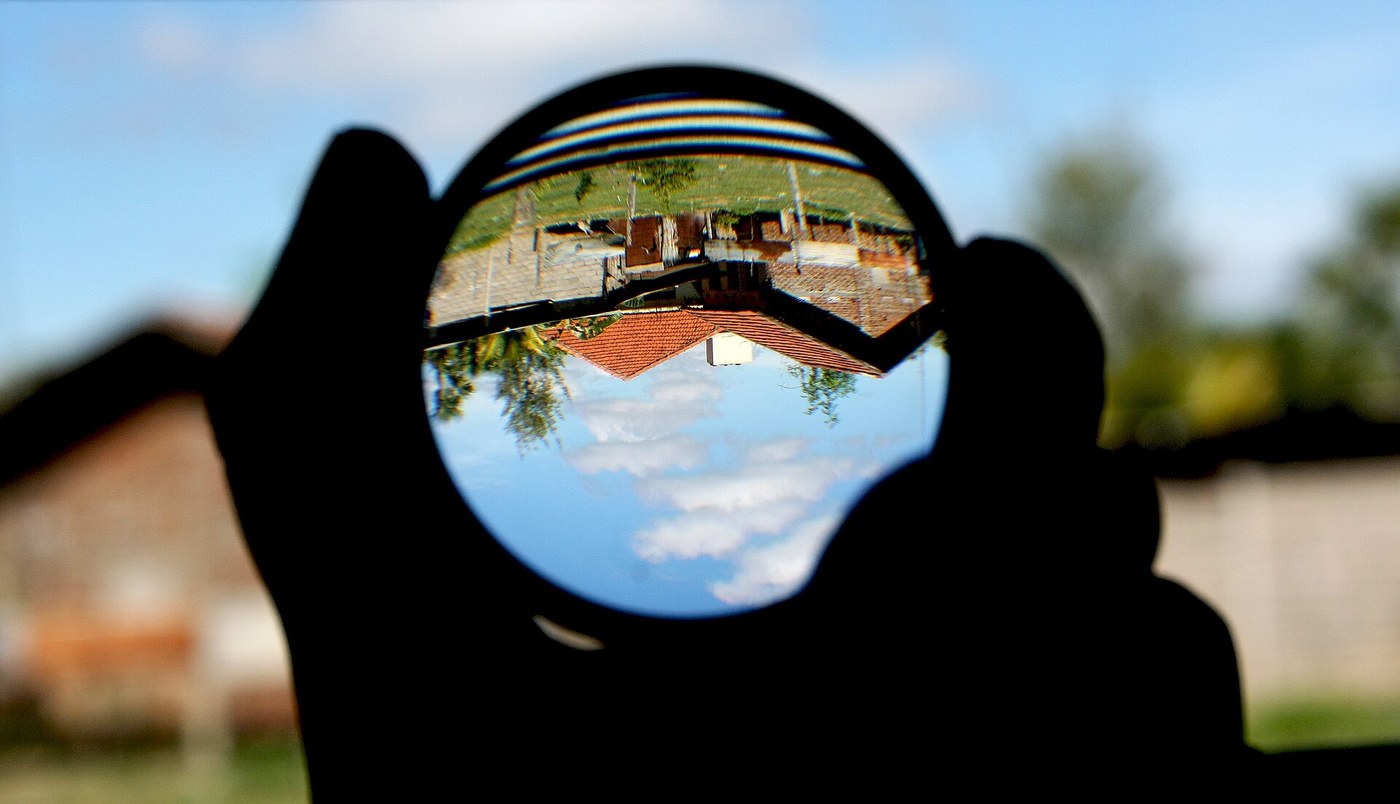


Convex and Concave Lenses Ground as a Pair
Rub one glass disc over another with wet grit and both change shape: the one on top goes hollow, the one beneath goes domed, and they stay a perfect fit. Grind both faces of a pair this way and the bottom disc becomes a double-convex lens, the top one a double-concave lens of the same curve. Longer work gives deeper curves and shorter focal lengths.
The picture: a double-convex lens held at arm's length shows the scene small and upside down.
Osezingeni eliphezulu
Several days per pair
Imiyalelo
1
1
Cut two discs
Cut two discs
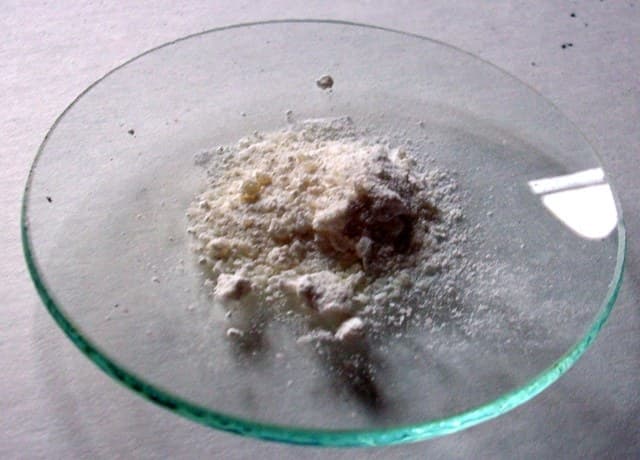
Score two equal circles on the glass sheet, snap them out and nibble the edges round with grozing pliers. Fix a short wooden handle to the back of each with warm pitch.
Izinto zokwakha zalesi sinyathelo:
 Ushidi wengilazi1 ucezu
 Iglu Yetiyela Lepayini20 g
 Umucu wokhuni oluqinile1 ucezu
Amathuluzi adingekayo:
 Isisiki sengilazi
 Udlawu lokuluma ingilazi
 Izibuko zokuphepha
2
2
Rough grind the first faces
Rough grind the first faces
Lay one disc face up on a firm table, wet it and sprinkle coarse grit. Push the other disc over it, face down, in short strokes, turning both a little all the time. The top one becomes concave, the bottom convex. Rinse and recharge as the grit wears.
Izinto zokwakha zalesi sinyathelo:
 Amanzi2 amalitha
Amathuluzi adingekayo:
 Irula
 Amagcubu e-silicon carbide
3
3
Check the curve
Check the curve
Lay a ruler across the hollow disc and measure the depth at the centre with the caliper. Keep the top disc on top to deepen the curve; swap them to flatten it.
Amathuluzi adingekayo:
Irula I-Caliper Yedijithali Yamayintshi Ayi-6
4
4
Fine grind and polish
Fine grind and polish
Go through finer grits, washing everything clean between grits. Polish each face on a pitch lap pressed to the other disc's curve, with tin oxide (putty powder) and water, until clear.
Izinto zokwakha zalesi sinyathelo:
 I-oksayidi kathini (i-stannic oxide)30 gIglu Yetiyela Lepayini100 g
Amathuluzi adingekayo:
Amagcubu e-silicon carbide5
5
Turn them over, do the second faces
Turn them over, do the second faces
Move the handles to the finished faces and grind the other sides the same way, the same disc on top, to the same depth. The bottom disc is now a double-convex lens, the top one double-concave.
Izinto zokwakha zalesi sinyathelo:
I-oksayidi kathini (i-stannic oxide)20 gAmathuluzi adingekayo:
I-Caliper Yedijithali Yamayintshi Ayi-6Amagcubu e-silicon carbide6
6
Find the focal length
Find the focal length
Hold the convex lens in sunlight over paper and move it until the spot is smallest; that distance is its focal length. Grind more pairs to different depths for a set of focal lengths.
Amathuluzi adingekayo:
Irula7
7
Focal length from the curve
Focal length from the curve
Ilayisha incwadi ye-Jupyter…
8
8
Limits
Limits
Which disc goes hollow is the mirror makers' rule (Sky & Telescope, Stellafane); the lens formula is from Wikipedia. Window glass is not optical glass: expect some colour fringes and bubbles.
Izinto
5- 1 ucezuIsibambeli
- Isibambeli
- 1 ucezuIsibambeli
- 2 amalithaIsibambeli
- Isibambeli
Le blueprint yenza


Ama-blueprint ahlobene
Lama-blueprint abelana ngolwazi — amasu, izinto noma izimiso


CC0 Isizinda Somphakathi
Le blueprint ikhishwe ngaphansi kwe-CC0. Ukhululekile ukukopisha, ukuguqula, ukusabalalisa, nokusebenzisa ngaphandle kwemvume.
Sekela uMenzi ngokuthenga imikhiqizo nge-Blueprint yabo IKhomishane Yomenzi kumiswe ngabathengisi, noma dala inguqulo entsha yale Blueprint bese uyifaka njengoxhumaniso ku-Blueprint yakho ukuze wabelane ngemali engenayo.