UBUCIKO
UBUHLE NEMPILO
UBUCIKO BEZANDLA
AMASIKO NOMLANDO
EZOKUZIJABULISA
IMVELO
UKUDLA NEZIPHUZO
REVERSE ENGINEERING
IZAYENSI
EZEMIDLALO
UBUCHWEPHESHE
IZINTO EZIGQOKWAYO
Youblob (generated from this blueprint's notebook) · CC0

Counterflow: The Same Area Does More When the Streams Run Opposite
Every heat exchanger in this batch — the economiser, the condenser, the plate exchanger — is built to one rule: make the hot and cold streams run in opposite directions. It is the single cheapest improvement in heat transfer, because it costs no extra metal.
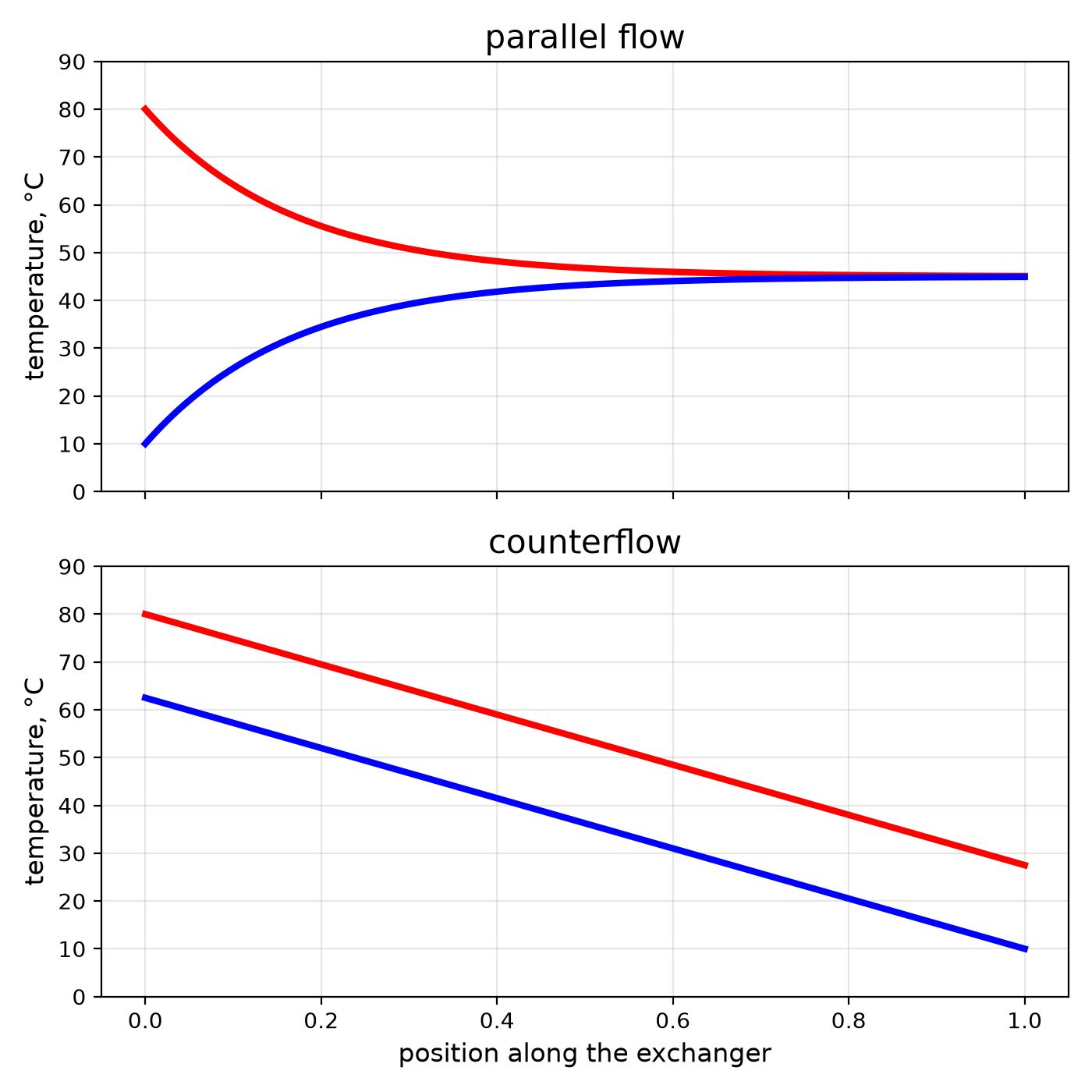
Run the same way, two streams approach a common middle temperature and stop; the cold one can never leave hotter than the hot one does. Run opposite, the cold stream meets the hottest fluid just as it leaves, and can come out warmer than the hot stream exits.
This rung builds a tube-in-tube exchanger from a copper tube inside a hose, logs four temperatures with an Arduino, and runs it both ways to measure the difference.
Ophakathi
About 5 hours
Imiyalelo
1
1
Parallel against counterflow, in numbers
Parallel against counterflow, in numbers
Ilayisha incwadi ye-Jupyter…
2
2
Build a tube-in-tube exchanger
Build a tube-in-tube exchanger
Take 2 m of 10 mm copper tube and slide it inside 2 m of clear vinyl tube with a bore comfortably larger — the annulus between them is the second channel. At each end fit a tee from the PVC fittings kit: the copper passes straight through the tee and is sealed where it exits with silicone; the tee's side branch is the jacket connection.
You now have two independent channels: inside the copper, and between copper and vinyl. Coil the whole thing loosely and insulate it with glass wool, leaving the four connections free. Push a waterproof temperature probe into each of the four connections through a hole sealed with silicone.
Izinto zokwakha zalesi sinyathelo:
 Ishubhu lethusi2 amamitha
 Ishubhu le-vinyl eliqhakazile2.5 amamitha
 Iqoqo Lezixhumanisi Zepayipi Le-PVC1 isethi
 Isivalo Se-silicone1 ucezu
 Isivikelo sokushisa sikawula wengilazi1 sqm
 Inhlanganisela yezibambi zempompi1 isethi
 Inzwa yokushisa4 izicucu
Amathuluzi adingekayo:
 Isisiki sepayipi
 Ibhola Elingenantambo
 Iqoqo Lamakhanda Ebhola
 Amagilavu Omsebenzi Esikhumba
3
3
The logger
The logger
Four DS18B20 probes on a single data wire, logging hot in, hot out, cold in and cold out every few seconds as comma-separated lines you can paste into the notebook or a spreadsheet.
hx_logger.inoarduino
Izinto zokwakha zalesi sinyathelo:
 Arduino Uno R31 ucezu
 Isivimbi sika-10 kilo-ohm2 izicucu
 Izintambo Zokuxhuma1 isethi
Amathuluzi adingekayo:
 Ikhompyutha Ene-Arduino IDE
4
4
Run it both ways
Run it both ways
Feed the copper with hot water from a bucket on a shelf — about 60 °C from a kettle topped up with cold — and the jacket with cold tap water. Set both flows to the same rate by timing each outlet into a measuring jug (aim for about 1 litre per minute).
**Parallel:** both streams enter at the same end. Let the logger settle for five minutes and note the four temperatures.
**Counterflow:** swap the jacket's hoses so the cold enters at the far end. Keep both flows the same. Settle and note.
Compare the cold outlet in the two runs. In counterflow it comes out noticeably warmer — often warmer than the hot outlet — with no change to the hardware except which way one hose points. Work out the heat each side carried; they should agree within a few per cent.
Izinto zokwakha zalesi sinyathelo:
 Amanzi40 amalitha
Amathuluzi adingekayo:
 Iketela likagesi lengilazi
 Ibhakede
 Ujeke wokukala
 Iwashi Lokumisa Isikhathi
 Isilinganiso sokushisa sasekhishini
5
5
Context
Context
A practice rung: no patent anchors counterflow — it is physics that engineers learned and wrote into every exchanger. The effectiveness–NTU method used in the notebook was set out in the mid-twentieth century and is how exchangers are sized today.
Where it shows up in this catalogue: the economiser meets the coolest gas with the coldest water; the Stirling engine's regenerator and a rocket's regenerative cooling both depend on it; the Linde air liquefier works only because its counterflow exchanger lets the cold returning gas pre-cool the incoming gas.
**Honest limits.** Counterflow gains most when you want the streams to approach each other's temperatures; for a small temperature change on one side it matters less. And it cannot beat the laws: with equal flows even a perfect counterflow exchanger only approaches 100 % effectiveness as its area goes to infinity.
Izinto
11- 2 amamithaIsibambeli
- 2.5 amamithaIsibambeli
- Isibambeli
- 1 ucezuIsibambeli
- Isibambeli
- Isibambeli
- Isibambeli
- Isibambeli
- Isibambeli
- Isibambeli
- 40 amalithaIsibambeli
Amathuluzi Adingekayo
10- Isibambeli
- 1 vendor sell this, none ship to you yetIsibambeli
- Isibambeli
- Isibambeli
- Isibambeli
- Isibambeli
- Isibambeli
- Isibambeli
- Isibambeli
- Isibambeli
Ama-blueprint ahlobene
Lama-blueprint abelana ngolwazi — amasu, izinto noma izimiso

The Economiser: The Heat Still Going Up the Chimney
ngu-Martin
Ezomshini
38
0
0
0
0
0
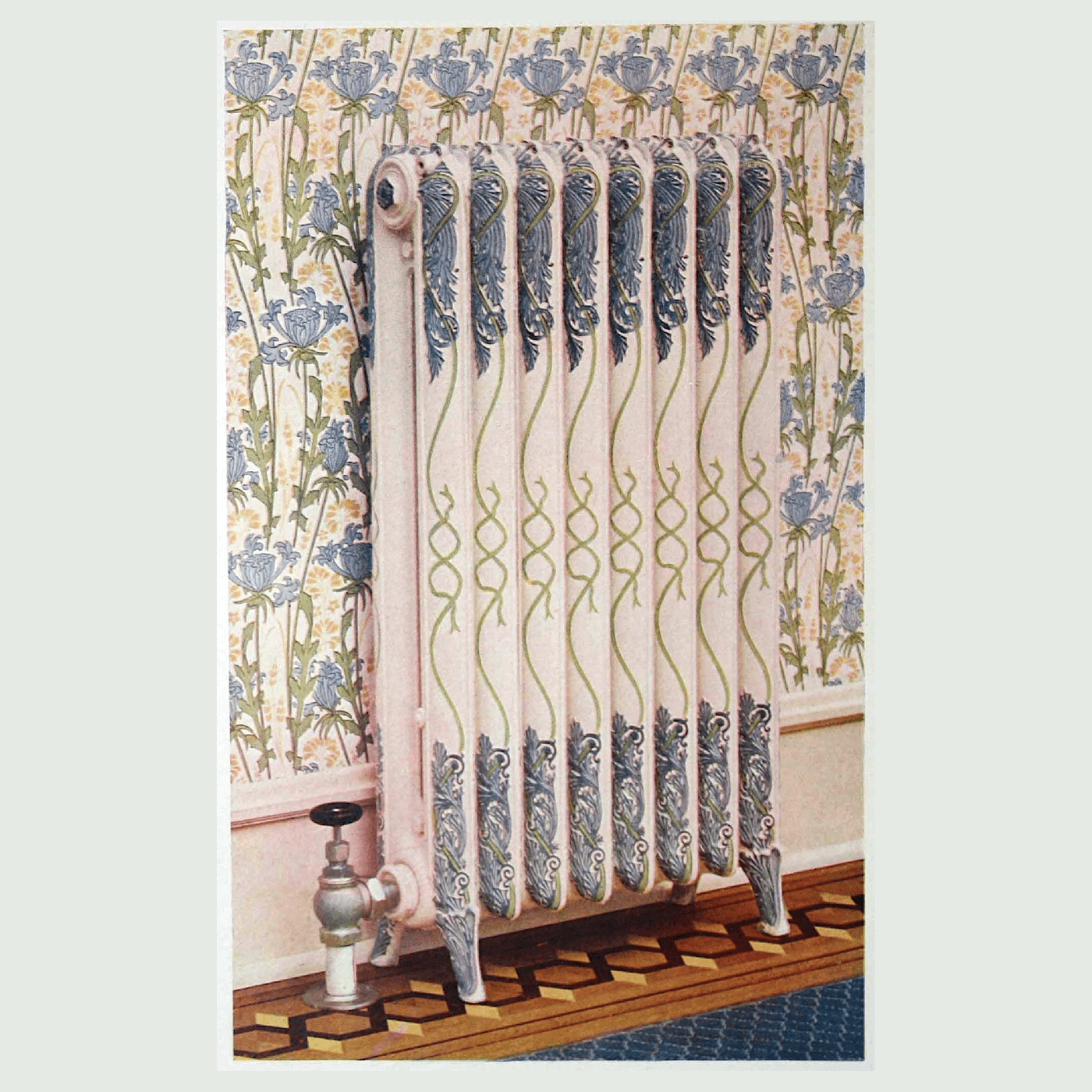
The Radiator: Mostly Convection, and Why Temperature Is Everything
ngu-Emma
Ezomshini
33
0
0
0
0
0
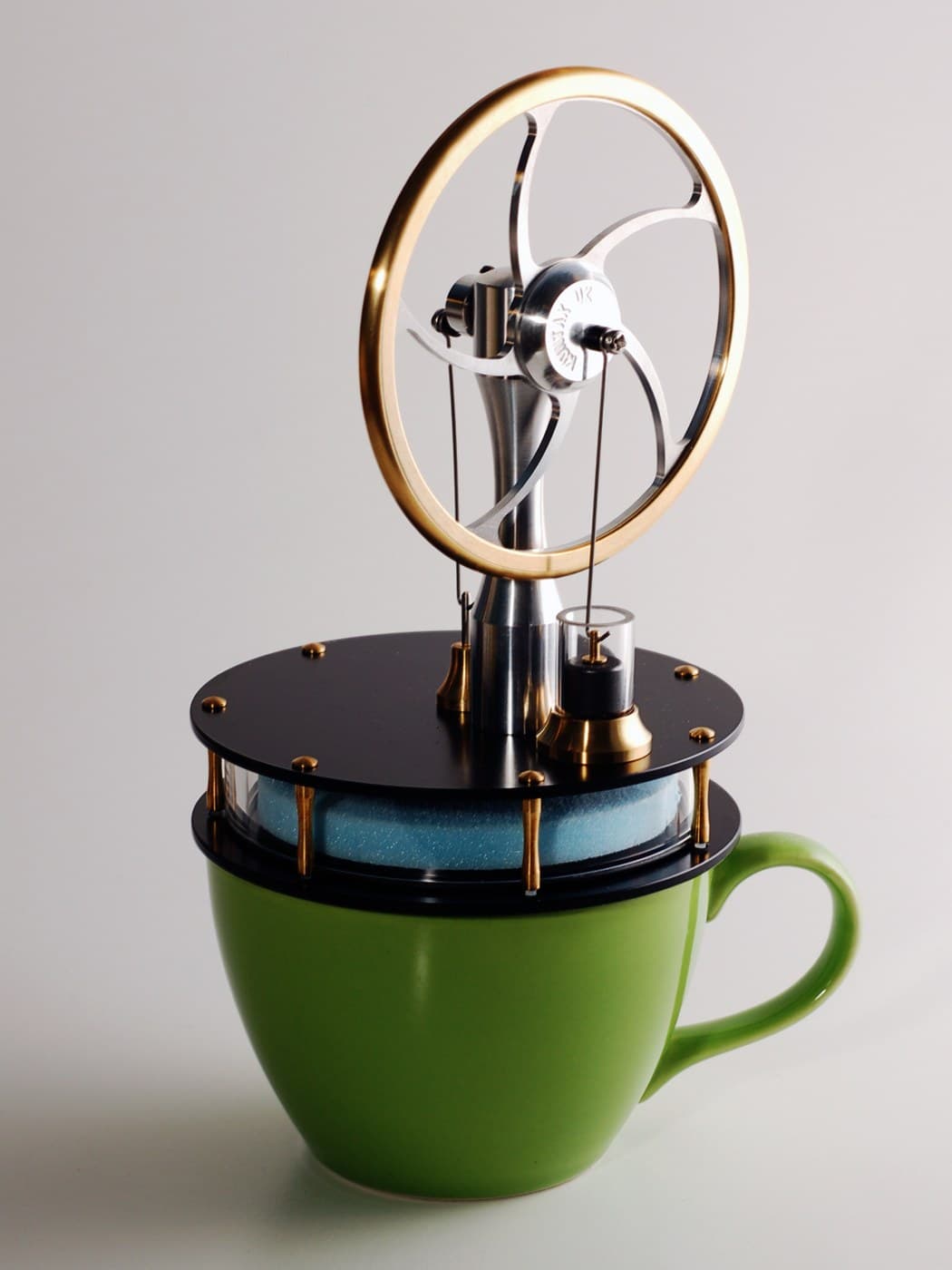
Stirling Engine
ngu-Martin
IMVELO
57
0
0
0
0
0
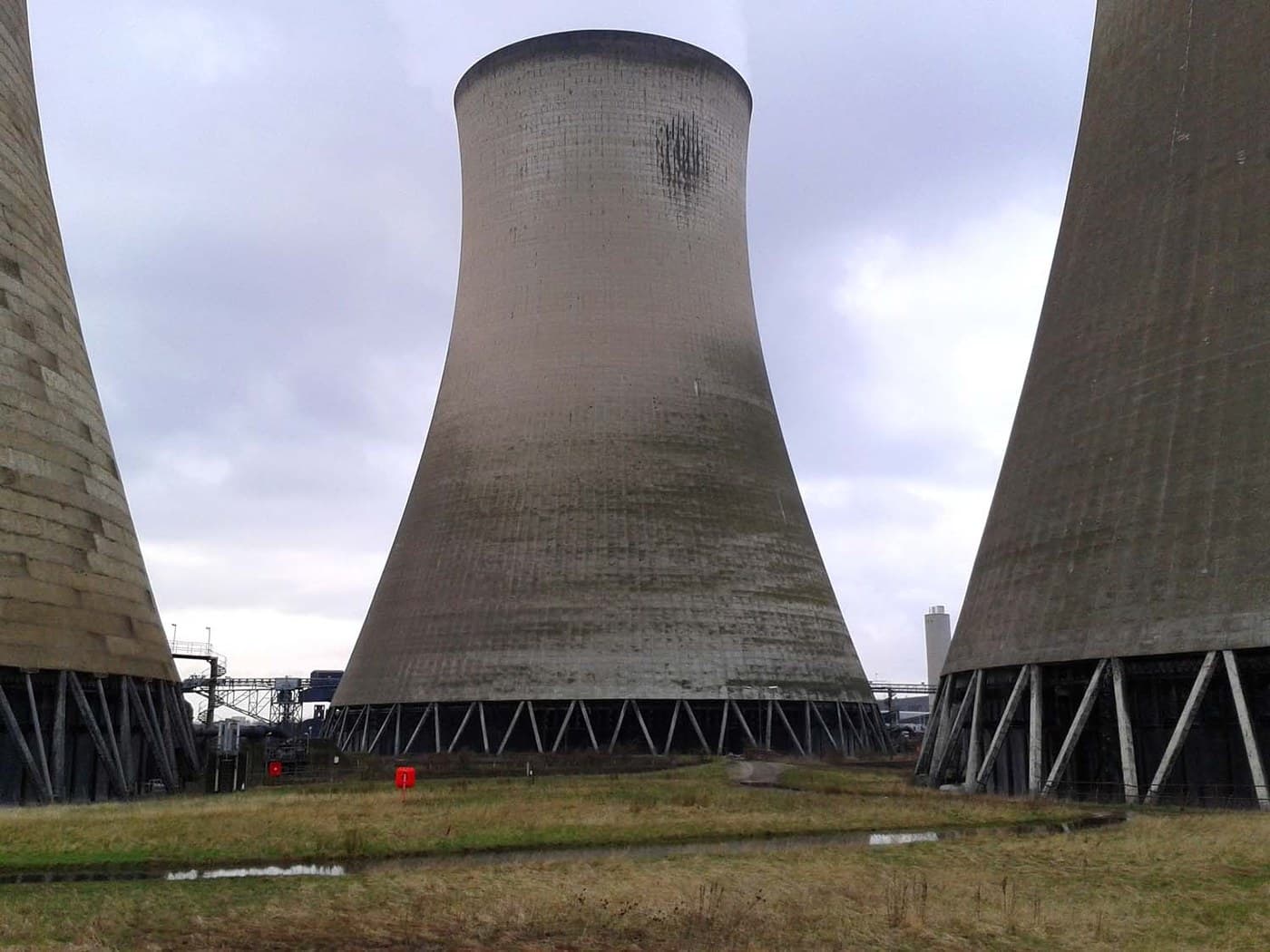
The Cooling Tower
ngu-Peter
Ezokugeleza Kwamanzi
44
0
0
0
1
0
Regenerative Cooling
ngu-Emma
Umkhathi
76
0
0
0
0
0
Ammonia Refrigeration Machine
ngu-Emma
UBUCHWEPHESHE
42
0
0
0
2
0
CC0 Isizinda Somphakathi
Le blueprint ikhishwe ngaphansi kwe-CC0. Ukhululekile ukukopisha, ukuguqula, ukusabalalisa, nokusebenzisa ngaphandle kwemvume.
Sekela uMenzi ngokuthenga imikhiqizo nge-Blueprint yabo IKhomishane Yomenzi kumiswe ngabathengisi, noma dala inguqulo entsha yale Blueprint bese uyifaka njengoxhumaniso ku-Blueprint yakho ukuze wabelane ngemali engenayo.