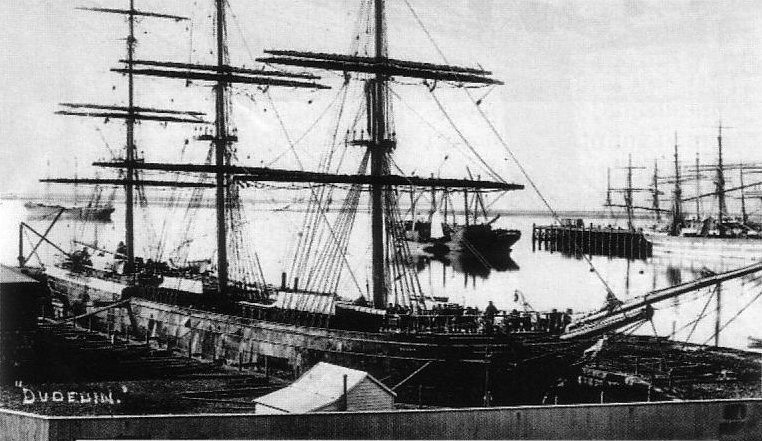


Refrigerated Ship
The machines earlier in this batch made cold in a building. Putting one on a sailing ship for three months, across the tropics and two hemispheres, is a different problem — and solving it changed which countries could feed which.
The machine aboard the Dunedin was air-cycle, not vapour-compression: compress air, cool it, expand it, and blow the resulting cold air straight into the hold. It is thermodynamically poor — far less efficient than Linde's ammonia machine of six years earlier — and it was chosen anyway, because the working fluid is air. There is nothing to leak, nothing toxic in a sealed hold, nothing to run out of a thousand miles from a chandler, and the refrigerant is free and everywhere.
That trade recurs whenever a machine has to work far from help: reliability and simple consumables beat efficiency.
The other half of the problem is not the machine at all. Cold air must actually reach every carcass, and a hold packed solid is a hold with no circulation. The Dunedin's voyage nearly failed on exactly this: becalmed in the tropics, the air stopped moving, and Captain Whitson crawled into the freezing hold and sawed extra air holes by hand to save the cargo.
She sailed from Port Chalmers on 15 February 1882 with about 5,000 carcasses and reached London in late May with one condemned.
Imiyalelo
Cool something with nothing but air
Cool something with nothing but air
Pump a bicycle pump hard with the outlet blocked, and feel the barrel — hot. Now let that compressed air cool to room temperature, then release it and feel the stream.
It comes out colder than the room.
That is the entire air cycle: compress, throw the heat of compression away, expand. The air returns to atmospheric pressure but it has lost energy on the way, so it arrives cold.
No refrigerant, no charge, nothing to leak. Note what that is worth on a ship.
Amathuluzi adingekayo:
 Ithemomitha Ye-Infrared
 Iphampu yasephansi yebhayisikili
Prove the packing matters more than the machine
Prove the packing matters more than the machine
Fill two identical boxes with the same number of frozen items: one packed tight against every wall, the other with deliberate gaps and channels between rows. Blow cold air into both from one corner with a small fan.
Measure the temperature at the far corner of each after twenty minutes.
Expect the packed box to have a warm far corner while the channelled one is even throughout.
The refrigeration plant was never the Dunedin's hardest problem. Distribution was.
Izinto zokwakha zalesi sinyathelo:
 Amaqhwa aqoshiwe1 ucezu
Amathuluzi adingekayo:
 Ifeni kagesi letafula
 Ithemomitha
Find the stagnation that nearly lost the cargo
Find the stagnation that nearly lost the cargo
Set up the packed box again and map its temperature at several depths with the infrared thermometer, then add one channel from top to bottom and re-map.
Expect a single deliberate path to transform the interior readings.
Cold air is dense and sinks; if it has no route back to the machine it settles, warms, and stops moving. The hold becomes a set of sealed pockets that the plant cannot reach however hard it runs.
This is what Whitson found and fixed with a saw, in the dark, at −10°C, in the middle of the Atlantic. A design flaw solved by a person, mid-voyage.
Work out why the worse machine was the right choice
Work out why the worse machine was the right choice
List what the ammonia machine of 1876 needs that a ship at sea cannot supply: a charge of toxic gas, replacement when it leaks, steel plant that resists it, a competent fitter, and a port that stocks any of the above.
Now list what the air machine needs: air.
The air cycle uses roughly twice the fuel for the same cooling. On a coal-fired ship, that is a cost you can simply carry.
Write the general form: when a failure cannot be repaired where it happens, the efficient answer is often the wrong answer. It is the same reasoning that put air-cycle machines into airliners, where they still are today.
Weigh what a voyage actually costs the cargo
Weigh what a voyage actually costs the cargo
Estimate the arithmetic Davidson faced. Take a shipment of 5,000 carcasses at roughly 25 kg each, a voyage of about three months, and compute the value at risk.
Then note the outcome: one carcass condemned.
Now consider the alternative that existed before — live animals shipped and fed and watered for months, losing weight, some dying, and slaughtered exhausted at the far end.
Refrigeration did not simply preserve meat. It let the slaughter happen where the animals were, which is the change that made distant agriculture viable at all.
History & Context
History & Context
The voyage. The Dunedin, an Albion Line sailing ship, was fitted with a coal-fired Bell-Coleman air-cycle plant capable of holding the hold about 22°C below the outside air. Organised by William Soltau Davidson of the New Zealand and Australian Land Company, she left Port Chalmers on 15 February 1882 carrying 4,331 mutton, 598 lamb and 22 pig carcasses, plus 250 kegs of butter, hare, pheasant, turkey, chicken and 2,226 sheep tongues — about 5,000 carcasses in total. She reached London in late May with one carcass condemned, and the cargo was judged better than the Australian shipments already arriving.
The saw in the hold. Becalmed in the tropics, the crew realised the cold air had stopped circulating. Captain John Whitson crawled into the freezing hold and cut additional air passages by hand, nearly freezing to death doing it. The most famous refrigerated voyage in history was saved by a man with a handsaw fixing a ventilation design in transit — worth remembering when a system is described as having worked.
What it did to a country. Before 1882 New Zealand could export wool and tallow — things that keep. Afterwards it could export meat and dairy, and frozen produce became the cornerstone of its economy for the next century. The same happened to Argentina, Uruguay and Australia. Refrigerated shipping did not just move food; it decided which nations could farm for the world, and it is still why lamb from the far side of the planet is ordinary in a British supermarket.
Air cycle did not die. Vapour-compression took over at sea within decades, being far cheaper to run. But the air cycle's virtues — free refrigerant, nothing toxic, nothing to leak, very light — made it the standard for aircraft cabin cooling, where it remains. The air conditioning on the aeroplane is closer to the Dunedin's plant than to the fridge in your kitchen.
Honest limits. Poor efficiency, as step 4 admits. Air carries little heat per cubic metre, so the machinery is bulky for its output. And it manages humidity badly — moisture in the air freezes out in the expander, which is why these plants iced up and needed attention, and why the crew were watching the hold in the first place.
Izinto
1- 1 ucezuIsibambeli
Amathuluzi Adingekayo
4- Isibambeli
- Isibambeli
- Isibambeli
- Isibambeli
Izinto Zokwakha Ze-Blueprint Exhunyiwe
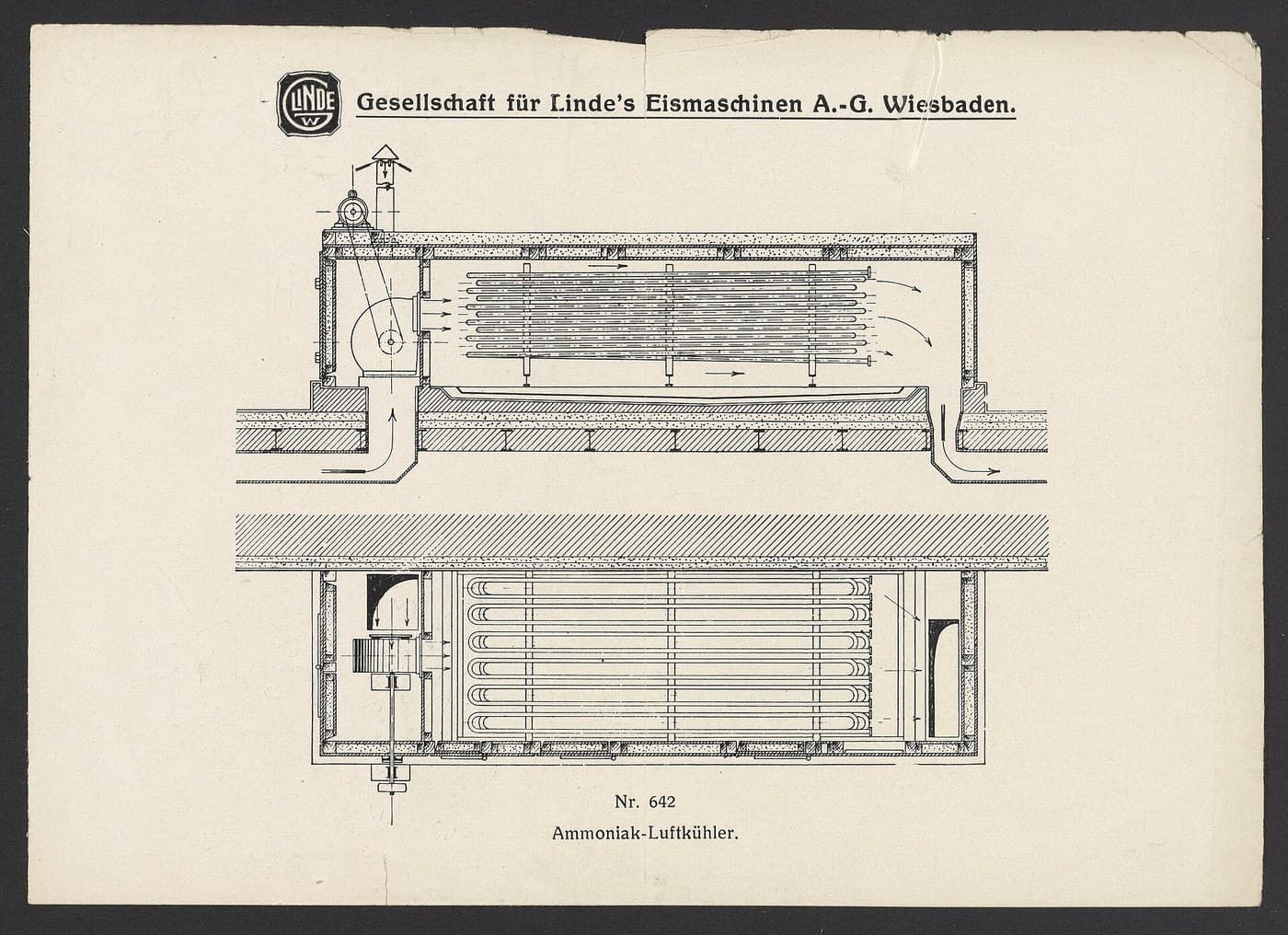

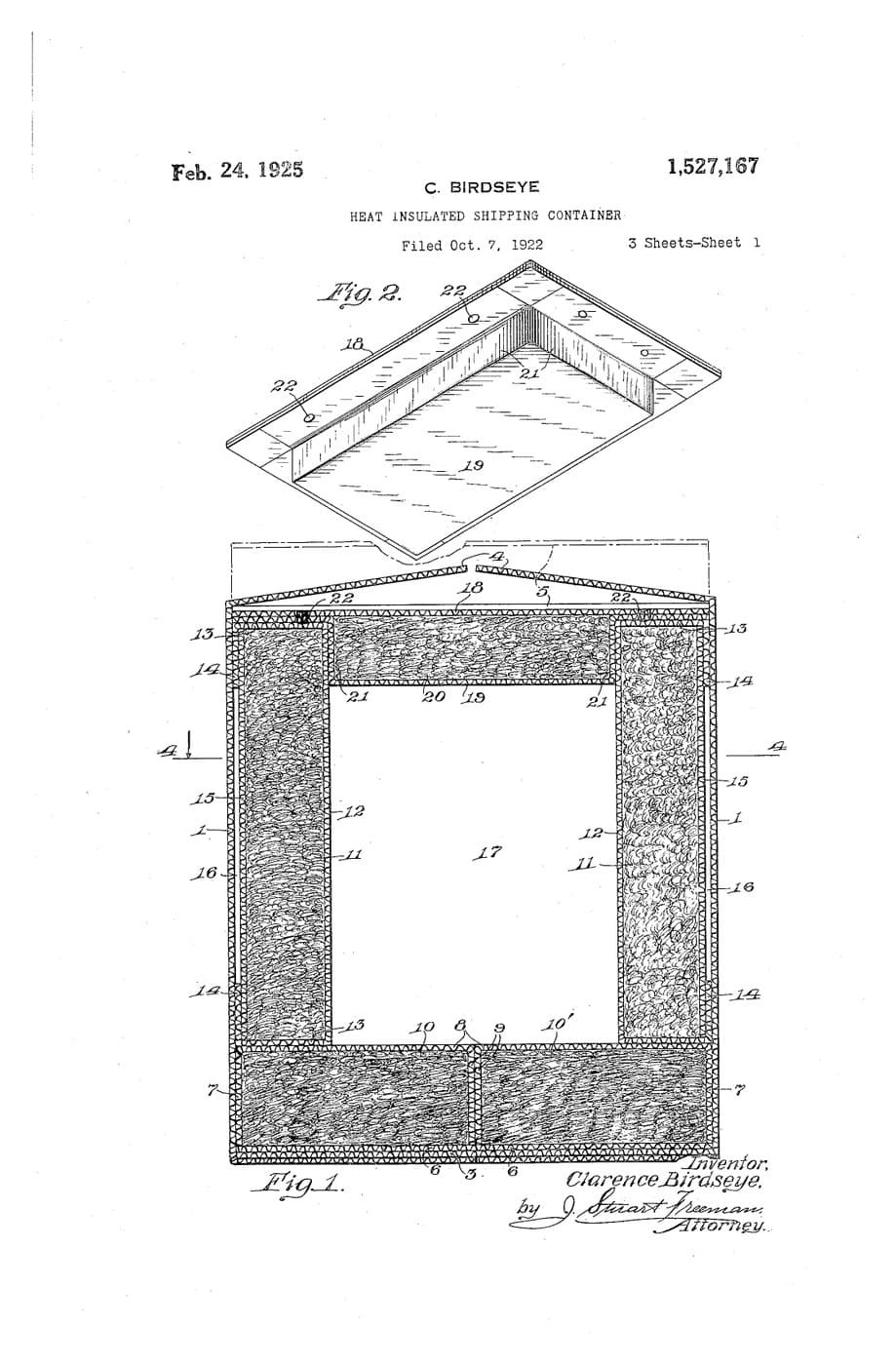
Ama-blueprint ahlobene
Lama-blueprint abelana ngolwazi — amasu, izinto noma izimiso
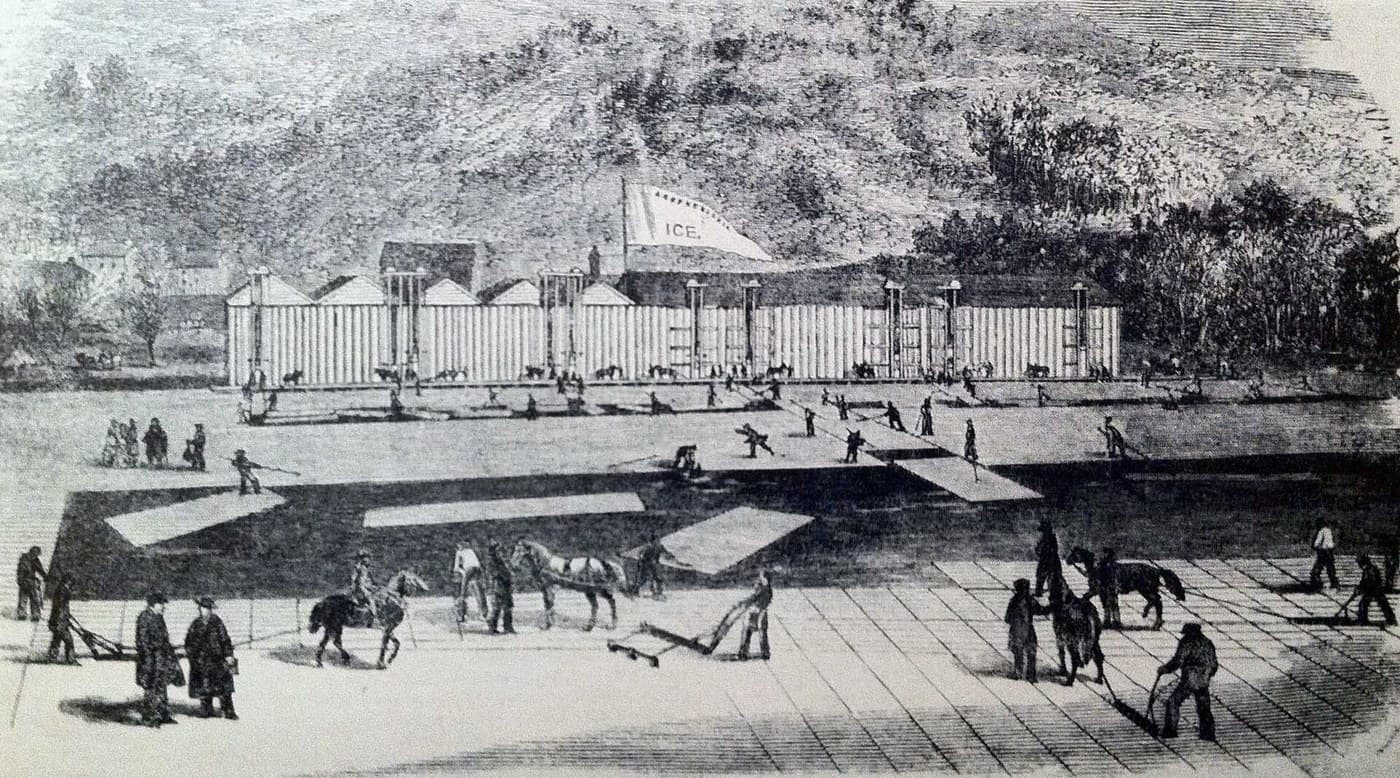

CC0 Isizinda Somphakathi
Le blueprint ikhishwe ngaphansi kwe-CC0. Ukhululekile ukukopisha, ukuguqula, ukusabalalisa, nokusebenzisa ngaphandle kwemvume.
Sekela uMenzi ngokuthenga imikhiqizo nge-Blueprint yabo IKhomishane Yomenzi kumiswe ngabathengisi, noma dala inguqulo entsha yale Blueprint bese uyifaka njengoxhumaniso ku-Blueprint yakho ukuze wabelane ngemali engenayo.