

Making Soda Ash by the Leblanc Process — The Chemical That Made Soap and Glass Affordable
Soda ash (sodium carbonate, Na₂CO₃) was for centuries one of the most expensive and scarce industrial chemicals. It was essential for making glass, soap, paper, and textiles — yet the only sources were the ashes of coastal plants (barilla in Spain, kelp in Scotland) or natural deposits like Egyptian natron. The price kept glass and soap as luxuries. In 1791, Nicolas Leblanc, a French surgeon turned chemist, patented an ingenious process to manufacture soda ash from common table salt — breaking the bottleneck that had constrained European industry for centuries.
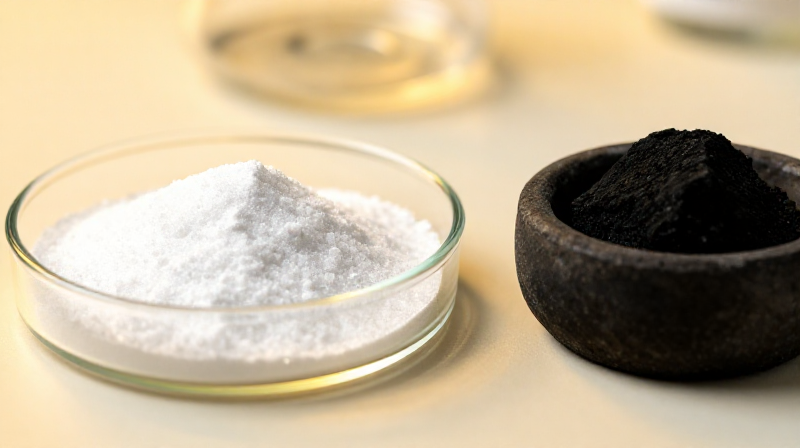
The Leblanc Process has three stages. First, salt is reacted with sulfuric acid to produce sodium sulfate ('salt cake') and hydrochloric acid gas. Second, the salt cake is mixed with charcoal (carbon) and crushed limestone (calcium carbonate) and heated to around 900 °C in a furnace. The carbon reduces the sodium sulfate to sodium sulfide, which immediately reacts with the limestone to form sodium carbonate and calcium sulfide. The resulting sintered mass — called 'black ash' — contains the soda ash mixed with insoluble calcium sulfide. Third, the black ash is leached with hot water: sodium carbonate dissolves while calcium sulfide remains behind. The solution is evaporated to crystallise pure soda ash.
Leblanc's process transformed the chemical industry but destroyed its inventor. The French Revolution seized his factory, and Leblanc died impoverished in 1806. His process, however, dominated world soda ash production for a century until the Solvay Process (1861) gradually displaced it. The Leblanc Process was also one of history's great polluters — the hydrochloric acid gas corroded everything downwind, and mountains of calcium sulfide waste (tank waste) poisoned the landscape around every alkali works.
SAFETY WARNING: Concentrated sulfuric acid causes severe burns on contact. Hydrochloric acid gas is acutely toxic and corrosive — it will corrode metal fittings, damage lungs, and etch glass. The furnace step requires temperatures above 900 °C. Work ONLY in a fume hood or outdoors with full PPE. Never add water to concentrated sulfuric acid — always add acid to salt.
Okuqukethwe okuyingozi
Le blueprint iqukethe izinqubo eziyingozi. Ngena ngemvume bese uvula okuqukethwe okuyingozi kuzilungiselelo ze-akhawunti yakho ukuze ubone iziqondiso zesinyathelo ngesinyathelo.
NgenaLe blueprint yenza
Ama-blueprint ahlobene
Lama-blueprint abelana ngolwazi — amasu, izinto noma izimiso

Making Soda-Lime Glass from Raw Materials — The Recipe That Has Not Changed in 5,000 Years
ngu-Mary
Umsebenzi Wengilazi

Burning Quicklime from Limestone — The Element That Built Civilization
ngu-Peter
Kwasendulo
Making Cold-Process Soap from Lye and Oils — Saponification Chemistry
ngu-Umenzi Ongaziwa
Insipho
CC0 Isizinda Somphakathi
Le blueprint ikhishwe ngaphansi kwe-CC0. Ukhululekile ukukopisha, ukuguqula, ukusabalalisa, nokusebenzisa ngaphandle kwemvume.
Sekela uMenzi ngokuthenga imikhiqizo nge-Blueprint yabo IKhomishane Yomenzi kumiswe ngabathengisi, noma dala inguqulo entsha yale Blueprint bese uyifaka njengoxhumaniso ku-Blueprint yakho ukuze wabelane ngemali engenayo.