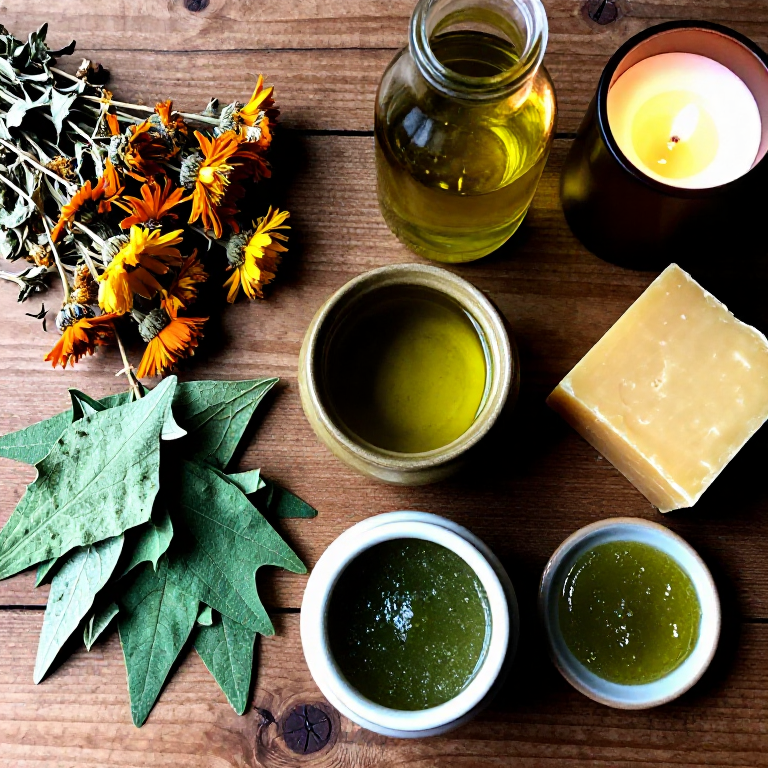


Compounding a Healing Salve from Herbs — Medieval Herbal Medicine
Imiyalelo
Infuse the Herbs in Oil
Infuse the Herbs in Oil
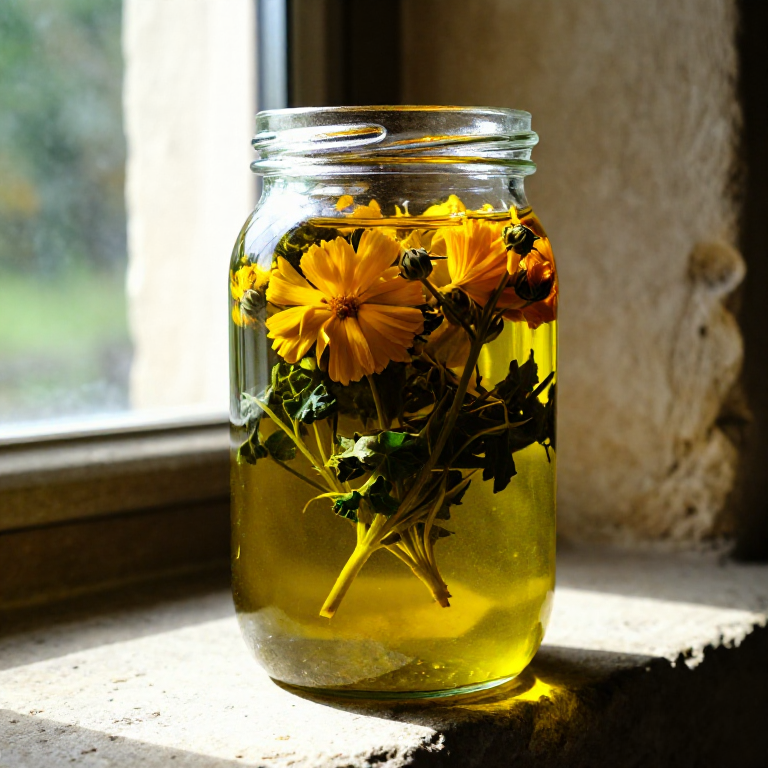
Combine the dried calendula, comfrey, and plantain in a clean glass jar and cover with olive oil. For the slow (cold) infusion method preferred by many medieval herbalists, seal the jar and place it in a sunny window for 4 to 6 weeks, shaking daily — the sun's warmth gently extracts the fat-soluble bioactive compounds into the oil. For a faster method, heat the herbs and oil in a double boiler (a pot of oil set inside a pot of simmering water) at approximately 50-60 degrees Celsius for 2 to 4 hours. Do not overheat — temperatures above 70 degrees Celsius can degrade delicate phytochemicals. Calendula contains triterpenoids and flavonoids with anti-inflammatory and wound-healing properties. Comfrey contains allantoin, which stimulates cell proliferation and tissue repair. Plantain contains aucubin and allantoin with antimicrobial and anti-inflammatory effects.
Izinto zokwakha zalesi sinyathelo:
 Uwoyela womnqumo wezinsalela250ml ucezu
Amathuluzi adingekayo:
 Amabhodwe amabili okupheka emanzini
 Ijeke Lengilazi Elinesivalo
Strain the Infused Oil
Strain the Infused Oil
Strain the infused oil through a fine-mesh strainer lined with cheesecloth into a clean container, squeezing the spent herbs to extract as much oil as possible. The strained oil should be a rich golden-green colour with a herbal aroma. Discard the spent herbs (they can be composted). If the oil appears cloudy, let it settle for a few hours and decant the clear oil off any sediment. This infused oil is itself a useful product — medieval herbalists applied herb-infused oils directly to minor wounds and irritated skin. The oil can be stored in a sealed jar in a cool, dark place for up to one year.
Amathuluzi adingekayo:
 Isihlungi Setiye Esinenetha Ecolekile
Melt the Beeswax into the Oil
Melt the Beeswax into the Oil
Measure the beeswax and herb-infused oil into a clean double boiler. The ratio of beeswax to oil determines the salve's firmness: approximately 25 to 30 grams of beeswax per 250 ml of oil produces a firm but spreadable salve at room temperature. Heat gently until the beeswax is fully melted and blended into the oil — stir with a wooden spoon to ensure uniform mixing. To test the consistency, dip a spoon in the mixture and place it in cold water for 30 seconds — the cooled sample should feel like a soft, spreadable ointment. If too soft, add more beeswax; if too firm, add more oil. Medieval apothecaries often added a few drops of essential oil (lavender or rosemary) at this stage for fragrance and additional antimicrobial properties.
Izinto zokwakha zalesi sinyathelo:
 Amaphilisi Omovu Wezinyosi25-30g ucezu
 Uwoyela obalulekile wamakhambia few drops ucezu
Amathuluzi adingekayo:
Amabhodwe amabili okupheka emanzini Isethi yezipuni zokhuni
Pour into Containers
Pour into Containers
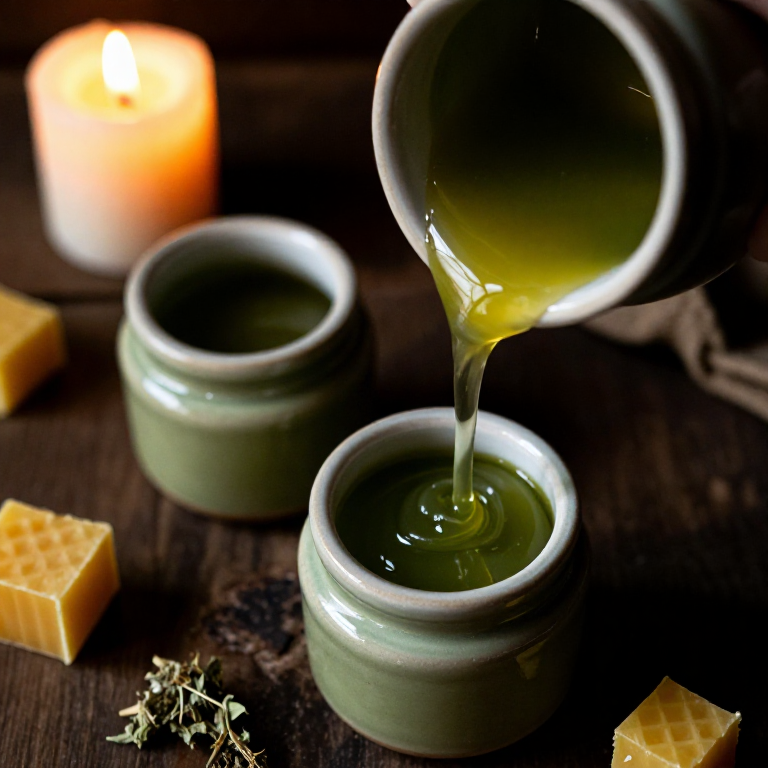
While the wax-oil mixture is still warm and liquid, pour it carefully into clean glass or ceramic jars. Fill to near the top, as the salve will shrink slightly as it cools. Allow the salve to cool undisturbed at room temperature — it will solidify within 1 to 2 hours into a semi-solid ointment. Do not move or shake the jars while cooling, as this can cause the surface to crack or become uneven. The cooled salve should be a uniform golden-green colour with a smooth surface. Seal the jars with tight-fitting lids. Medieval apothecaries stored salves in small ceramic or pewter pots, often marked with the recipe name in Latin.
Amathuluzi adingekayo:
Ijeke Lengilazi ElinesivaloLabel, Store, and Use
Label, Store, and Use
Label each jar with the contents and date. Store in a cool, dark place — the salve will keep for approximately 6 to 12 months. The absence of water in the formula (oil and wax only) means there is no medium for bacterial growth, so the salve does not require preservatives beyond the natural antimicrobial properties of the herbs themselves. To use, apply a thin layer to minor cuts, scrapes, burns, dry skin, or chapped lips. The beeswax creates a protective barrier over the skin while the herb-infused oil delivers its bioactive compounds. This type of oil-and-wax salve has been made continuously from ancient Egyptian times through the medieval period to the present day. Note that comfrey should only be applied externally and not to deep puncture wounds, as its cell-proliferation-stimulating properties can cause surface tissue to close over a wound before deeper layers have healed, potentially trapping infection.
Izinto
8- 250ml ucezuIsibambeli
- 25-30g ucezuIsibambeli
- a few drops ucezuIsibambeli
- 30 grams ucezuIsibambeli
- 15 grams ucezuIsibambeli
- 15 grams ucezuIsibambeli
- 250 ml ucezuIsibambeli
- 25-30 grams ucezuIsibambeli
Amathuluzi Adingekayo
4- Isibambeli
- Isibambeli
- Isibambeli
- Isibambeli
Ama-blueprint ahlobene
Lama-blueprint abelana ngolwazi — amasu, izinto noma izimiso
CC0 Isizinda Somphakathi
Le blueprint ikhishwe ngaphansi kwe-CC0. Ukhululekile ukukopisha, ukuguqula, ukusabalalisa, nokusebenzisa ngaphandle kwemvume.
Sekela uMenzi ngokuthenga imikhiqizo nge-Blueprint yabo IKhomishane Yomenzi kumiswe ngabathengisi, noma dala inguqulo entsha yale Blueprint bese uyifaka njengoxhumaniso ku-Blueprint yakho ukuze wabelane ngemali engenayo.