Ukusebenzisana
UBUCIKO
UBUHLE NEMPILO
UBUCIKO BEZANDLA
AMASIKO NOMLANDO
EZOKUZIJABULISA
IMVELO
UKUDLA NEZIPHUZO
REVERSE ENGINEERING
IZAYENSI
EZEMIDLALO
UBUCHWEPHESHE
IZINTO EZIGQOKWAYO
English


Oblique-Shaft Basin-Lid Churn: A Slanting Agitator Between Brakes, a Lid That Holds Tempering Water
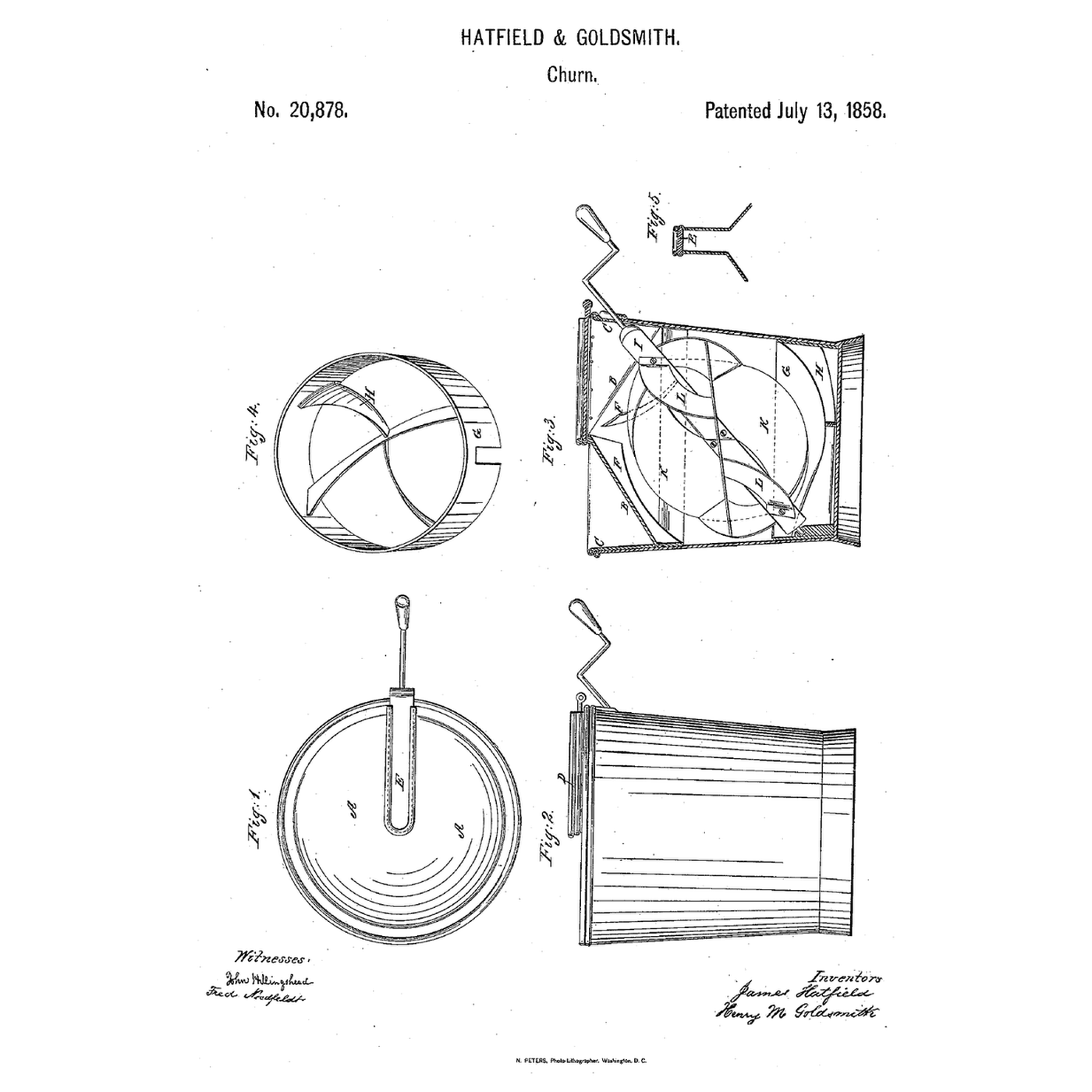
James Hatfield of Falmouth, Indiana, and Henry M. Goldsmith of Burlington, Iowa, received US 20,878, dated 13 July 1858, for a churn with a triangular agitator shaft slanting across the vessel, wings set across it at 45 degrees, brakes above and below, and a lid sunk into a basin of hot or cold water, with a glass slide to watch.
This rung prints the shaft, agitator, brakes and basin lid at tabletop scale, on a stock pot.
Osezingeni eliphezulu
About 6 hours, plus printing
Imiyalelo
1
1
The slant and the wings
The slant and the wings
Ilayisha incwadi ye-Jupyter…
2
2
Slanting dasher shafts, before it
Slanting dasher shafts, before it
That shaft carried dished blades; this one a disk across it at 45 degrees, braced by quarter-circle wings.
3
3
Read US 20,878
Read US 20,878
"The basin or reservoir lid is so arranged as to contain either hot or cold water which being circulated through the cream by the action of the agitator and brakes soon reduces the cream to the desired temperature."
4
4
Print the parts
Print the parts
Print the shaft lying on a flat face across the bed's diagonal, the agitator with supports, the hoop with its brakes, the basin floor down, the rim, three brakes for the lid and the crank. The shaft, rim and hoop need a 256 mm print bed. Print in PETG at 0.2 mm layers, 30 % infill, 4 walls; wash before first use.
Izinto zokwakha zalesi sinyathelo:
 Ifilamenti ye-PETG1 ucezu
Amathuluzi adingekayo:
 Iphrinta ye-3D yentambo (i-FDM)
5
5
Print the shaft
6
6
Print the agitator
Print the agitator
The agitator, printed as step 4 describes.
7
7
Print the hoop
8
8
Print the basin
9
9
Print the rim
10
10
Print the brake
11
11
Print the crank
12
12
Agitator and vessel
Agitator and vessel
Slide the agitator onto the triangular shaft to its middle and fix it with an M3 screw through the collar. Set the hoop in the bottom of the pot and stand the shaft's foot in the socket of its foot block, the shaft slanting across to the opposite side.
Izinto zokwakha zalesi sinyathelo:
 Ibhodwe Elikhulu Lomhluzi1 ucezu
 Izikulufu zomshini1 ucezu
Amathuluzi adingekayo:
 Isethi yezikulufudrayiva
13
13
Lid, glass and crank
Lid, glass and crank
Screw the three brakes under the basin's floor with M4 screws. Set the basin in the rim and the rim on the pot, threading the shaft's top journal out through the chamber and the rim's bearing. Cut a strip of glass 72 by 34 mm and lay it over the chamber. Fix the crank on the shaft's triangular end with an M3 screw.
Izinto zokwakha zalesi sinyathelo:
Izikulufu zomshini1 ucezu Ishidi lengilazi entantayo1 ucezu
Amathuluzi adingekayo:
 Isisiki sengilaziIsethi yezikulufudrayiva
14
14
The build in 3D
The build in 3D
FreeCAD model of this build: the pot cut open, the hoop with three curved brakes and the foot block, the slanting triangular shaft, the disk of wings at 45 degrees with quarter-circle wings to each end, the basin lid with its air chamber and glass, the rim with the bearing, the brakes under the lid and the crank.
15
15
Temper and churn
Temper and churn
Pour in 2 litres of heavy cream, put the lid on and fill the basin with warm or cold water to bring the cream to about 15 °C, checked with the thermometer. Turn the crank steadily, timing it with the stopwatch, and watch through the glass. When the butter comes, lift the lid and the shaft out, pour off the buttermilk, wash the butter in cold water until it runs clear, work in a pinch of salt and weigh it.
Izinto zokwakha zalesi sinyathelo:
 Ukhilimu ojiyile2 l
 Amanzi1 ucezu
 Usawoti Wolwandle Omkhulu1 ucezu
Amathuluzi adingekayo:
 Ithemomitha enenaliti eshiywa ngaphakathi
 Iwashi Lokumisa Isikhathi
 Isikali Sedijithali Sasekhishini
 Isitsha esikhulu sokuxuba sensimbi engagqwali
16
16
Troubleshooting
Troubleshooting
Basin-lid churn troubleshooting.
Flow
Loading...
17
17
History and honest limits
History and honest limits
**James Hatfield** of Falmouth, Fayette County, Indiana, and **Henry M. Goldsmith** of Burlington, Des Moines County, Iowa, US 20,878, 13 July 1858. Their vessel could be of any size or form, round and largest at the top preferred. They wrote that the belt and brakes lift out to wash and that the glass makes it needless to raise the lid to see the work. They claimed the basin lid with its glass slide, and the agitator with the wings L used with the brakes G and H. Our pot, sizes, printed parts and the brakes' shapes are ours. FDM prints hold food in their layer lines, so wash well and replace when worn.
Izinto
7- 1 ucezuIsibambeli
- 1 ucezuIsibambeli
- 2 izicucuIsibambeli
- 1 ucezuIsibambeli
- Isibambeli
- 1 ucezuIsibambeli
- 1 ucezuIsibambeli
Amathuluzi Adingekayo
7- Isibambeli
- Isibambeli
- Isibambeli
- Isibambeli
- Isibambeli
Amafayela omklamo
8Le blueprint yenza
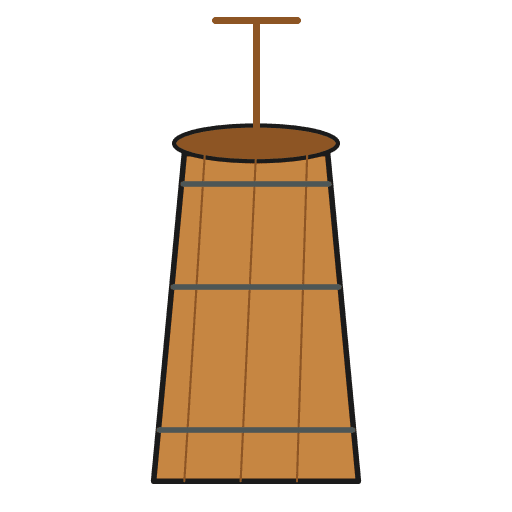
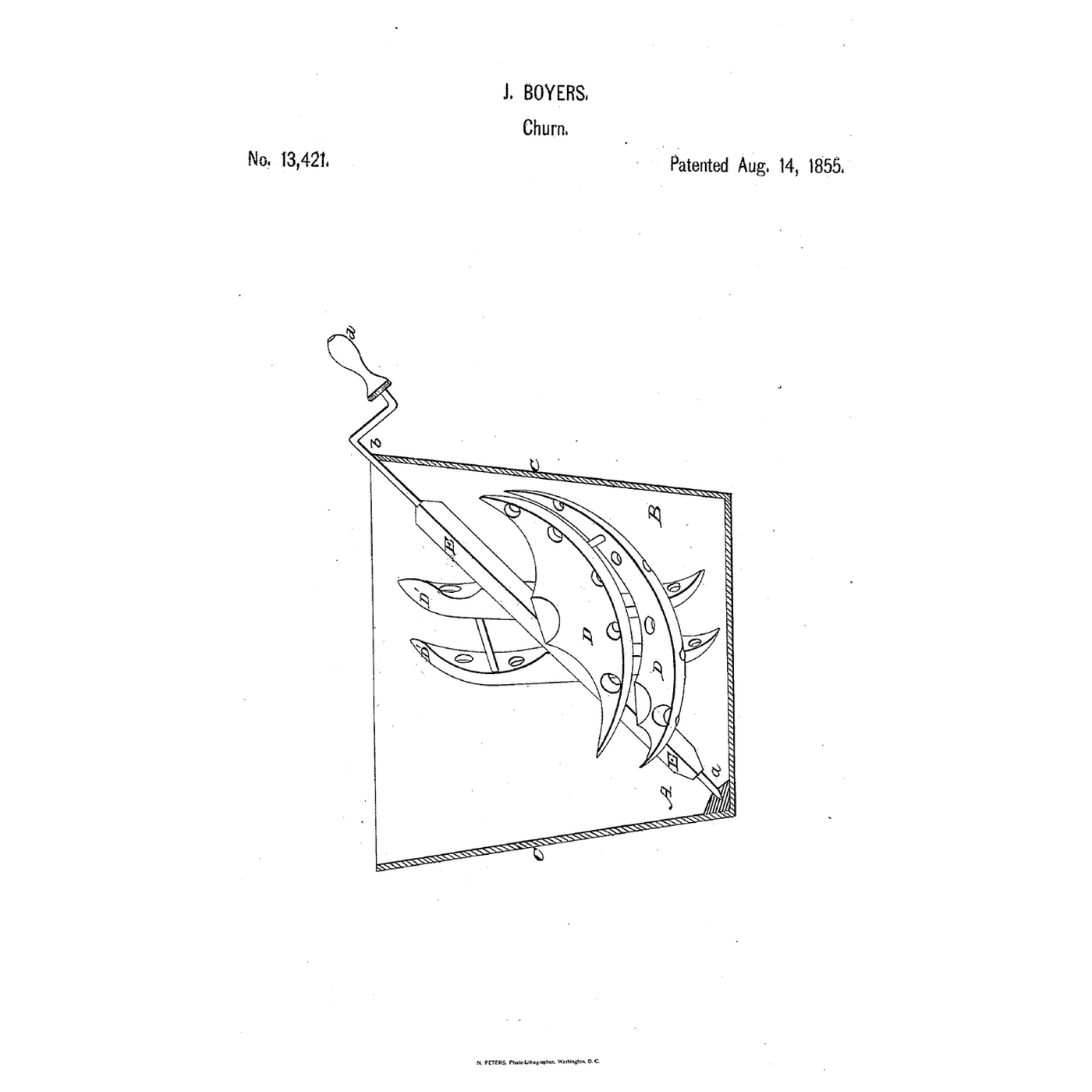
Ama-blueprint ahlobene
Lama-blueprint abelana ngolwazi — amasu, izinto noma izimiso

CC0 Isizinda Somphakathi
Le blueprint ikhishwe ngaphansi kwe-CC0. Ukhululekile ukukopisha, ukuguqula, ukusabalalisa, nokusebenzisa ngaphandle kwemvume.
Sekela uMenzi ngokuthenga imikhiqizo nge-Blueprint yabo IKhomishane Yomenzi kumiswe ngabathengisi, noma dala inguqulo entsha yale Blueprint bese uyifaka njengoxhumaniso ku-Blueprint yakho ukuze wabelane ngemali engenayo.