UBUCIKO
UBUHLE NEMPILO
UBUCIKO BEZANDLA
AMASIKO NOMLANDO
EZOKUZIJABULISA
IMVELO
UKUDLA NEZIPHUZO
REVERSE ENGINEERING
IZAYENSI
EZEMIDLALO
UBUCHWEPHESHE
IZINTO EZIGQOKWAYO
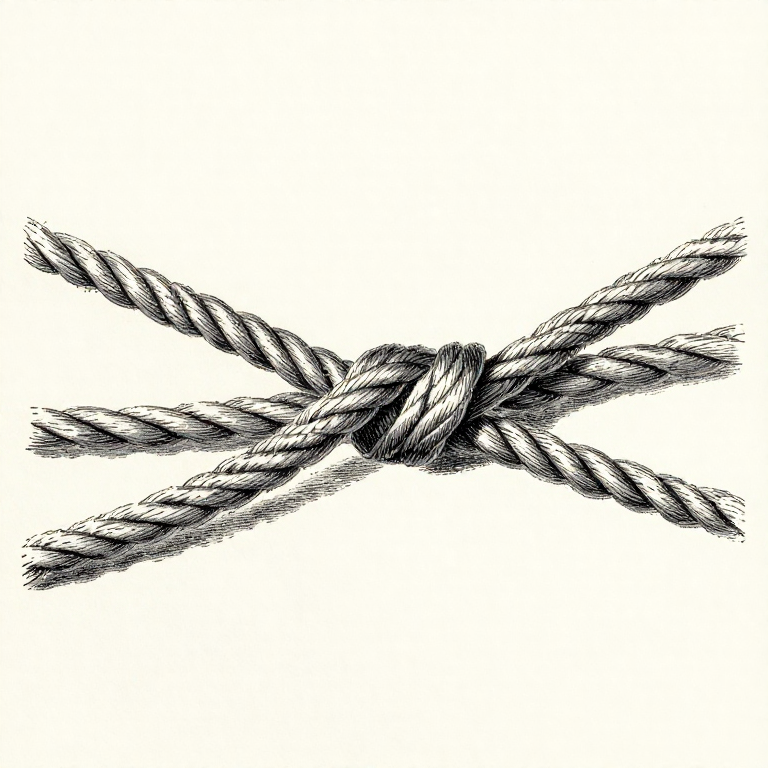


Plying: Two Wrongs Making a Right
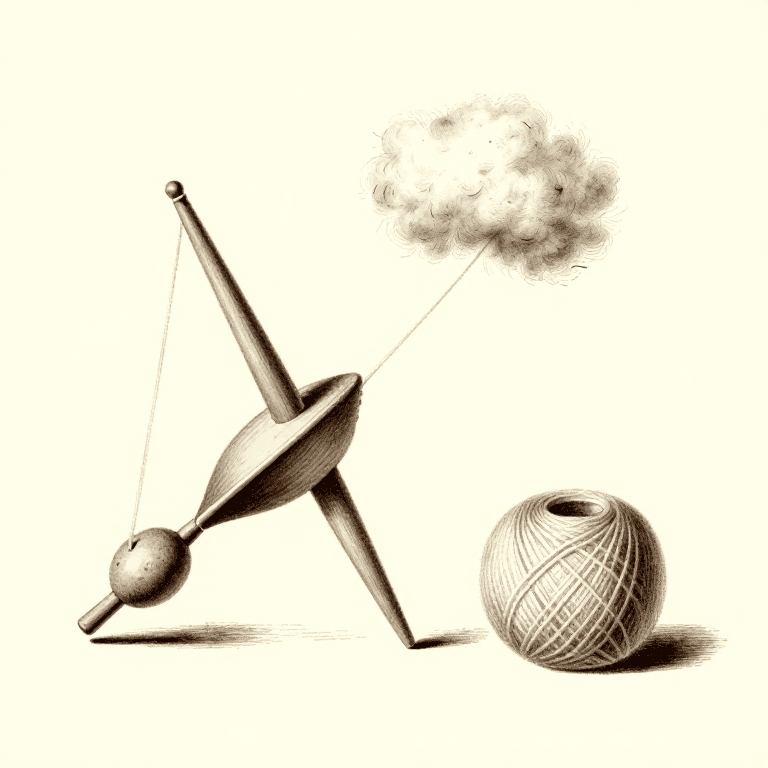
A single spun thread — a **singles** — carries all its twist in one direction, so it is permanently trying to untwist. Knit with it and the fabric leans; weave with it and the cloth skews.
**Plying** twists two or more singles together in the OPPOSITE direction. Each strand unwinds a little as the ply twist goes in, and at the right amount the two cancel: the yarn hangs straight, and it is far stronger and more even than either strand alone.
It is also the fastest way to make a yarn more consistent, because a thin place in one strand almost never lines up with a thin place in the other.
Ophakathi
3 hours
Imiyalelo
1
1
Why ply at all
Why ply at all
**Balance.** The main reason. Opposing twists cancel, and the yarn stops trying to rotate. A knitted fabric from unbalanced singles leans visibly to one side; a woven one pulls out of square.
**Strength.** A plied yarn is stronger than the sum of its strands, because a thin place in one is supported by the others across it rather than being the weak link of the whole.
**Evenness.** Two strands average out each other's variation. Three do it better. This is the cheapest improvement available to a beginner's spinning.
**Roundness.** A two-ply is slightly oval and shows stitch definition well; a three-ply is genuinely round and is what cables and lace want. A four-ply or more is rounder and denser still.
**Singles are not a failure**, though. A singles yarn is lighter and airier for the same thickness, and it is what most weaving yarn and most historical yarn actually was. Tapestry and much traditional weaving use singles deliberately — the loom holds the twist under tension until the cloth is woven, and the finished cloth holds it afterwards.
Izinto zokwakha zalesi sinyathelo:
 Intambo kavolo engadayiwe2 izicucu
Amathuluzi adingekayo:
 I-Loupe Yokukhulisa
 Ibhuku Lokubhala
2
2
Doing it, and how much ply twist
Doing it, and how much ply twist
**Ply in the opposite direction to the singles.** Z singles are plied S. Getting this wrong produces a rope so overtwisted it cannot be used, and it is obvious within a few centimetres.
**Keep the strands under even tension** and let them come together at one fixed point. A lazy kate holding the bobbins with a little drag is what keeps them from unwinding at different rates.
**Roughly two thirds of the singles twist**, as a starting point. Less and the yarn is still active; more and it becomes hard and wiry in the other direction.
**The balance test while plying:** stop the wheel, let a loop of the plied yarn hang slack. A balanced yarn hangs almost straight with perhaps a slow lazy loop. A yarn that corkscrews tightly has too much ply twist; one that still tries to twist in the singles direction has too little.
**Ply from bobbins filled at about the same time.** Spinning drifts over a long session, and plying the first bobbin against the last puts all the drift into one yarn.
**Chain plying** makes a three-ply from a single bobbin by pulling loops through each other. It keeps colour sequences together, which is why it is used for dyed fibre, and it costs a slight bump at each join.
Izinto zokwakha zalesi sinyathelo:
Intambo kavolo engadayiwe2 izicucuAmathuluzi adingekayo:
 Isipindi sesandla
 Isigoqi sebhobhiniIbhuku Lokubhala
3
3
Finishing: the wash that sets the twist
Finishing: the wash that sets the twist
A freshly plied skein is not finished. The twist is held in place by tension, and it is still an active, energetic yarn.
**Skein it, tie it loosely in four places**, in a figure of eight so the ties do not slip.
**Soak it in hot water** with a little wool wash, twenty minutes, no agitation. The fibres relax and the twist settles into its final arrangement.
**Then thwack it, if it is wool.** Squeeze the water out and snap the wet skein hard against a hard surface a dozen times. It sounds violent and it is exactly what fulls a woollen yarn: the fibres bloom, the yarn plumps up and becomes softer and more cohesive. Worsted yarn wants less of this.
**Hang it to dry without weight.** Weighting a drying skein stretches out the very elasticity that was just developed, and the yarn will spring back when it is knitted, leaving the garment a different size from the swatch.
**Measure it again afterwards.** Finished yarn is shorter, thicker and softer than it was on the bobbin, and it is the finished number that goes on the tag.
Izinto zokwakha zalesi sinyathelo:
Intambo kavolo engadayiwe2 izicucuAmathuluzi adingekayo:
 Isikali Esinembile
 Irula Lensimbi
 Isikelo
4
4
Cabling, and the structures beyond a simple ply
Cabling, and the structures beyond a simple ply
**A cable** is a plied yarn plied again. Two two-plies, both S, plied together Z gives a four-strand cabled yarn: very round, very hard-wearing, and the structure of most sewing thread and rope.
Each level reverses the direction, exactly as rope is laid: yarns Z, strands S, rope Z. The catalogue's rope blueprints are the same principle at a different scale, and a cabled yarn is a rope.
**A crepe yarn** deliberately leaves the twists unbalanced — a hard-twisted singles plied lightly, so the finished yarn still wants to move. That residual energy is what makes crepe fabric crinkle when it is washed. Unbalanced on purpose is a technique, not a fault.
**A boucle or other novelty yarn** plies strands of different lengths or tensions together so one loops around the other. It needs a binder — a fine strong thread plied in last — to hold the loops in place.
**A navajo or chain ply** is a three-ply from one strand, as above.
In every case the rule from the first step holds: **each level of twist opposes the one below it.** Count the levels and the directions alternate.
Izinto zokwakha zalesi sinyathelo:
Intambo kavolo engadayiwe2 izicucu Intambo ye-linen1 ucezu
Amathuluzi adingekayo:
Isipindi sesandlaI-Loupe YokukhulisaIbhuku LokubhalaAmathuluzi Adingekayo
7- Isibambeli
- Isibambeli
- Isibambeli
- Isibambeli
- Isibambeli
- Isibambeli
- Isibambeli
Ama-blueprint ahlobene
Lama-blueprint abelana ngolwazi — amasu, izinto noma izimiso
CC0 Isizinda Somphakathi
Le blueprint ikhishwe ngaphansi kwe-CC0. Ukhululekile ukukopisha, ukuguqula, ukusabalalisa, nokusebenzisa ngaphandle kwemvume.
Sekela uMenzi ngokuthenga imikhiqizo nge-Blueprint yabo IKhomishane Yomenzi kumiswe ngabathengisi, noma dala inguqulo entsha yale Blueprint bese uyifaka njengoxhumaniso ku-Blueprint yakho ukuze wabelane ngemali engenayo.