UBUCIKO
UBUHLE NEMPILO
UBUCIKO BEZANDLA
AMASIKO NOMLANDO
EZOKUZIJABULISA
IMVELO
UKUDLA NEZIPHUZO
REVERSE ENGINEERING
IZAYENSI
EZEMIDLALO
UBUCHWEPHESHE
IZINTO EZIGQOKWAYO
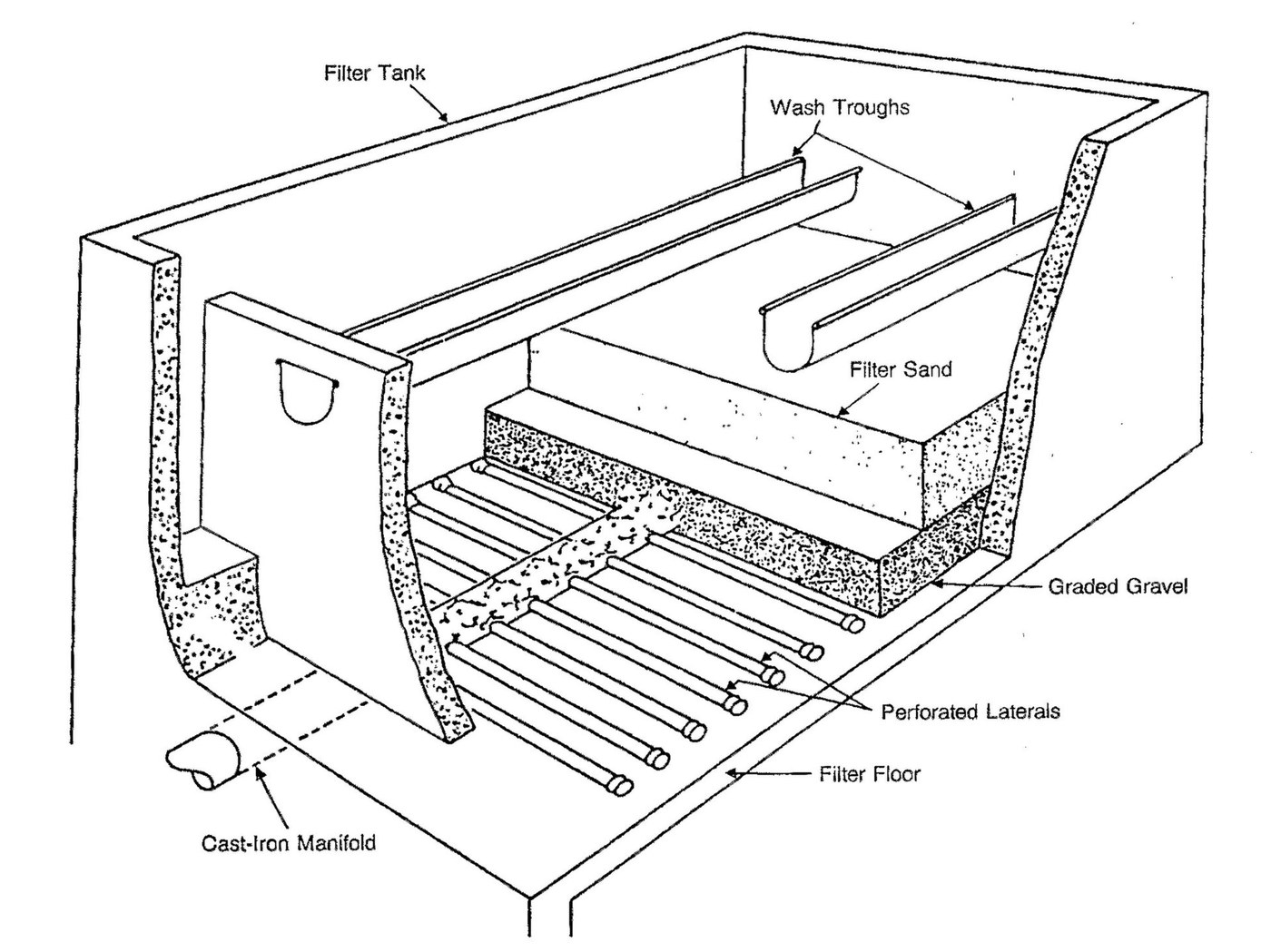


Rapid Gravity Sand Filter with Backwash
The slow sand filter, already published here, cleans water with a living skin of microbes on its surface, and it does it at about 0.1 to 0.3 metres an hour. To supply a city that way you need acres of it.
The rapid filter runs at five to fifteen metres an hour — fifty times faster — through coarser sand, and it has no living skin at all. It cannot: nothing survives being scoured daily. It works only because the water reaching it has already been coagulated, so the particles arrive as flocs that stick to the grains instead of passing between them. And because it clogs in hours rather than months, it needs the invention that actually made it practical — reversing the flow to blow the bed clean. Build one in a clear pipe so you can watch the dirt go in, and watch it come back out.
Ophakathi
1 day
Imiyalelo
1
1
Build the column
Build the column
Stand a 1-metre length of wide pipe upright, closed at the bottom with an outlet and a valve, and a second valve and inlet near the base for the backwash. A clear pipe is worth hunting for: half the lesson here is visible.
Fit a false floor 5 cm above the bottom — a perforated disc under a circle of mesh — so water can leave evenly across the whole area. Without it the flow funnels to the outlet and you filter through a cone of sand while the rest sits idle.
Izinto zokwakha zalesi sinyathelo:
 Ipayipi Le-PVC1 length
 Ivalvu eyibhola2 izicucu
2
2
Grade the bed, coarse at the bottom
Grade the bed, coarse at the bottom
Lay 10 cm of gravel on the false floor, then 5 cm of coarse grit, then 50 cm of washed sand of about 0.6 to 1.0 mm grain. Wash each layer until the rinse runs clear before the next goes in.
Coarse at the bottom, fine at the top is deliberate: the gravel supports the sand without letting it escape into the outlet. Unwashed sand is the classic first failure — the fines wash straight through and your first filtrate is muddier than what you put in.
Izinto zokwakha zalesi sinyathelo:
 Ugade10 amalitha
 Isihlabathi30 amalitha
Amathuluzi adingekayo:
 Ibhakede
3
3
Feed it coagulated water, not raw water
Feed it coagulated water, not raw water
Treat your raw water with alum first and let the floc form. Feed the column from a header bucket so the water level above the sand stays roughly constant, and open the outlet valve until you get a steady stream.
Run raw, uncoagulated water through it once, deliberately, and watch what happens: it comes out nearly as cloudy as it went in. Rapid sand on its own is a strainer with gaps far bigger than the clay it is meant to catch. Coagulation is not an optional pre-step, it is the half of the process that does the removing.
Amathuluzi adingekayo:
Ibhakede Isilinda sokukala
4
4
Watch the head loss build
Watch the head loss build
Mark the water level above the sand every ten minutes. As the bed loads with floc, the resistance climbs and the level rises — that rise is head loss, and it is how a works knows the filter is full.
Keep going and you will see the second failure mode. When head loss gets high enough the trapped floc is pushed straight through and the filtrate goes cloudy again: breakthrough. A real plant washes on head loss OR on turbidity, whichever comes first, and never waits for breakthrough.
Amathuluzi adingekayo:
 Iwashi Lokumisa IsikhathiIsilinda sokukala
5
5
Backwash — the invention that made it work
Backwash — the invention that made it work
Shut the inlet, open the bottom valve to the mains or to a raised bucket, and push clean water UP through the bed until it lifts and boils. Send the dirty overflow to waste. Two or three minutes usually does it; stop when the water running off is clear.
You should see the bed expand by 20 to 30 per cent and the grains tumble. Too gentle and the dirt stays put; too fierce and you wash your sand down the drain with it. Then shut it off and watch the sand settle: it grades itself, fine on top, coarse below, every single time. That self-sorting is why the filter works the same way after the hundredth wash as after the first.
Amathuluzi adingekayo:
Ibhakede6
6
Filtration rate, run length and the cost of speed
Filtration rate, run length and the cost of speed
Ilayisha incwadi ye-Jupyter…
Amathuluzi adingekayo:
Isilinda sokukalaIwashi Lokumisa Isikhathi7
7
Know what you have and have not removed
Know what you have and have not removed
Compare raw, settled and filtered water side by side in clear jars against a white sheet. A working rapid filter fed coagulated water should give you a visibly clear filtrate.
Clear is not safe. Rapid filtration removes turbidity and a good share of the larger microbes attached to it, but it leaves plenty behind — and unlike slow sand, it has no biological layer doing quiet extra work. Every rapid filter plant in the world is followed by a disinfection step. That is the next rung.
Amathuluzi adingekayo:
 Ijeke Lengilazi
Izinto
4- 1 lengthIsibambeli
- 2 izicucuIsibambeli
- 10 amalithaIsibambeli
- 30 amalithaIsibambeli
Ama-blueprint ahlobene
Lama-blueprint abelana ngolwazi — amasu, izinto noma izimiso


CC0 Isizinda Somphakathi
Le blueprint ikhishwe ngaphansi kwe-CC0. Ukhululekile ukukopisha, ukuguqula, ukusabalalisa, nokusebenzisa ngaphandle kwemvume.
Sekela uMenzi ngokuthenga imikhiqizo nge-Blueprint yabo IKhomishane Yomenzi kumiswe ngabathengisi, noma dala inguqulo entsha yale Blueprint bese uyifaka njengoxhumaniso ku-Blueprint yakho ukuze wabelane ngemali engenayo.