UBUCIKO
UBUHLE NEMPILO
UBUCIKO BEZANDLA
AMASIKO NOMLANDO
EZOKUZIJABULISA
IMVELO
UKUDLA NEZIPHUZO
REVERSE ENGINEERING
IZAYENSI
EZEMIDLALO
UBUCHWEPHESHE
IZINTO EZIGQOKWAYO
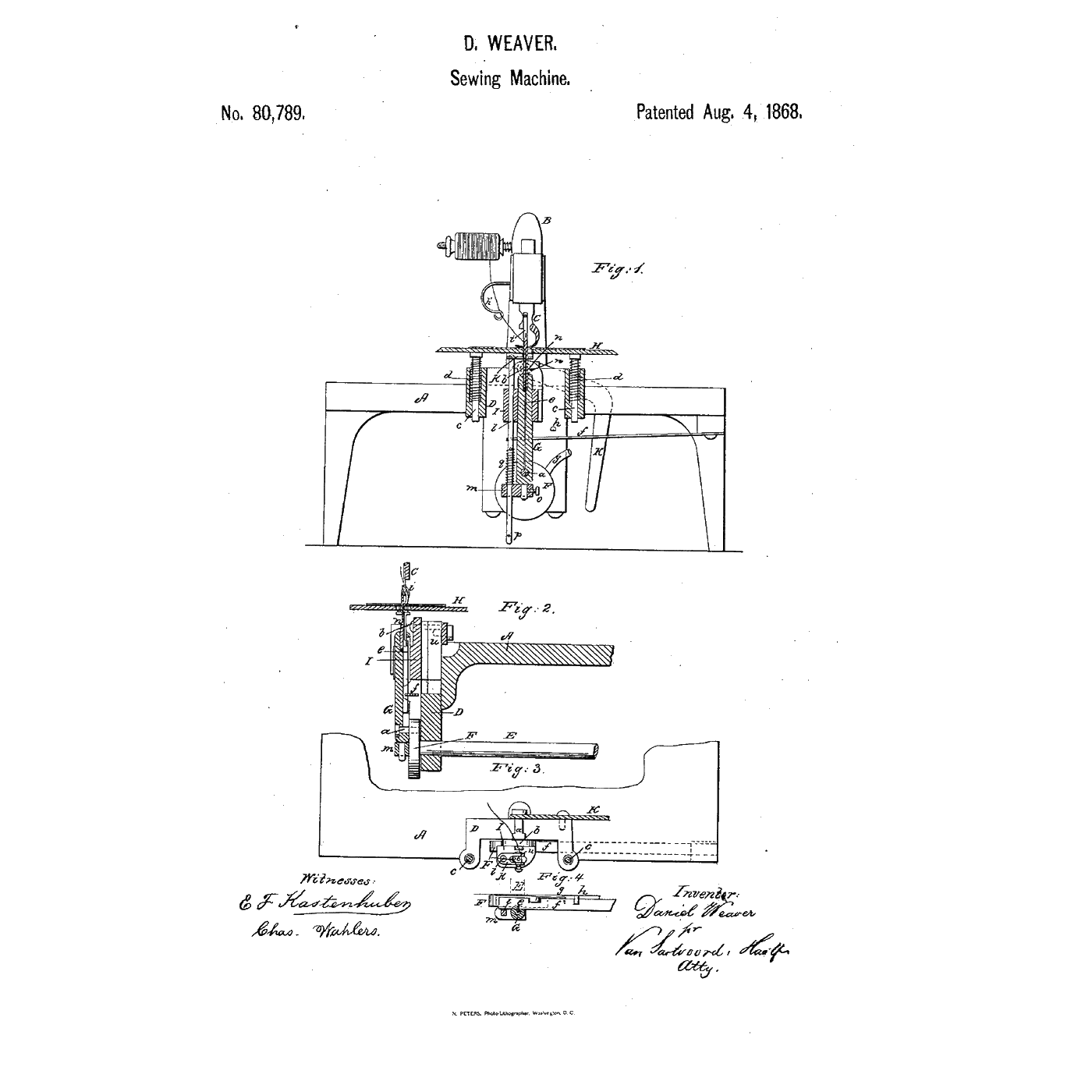


The Latch-Hook Chain Stitcher: A Hook Needle From Below, Its Latch Closed by the Cloth
A hook needle rising through the cloth from below catches the thread above and draws it down as a loop; but going up, the open hook catches in the cloth, and coming down it may drop the loop.
Daniel Weaver of Guilderland, New York, received US 80,789, dated 4 August 1868, for a machine in which "the hook-needle is provided with a latch, which recedes as the needle rises, so that the hook will catch the thread presented to it and, forming a loop, carry it down through the material, the loop of the thread being retained in the hook by a latch, which also prevents the hook in its descent from catching in the material." A tappet-arm opens the latch to cast off the loop, a spring closes it, and a fork rising through slots in the cloth-plate feeds the work with the needle.
This rung works out how the bracket's place sets the stitch, then builds a hand-cranked demonstrator from a latch-hook needle on a rocking bar under a cloth-plate, and sews a chain stitch from below.
Osezingeni eliphezulu
About 2 days
Imiyalelo
1
1
Feed from the bracket
Feed from the bracket
Ilayisha incwadi ye-Jupyter…
2
2
A hook-needle machine before it
A hook-needle machine before it
The embedded blueprint works on a machine whose hook needle rises through the work. Weaver adds a latch that shuts the hook so it neither catches the cloth nor drops the loop.
3
3
Read US 80,789
Read US 80,789
"The needle n is provided with a latch or slide, e, which is embedded in a groove in the needle-bar and subjected to the action of a spring, f, which has a tendency to keep the point of the latch in contact with the barb of the hook, so that said hook is closed."
"By these means a chain-stitch is formed and a sewing mechanism is obtained which is very simple in its construction and sure in its operation. The feed of the material to be sewed is effected by the needle itself and the fork, said needle and fork being so arranged that they receive a compound motion—viz., a reciprocating and an oscillating motion"
4
4
Build the demonstrator and sew from below
Build the demonstrator and sew from below
**Frame and plate.** Make a hardwood table with a thin plywood cloth-plate on top, slotted for the needle, and fix a sprung wooden foot above it that presses the cloth down.
**Needle bar.** Under the plate, pivot a hardwood needle-bar in a bracket, its lower end on a wrist-pin on a hand-turned disc. Fix a crochet hook in its upper end as the hook needle, pointing up through the slot.
**Latch.** Glue a thin strip of spring steel along the hook's shank as the latch, bent so its tip rests on the hook's barb and closes it; fix a small stop under the plate that the latch meets as the hook comes down, opening it to cast off.
**Test.** Lay cloth under the foot, lead a thread over it from a spool, and turn the disc slowly. Watch the hook catch the thread above, draw a loop down, and draw the next loop through it. Move the bracket's pivot and see the stitch length change.
Izinto zokwakha zalesi sinyathelo:
 Ipulangwe Lokhuni Oluqinile2 izicucu
 Ishidi le-plywood1 ucezu
 Ibhulokhi Lokhuni Oluqinile1 ucezu
 Izikulufu zokhuni12 izicucu
 Umucu wensimbi yensipho0.1 imitha
 Iqoqo lezintambo zokucindezela1 ucezu
 I-epoxy Yezingxenye Ezimbili1 ucezu
 Intambo Yekotini1 ucezu
 Indwangu kakotini (elula)1 ucezu
Amathuluzi adingekayo:
 Isaha Sesandla
 Isethi yezisebenzi zokhuni
 Ibhola Elingenantambo
 Iqoqo Lamakhanda Ebhola
 Isethi yezinaliti ze-crochet
 Udlawu Olunezihloko Eziyindilinga
 Isethi yezikulufudrayiva
 Ama-clamp
 I-Caliper Yedijithali Yamayintshi Ayi-6
5
5
A hook that snags, drops loops or skips
A hook that snags, drops loops or skips
Latch-hook chain stitcher troubleshooting.
Flow
Loading...
6
6
History and honest limits
History and honest limits
**Daniel Weaver** of Guilderland, Albany County, New York, received US 80,789, dated 4 August 1868. His needle-bar G was driven by the wrist-pin a on the disc F of the driving shaft E, its bracket I pivoted on a slide u adjusted by the lever K; the tappet-arm g opened the latch, and the stop h held it open as the needle rose; the fork k on a rod l with the spring q fed the material; the foot C was fixed and the cloth-plate H sprung up against it. His claims cover the spring and tappet-arm with the latch and hook-needle, the stop, the fork's spring and bracket, and the slide and hinged bracket with the lever.
**Honest limits.** A crochet hook with a strip latch on a hand-turned wooden linkage stands in for his machine, and the fork feed is left out. The notebook's stitch length is a small-angle approximation; its values are examples. Your chain stitch is the result.
Izinto
9- 2 izicucuIsibambeli
- 1 ucezuIsibambeli
- 1 ucezuIsibambeli
- 12 izicucuIsibambeli
- 0.1 imithaIsibambeli
- Isibambeli
- 1 ucezuIsibambeli
- 1 ucezuIsibambeli
- 1 ucezuIsibambeli
Amathuluzi Adingekayo
9- Isibambeli
- Isibambeli
- 1 vendor sell this, none ship to you yetIsibambeli
- Isibambeli
- Isibambeli
- Isibambeli
- Isibambeli
- Isibambeli
- Isibambeli
Ama-blueprint ahlobene
Lama-blueprint abelana ngolwazi — amasu, izinto noma izimiso
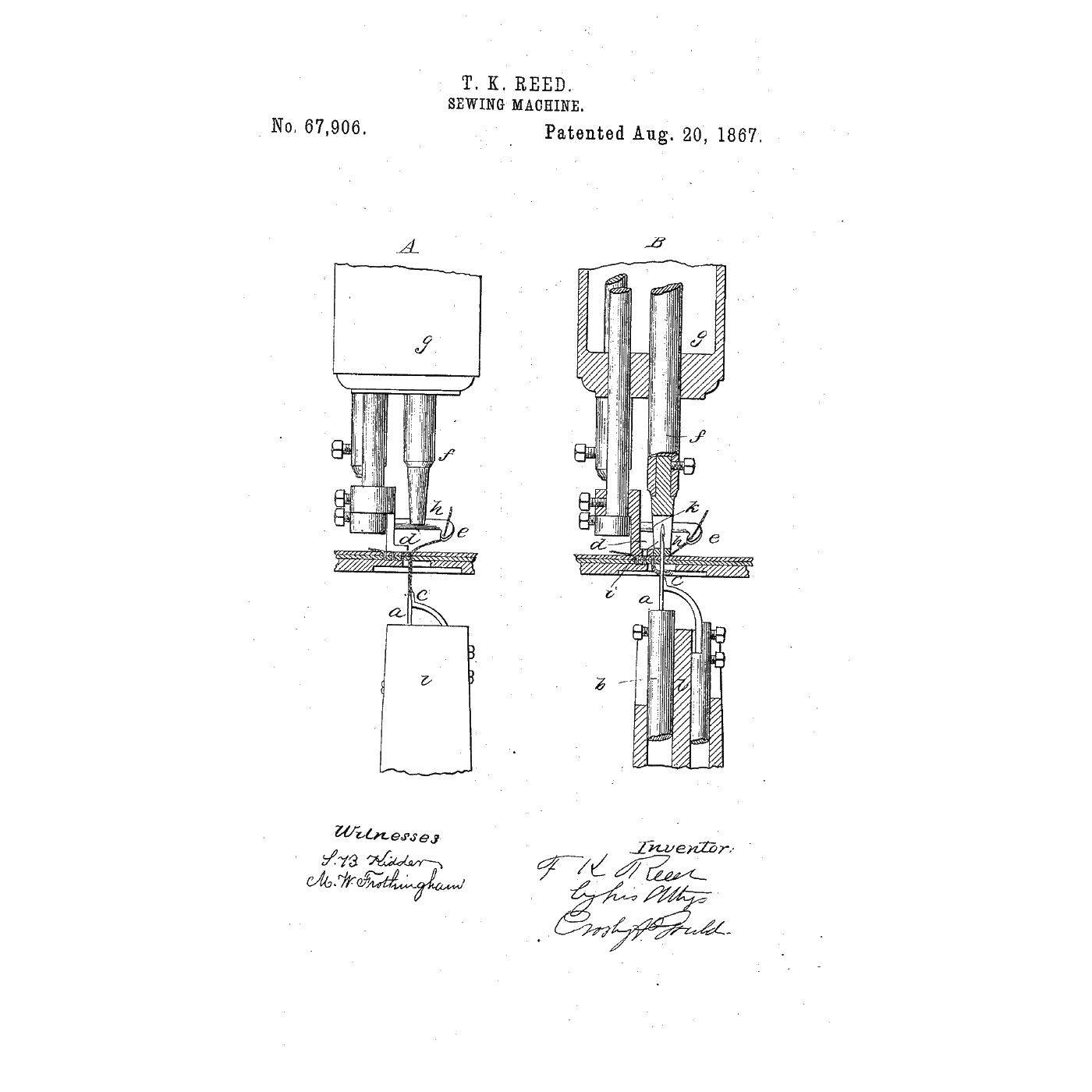
The Tubular Presser Foot: Hold the Leather Flat Round the Hole So the Needle Raises No Burr
ngu-Martin
Indwangu Nesikhumba
35
0
0
0
0
0
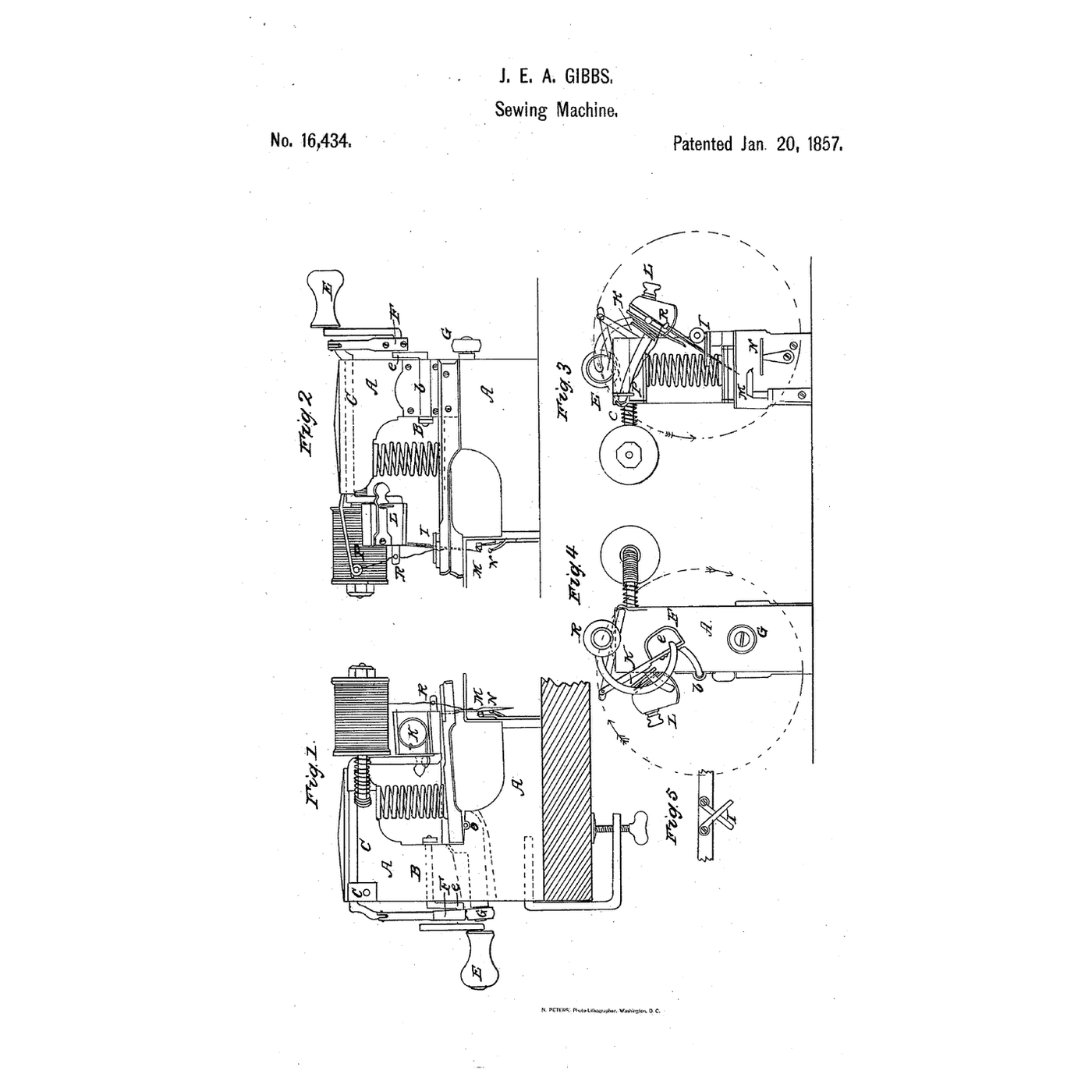
The Stationary-Hook Chain Stitcher: A Vibrating Needle Lays Its Loop Over a Fixed Hook
ngu-Tex
Ukuthunga
40
0
0
0
0
0
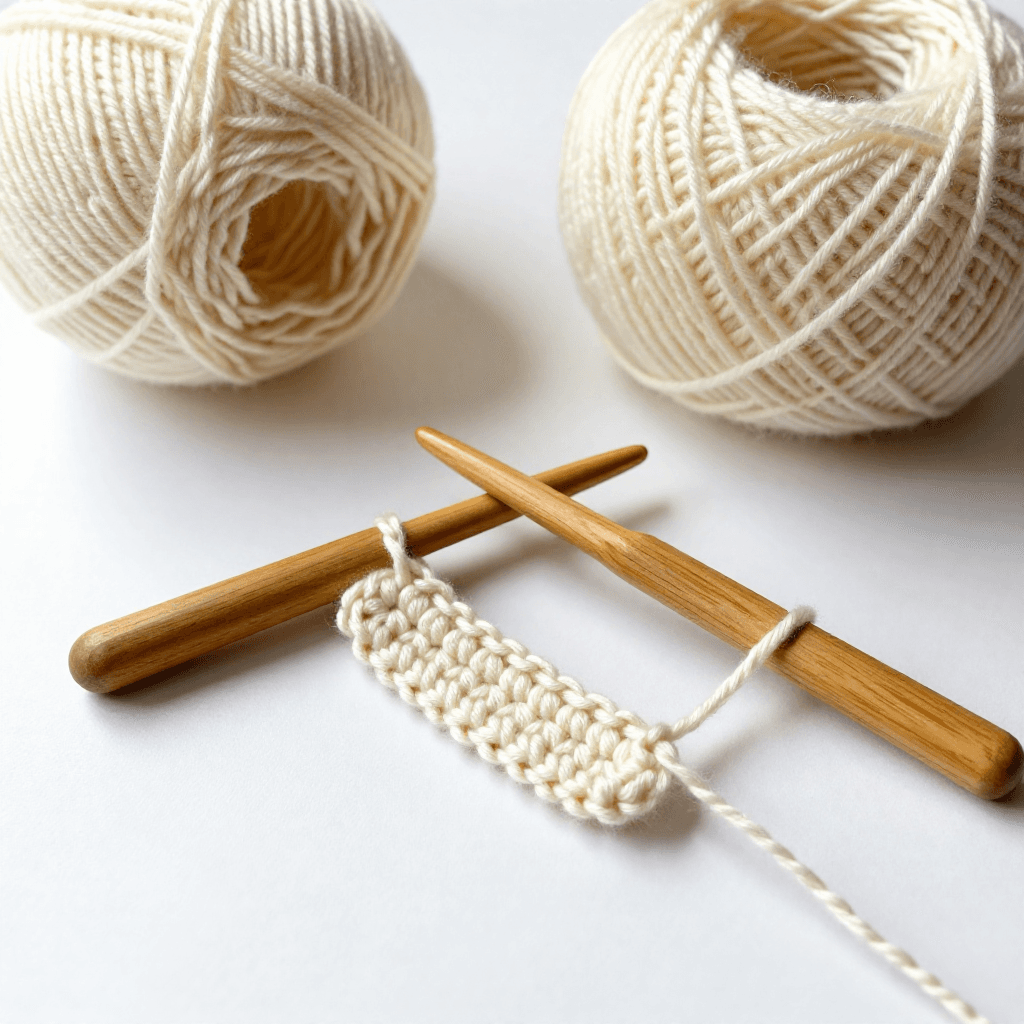
Crochet — The Chain Stitch and Single Crochet Foundation
ngu-Tex
Indwangu Nesikhumba
40
0
0
0
2
0
CC0 Isizinda Somphakathi
Le blueprint ikhishwe ngaphansi kwe-CC0. Ukhululekile ukukopisha, ukuguqula, ukusabalalisa, nokusebenzisa ngaphandle kwemvume.
Sekela uMenzi ngokuthenga imikhiqizo nge-Blueprint yabo IKhomishane Yomenzi kumiswe ngabathengisi, noma dala inguqulo entsha yale Blueprint bese uyifaka njengoxhumaniso ku-Blueprint yakho ukuze wabelane ngemali engenayo.