UBUCIKO
UBUHLE NEMPILO
UBUCIKO BEZANDLA
AMASIKO NOMLANDO
EZOKUZIJABULISA
IMVELO
UKUDLA NEZIPHUZO
REVERSE ENGINEERING
IZAYENSI
EZEMIDLALO
UBUCHWEPHESHE
IZINTO EZIGQOKWAYO
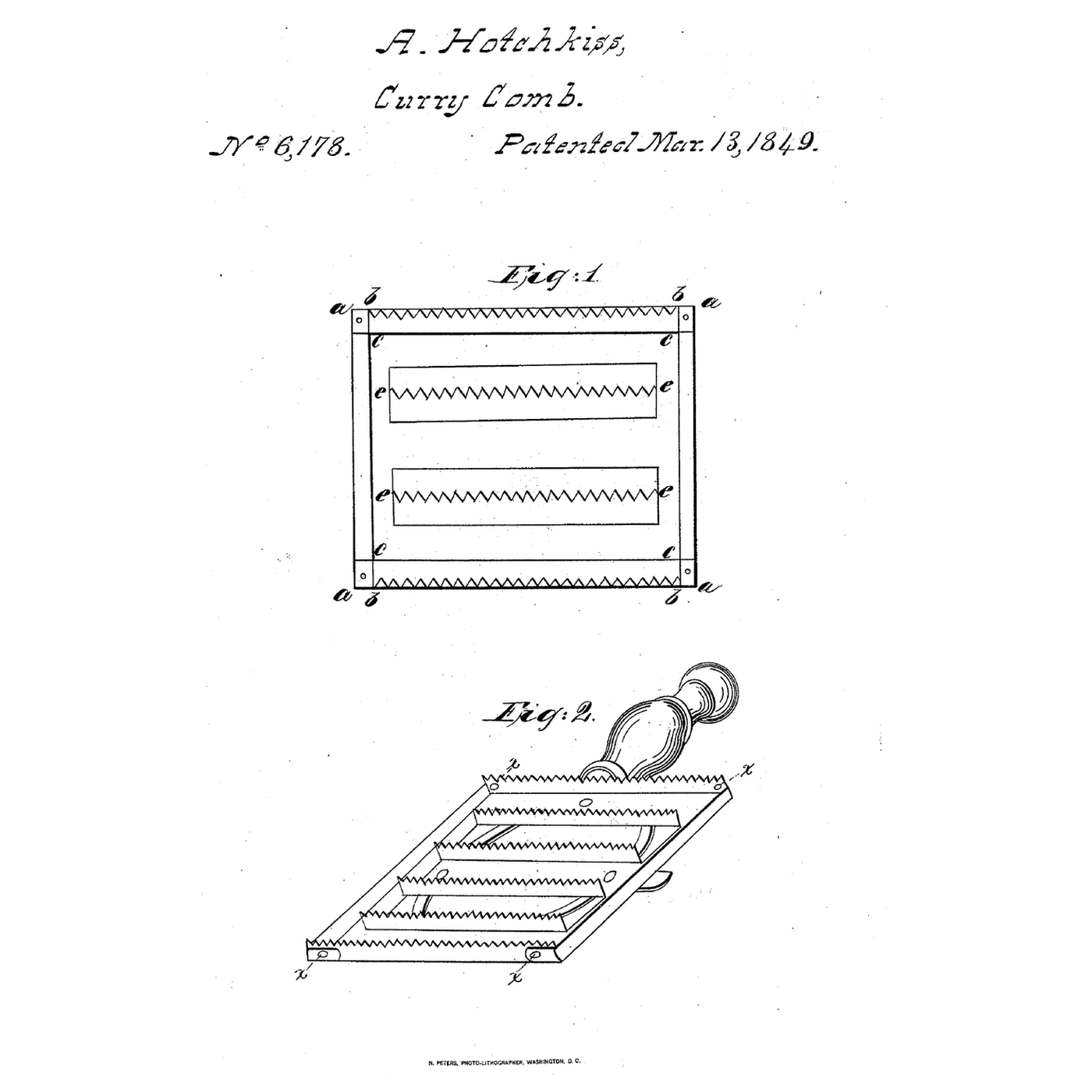


The One-Sheet Curry Comb: Cut, Slit and Fold, With No Rivet and No Waste
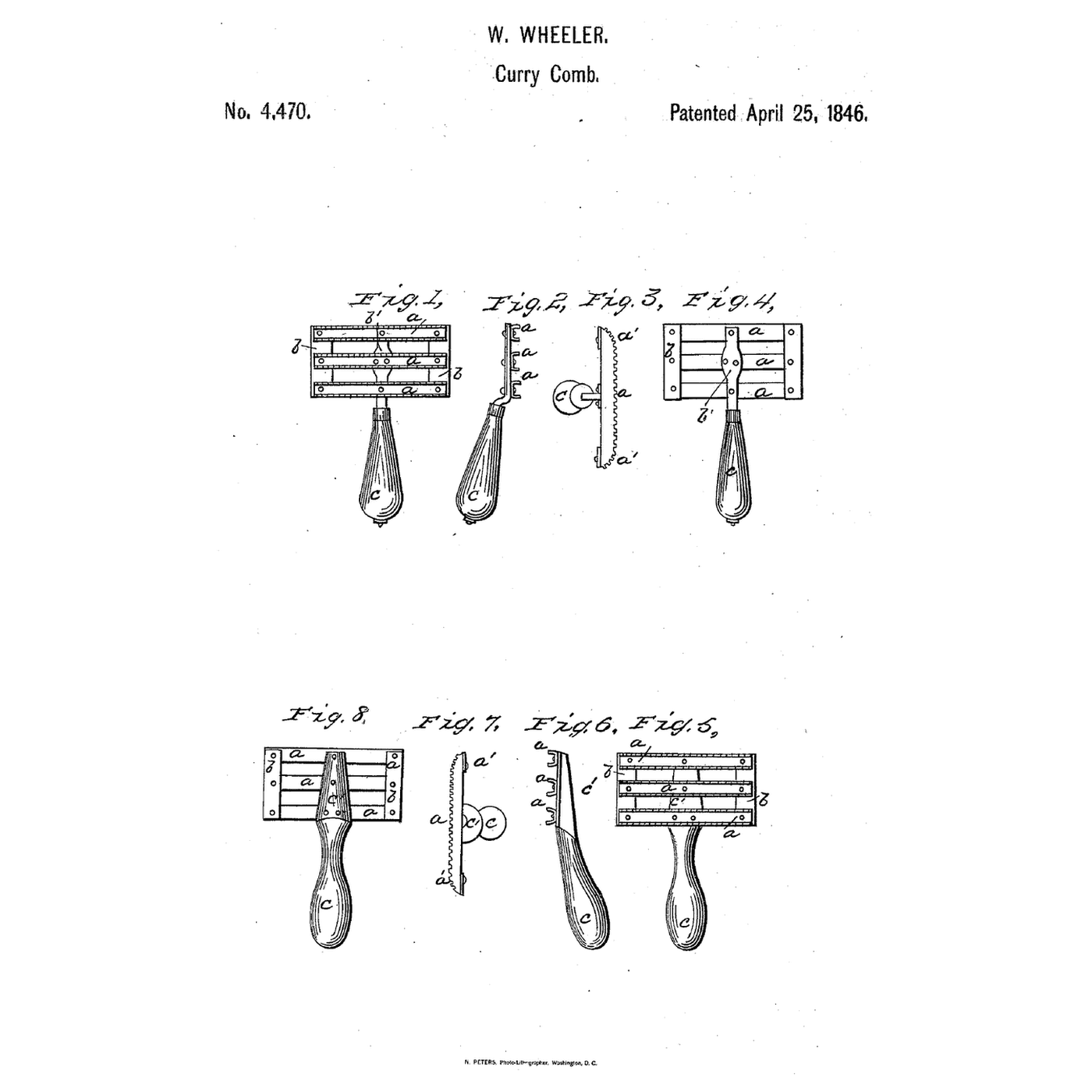
A curry comb built of separate toothed strips riveted to a back takes many parts, much riveting, and leaves offcuts.
Andrew Hotchkiss of Sharon, Connecticut, received US 6,178, dated 13 March 1849, for "making curry combs by constructing their body and teeth out of one solid sheet, or piece of metal, by so cutting and bending the said sheet or piece of metal, as set forth in the above specification, that without any material waste and without the combining and riveting or fastening together, separate and detached portions of the structure. I do make a complete body and teeth for the comb." Teeth are cut along all four sides; two sides are bent up, the other two bent up and then round over them and riveted; the inner rows are slit and bent up from the plate itself.
This rung lays out the blank, then cuts, slits and folds a comb from one piece of sheet steel and grooms with it.
Ophakathi
About 4 hours
Imiyalelo
1
1
Lay out the blank
Lay out the blank
Ilayisha incwadi ye-Jupyter…
2
2
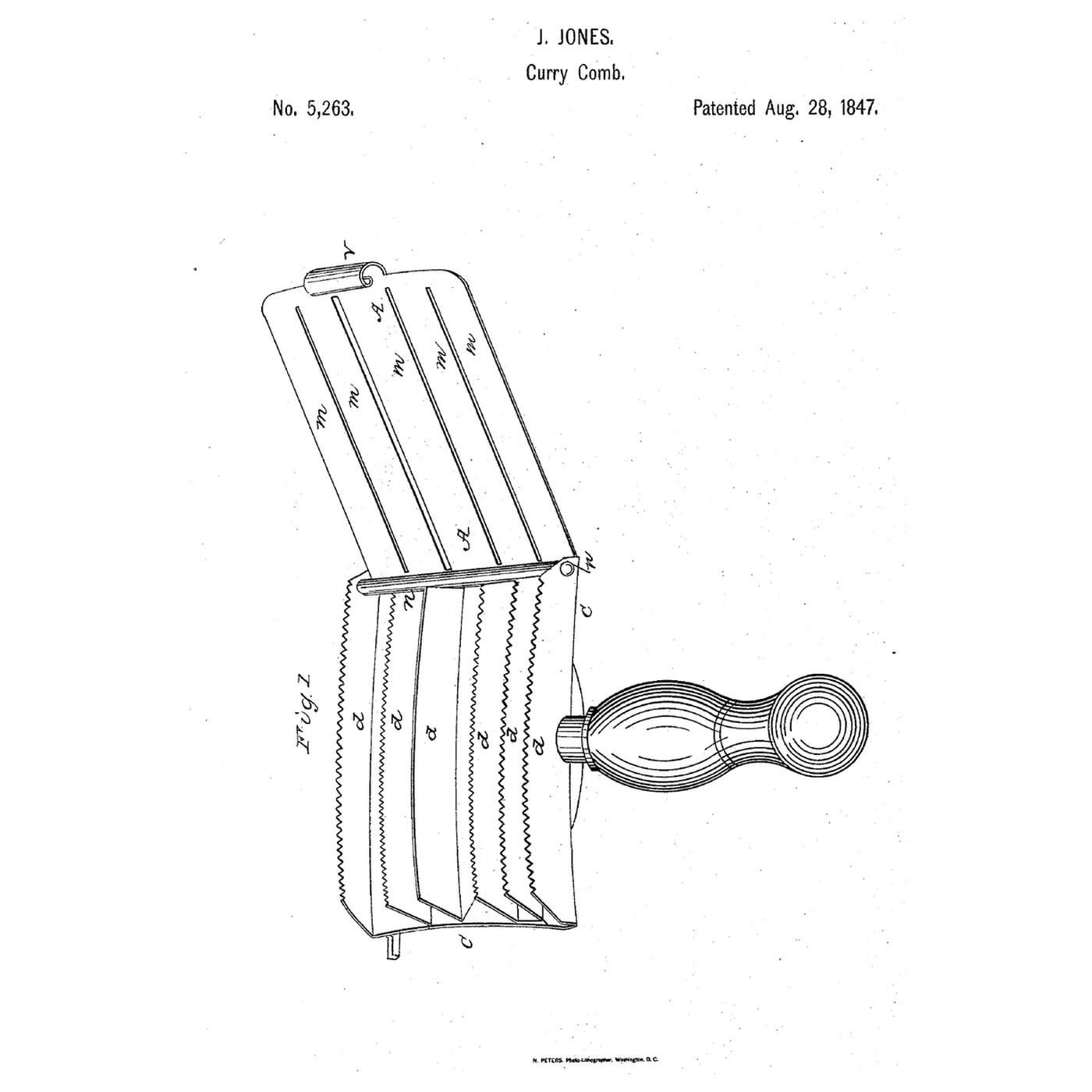
A riveted comb before it
A riveted comb before it
The embedded blueprint rivets bent toothed bars to cross bars. Hotchkiss cuts and folds the whole body and all its teeth from one sheet.
3
3
Read US 6,178
Read US 6,178
"On two of the sides, opposite to each other, by the aid of suitable tools and machinery teeth of a proper size are cut, extending nearly across the outer edges of these sides, but leaving a small margin, not so cut into teeth, see b, b, b, b. At the termination of these teeth, slits are made of a length equal to the height, to which it is intended to erect the teeth, above the flat body of the comb, and these slits are parallel with the sides that are not cut into teeth, see bc, bc, bc, bc."
"To form the interior sets, represented in the drawing as faces, but which may be made more or less numerous as required, rows of indentations c, c, c, c are cut at proper distances, extending to within a small distance of the sides of the comb, and parallel with the external rows of teeth. At the extremities of these rows of indentations, slits are cut, parallel with the sides of the comb, and so deep as to allow the metal comprised between them to be bent up, as the end teeth were, to a proper height to make said teeth effective."
4
4
Cut and fold the comb and groom with it
Cut and fold the comb and groom with it
**Blank.** Mark out the blank from the notebook on 0.8 mm mild steel sheet, with the finished body, the two tooth sides, the two fold-over sides and the inner rows drawn on it.
**Teeth and slits.** File teeth along the two tooth sides, leaving a small margin at each end, and cut the slits at the end of each row as long as the teeth's height. Cut the inner rows of teeth along their lines and slit their ends the same way.
**Fold.** In the vise, bend the tooth sides up at right angles. Bend the other two sides up to meet them, then on round over the first bent sides, and rivet each corner. Bend the inner rows up.
**Back.** Rivet a strip of flat bar across the back as the strap, run it out as a tang, and set it in a hardwood handle with epoxy.
**Test.** Weigh the offcuts from the blank. Groom a horse, a dog or a rough rug with the comb.
Izinto zokwakha zalesi sinyathelo:
 Ishidi lensimbi1 ucezu
 Ibha Eyisicaba Yensimbi Ethambile0.25 imitha
 Izipikili zensimbi8 izicucu
 Ingodo Yokhuni Oluqinile Yezibambo1 ucezu
 I-epoxy Yezingxenye Ezimbili1 ucezu
Amathuluzi adingekayo:
 Isikeli sensimbi
 Isaha Sensimbi
 Izinsimbi zokuhlikihla (ezesandla)
 Isethi Yamafayela Amancane
 Isibambo Sebhentshi
 Isando
 Ibhola Elingenantambo
 Iqoqo Lamakhanda Ebhola
 Isethi yama-rivet
 Irula
Irula Ipeni Elingesulekiyo
 Isikali Sedijithali Sasekhishini
 Amagilavu Omsebenzi Esikhumba
 Izibuko Zokuphepha Ezicwathile
5
5
A comb that tears, gapes or scratches
A comb that tears, gapes or scratches
One-sheet curry comb troubleshooting.
Flow
Loading...
6
6
History and honest limits
History and honest limits
**Andrew Hotchkiss** of Sharon, Litchfield County, Connecticut, received US 6,178, dated 13 March 1849. He took a piece of iron of square or rectangular shape, cut its teeth by tools and machinery, stiffened the whole with a back strap of square, lozenge, oval or other form riveted on, whose ends formed knockers, and fixed it to a handle. His claims cover making a comb's body and teeth from one sheet by cutting and bending, and the comb's whole form and combination.
**Honest limits.** Hand-filed teeth and vise bends stand in for his tools and machinery. The notebook's blank is a simple layout that ignores bend allowance; its sizes are examples. Your offcuts and grooming are the result.
Izinto
5- 1 ucezuIsibambeli
- 0.25 imithaIsibambeli
- 8 izicucuIsibambeli
- Isibambeli
- 1 ucezuIsibambeli
Amathuluzi Adingekayo
14- Isibambeli
- Isibambeli
- Isibambeli
- Isibambeli
- Isibambeli
- Isibambeli
- 1 vendor sell this, none ship to you yetIsibambeli
- Isibambeli
- Isibambeli
- Isibambeli
- Isibambeli
- Isibambeli
- Isibambeli
- Isibambeli
Le blueprint yenza
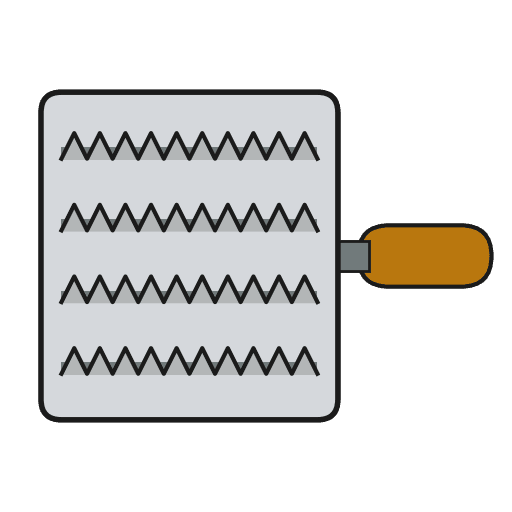
Ama-blueprint ahlobene
Lama-blueprint abelana ngolwazi — amasu, izinto noma izimiso

CC0 Isizinda Somphakathi
Le blueprint ikhishwe ngaphansi kwe-CC0. Ukhululekile ukukopisha, ukuguqula, ukusabalalisa, nokusebenzisa ngaphandle kwemvume.
Sekela uMenzi ngokuthenga imikhiqizo nge-Blueprint yabo IKhomishane Yomenzi kumiswe ngabathengisi, noma dala inguqulo entsha yale Blueprint bese uyifaka njengoxhumaniso ku-Blueprint yakho ukuze wabelane ngemali engenayo.