UBUCIKO
UBUHLE NEMPILO
UBUCIKO BEZANDLA
AMASIKO NOMLANDO
EZOKUZIJABULISA
IMVELO
UKUDLA NEZIPHUZO
REVERSE ENGINEERING
IZAYENSI
EZEMIDLALO
UBUCHWEPHESHE
IZINTO EZIGQOKWAYO
Youblob (generated from this blueprint's notebook) · CC0

The Spool Valve: Steering Oil With a Sliding Rod
A pump makes flow and a cylinder makes force. Between them sits the valve that decides where the oil goes: to one end of the cylinder, to the other, or back to the tank. In almost every hydraulic machine that valve is a **spool**: a ground steel rod with raised lands, sliding in a bore with five ports — pressure, tank, two work ports, and a second tank.
Slide the spool one way and pressure goes to port A while B drains; slide it the other way and the roles swap; centre it and the ports are blocked or joined, depending on the spool's centre. The edges of the lands are orifices, so the spool also meters how fast.
This rung works out the metering, the choice between open and closed centre, and builds a transparent spool valve that shows the oil paths in coloured water.
Ophakathi
About 4 hours
Imiyalelo
1
1
Metering edges and the centre condition
Metering edges and the centre condition
Ilayisha incwadi ye-Jupyter…
2
2
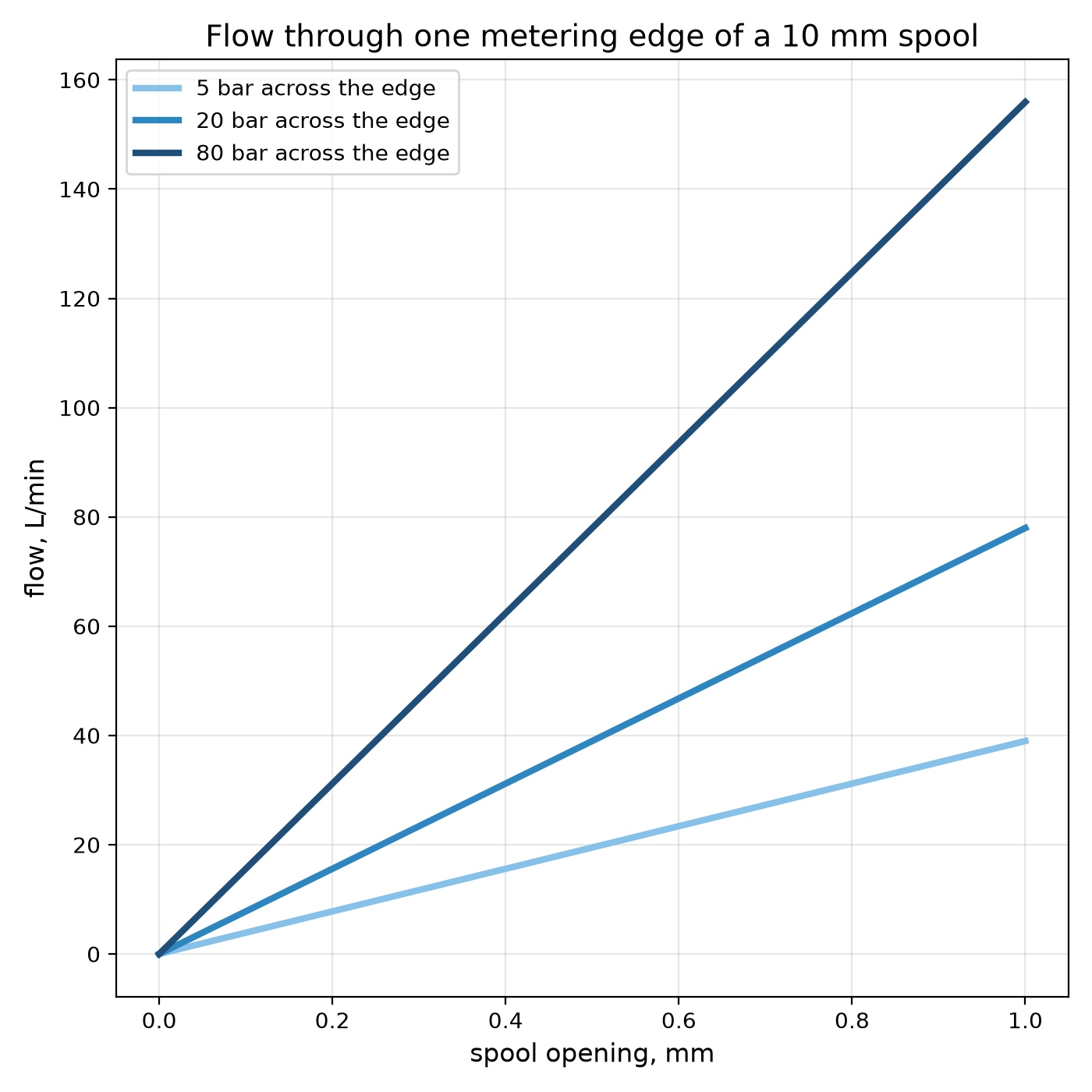
Each land edge is a throttle
Each land edge is a throttle
The spool meters flow the way any restriction does. The embedded blueprint shows how flow through a restriction depends on its area and the pressure across it.
3
3
Build a clear spool valve
Build a clear spool valve
Take 150 mm of clear acrylic tube with a smooth 20 mm bore. Drill five 6 mm holes in a line along one side, 20 mm apart, and glue a hose barb over each: from one end, **T**, **A**, **P**, **B**, **T**.
3D-print a spool: a 10 mm shaft carrying three lands, each 12 mm long with an O-ring groove, spaced so that when the spool is centred the middle land exactly covers **P** and the outer lands cover **A** and **B**. Fit O-rings sized to seal lightly in the bore. A handle on one end, a stop on the other.
Connect **P** to a garden hose through a ball valve, the two **T** ports to a bucket, and **A** and **B** to the two ports of the double-acting cylinder, or to two clear tubes standing up so you can see which one fills.
Izinto zokwakha zalesi sinyathelo:
 Ishubhu le-acrylic (elicacile)1 ucezu
 Iqoqo Lezixhumanisi Zepayipi Le-PVC1 ucezu
 Isethi Yezindandatho Ze-O1 ucezu
 Ipayipi Le-silicone2 amamitha
 Ivalvu yokulawula indlela1 ucezu
Amathuluzi adingekayo:
 Iphrinta ye-3D yentambo (i-FDM)
 Ifilamenti ye-PETG
 Ibhola Elingenantambo
 Iqoqo Lamakhanda Ebhola
 I-Caliper Yedijithali Yamayintshi Ayi-6
 Isibhamu sikaglu oshisayo
 Ibhakede
4
4
The three positions
The three positions
Indawo Yokusebenza Ye-Blockly
Loading Blockly workspace...
5
5
Run it with coloured water
Run it with coloured water
Add food colouring to a bucket feeding a small submersible pump, or tint the hose supply with a dye injector, so the flow shows in the clear bore.
Centre the spool and open the supply: nothing moves, and the supply hose stiffens — that is a closed centre. Slide the spool slowly one way: first a thread of colour as the edge just cracks open, then a full stream into **A** while **B** drains to **T**. Slide it the other way and watch the paths swap.
Then turn the middle land down on a second printed spool so that, centred, it leaves a gap round **P**: now the supply runs straight through to **T** at the centre. That is an open centre.
Izinto zokwakha zalesi sinyathelo:
 Umbala wokudla (umbala wokubona ukugeleza)1 ucezu
 Amanzi20 amalitha
Amathuluzi adingekayo:
 Iphampu yamanzi engena emanzini
 Iwashi Lokumisa Isikhathi
6
6
A valve that will not control the load
A valve that will not control the load
Directional valve faults, in the order to check them.
Flow
Loading...
7
7
Context and honest limits
Context and honest limits
Spool valves go back to the steam age — slide valves on engines, piston valves on locomotives — and became the standard directional valve of oil hydraulics. Their symbols and port letters (P, T, A, B) are now standardised, so a circuit diagram from any maker reads the same way.
**Honest limits.** A spool always leaks a little through its clearance, so it cannot hold a load for long; a check valve does that. Flow through the edges also pushes on the spool (flow forces), which is why large valves are moved by pilot pressure rather than by hand. The printed model with O-rings shows the paths, not the metering: real spools seal by a micrometre clearance, not by rubber.
Izinto
7- Isibambeli
- Isibambeli
- 1 ucezuIsibambeli
- 2 amamithaIsibambeli
- 1 ucezuIsibambeli
- Isibambeli
- 20 amalithaIsibambeli
Amathuluzi Adingekayo
9- Isibambeli
- Isibambeli
- 1 vendor sell this, none ship to you yetIsibambeli
- Isibambeli
- Isibambeli
- Isibambeli
- Isibambeli
- Isibambeli
- Isibambeli
Ama-blueprint ahlobene
Lama-blueprint abelana ngolwazi — amasu, izinto noma izimiso
Throttling: Letting Some of It Past
ngu-Emma
Ezomshini
35
0
0
0
0
0
Orifice Plate Meter
ngu-Emma
UBUCHWEPHESHE
47
0
0
0
0
0
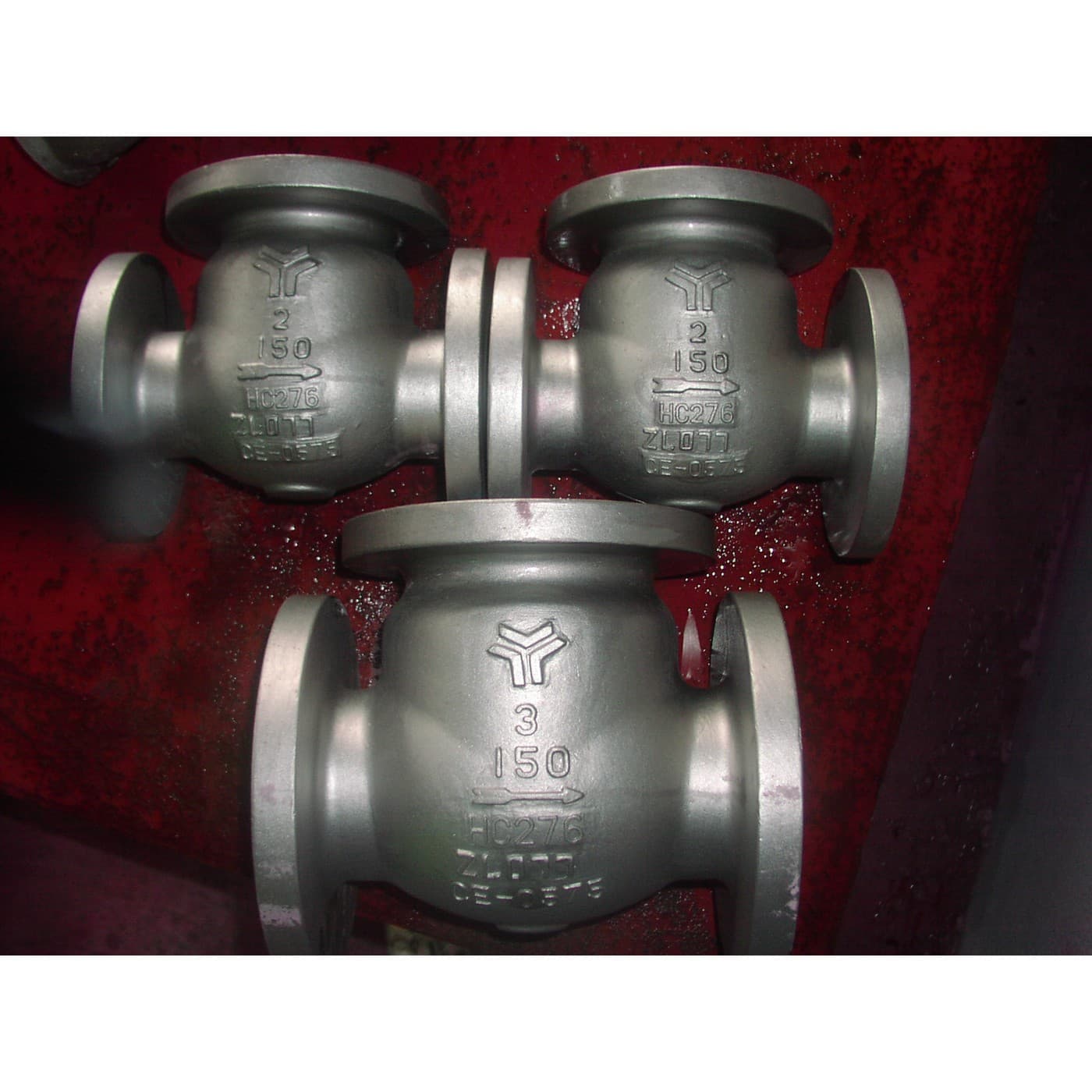
One Way Only: The Check Valve and the Bang It Makes
ngu-Martin
Amathuluzi
39
0
0
0
0
0
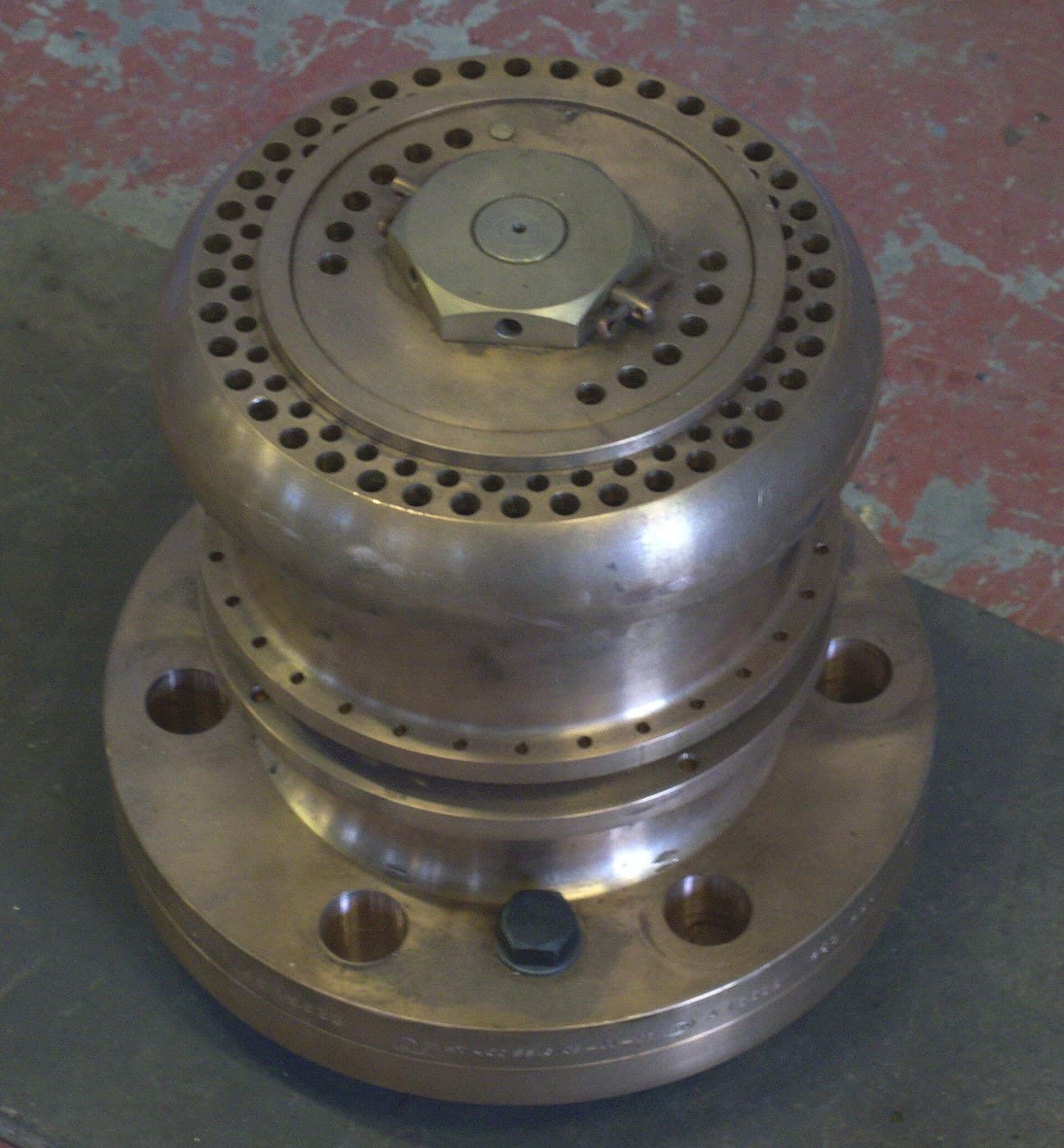
Safety Relief Valve
ngu-Penny
UBUCHWEPHESHE
43
0
0
0
0
0
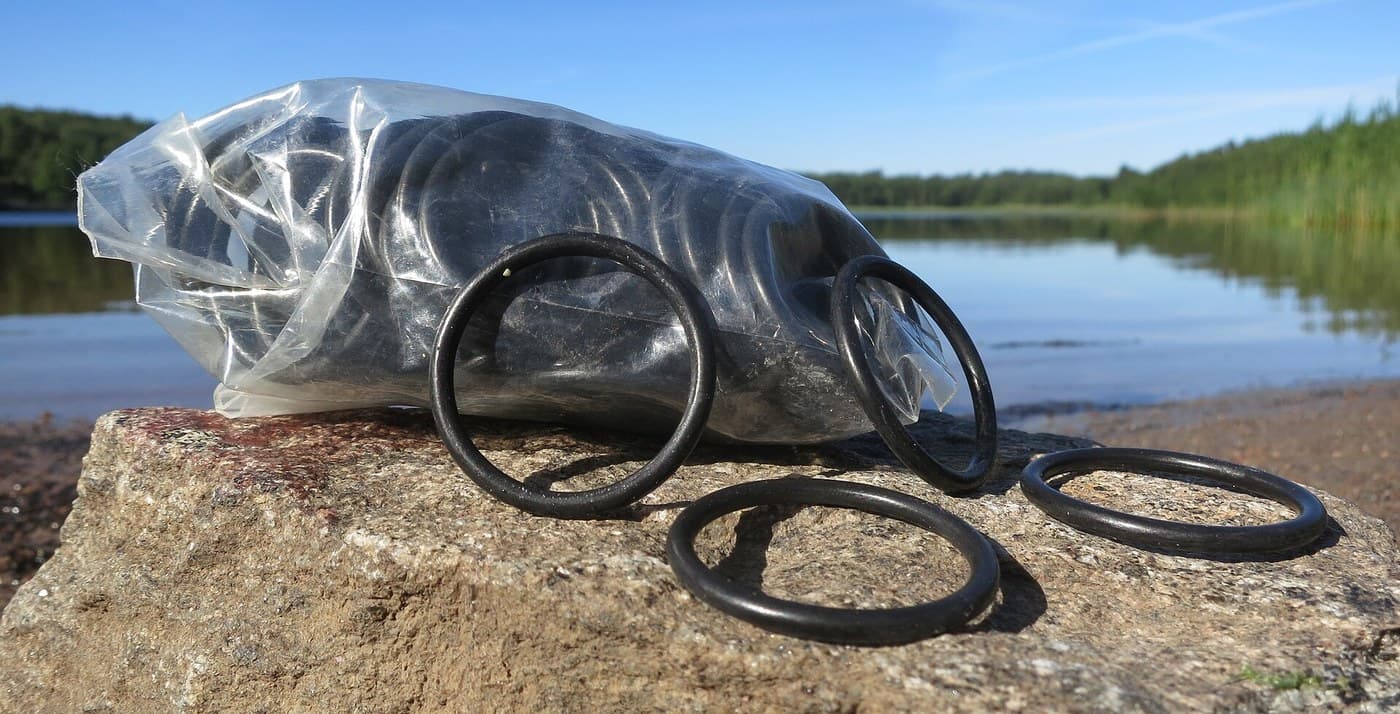
O-Ring Seal
ngu-Mary
Umsebenzi Wensimbi
52
0
0
0
0
0
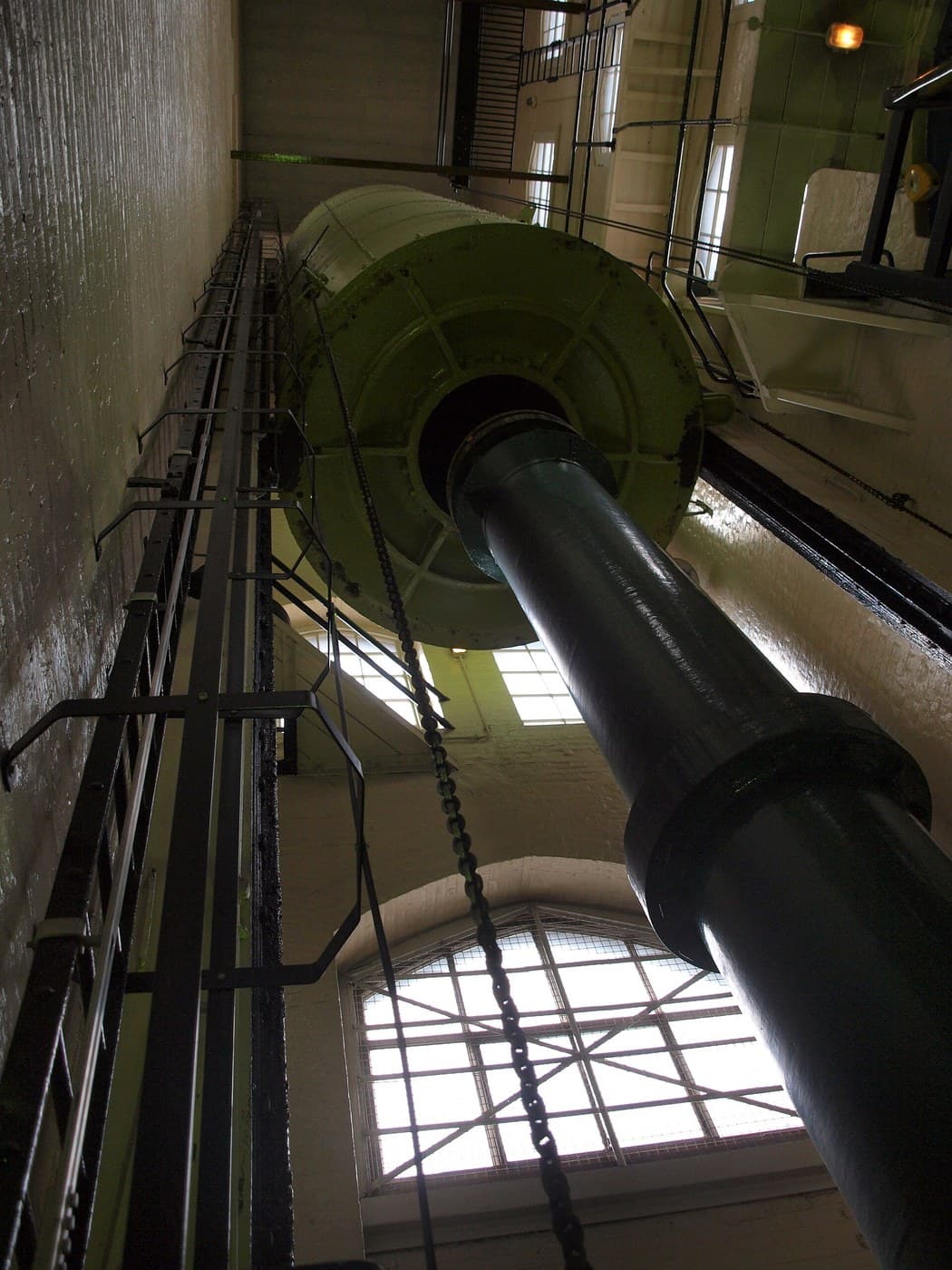
Hydraulic Accumulator
ngu-Emma
Umsebenzi Wensimbi
36
0
0
0
1
0
CC0 Isizinda Somphakathi
Le blueprint ikhishwe ngaphansi kwe-CC0. Ukhululekile ukukopisha, ukuguqula, ukusabalalisa, nokusebenzisa ngaphandle kwemvume.
Sekela uMenzi ngokuthenga imikhiqizo nge-Blueprint yabo IKhomishane Yomenzi kumiswe ngabathengisi, noma dala inguqulo entsha yale Blueprint bese uyifaka njengoxhumaniso ku-Blueprint yakho ukuze wabelane ngemali engenayo.