UBUCIKO
UBUHLE NEMPILO
UBUCIKO BEZANDLA
AMASIKO NOMLANDO
EZOKUZIJABULISA
IMVELO
UKUDLA NEZIPHUZO
REVERSE ENGINEERING
IZAYENSI
EZEMIDLALO
UBUCHWEPHESHE
IZINTO EZIGQOKWAYO
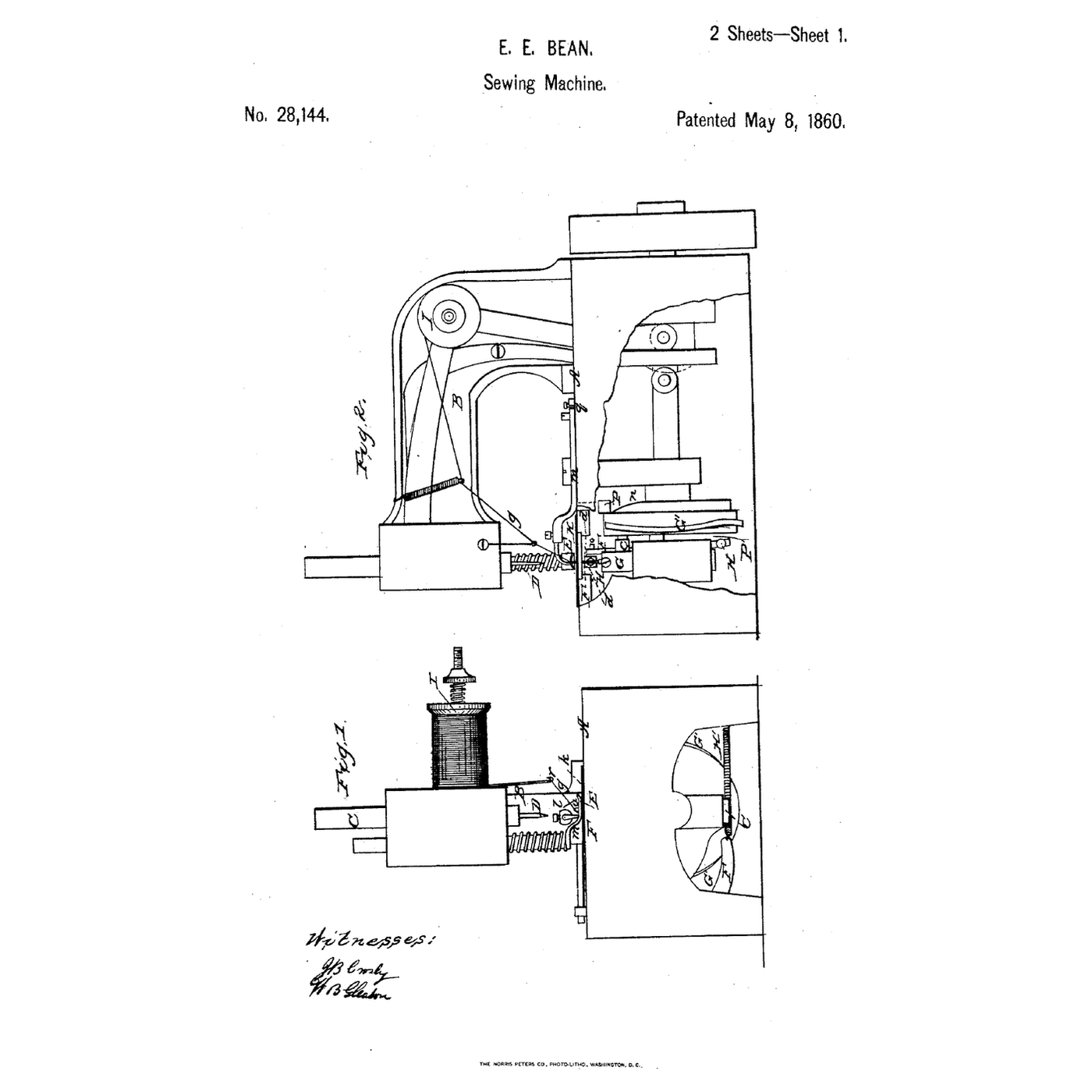

The Spring-Prong Looper: Two Springs That Take the Loop Off the Hook and Hold It Open for the Needle
In a chain-stitch machine for leather with a hooked needle rising from below, the loop must be taken off the hook and held open so the needle passes through it on the next stroke, and a slide over the hook frays the thread.
Edward E. Bean of Boston received US 28,144, dated 8 May 1860, for a looper that "consists of two flat springs, d d, and is seen particularly in Figs 9 and 10, the former of which represents the looper with its prongs sprung together, and the latter as it appears when opened by the needle." On a sliding bar below the table, it advances between the threads, rises to lift the loop from the hook, and carries it beyond the needle's path; on the next rise the needle forces the prongs apart and passes through the extended loop.
This rung works out the force the needle needs to spread the prongs, then makes a spring-prong looper on a slide, and forms a chain of loops with it and a crochet hook.
Ophakathi
About 4 hours
Imiyalelo
1
1
Spreading the prongs
Spreading the prongs
Ilayisha incwadi ye-Jupyter…
2
2
A looper drive before it
A looper drive before it
The embedded blueprint drives a curved needle or looper with a twisted shaft. Bean's looper is two springs on a slide that the needle itself spreads.
3
3
Read US 28,144
Read US 28,144
"The looper is shown at H. It consists of two flat springs, d d, and is seen particularly in Figs 9 and 10, the former of which represents the looper with its prongs sprung together, and the latter as it appears when opened by the needle. The springs approach at their front ends to each other, so as to form a looper point or beak, and at their opposite ends they are united to a horizontal sliding bar, e"
"Thus it will be seen that the looper-points operate to release the hook of or from its thread, and having so released it to carry it forward beyond the path of the needle in the form of a loop in such manner as that, when the needle next passes up to draw down or take another stitch, (above the table,) it shall pass through such loop"
4
4
Make the looper and form a chain
Make the looper and form a chain
**Prongs.** Cut two strips of thin spring steel 3 mm wide and 30 mm long. Rivet them together at one end to a hardwood slide, and bend their free ends toward each other so the tips touch in a point.
**Table and slide.** Fix a thin plywood plate over a box with a small hole for the hook, and run the slide in a groove under it so the looper's point passes just below the hole.
**Test.** Hold cloth on the plate. Push a crochet hook up through cloth and hole, catch the thread above, and draw it down as a loop. Advance the looper so its point enters the loop between the threads, lift it off the hook, and carry it past the hole. Push the hook up again between the prongs, spreading them, and through the held loop, catch the thread and draw it down. Repeat for a short chain, and compare with lifting the loop off the hook by hand.
Izinto zokwakha zalesi sinyathelo:
 Umucu wensimbi yensipho0.1 imitha
 Izipikili zensimbi2 izicucu
 Ibhulokhi Lokhuni Oluqinile1 ucezu
 Ishidi le-plywood1 ucezu
 Izikulufu zokhuni6 izicucu
 Intambo Yekotini1 ucezu
 Indwangu kakotini (elula)1 ucezu
Amathuluzi adingekayo:
 Isikeli sensimbi
 Izinsimbi zokuhlikihla (ezesandla)
 Isethi Yamafayela Amancane
 Isethi yama-rivet
 Ibhola Elingenantambo
 Iqoqo Lamakhanda Ebhola
 Isaha Sesandla
 Isethi yezinaliti ze-crochet
 Udlawu Olunezihloko Eziyindilinga
 Isando sokubethela ama-rivet
5
5
A looper that drops the loop, snags or will not open
A looper that drops the loop, snags or will not open
Spring-prong looper troubleshooting.
Flow
Loading...
6
6
History and honest limits
History and honest limits
**Edward E. Bean** of Boston, Suffolk County, Massachusetts, received US 28,144, dated 8 May 1860. His machine had an awl-feed for leather goods; the sliding bar e was worked by a lever F on a cam G′ and a spring H′; a thread-carrier l on a sliding bar m, moved by a cam n and a spring q, laid the thread against and partly round the needle. He noted a similar instrument by J. C. Seelye, applied for and rejected, worked differently. His claim is the crochet needle, thread-carrier and the looper of spring prongs operating together.
**Honest limits.** A hand-moved slide and a crochet hook stand in for his cam-driven machine, and the thread carrier is left out. The notebook treats the prongs as straight cantilevers; its sizes are examples. Your chain is the result.
Izinto
7- 0.1 imithaIsibambeli
- 2 izicucuIsibambeli
- 1 ucezuIsibambeli
- 1 ucezuIsibambeli
- 6 izicucuIsibambeli
- 1 ucezuIsibambeli
- 1 ucezuIsibambeli
Amathuluzi Adingekayo
10- Isibambeli
- Isibambeli
- Isibambeli
- Isibambeli
- 1 vendor sell this, none ship to you yetIsibambeli
- Isibambeli
- Isibambeli
- Isibambeli
- Isibambeli
- Isibambeli
Ama-blueprint ahlobene
Lama-blueprint abelana ngolwazi — amasu, izinto noma izimiso

The Twisted-Shaft Needle Rocker: A Straight Push That Swings the Needle, Then Holds It Still
ngu-Martin
Ukuthunga
36
0
0
0
0
0
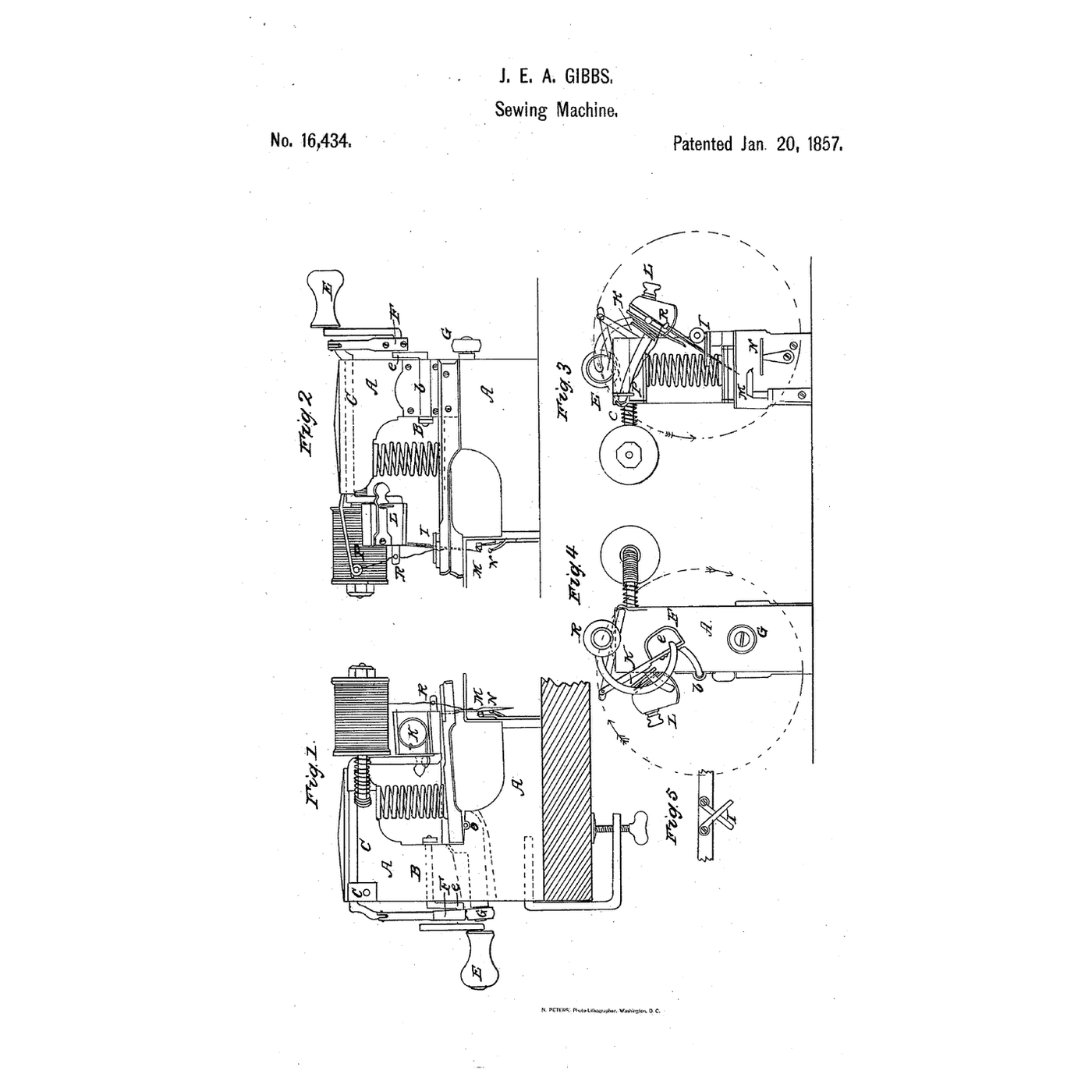
The Stationary-Hook Chain Stitcher: A Vibrating Needle Lays Its Loop Over a Fixed Hook
ngu-Tex
Ukuthunga
40
0
0
0
0
0
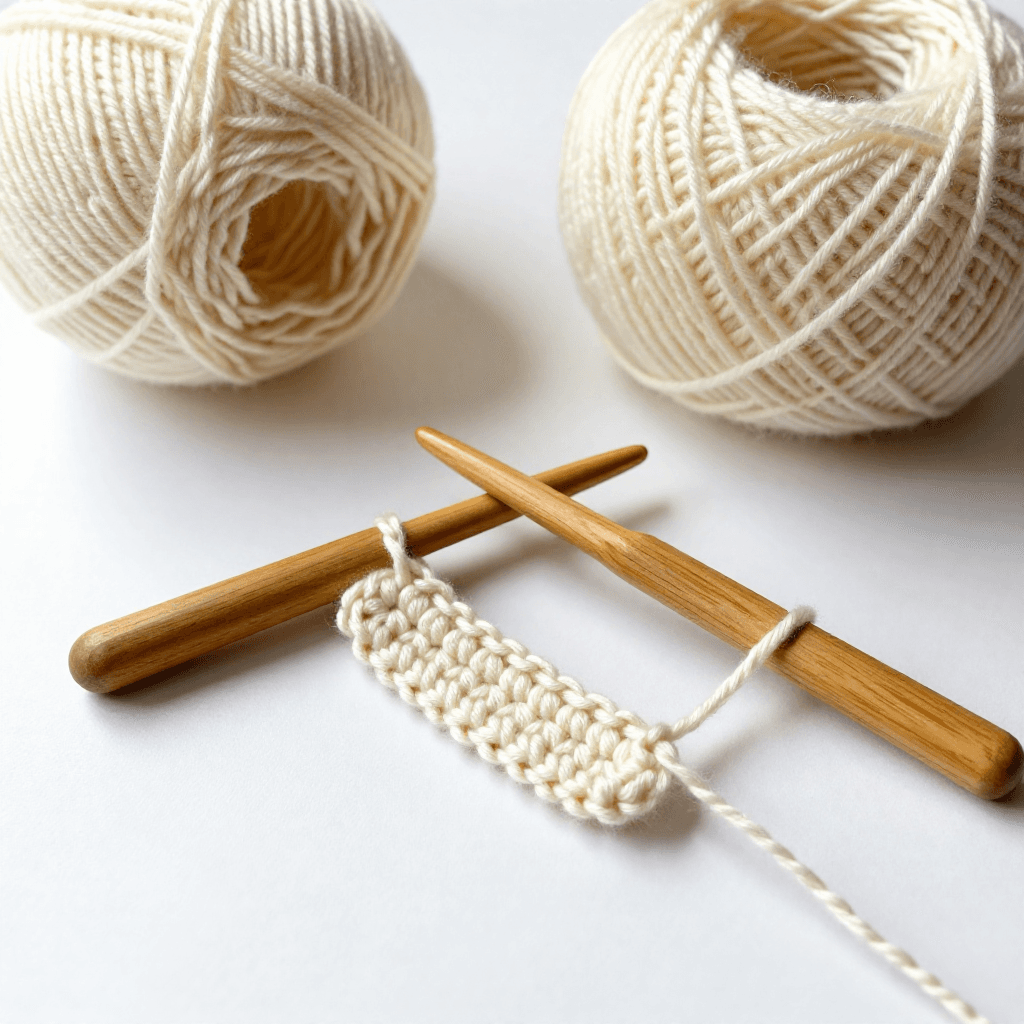
Crochet — The Chain Stitch and Single Crochet Foundation
ngu-Tex
Indwangu Nesikhumba
40
0
0
0
2
0
CC0 Isizinda Somphakathi
Le blueprint ikhishwe ngaphansi kwe-CC0. Ukhululekile ukukopisha, ukuguqula, ukusabalalisa, nokusebenzisa ngaphandle kwemvume.
Sekela uMenzi ngokuthenga imikhiqizo nge-Blueprint yabo IKhomishane Yomenzi kumiswe ngabathengisi, noma dala inguqulo entsha yale Blueprint bese uyifaka njengoxhumaniso ku-Blueprint yakho ukuze wabelane ngemali engenayo.