UBUCIKO
UBUHLE NEMPILO
UBUCIKO BEZANDLA
AMASIKO NOMLANDO
EZOKUZIJABULISA
IMVELO
UKUDLA NEZIPHUZO
REVERSE ENGINEERING
IZAYENSI
EZEMIDLALO
UBUCHWEPHESHE
IZINTO EZIGQOKWAYO



The Wedge Boot Tree: A Screw That Stretches Foot and Leg Together
A felt boot comes out of the fulling mill too small and must be stretched to shape, foot and leg at once, and set so it keeps that shape in wear.
Edward E. Thresher of Reed City, Michigan, assignor of one-third to William McNamara, received US 245,240, dated 2 August 1881, for a boot tree "designed for stretching felt boots in the process of manufacturing the same": a sole piece shorter than the foot, an instep piece, and a wedge driven down between them by a screw that also spreads two leg pieces and pulls on the top of the leg through a cap with hooks.
This rung works out the wedge's push and travel, then carves the foot pieces and wedge from hardwood, drives them with an M10 screw and stretches a damp leather boot for a day.
Ophakathi
About 4 hours, then a day in the boot
Imiyalelo
1
1
Wedge push and travel
Wedge push and travel
Ilayisha incwadi ye-Jupyter…
2
2
The screw stretcher before it
The screw stretcher before it
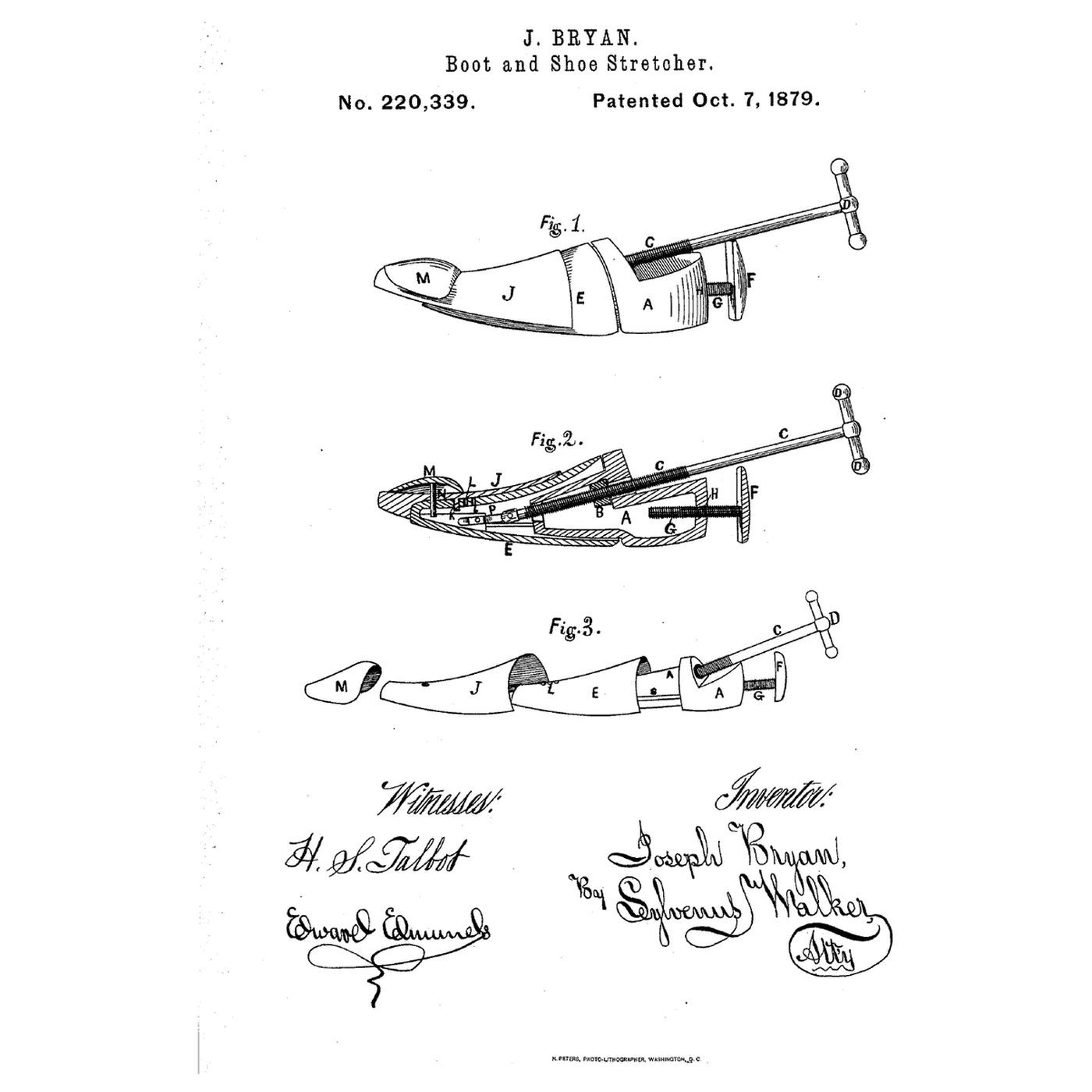
The embedded blueprint pushes the toe of a shoe out with a screw. Thresher turns the screw's push through a wedge and stretches the leg as well.
3
3
Read US 245,240
Read US 245,240
"The piece B is several sizes shorter than the foot or sole of the complete last, and is inserted first into the foot of the boot to be stretched. The instep-piece C is inserted, as shown in Fig. 2, and afterward the wedge-piece A is inserted into the V-shaped opening."
"At the same time the top of the leg is also stretched by means of the cap E and collar R, said cap being provided with hooks h to seize and hold the top of the leg".
4
4
Build the tree and stretch a boot
Build the tree and stretch a boot
**Sole and instep.** From hardwood block, saw and rasp a sole piece like the back two-thirds of the boot's inner sole, 2 cm thick, and an instep piece like the front of the foot whose back face slopes, so that laid in the boot they leave a V-shaped gap.
**Wedge.** Saw a wedge to fill that gap with its faces at 20° to its centre line, checked with the protractor, and drill a 10 mm hole 2 cm deep in its top.
**Screw and cap.** Cut a plywood disc wider than the boot's opening, drill its centre 10.5 mm, and fix an M10 nut over the hole with a second nut. Screw 30 cm of M10 threaded rod through. Lock a 12 cm hardwood dowel on its top between two nuts as a T-handle. Turn four screw eyes into the disc's edge and open them into hooks.
**Test.** Mark the instep piece's position on the sole piece, turn the screw 5 turns and measure how far it moved with the caliper. With 1.5 mm pitch at 20° it should be about 5 × 1.5 × tan 20° = 2.7 mm. Then spray the inside of a leather boot lightly with water, measure the ball width with the caliper, fit the tree, hook the cap on the top of the leg, tighten firmly and leave it a day. Measure again.
Izinto zokwakha zalesi sinyathelo:
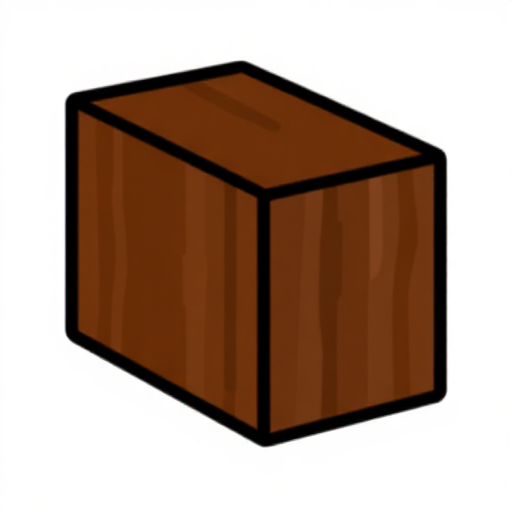 Ibhulokhi Lokhuni Oluqinile2 izicucu
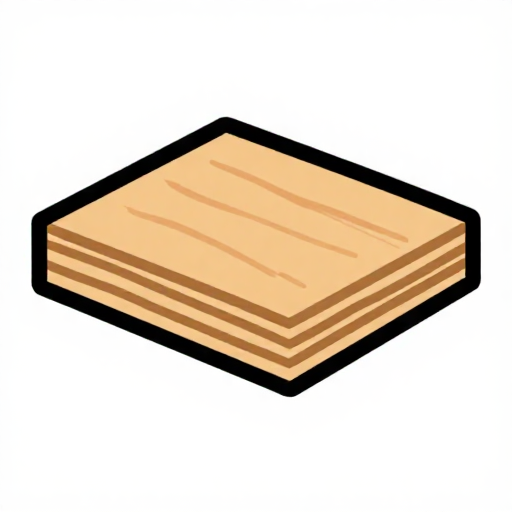 Ishidi le-plywood1 ucezu
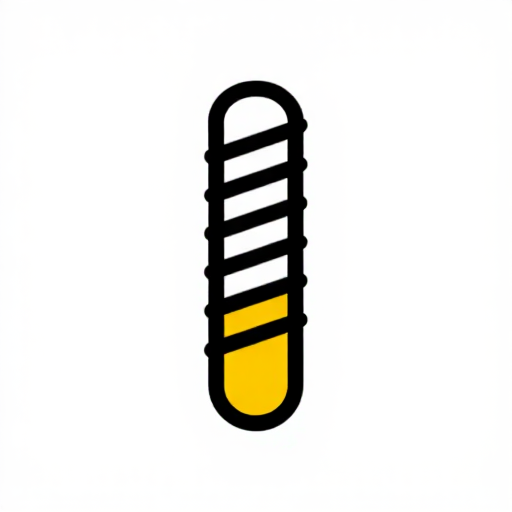 Insika enemicu yesikulufu0.3 imitha
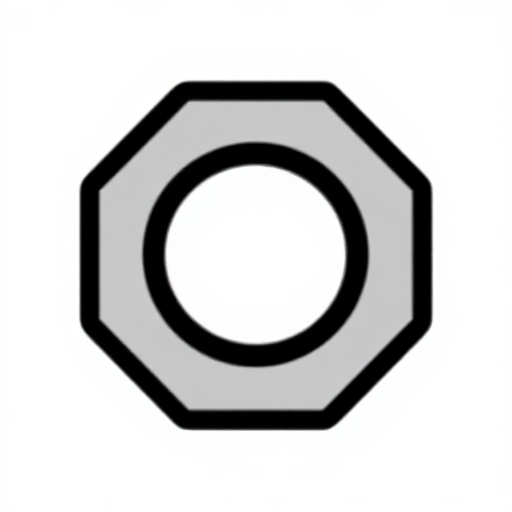 Inathi Yezinhlangothi Eziyisithupha4 izicucu
 Iwasha Eliyisicaba2 izicucu
 Izikhonkwane zokhuni oluqinile0.12 imitha
 Isikulufu esinendandatho4 izicucu
Amathuluzi adingekayo:
 Isaha Sesandla
 Isaha Se-Coping
 Insimbi yokuhlikihla enamazinyo
 Ibhola Elingenantambo
 Iqoqo Lamakhanda Ebhola
 Isipanela esilungisekayo
 Iphrothrakta
 I-Caliper Yedijithali Yamayintshi Ayi-6
 Irula
Irula Ipensela
 Ibhodlela lokufafaza amanzi
 Izicathulo zesikhumba
5
5
A tree that jams, slips or stretches the wrong place
A tree that jams, slips or stretches the wrong place
Wedge boot tree troubleshooting.
Flow
Loading...
6
6
History and honest limits
History and honest limits
**Edward E. Thresher** of Reed City, Osceola County, Michigan, assignor of one-third to William McNamara, filed US 245,240 on 12 February 1881; it is dated 2 August 1881. He described the whole felt-boot process: wool carded into batting, felted over a pattern with steam, fulled down smaller than the finished boot, stretched, steamed and stretched again, and finally set on his tree.
**Honest limits.** Hardwood pieces, an M10 rod and screw eyes stand in for his tree, and the leg pieces with their nuts on inclined bearings are not built. A damp leather boot stands in for a felt one. The notebook ignores friction; its force and angles are examples. Your caliper readings are the result.
Izinto
7- 2 izicucuIsibambeli
- 1 ucezuIsibambeli
- 0.3 imithaIsibambeli
- 4 izicucuIsibambeli
- 2 izicucuIsibambeli
- 0.12 imithaIsibambeli
- 4 izicucuIsibambeli
Amathuluzi Adingekayo
12- Isibambeli
- Isibambeli
- Isibambeli
- 1 vendor sell this, none ship to you yetIsibambeli
- Isibambeli
- Isibambeli
- Isibambeli
- Isibambeli
- Isibambeli
- 1 vendor sell this, none ship to you yetIsibambeli
- Isibambeli
- Isibambeli
Ama-blueprint ahlobene
Lama-blueprint abelana ngolwazi — amasu, izinto noma izimiso

CC0 Isizinda Somphakathi
Le blueprint ikhishwe ngaphansi kwe-CC0. Ukhululekile ukukopisha, ukuguqula, ukusabalalisa, nokusebenzisa ngaphandle kwemvume.
Sekela uMenzi ngokuthenga imikhiqizo nge-Blueprint yabo IKhomishane Yomenzi kumiswe ngabathengisi, noma dala inguqulo entsha yale Blueprint bese uyifaka njengoxhumaniso ku-Blueprint yakho ukuze wabelane ngemali engenayo.