UBUCIKO
UBUHLE NEMPILO
UBUCIKO BEZANDLA
AMASIKO NOMLANDO
EZOKUZIJABULISA
IMVELO
UKUDLA NEZIPHUZO
REVERSE ENGINEERING
IZAYENSI
EZEMIDLALO
UBUCHWEPHESHE
IZINTO EZIGQOKWAYO
Understanding Krypton from Air Separation — The Hidden Gas That Once Defined the Meter
Ophakathi
Imiyalelo
1
1
Understand Krypton's Discovery
Understand Krypton's Discovery
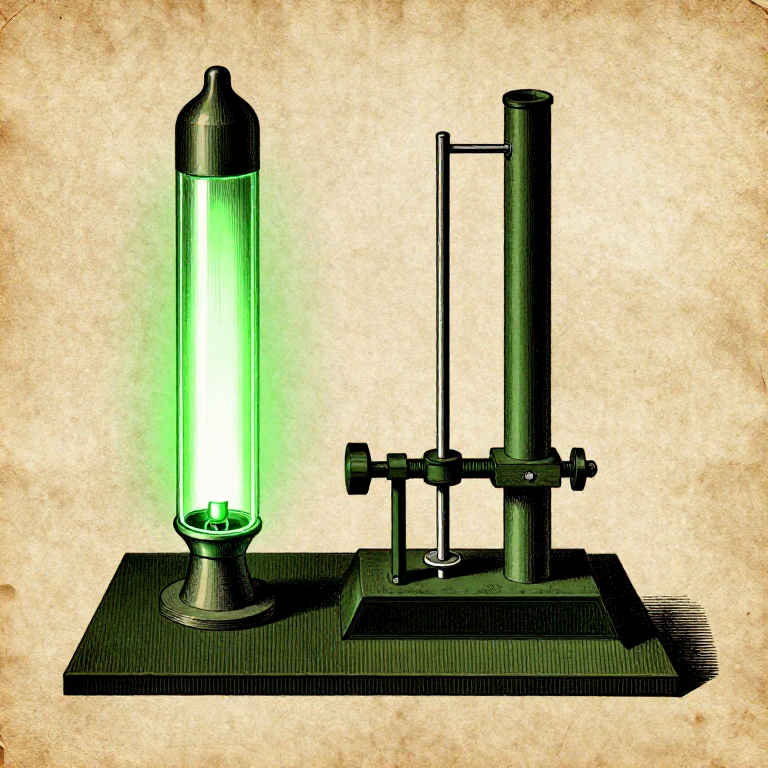
William Ramsay and Morris Travers discovered krypton on May 30, 1898, by evaporating liquid air and examining the fraction that boiled between argon and xenon. The gas produced a brilliant greenish-white glow in a discharge tube with sharp spectral lines distinct from any known element. They named it krypton from the Greek 'kryptos' (hidden) because it had been concealed within the atmosphere, undetected despite being present in every breath.
2
2
Identify Krypton in Earth's Atmosphere
Identify Krypton in Earth's Atmosphere
Krypton makes up just 1.14 ppm of Earth's atmosphere — approximately 1 part in 877,000. It is produced by slow neutron capture in stars and distributed throughout the universe. On Earth, some krypton isotopes (Kr-81, Kr-85) are produced by nuclear fission. All commercial krypton is extracted as a minor byproduct of cryogenic air separation, collected alongside xenon in the heavy noble gas fraction. Global production is approximately 15 tonnes per year.
Amathuluzi adingekayo:
 Isethi yemishubhe yokukhipha igesi (izinto ezi-6)
3
3
Examine the Former Definition of the Meter
Examine the Former Definition of the Meter
From 1960 to 1983, the meter was defined as 1,650,763.73 wavelengths of the orange-red emission line of krypton-86 in vacuum. This replaced the physical platinum-iridium meter bar that had defined the unit since 1889. Krypton-86 was chosen because its spectral line is exceptionally narrow and reproducible — any laboratory worldwide could reproduce the exact same wavelength. The meter was later redefined in terms of the speed of light in 1983.
4
4
Discover High-Performance Lighting Applications
Discover High-Performance Lighting Applications
Krypton gas fill in incandescent bulbs allows the filament to operate at higher temperatures, producing brighter and whiter light with 10% greater efficiency than argon-filled bulbs. Krypton fluoride (KrF) excimer lasers emit deep ultraviolet light at 248 nm and are used in semiconductor photolithography for patterning chip features. Aircraft runway approach lighting uses krypton flash tubes for their intense, reliable white light output visible in poor weather.
5
5
Understand Window Insulation Applications
Understand Window Insulation Applications
Krypton gas fill in double and triple-glazed windows provides superior insulation to argon — krypton's thermal conductivity is 36% that of air, compared to argon's 67%. Krypton-filled windows achieve the same insulation in a thinner gap (10 mm vs 16 mm for argon), making them ideal for slim-profile frames. The premium price (krypton costs 200 times more than argon per liter) limits its use to high-performance applications where thin profiles are essential.
6
6
Explore Nuclear Monitoring Applications
Explore Nuclear Monitoring Applications
Krypton-85 (half-life 10.76 years) is a fission product released during nuclear fuel reprocessing. Monitoring atmospheric Kr-85 levels allows detection of covert nuclear weapons programs — any country reprocessing spent fuel to extract plutonium releases Kr-85 that can be detected thousands of kilometers away. The Comprehensive Nuclear-Test-Ban Treaty Organization monitors global Kr-85 as part of its International Monitoring System for treaty verification.
7
7
Examine Krypton in Ion Propulsion
Examine Krypton in Ion Propulsion
SpaceX's Starlink satellites use krypton as the propellant for their Hall-effect ion thrusters. Krypton was chosen over the traditional xenon because it is cheaper and more abundant, though slightly less efficient. Each Starlink satellite carries several kilograms of krypton for station-keeping and deorbiting maneuvers. With over 5,000 Starlink satellites in orbit, SpaceX has become the world's largest consumer of krypton for space propulsion.
8
8
Survey MRI and Medical Applications
Survey MRI and Medical Applications
Hyperpolarized krypton-83 is used in MRI imaging of lung function. Patients inhale the gas and are scanned immediately — the krypton fills the airspaces and reveals ventilation patterns with extraordinary detail. This technique diagnoses early-stage chronic obstructive pulmonary disease (COPD) and asthma before conventional tests show abnormalities. Krypton MRI can detect lung function changes caused by a single cigarette.
Amathuluzi adingekayo:
 Isikali Esinembile
9
9
Understand Groundwater Dating with Kr-81
Understand Groundwater Dating with Kr-81
Krypton-81 (half-life 229,000 years) is a cosmogenic isotope used to date ancient groundwater between 50,000 and 1,000,000 years old — filling a gap where radiocarbon dating is too short and other methods are unreliable. Atom trap trace analysis (ATTA) counts individual Kr-81 atoms in water samples. This technique has revealed that some of the world's largest aquifers in the Sahara and Nubian Sandstone contain water that fell as rain over 500,000 years ago.
10
10
Document Findings and Modern Significance
Document Findings and Modern Significance
Record krypton's key data: atomic number 36, density 3.749 g/L, boiling point -153.4°C, colorless noble gas with white-green glow. Krypton's story spans from defining the meter to propelling satellites and detecting covert nuclear programs. Its growing use in satellite propulsion is transforming this once-obscure gas into a strategically important aerospace material. SpaceX's Starlink alone may eventually consume a significant fraction of annual krypton production.
11
11
Half-life: what is left, and when
Half-life: what is left, and when
Ilayisha incwadi ye-Jupyter…
Amathuluzi Adingekayo
2- Isibambeli
Izinto Zokwakha Ze-Blueprint Exhunyiwe
10% Ukwabiwa
Understanding Argon from Air Separation — The Invisible Shield Gas
ngu-Peter
Ukumbiwa
14
0
0
0
2
0
10% Ukwabiwa
Understanding Neon from Air Separation — The Gas That Lit the Modern City
ngu-Peter
Ukumbiwa
44
0
0
0
3
0
10% Ukwabiwa
Understanding Helium from Natural Gas — The Element That Escapes Earth Forever
ngu-Peter
Ukumbiwa
21
0
0
0
4
0

10% Ukwabiwa
Understanding Bromine from Seawater Brine — The Only Liquid Non-Metal
ngu-Peter
Ulwandle
69
0
0
0
2
0
Yingozi
10% Ukwabiwa
Understanding Fluorine from Fluorite — The Most Reactive Element on Earth
ngu-Peter
Ukumbiwa
40
0
0
0
4
0
Ama-blueprint ahlobene
Lama-blueprint abelana ngolwazi — amasu, izinto noma izimiso

Growing Saltpeter from Niter Beds — The Explosive Element in Every Living Thing
ngu-Peter
Kwasendulo
286
0
0
0
5
0
Understanding Oxygen Through Combustion — The Element That Makes Fire Breathe
ngu-Peter
Kwasendulo
65
0
0
0
4
0
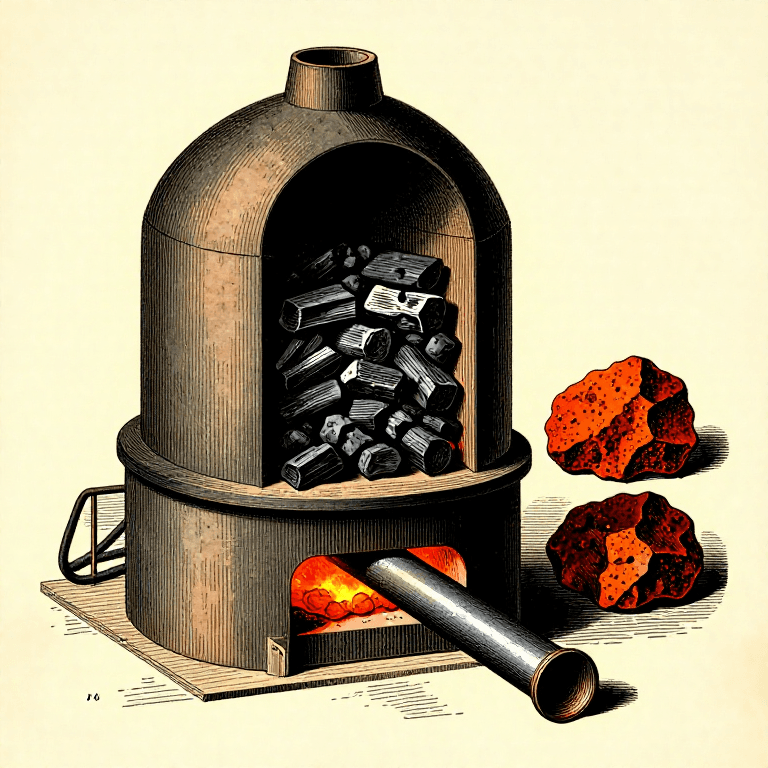
Extracting Iron from Hematite — Bloomery Smelting from Ore to Bloom
ngu-Peter
Umsebenzi Wensimbi
162
0
0
0
12
0
CC0 Isizinda Somphakathi
Le blueprint ikhishwe ngaphansi kwe-CC0. Ukhululekile ukukopisha, ukuguqula, ukusabalalisa, nokusebenzisa ngaphandle kwemvume.
Sekela uMenzi ngokuthenga imikhiqizo nge-Blueprint yabo IKhomishane Yomenzi kumiswe ngabathengisi, noma dala inguqulo entsha yale Blueprint bese uyifaka njengoxhumaniso ku-Blueprint yakho ukuze wabelane ngemali engenayo.