ARTE
BELEZA E BEM-ESTAR
ARTESANATO
CULTURA E HISTÓRIA
ENTRETENIMENTO
MEIO AMBIENTE
COMIDA E BEBIDAS
ENGENHARIA REVERSA
CIÊNCIAS
ESPORTES
TECNOLOGIA
TECNOLOGIA VESTÍVEL
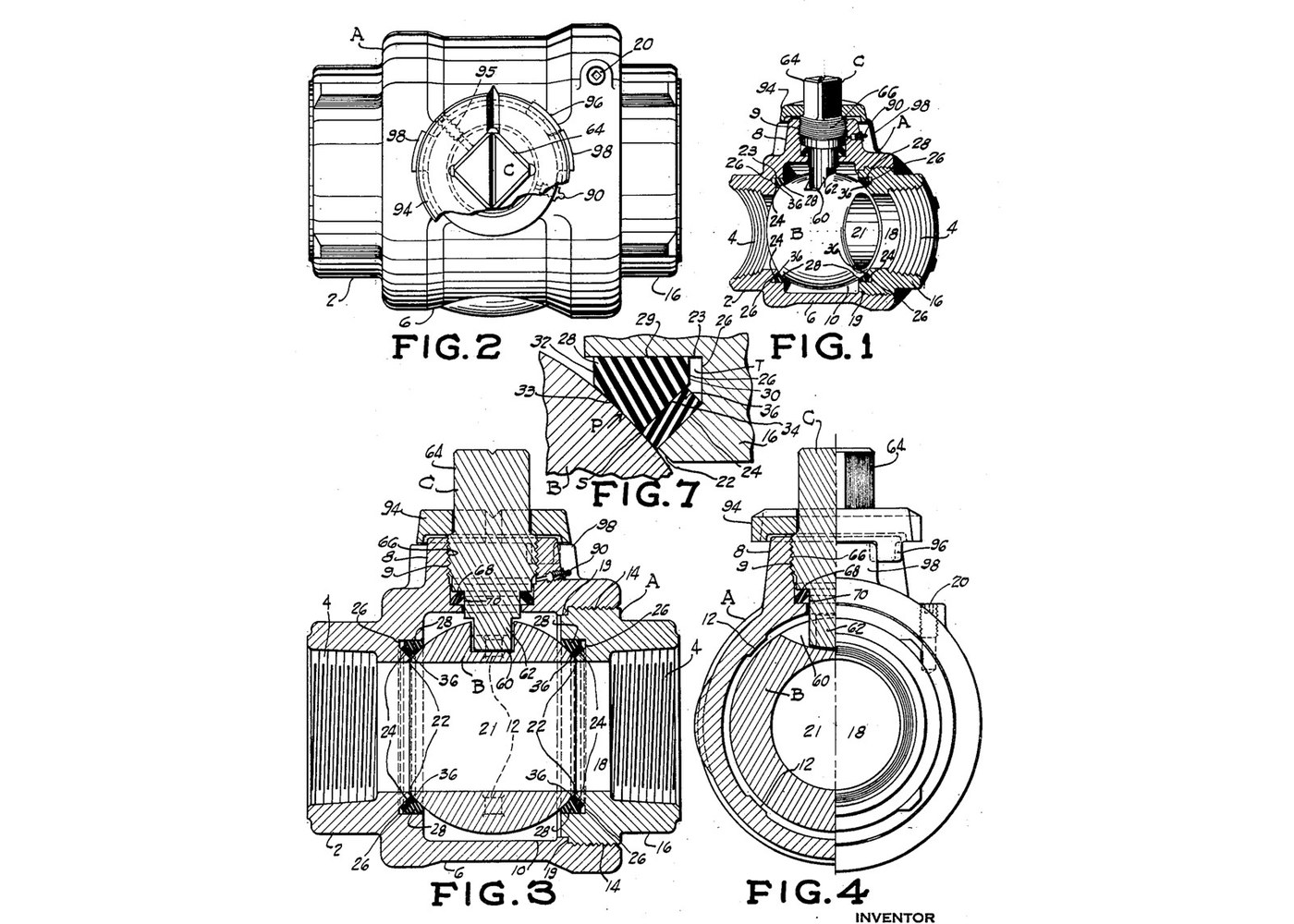


Ball Valve: Floating PTFE Seat and Seal Rings on a Stainless Ball (Clade 1956)
A ball with a hole through it, turned a quarter turn, opens or shuts a pipe. Clade's valve seals it with PTFE. A seating ring rests on the ball, and behind it sits a flat PTFE ring twisted into a cone. PTFE remembers its shape, so the ring keeps pressing on the ball, and line pressure only presses it harder. The metal never touches the ball, so body and ball can be stainless steel.
Source: R. Clade (W-K-M Manufacturing), US 2,762,601 (1956). Unknown: the dimensions. The patent gives the design and a 45° seat angle, but no sizes, so they are linked to an unknown head. Stainless rod as stock and the machining tools are ours. Picture: the patent's sheet 1.
Especialista
3 days
Instruções
1
1
Make the two-part body
Make the two-part body
Turn the cup: a base threaded inside for the pipe, an enlarged cavity with small bosses that lightly support the ball, a boss on top bored and threaded for the stem, and the mouth threaded inside for the closure, with a shoulder below the threads. Turn the closure: threaded outside to screw into the cup, threaded inside for the other pipe. Bore a through passage in both. Unknown: all the dimensions.
Materiais para este passo:
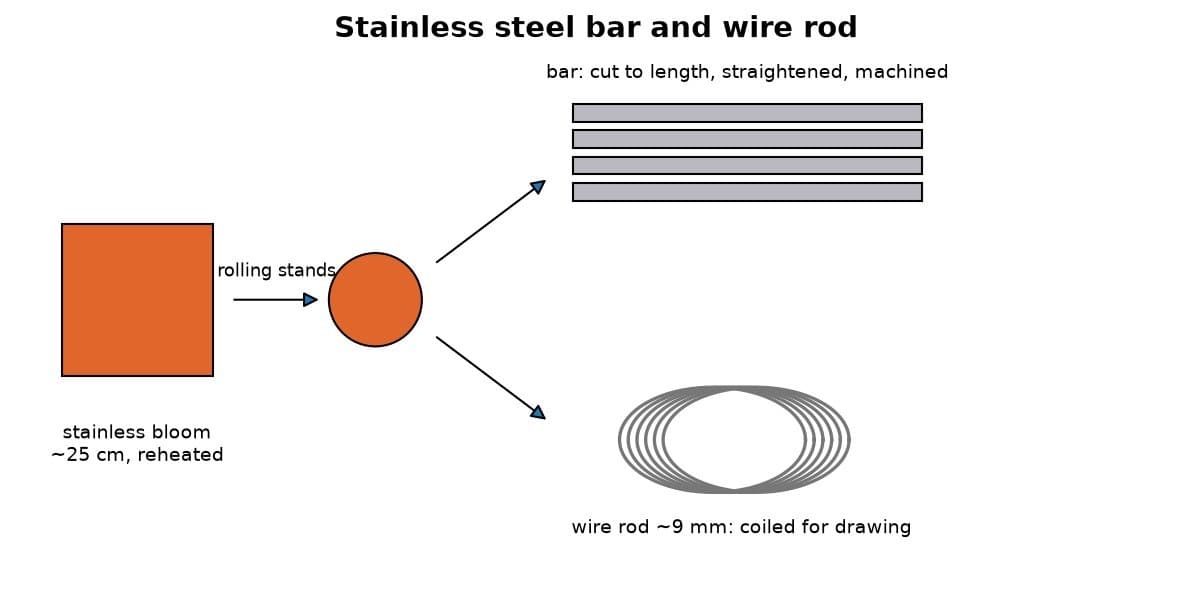
 Varão de aço inoxidável1 as required
Ferramentas necessárias:
 Torno mecânico
 Conjunto de ferramentas de torno (HSS)
 Barra de mandrilar
 Jogo de machos e cossinetes
 Paquímetro
 Dimensões desconhecidas
2
2
Cut the 45° seats and their V grooves
Cut the 45° seats and their V grooves
On the closure and on the ledge inside the cup next to the base, machine a conical seat at about 45° to the passage axis, so it would touch the ball at 45°. Interrupt each seat with a groove of truncated V section: its outer wall parallel to the axis, its inner wall parallel to the 45° line, its bottom square to the axis.
Ferramentas necessárias:
Torno mecânicoConjunto de ferramentas de torno (HSS)PaquímetroDimensões desconhecidas3
3
Make the ball and the stem
Make the ball and the stem
Turn the ball as a true sphere and bore a passage through it. Round off the edges where the passage meets the surface, so they do not cut the rings. Mill a slot across the top for the stem. Turn the stem with a square operating end, a thread below it for the boss, a shoulder, and a lower end that fits the ball's slot.
Materiais para este passo:
Varão de aço inoxidável1 as requiredFerramentas necessárias:
Torno mecânicoConjunto de ferramentas de torno (HSS) Fresadora
 Jogo de limasDimensões desconhecidas
4
4
Make the PTFE rings
Make the PTFE rings
For each seat, cut a seating ring with a face parallel to the 45° seat and a sliding fit in the groove. Then cut a sealing ring, flat and rectangular in section (or cut from PTFE tube). For the stem, cut a ring of parallelogram section. Ours: all cut from PTFE ring stock.
Materiais para este passo:
 Anel de PTFE5 peças
Ferramentas necessárias:
Torno mecânicoConjunto de ferramentas de torno (HSS)Dimensões desconhecidas5
5
Fit the rings and assemble the valve
Fit the rings and assemble the valve
Put each sealing ring into its V groove first, twisting the flat ring into a cone, then slide in the seating ring. The ball closes the gap left behind the seal ring, and PTFE's memory keeps the seal's corner pressed on the ball. Set the ball in the cup and screw the closure in hard against the shoulder. Drill and tap the cup for a locking stud that enters a hole drilled in the closure. Fit the stem with its PTFE ring between the stem and boss shoulders, and screw it down: the ring is squeezed into a seal. Drop the stop cap over the stem and lock it with a stud. Its projection meets the body stops, so the ball turns only 90°.
Ferramentas necessárias:
 Engenho de furarJogo de machos e cossinetes
 Chave de tubos
 Torno de bancada
 Óculos de segurança
Materiais
2- 1 as requiredReferência
- 5 peçasReferência
Ferramentas necessárias
12- Referência
- Referência
- Referência
- Referência
- Referência
- Referência
- Referência
- Referência
- Referência
- Referência
- Referência
- Referência
Este projeto faz
Blueprints relacionados
Estes blueprints compartilham conhecimento — técnicas, materiais ou princípios


CC0 Domínio Público
Este blueprint é liberado sob CC0. Você é livre para copiar, modificar, distribuir e usar este trabalho para qualquer finalidade, sem pedir permissão.
Apoie o Maker comprando produtos através do Blueprint, onde ele ganha uma Comissão Maker definida pelos vendedores, ou crie uma nova versão deste Blueprint e inclua-o como conexão no seu próprio Blueprint para compartilhar receita.