Colaboração
ARTE
BELEZA E BEM-ESTAR
ARTESANATO
CULTURA E HISTÓRIA
ENTRETENIMENTO
MEIO AMBIENTE
COMIDA E BEBIDAS
ENGENHARIA REVERSA
CIÊNCIAS
ESPORTES
TECNOLOGIA
TECNOLOGIA VESTÍVEL
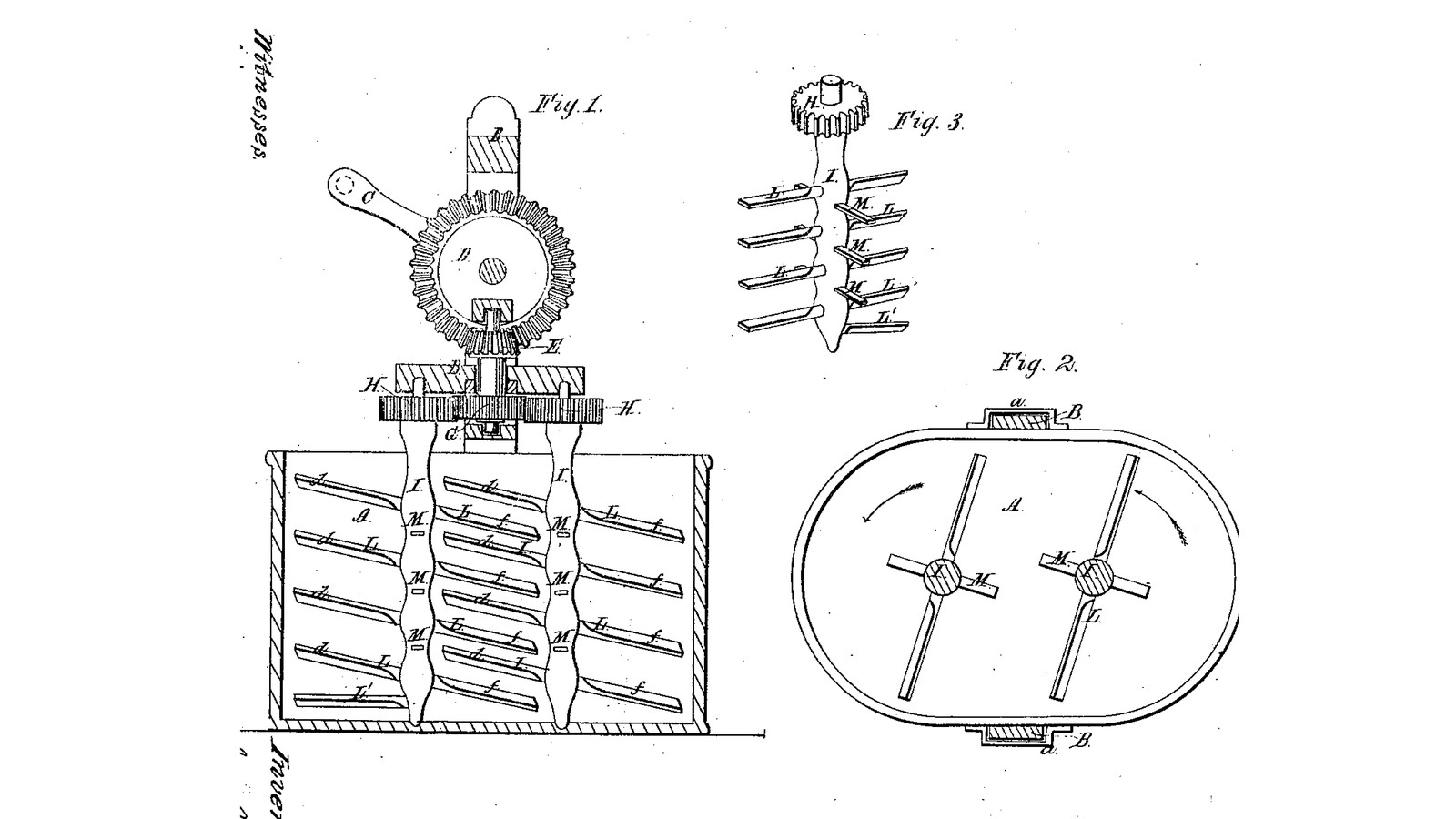

Twin Inclined-Wing Dasher Churn: Two Geared Dashers With Up- and Down-Sloping Wings Turn Through Each Other, Flat Wings Between
Levi Bissell of North Bergen, New York, received US 29,052, dated 10 July 1860, for a churn with two upright dashers in an oblong body. A crank on a lift-off frame drives both through gears, the same way round, so their wings pass each other in opposite directions in the middle. Each dasher's wings slope up on one side and down on the other, and one dasher's down-sloping wings pass between the other's up-sloping ones, so the cream is driven up and down at once. Flat wings between them check the swirl.
The patent gives no sizes; every size here is ours.
Intermediário
About 3 days
Instruções
1
1
Where the wings meet
Where the wings meet
A carregar o notebook Jupyter…
2
2
Two shafts turned the same way by one wheel, eight months before
Two shafts turned the same way by one wheel, eight months before
Cornell's two shafts also turn the same way off one wheel, lying flat. Bissell stands them upright and slopes the wings.
3
3
Read US 29,052
Read US 29,052
"Thus it will be seen that the downwardly inclined wings move in paths describing broad cones, pointing upward; while the upwardly inclined wings describe cones pointing downward; and as these rapidly alternate, they cut paths through the milk or cream rapidly crossing each other, thereby producing intense and effective agitation of the cream."
4
4
Body A and sockets a
Body A and sockets a
Draw two 330 mm circles, centres 220 mm apart, joined by straight lines, on 20 mm hardwood glued up wide enough, and cut the floor to it. Rout a groove 1.6 mm wide and 8 mm deep on the 290 mm circles and their joining lines. Cut two strips of 1.5 mm stainless sheet 428 mm high, bend them to the outline, stand them in the groove with silicone sealant, and lap and rivet the joins on the straight sides with sealant between. Glue up a hardwood rim 18 mm thick and 30 mm deep to fit round the top, screwed through the sheet. Screw a hardwood block 60 x 64 x 70 mm to the middle of each long side, 150 mm up, with a 24 mm square socket a down through it, sealing the screw holes.
Materiais para este passo:
 Tábua de madeira de lei3 peças
 Chapa de aço inoxidável2 peças
 Vedante de silicone1 peça
 Rebites cegos12 peças
 Cola de madeira1 peça
 Parafusos para madeira24 peças
Ferramentas necessárias:
 Bússola
 Serra tico-tico
 Tupia
 Conjunto de formões para madeira
 Tesoura de chapa
 Kit de rebitadora
 Berbequim sem fios
 Jogo de brocas
 Sargento de barra
 Conjunto de chaves de fendas
5
5
Dashers I with wings L and M
Dashers I with wings L and M
Cut two hardwood shafts 28 mm round and 408 mm long; turn the foot of each to 16 mm for 18 mm, and set a 16 mm stainless rod 103 mm long 40 mm into the top, pinned. Cut eight hardwood wings L 250 x 25 x 8 mm and six flat wings M 114 x 24 x 8 mm. Chisel slots through each shaft and drive the wings through, each pinned with a small dowel: the L pairs sloping 20 degrees, all in one plane, at 60, 140, 220 and 300 mm above the floor on one shaft and 100, 180, 260 and 340 mm on the other; the M wings flat, at right angles to the L, midway between them. Screw two hardwood steps 40 mm across, each with a 16.6 mm hole 6 mm deep, to the floor at the two end centres.
Materiais para este passo:
Tábua de madeira de lei1 peça Varão de aço inoxidável1 peça
 Cavilhas de madeira dura1 peçaCola de madeira1 peçaParafusos para madeira4 peças
Ferramentas necessárias:
 Serra de mesaConjunto de formões para madeiraBerbequim sem fiosJogo de brocas
 Serra de arco para metais
 Limas (lima de mão)
 Torno de bancada
6
6
Print the cog-wheel G
Print the cog-wheel G
The cog-wheel G on the upright shaft: 40 teeth, module 2.75, 12 mm thick, 12.4 mm bore. PETG, 0.2 mm layers, 30 % infill, 4 walls.
7
7
Print the pinions H (two)
Print the pinions H (two)
The two pinions H on the dasher shafts, the same size as G: 40 teeth, module 2.75, 16.4 mm bore. Print two. PETG, 0.2 mm layers, 30 % infill, 4 walls.
8
8
Print the crown wheel D
Print the crown wheel D
The driving wheel D on the crank shaft, a crown wheel of 36 teeth, module 2, 12.4 mm bore. PETG, 0.2 mm layers, 30 % infill, 4 walls.
9
9
Print the pinion E
Print the pinion E
The pinion E on the upright shaft, 12 teeth, module 2, 12.4 mm bore, meshing the crown wheel D. PETG, 0.2 mm layers, 30 % infill, 4 walls.
10
10
Frame B, cover, gearing and winch C
Frame B, cover, gearing and winch C
Cut a hardwood board 340 x 396 x 25 mm and screw two 22 mm square hardwood standards 302 mm long under the middle of its 340 mm edges to drop into the sockets a. Bore it 16.8 mm over the two dasher shafts and 12.8 mm at the centre. Cut a 12 mm HDPE cover to the body's outside outline with 28 mm holes over the dashers. Stand the dashers in their steps, put on the cover and drop the frame into the sockets. Pin a pinion H on each dasher rod above the board with both wing planes lying along the churn, one dasher's down-sloping wings toward the other's up-sloping ones. Run a 12 mm stainless upright shaft 113 mm long through the centre hole with the wheel G pinned on it meshing both pinions, and the pinion E pinned 60 mm above the board. Screw two hardwood chairs 44 x 30 x 116 mm to the board, bored 12.6 mm across, carry a 12 mm stainless crank shaft in them with the crown wheel D pinned on its end meshing E, and hold it with shaft collars. Pin on a crank C of mild steel flat bar, 88 mm throw, with a hardwood handle.
Materiais para este passo:
Tábua de madeira de lei1 peça Chapa de PEAD1 peçaVarão de aço inoxidável1 peça
 Barra chata de aço macio1 peça
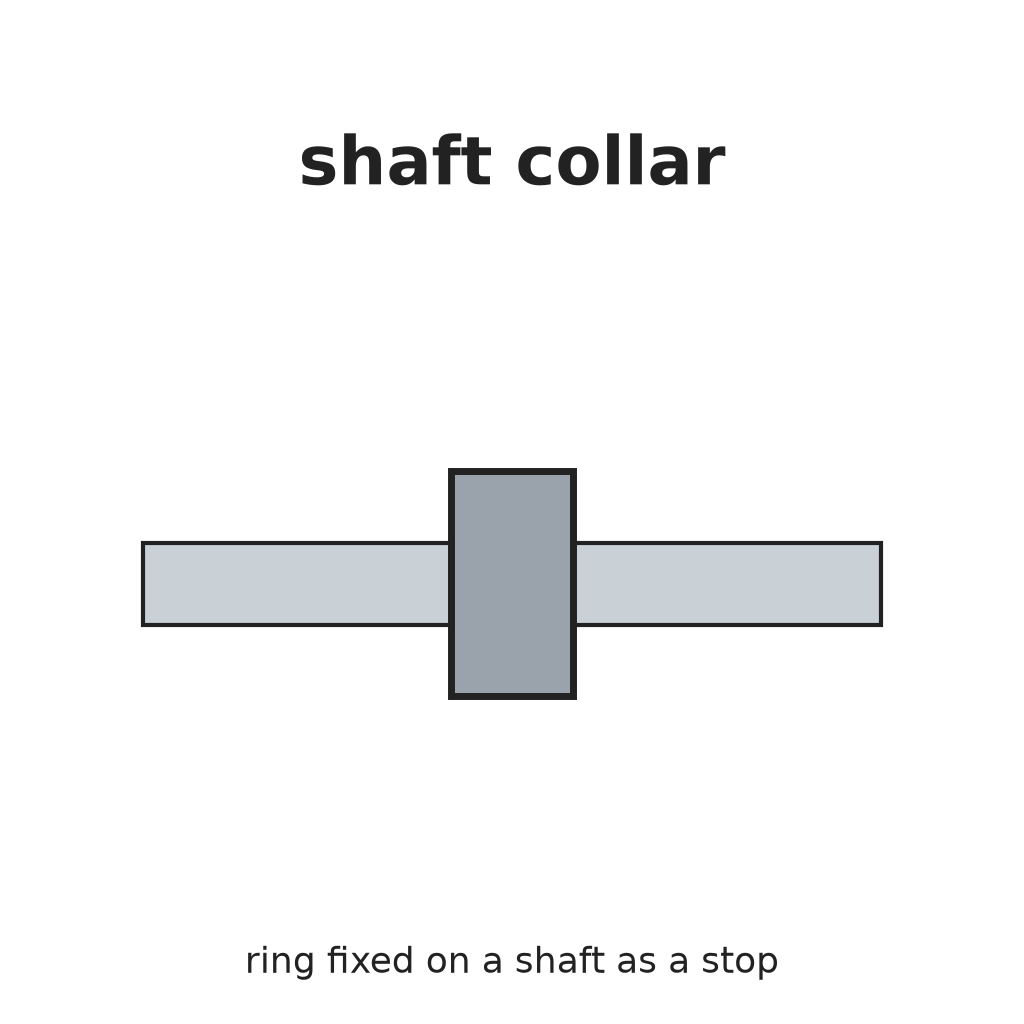 Shaft Collar2 peças
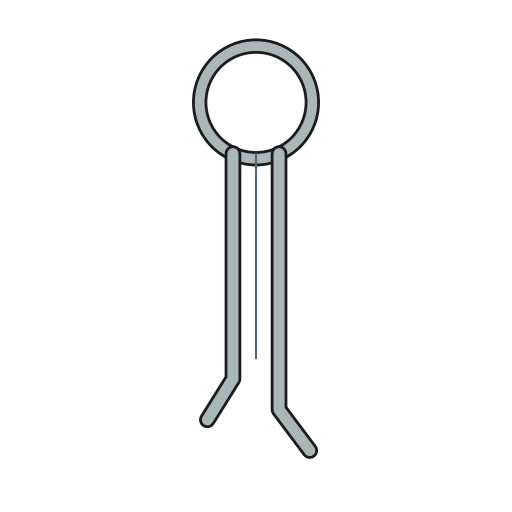 Contrapino6 peçasCavilhas de madeira dura1 peçaParafusos para madeira12 peçasCola de madeira1 peça
 Filamento PETG1 peça
Ferramentas necessárias:
 Impressora 3D de filamento (FDM)Serra de mesaSerra tico-tico
 Conjunto de brocas de páBerbequim sem fiosJogo de brocasSerra de arco para metaisLimas (lima de mão)Torno de bancadaConjunto de chaves de fendas
 Fita métrica
11
11
The build in 3D
The build in 3D
FreeCAD model of this build, the body cut open: the floor, sheet wall and rim, the sockets and the lift-off frame, the winch, crown wheel and pinion, the cog-wheel and two pinions, and the two dashers with their sloping wings L and flat wings M passing between each other.
12
12
Churn
Churn
Pour about 25 litres of heavy cream at about 15 °C, checked with the thermometer, into the body, about half full; put on the cover and drop in the frame. Turn the winch steadily, timing it. When the butter comes, lift the frame out of its sockets, take off the cover and lift out the dashers. Take out the butter from the ends, pour the buttermilk into a bowl, wash the butter in cold water until it runs clear, salt and weigh it.
Materiais para este passo:
 Natas para bater25 l
 Sal marinho grosso1 peça
 Água1 peça
Ferramentas necessárias:
 Termómetro de sonda permanente
 Cronómetro
 Balança digital de cozinha
 Taça grande de aço inoxidável
13
13
Troubleshooting
Troubleshooting
Twin-dasher churn troubleshooting.
Flow
Loading...
14
14
History and honest limits
History and honest limits
**Levi Bissell** of North Bergen, Genesee County, New York, US 29,052, 10 July 1860, "Churn". He claimed "the oppositely inclined sets of dasher wings L, L, following each other on their respective shafts, while those of one dasher alternate and intermatch with those of the other dasher, and the intermediate, horizontal dasher wings M, M". He did not claim two dashers with intermatching wings as such, nor sloping wings alone. He also allowed "feathering" the wings, in one way or in contrary ways; ours are not feathered. His gears were a bevel wheel and pinion; ours are a printed crown wheel and pinion. The patent gives no sizes; every size here is ours.
Materiais
16- 3 peçasReferência
- 2 peçasReferência
- 1 peçaReferência
- 12 peçasReferência
- 3 peçasReferência
- 40 peçasReferência
- 1 peçaReferência
- 1 peçaReferência
- 1 peçaReferência
- 1 peçaReferência
- 2 peçasReferência
- 6 peçasReferência
- 1 peçaReferência
- 25 lReferência
- 1 peçaReferência
- 1 peçaReferência
Ferramentas necessárias
21- Referência
- 1 vendor sell this, none ship to you yetReferência
- Referência
- Referência
- Referência
- Referência
- 1 vendor sell this, none ship to you yetReferência
- Referência
- Referência
- Referência
- 1 vendor sell this, none ship to you yetReferência
- Referência
- Referência
- Referência
- Referência
- Referência
- 1 vendor sell this, none ship to you yetReferência
- Referência
- Referência
- Referência
- Referência
Ficheiros de design
5

Blueprints relacionados
Estes blueprints compartilham conhecimento — técnicas, materiais ou princípios
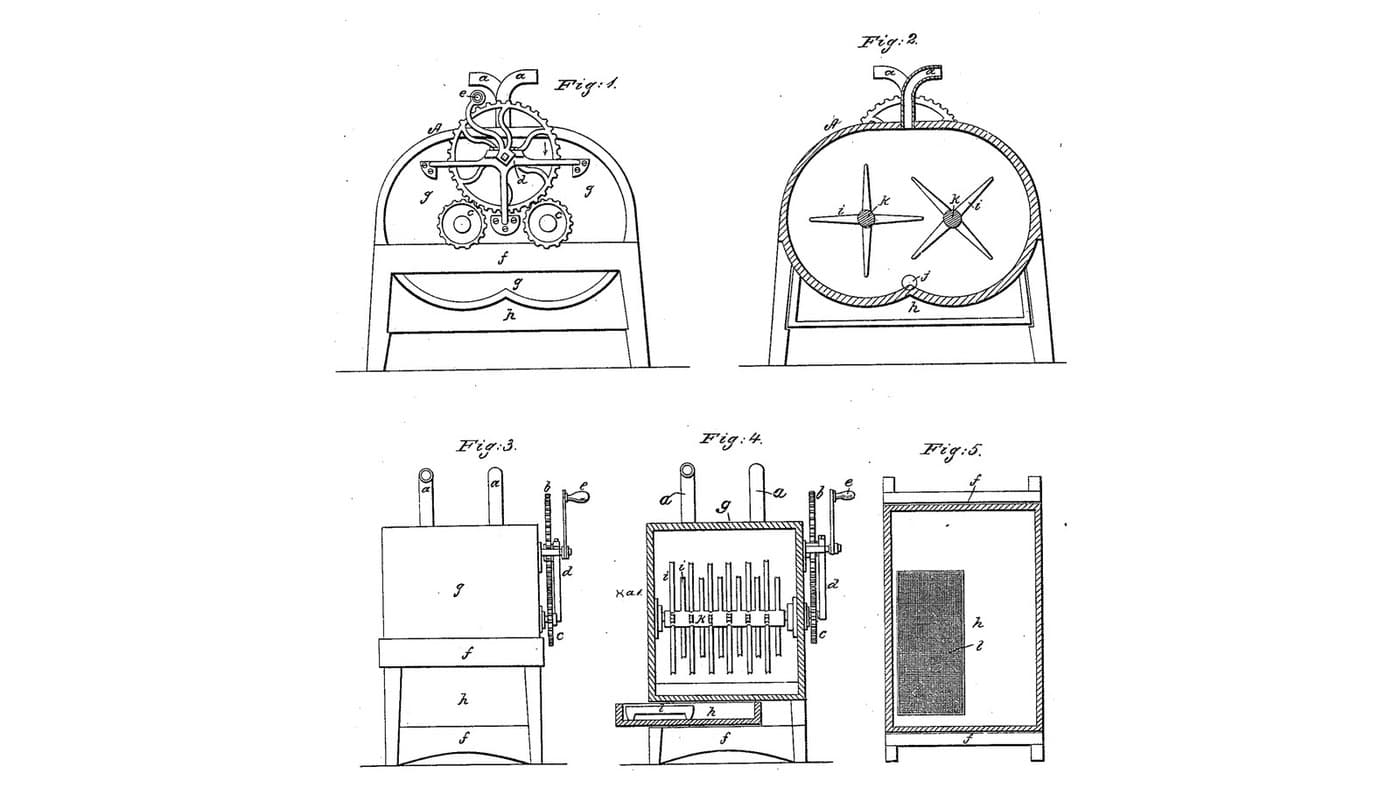
Double Rotary Crag Churn: Two Shafts of Four-Edged Arms Turn Through Each Other in Twin Half-Cylinders
por Buttercup
Marcenaria
10
0
0
0
0
0
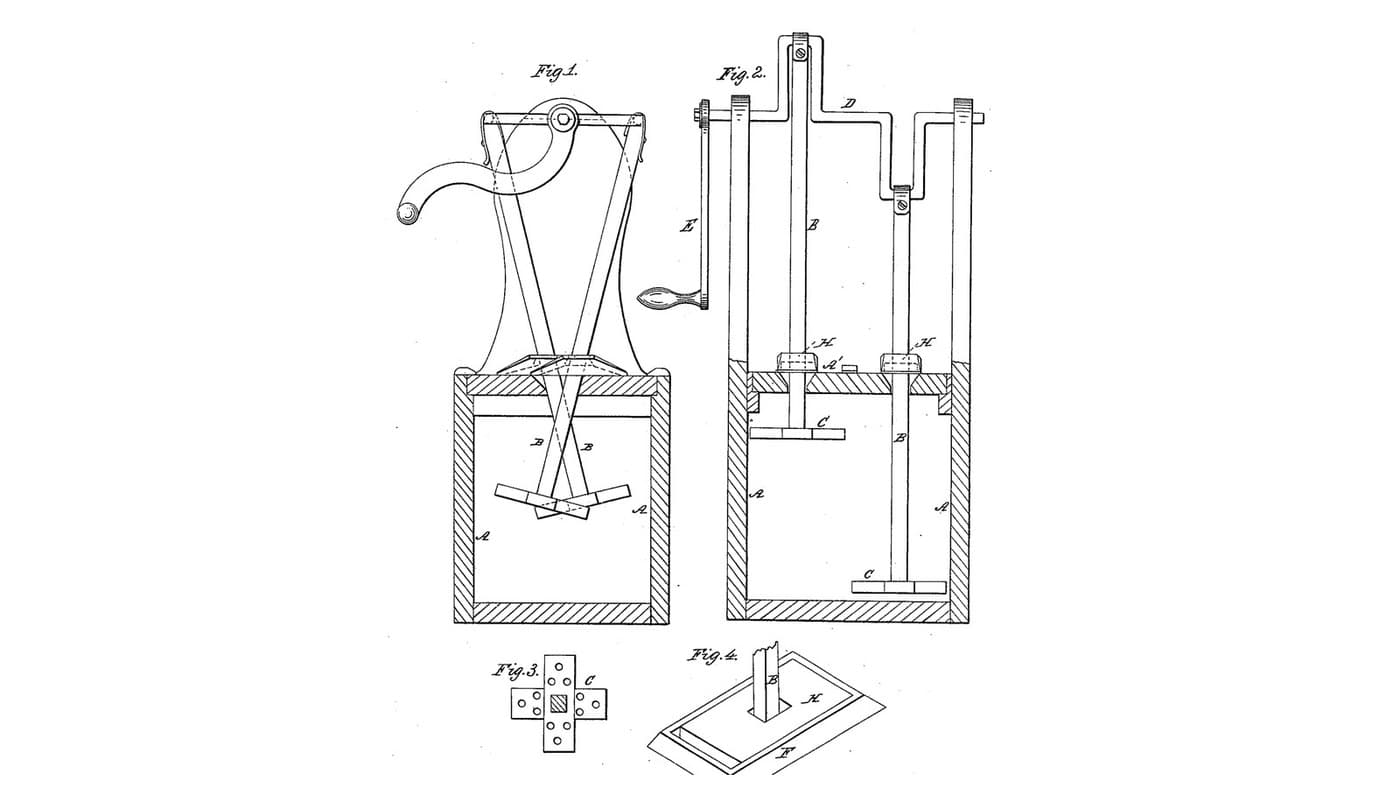
Twin-Crank Slide-Top Churn: Two Dashers on a Bent Crank Shaft, Sliding Plates Keep the Milk In
por Buttercup
Marcenaria
6
0
0
0
0
0

Churning Butter from Cream — The 5,000-Year-Old Fat Separation
por TheChef
ARTESANATO
63
0
0
0
0
0
CC0 Domínio Público
Este blueprint é liberado sob CC0. Você é livre para copiar, modificar, distribuir e usar este trabalho para qualquer finalidade, sem pedir permissão.
Apoie o Maker comprando produtos através do Blueprint, onde ele ganha uma Comissão Maker definida pelos vendedores, ou crie uma nova versão deste Blueprint e inclua-o como conexão no seu próprio Blueprint para compartilhar receita.