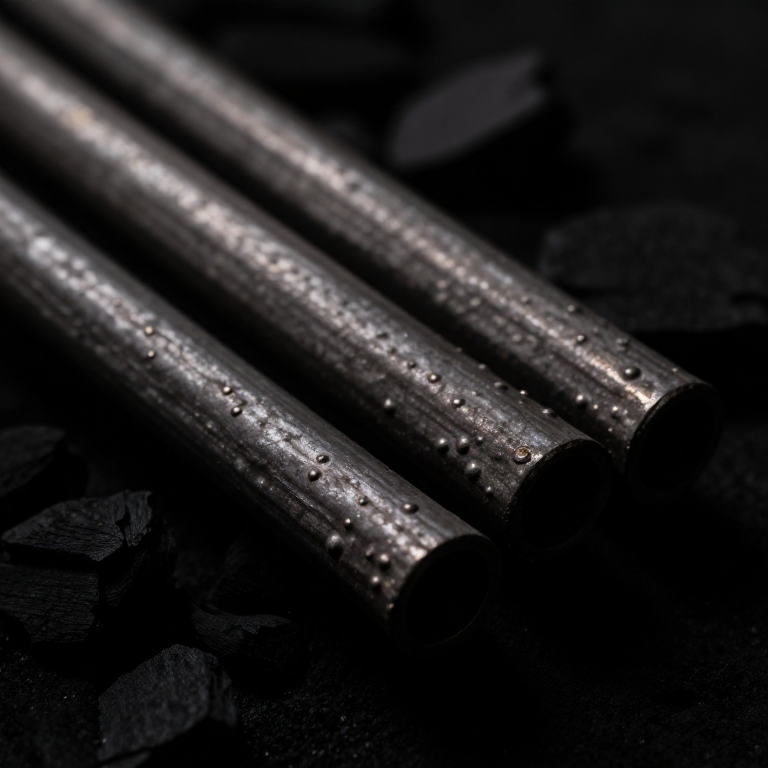


Making Blister Steel by Cementation — Carburizing Wrought Iron into Steel
Wrought iron bends but will not hold an edge; cast iron holds an edge but shatters. Steel — iron with just the right sliver of carbon — does both, and for centuries the great problem of metalworking was how to make it reliably. The cementation process, used across Europe from the 1600s, was the first method to manufacture steel in quantity from ordinary wrought iron bars.
The idea is to add carbon to solid iron without ever melting it. Bars of wrought iron are packed in powdered charcoal inside a sealed stone chest and roasted for a week at a bright red heat. Over those days, carbon slowly creeps out of the charcoal and diffuses into the surface of the iron, turning the skin into steel. Gas trapped under the surface raises little blisters across the bars — which is why the product is called blister steel.
Blister steel is uneven, carbon-rich at the surface and soft in the core, so smiths refined it further: forge-welding and folding it into shear steel, or melting it in crucibles into perfectly uniform cast steel. But cementation was the foundation — the step that first made steel an industrial material rather than a rare treasure.
Instruções
Understand cementation
Understand cementation
Select wrought iron bars
Select wrought iron bars
Materiais para este passo:
 Barras de ferro forjado20 kg
Build the cementation chest
Build the cementation chest
Materiais para este passo:
 Tijolos refratários60 peças
Ferramentas necessárias:
 Colher de jardineiro
Crush the charcoal
Crush the charcoal
Materiais para este passo:
 Carvão vegetal em pedaços15 kg
Ferramentas necessárias:
 Martelo
Pack iron and charcoal in layers
Pack iron and charcoal in layers
Seal the chest with clay
Seal the chest with clay
Materiais para este passo:
 Argila10 kg
Fire at red heat for days
Fire at red heat for days
Materiais para este passo:
 Carvão betuminoso200 kg
Let the carbon diffuse
Let the carbon diffuse
Recognise the blisters
Recognise the blisters
Ferramentas necessárias:
 Tenazes de estirar
Cool slowly and open
Cool slowly and open
Ferramentas necessárias:
Tenazes de estirarRefine into shear steel
Refine into shear steel
Ferramentas necessárias:
MarteloTest that it is steel
Test that it is steel
Materiais para este passo:
 Água5 litros
Materiais
6- Referência
- 60 peçasReferência
- Referência
- 10 kgReferência
- 200 kgReferência
- 5 litrosReferência
Materiais de Blueprints conectados

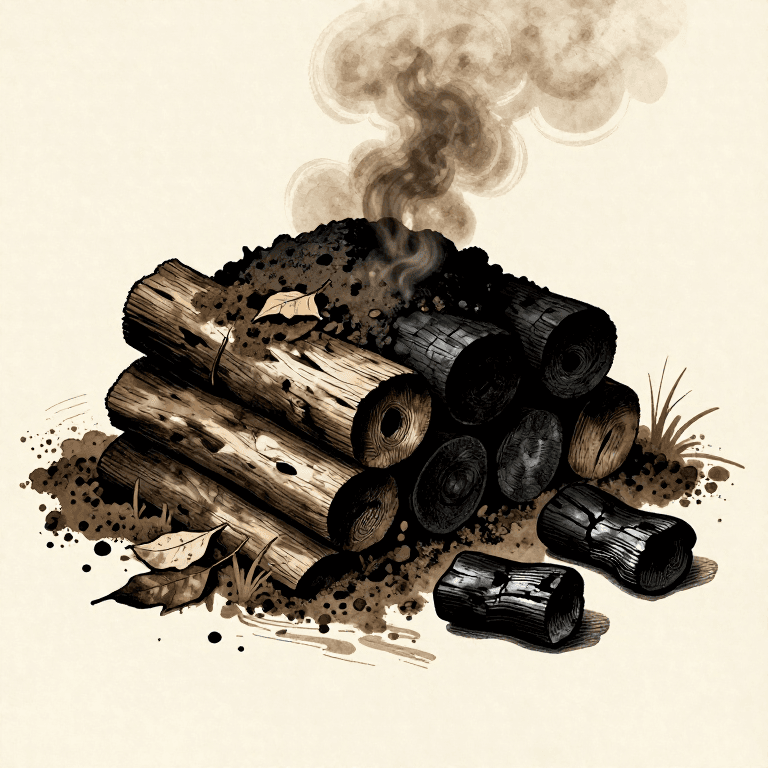

Blueprints relacionados
Estes blueprints compartilham conhecimento — técnicas, materiais ou princípios
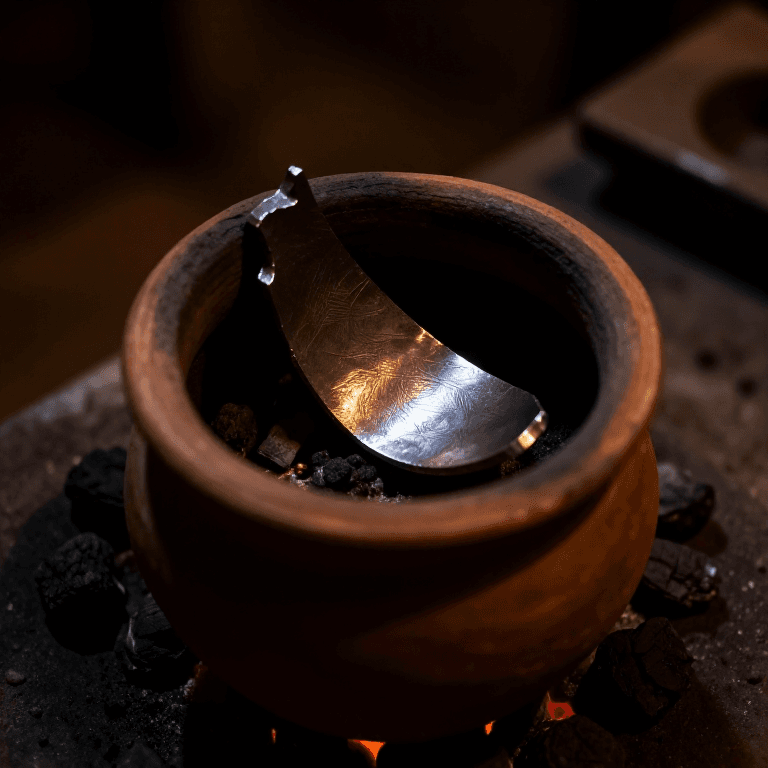

CC0 Domínio Público
Este blueprint é liberado sob CC0. Você é livre para copiar, modificar, distribuir e usar este trabalho para qualquer finalidade, sem pedir permissão.
Apoie o Maker comprando produtos através do Blueprint, onde ele ganha uma Comissão Maker definida pelos vendedores, ou crie uma nova versão deste Blueprint e inclua-o como conexão no seu próprio Blueprint para compartilhar receita.