Colaboração
ARTE
BELEZA E BEM-ESTAR
ARTESANATO
CULTURA E HISTÓRIA
ENTRETENIMENTO
MEIO AMBIENTE
COMIDA E BEBIDAS
ENGENHARIA REVERSA
CIÊNCIAS
ESPORTES
TECNOLOGIA
TECNOLOGIA VESTÍVEL
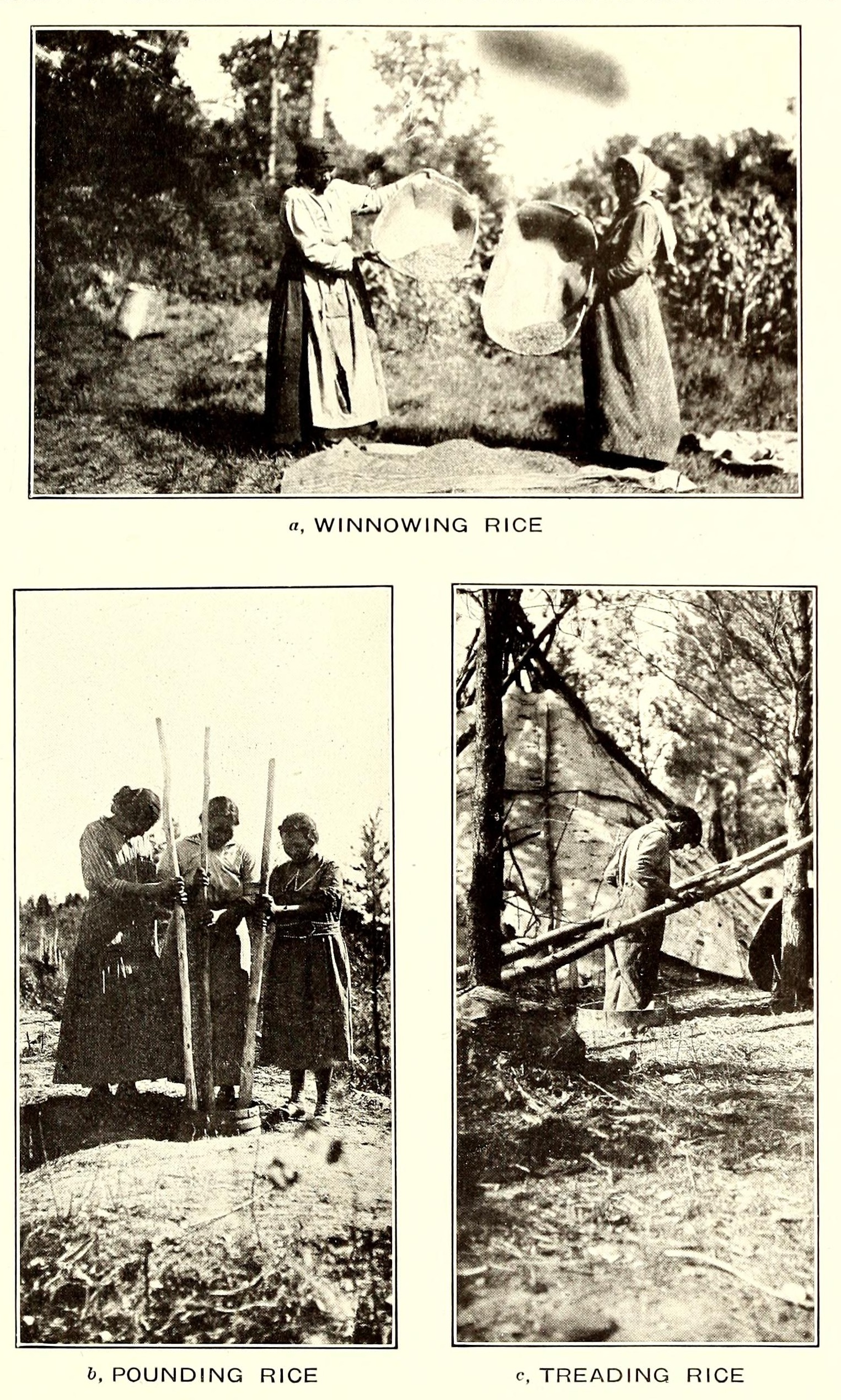

Chippewa Wild Rice: Knocked into the Canoe with Two Sticks, Parched, Pounded, Winnowed and Trodden (Densmore, 1928)
How the Chippewa (Ojibwe) harvested and finished wild rice, from Frances Densmore's account: the ripe kernels knocked into a poled canoe with two rice sticks, dried a day on birch bark, parched a peck at a time in a slanting kettle, pounded with dropped pestles, winnowed in the breeze and trodden in a sunken tub to free the last husk.
Intermediário
A day to gather a canoeful; a day and a half to finish it
Instruções
1
1
Her measures
Her measures
A carregar o notebook Jupyter…
2
2
Read Densmore
Read Densmore
"Wild rice constitutes the chief cereal food of the Chippewa."
3
3
Knock the rice
Knock the rice
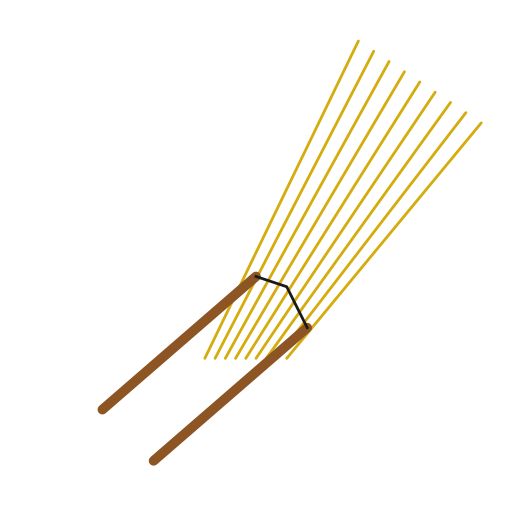
In warm, still weather, pole a canoe into the rice (a pole forked at the end). From the stern, bend a few stalks over the canoe with one stick and free the kernels with a sweeping, gentle stroke of the other, on both sides. Take only the ripe kernels and come back in a few days for more; leave some to fall as seed. A canoeful is a day's gathering.
Ferramentas necessárias:
 Canoa
 Paus de debulhar
4
4
Dry a day
Dry a day
Spread the rice on sheets of birch bark in the sun, but not so hot that it heats, and stir it often. Allow about 24 hours.
Materiais para este passo:
 Folhas de casca de bétula1 peça
Ferramentas necessárias:
 Pá de madeira
5
5
Parch it
Parch it
Prop a large kettle slanting over a carefully kept fire and stir about a peck (9 L) at a time with a slender paddle for about an hour, without burning it. This loosens the husk and gives the flavour. (Oldest way, "hard rice": spread it about 3 in., 8 cm, deep on hay over a frame above a slow fire: greenish black, keeps indefinitely and can be sown.)
Materiais para este passo:
 Feno1 peça
Ferramentas necessárias:
 Chaleira de ferro
 FogueiraPá de madeira
 Secador
6
6
Pound it
Pound it
Put the rice in a barrel or a wooden mortar with sloping sides. Work wooden pestles about 5 1/2 ft (1.7 m) long up and down near the edge, letting them drop of their own weight, never forcing them, so the husk loosens and the kernel stays whole.
Ferramentas necessárias:
 Barril de madeira
 Pilão de madeira
7
7
Winnow
Winnow
Where a breeze blows, toss the rice in a winnowing tray, or pour it slowly from the tray onto birch bark on the ground; the wind takes the chaff.
Ferramentas necessárias:
 Joeira
8
8
Tread it
Tread it
Sink a small wooden tub of about a bushel partly into the ground, with a stout pole either side fixed to a tree about 4 ft (1.2 m) up. In clean moccasins, lean on the poles and tread lightly, like dancing, to free the last bits of husk. Winnow again. Keep the chaff: it cooks like rice. Store the rice in bags with straw on top, sewn shut with basswood twine.
Materiais para este passo:
 Palha1 peça
 Cordame1 peça
Ferramentas necessárias:
Barril de madeira MocassinsJoeira
9
9
Troubleshooting
Troubleshooting
Wild rice troubleshooting.
Flow
Loading...
10
10
History and honest limits
History and honest limits
From Frances Densmore, *Uses of Plants by the Chippewa Indians*, **44th Annual Report of the Bureau of American Ethnology** (1928), pp. 313-316 (checked on the archive.org scan usesofplantsbych00dens). A woman could also claim her rice about 10 days before it ripened by tying it in small sheaves with basswood fiber, drawn to her with a rice hoop; tied rice tasted slightly different and needed longer boiling. In old times the treading pit was lined with deerskin. Metric is ours.
Materiais
4- Referência
- 1 peçaReferência
- 1 peçaReferência
- 1 peçaReferência
Blueprints relacionados
Estes blueprints compartilham conhecimento — técnicas, materiais ou princípios
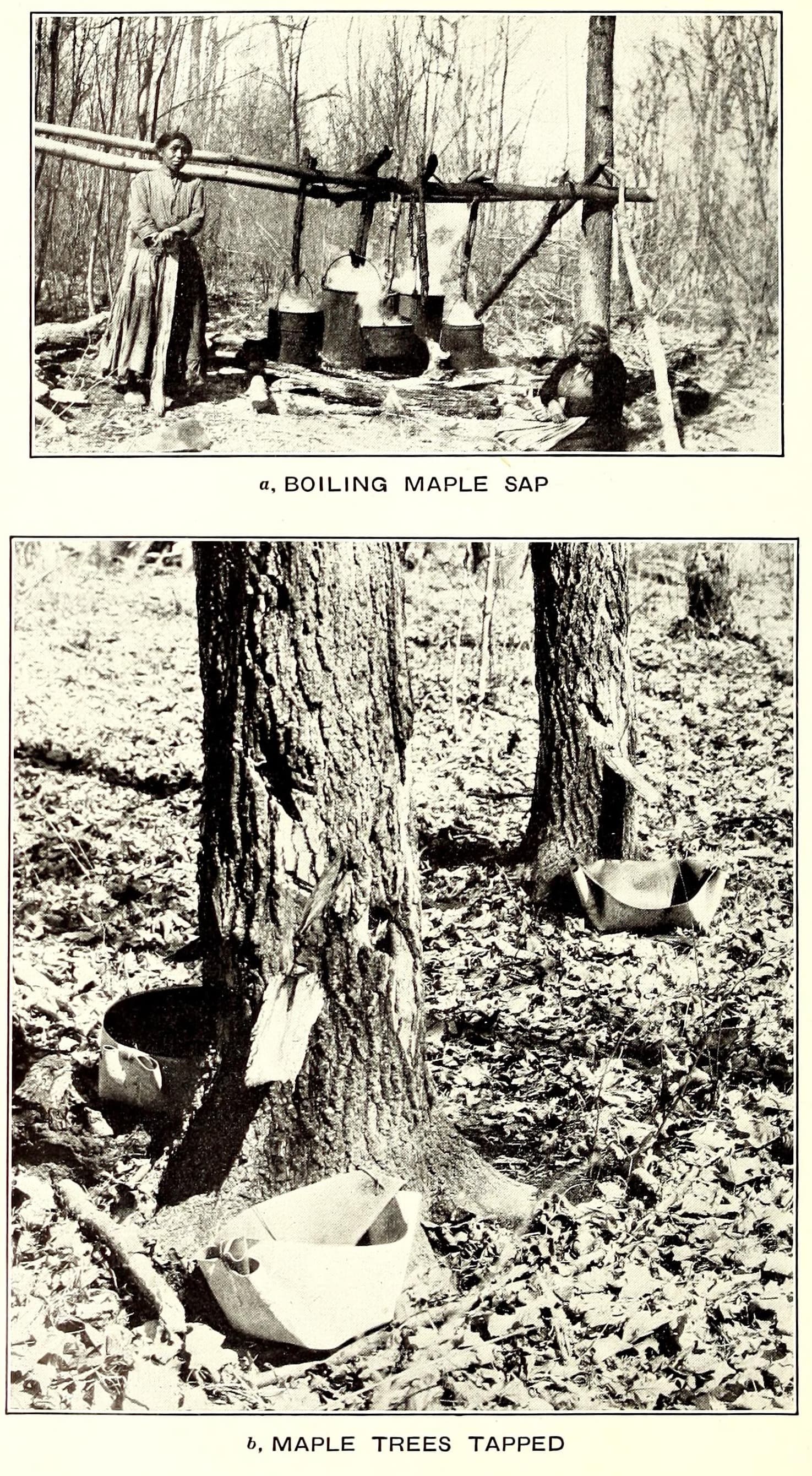
Chippewa Maple Sugar Camp: Spiles Below a Diagonal Cut, Kettles Boiled All Night, Sugar Worked in a Trough (Densmore, 1928)
por TheChef
COMIDA E BEBIDAS
1
0
0
0
0
0
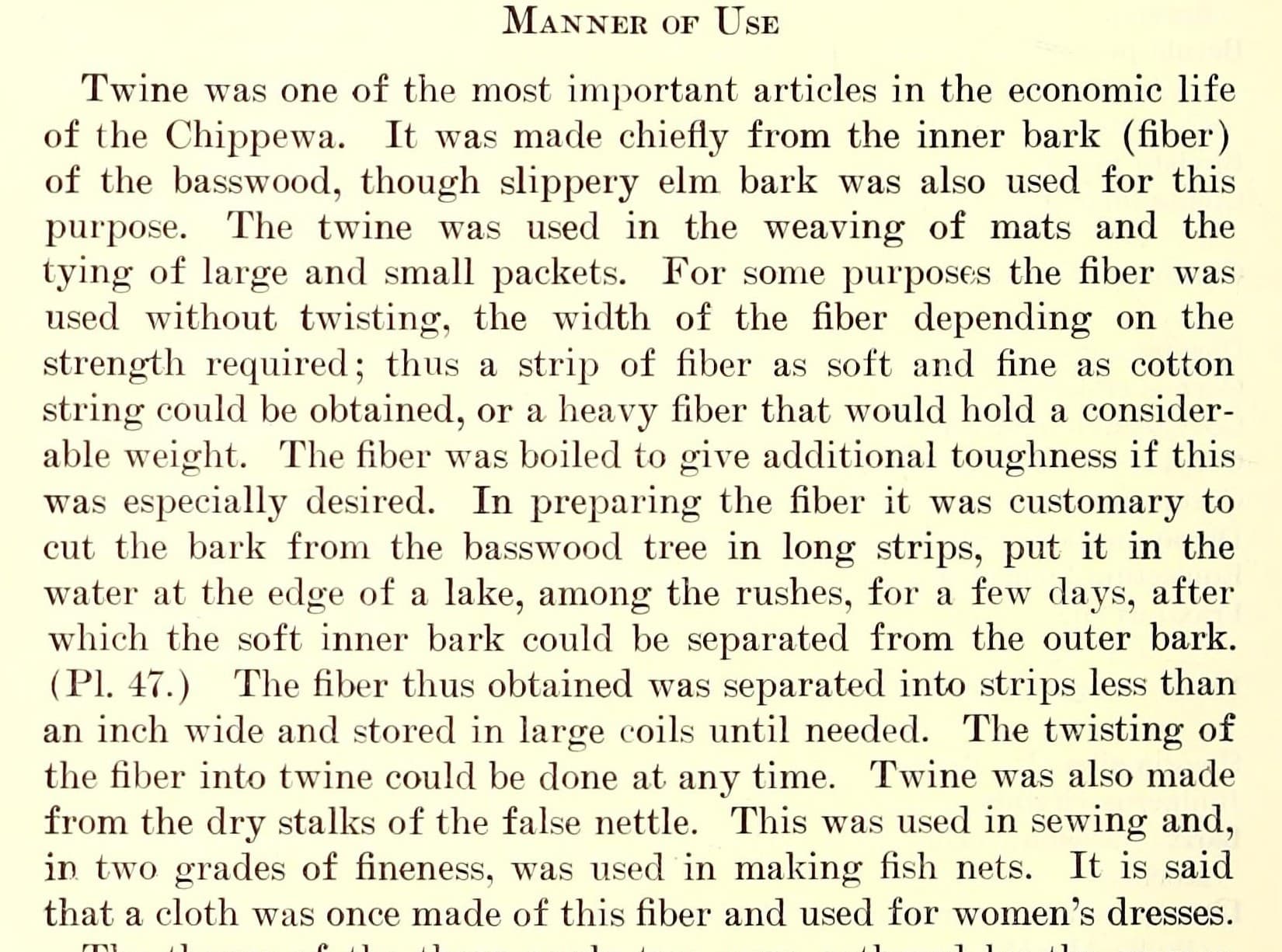
Chippewa Basswood Fiber and Twine: Bark Strips Soaked at the Lake Edge, Inner Bark Peeled and Coiled (Densmore, 1928)
por Tex
Trabalho com Corda
3
0
0
0
0
0
CC0 Domínio Público
Este blueprint é liberado sob CC0. Você é livre para copiar, modificar, distribuir e usar este trabalho para qualquer finalidade, sem pedir permissão.
Apoie o Maker comprando produtos através do Blueprint, onde ele ganha uma Comissão Maker definida pelos vendedores, ou crie uma nova versão deste Blueprint e inclua-o como conexão no seu próprio Blueprint para compartilhar receita.