ARTE
BELEZA E BEM-ESTAR
ARTESANATO
CULTURA E HISTÓRIA
ENTRETENIMENTO
MEIO AMBIENTE
COMIDA E BEBIDAS
ENGENHARIA REVERSA
CIÊNCIAS
ESPORTES
TECNOLOGIA
TECNOLOGIA VESTÍVEL
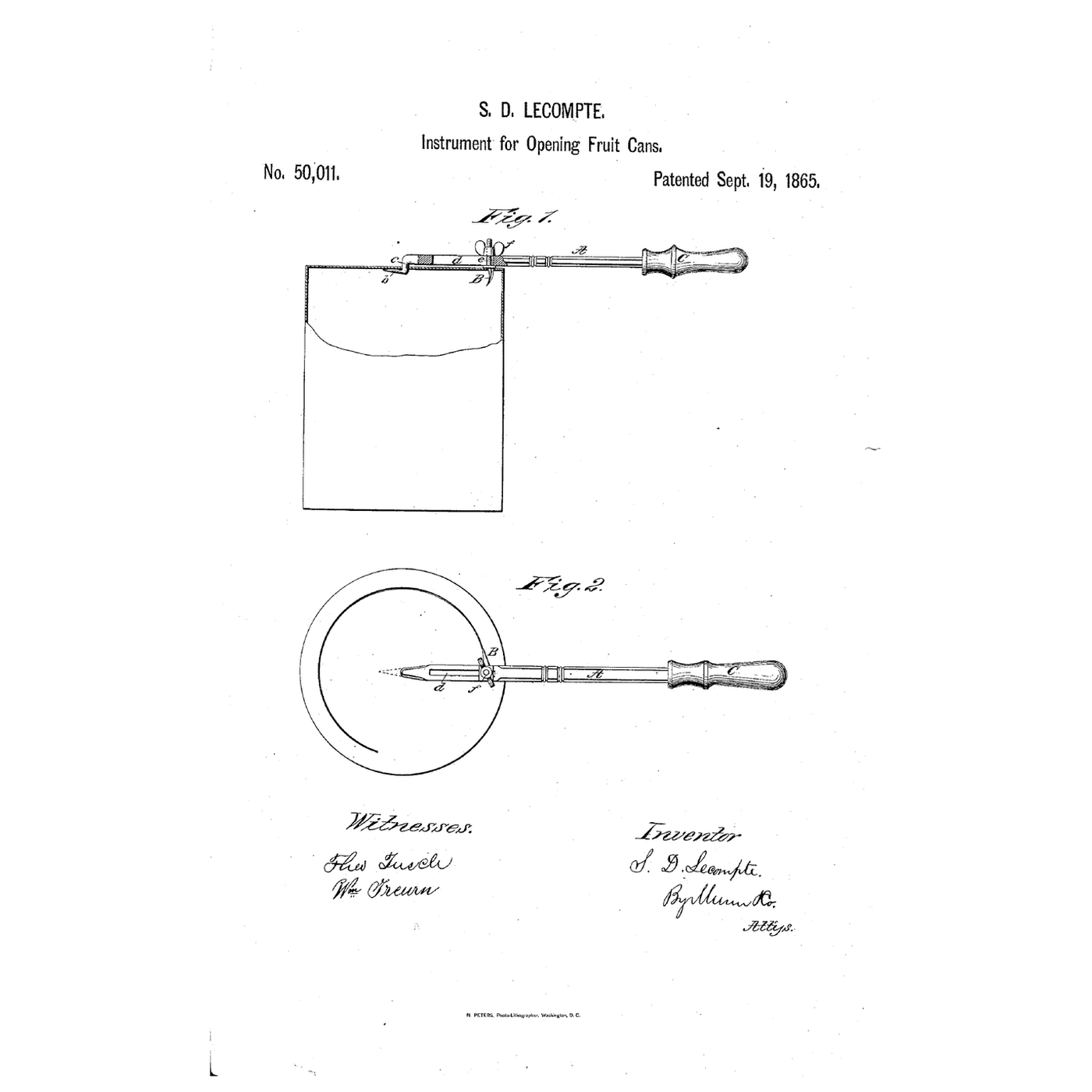


Crank-Point Can Opener: A Bent Point to Turn On, a Knife Set in a Slot
A can opened with a lever knife leaves a jagged hole of any size.
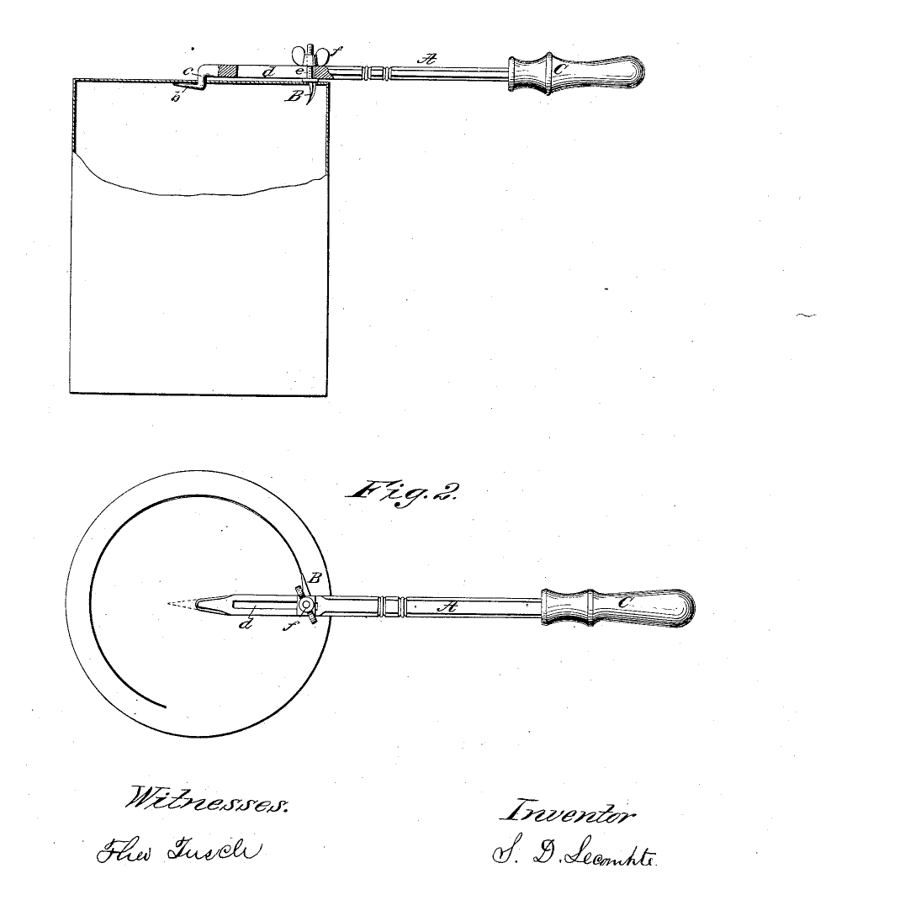
Samuel D. Lecompte of Leavenworth, Kansas, received US 50,011, dated 19 September 1865, for an instrument for opening fruit and other sealed cans: a bar with a handle, its end bent like a crank and pointed so that, thrust through the top, the bent part is held by the edges of the hole as a bearing; a knife slides along a slot in the bar on a set screw, and the instrument is turned round to cut.
This rung works out where to set the knife for each can, then forges the bar, crank and knife and cuts a round opening.
Intermediário
About 3 hours
Instruções
1
1
Knife position for each can
Knife position for each can
A carregar o notebook Jupyter…
2
2
A lever opener before it
A lever opener before it
The embedded blueprint saws round a can with a lever knife. Lecompte gives the knife a centre to turn about and a slot to set its radius.
3
3
Read US 50,011
Read US 50,011
"The end of the instrument is bent somewhat in the form of a crank, and pointed, as shown by the letters b c in Fig. 1. This enables the instrument to be thrust into the top of the can in such manner that the part c, which is bent at right angles to the bar A, will be encircled by the edges of the hole made in the top of the can, thus insuring a good and sufficient bearing to enable the instrument to be operated."
4
4
Slot the bar
Slot the bar
Cut 170 mm of 25 × 3 mm flat bar. Drill a row of 5 mm holes along its centre from 25 to 70 mm from one end and file them into a slot.
Materiais para este passo:
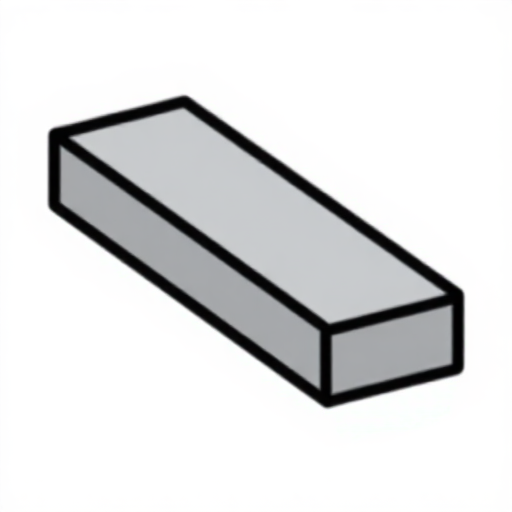 Barra chata de aço macio1 peça
Ferramentas necessárias:
 Serra de arco para metais
 Torno de bancada
 Punção de centro
 Berbequim sem fios
 Jogo de brocas
 Jogo de limas de agulha
 Régua
Régua5
5
Forge the crank point
Forge the crank point
File the bar's slotted end down to 6 mm wide for its last 30 mm. Bend it down 15 mm, along 10 mm, and down again 15 mm in the vice, and file the end to a sharp point.
Ferramentas necessárias:
 Limas (lima de mão)Torno de bancada
 Martelo
 Óculos de segurança transparentes
6
6
Make the knife
Make the knife
Cut a 6 × 25 mm knife from 1 mm steel sheet with a pointed lower end and a 5 mm hole at the top. Hone its edge.
Materiais para este passo:
 Chapa de aço macio1 peça
Ferramentas necessárias:
 Tesoura de chapaBerbequim sem fiosJogo de brocasLimas (lima de mão)
 Pedra de amolar
7
7
Fit the knife and handle
Fit the knife and handle
Bolt the knife under the slot with an M5 screw, washer and nut as the set screw. Fit a hardwood handle to the bar's other end with epoxy.
Materiais para este passo:
 Parafusos de máquina1 peça
 Anilha plana1 peça
 Porca sextavada1 peça
 Cavilhas de madeira dura1 peça
 Epóxi de dois componentes1 peça
Ferramentas necessárias:
 Chave inglesa ajustávelBerbequim sem fiosJogo de brocas
8
8
The patent drawing
The patent drawing
US 50,011 drawing sheet, public domain (expired patent).
9
9
Cut a round opening
Cut a round opening
Set the knife for the can and tighten it. Stand a sealed can on the kitchen scale, thrust the point through the top's centre, press the knife in and turn round; read the peak load, time it, and measure the hole.
Materiais para este passo:
 Lata1 peça
Ferramentas necessárias:
 Balança digital de cozinha
 Cronómetro
 Paquímetro digital de 6 polegadas
 Luvas de trabalho em couro
10
10
A point that tears out, a knife that slips
A point that tears out, a knife that slips
Crank-point can opener troubleshooting.
Flow
Loading...
11
11
History and honest limits
History and honest limits
**Samuel D. Lecompte** of Leavenworth, Kansas, received US 50,011, dated 19 September 1865, for cans used for fruits, preserves and oysters. He did not limit himself to one knife shape, having adopted various styles. The patent was reissued on 4 February 1868 (No. 2,851). F. S. Wyman's 1868 patent names it as the circular opener he added a side knife to.
**Honest limits.** A bolt and nut stand in for his set screw, and the knife is unhardened. Your loads and times are the result.
Materiais
8- 1 peçaReferência
- 1 peçaReferência
- 1 peçaReferência
- 1 peçaReferência
- 1 peçaReferência
- 1 peçaReferência
- Referência
- 1 peçaReferência
Ferramentas necessárias
17- Referência
- Referência
- Referência
- 1 vendor sell this, none ship to you yetReferência
- Referência
- Referência
- Referência
- Referência
- Referência
- Referência
- Referência
- Referência
- Referência
- Referência
- Referência
- Referência
- Referência
Blueprints relacionados
Estes blueprints compartilham conhecimento — técnicas, materiais ou princípios



CC0 Domínio Público
Este blueprint é liberado sob CC0. Você é livre para copiar, modificar, distribuir e usar este trabalho para qualquer finalidade, sem pedir permissão.
Apoie o Maker comprando produtos através do Blueprint, onde ele ganha uma Comissão Maker definida pelos vendedores, ou crie uma nova versão deste Blueprint e inclua-o como conexão no seu próprio Blueprint para compartilhar receita.