ARTE
BELEZA E BEM-ESTAR
ARTESANATO
CULTURA E HISTÓRIA
ENTRETENIMENTO
MEIO AMBIENTE
COMIDA E BEBIDAS
ENGENHARIA REVERSA
CIÊNCIAS
ESPORTES
TECNOLOGIA
TECNOLOGIA VESTÍVEL
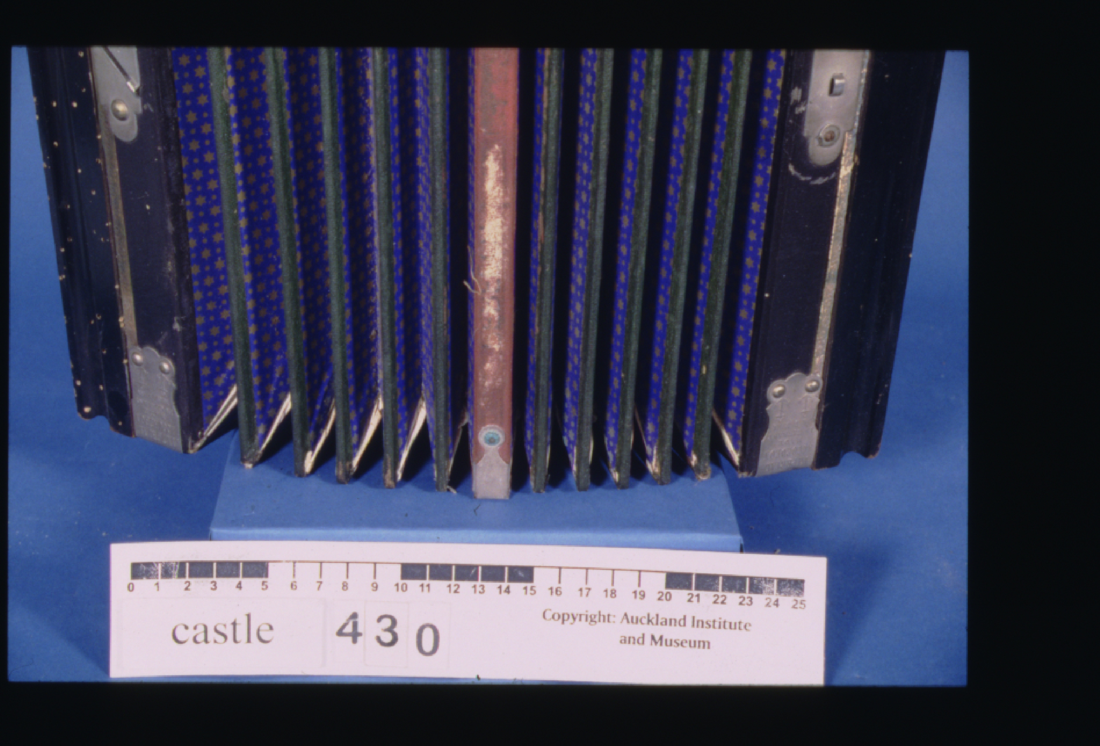
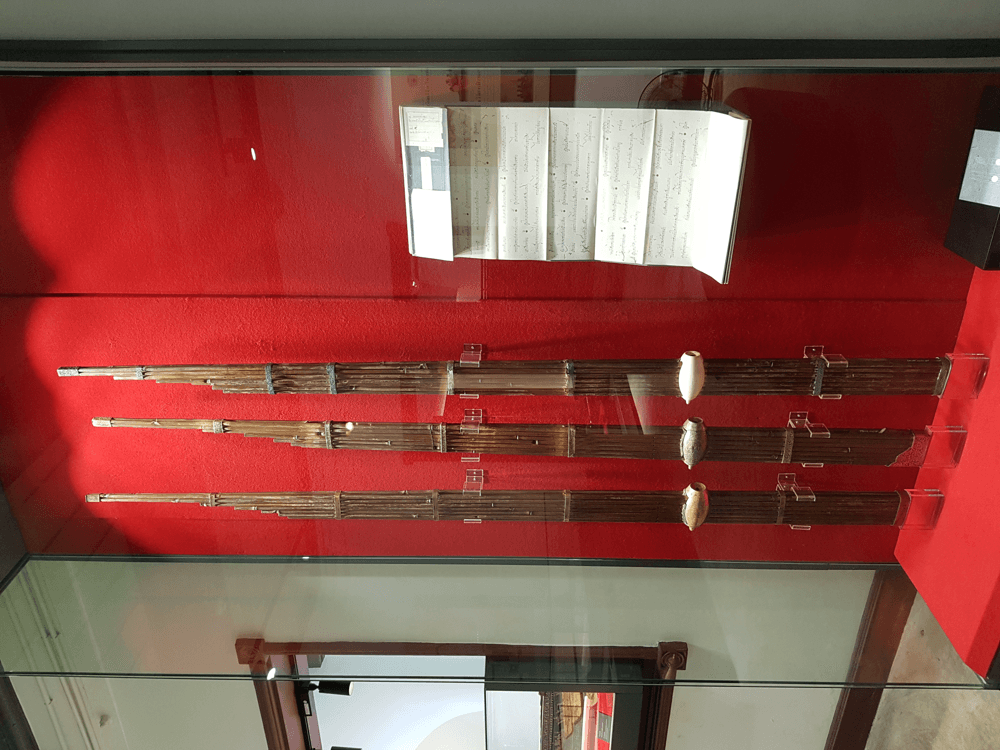
Auckland Museum / Kalbe's (Wikimedia Commons) · CC BY 4.0


Building a Free-Reed Accordion — Bellows, Reeds and Buttons
Build a simple accordion: cut and tune springy metal free reeds, mount them in reed blocks with leather valves, and pump air past them with a pleated bellows squeezed between two button boxes. A serious maker build in the free reed and the bellows — the European instrument born from the Chinese sheng, that carries its own wind supply.
Avançado
Many hours over several sessions
Instruções
1
1
A box of reeds you pump
A box of reeds you pump
An accordion is a bellows with metal reeds. Squeeze or pull the bellows and air is forced past thin metal tongues, each of which flutters and sings. Buttons open the path to different reeds so you choose the notes — and the instrument carries its own wind, so it never needs a breath.
2
2
Cut the free reeds
Cut the free reeds
For each note, cut a matching slot in a small metal plate and rivet a thin springy tongue over it, sized so the tongue swings freely DOWN THROUGH the slot with only a hair's gap. This 'free reed' — a tongue that passes through its frame — is the whole secret. Longer tongues sound lower.
Materiais para este passo:
 Chapa de latão1 peça
Ferramentas necessárias:
 Lima para metal
3
3
Tune the reeds
Tune the reeds
Tune each tongue by filing: scrape the TIP thinner to raise its pitch, or scrape near the RIVETED base to lower it — exactly how an mbira key is tuned. Make one reed for pushing air and one for pulling on each note if you want it to sound both ways.
4
4
Build the reed blocks
Build the reed blocks
Mount the reed plates over air channels in a wooden block. Glue a small leather flap (a valve) over the idle reed of each pair, so air only ever drives the reed meant to sound and does not waste out through its partner.
Materiais para este passo:
 Tábua de resinosa seca1 peça
 Couro curtido ao crómio1 peça
Ferramentas necessárias:
 Faca de talha sloyd
5
5
Build the two ends and buttons
Build the two ends and buttons
Build a small box at each end. Over each reed sits a hole kept shut by a leather-faced pad; a button on a lever lifts the pad to let air reach that reed. Fit a row of buttons on one end, the bass end on the other.
Materiais para este passo:
 Contraplacado de bétula báltica1 peça
 Vareta de madeira (cavilha)1 peça
 Cola branca para madeira (PVA)1 peça
Ferramentas necessárias:
 Sovela
6
6
Make the bellows
Make the bellows
Between the two ends build a pleated bellows — stiff card folded into a concertina zig-zag, its corners sealed with leather so it is airtight. Screw and glue the bellows to both end boxes. This is the lung that supplies the wind.
Materiais para este passo:
 Parafuso para madeira n.º 8 x 1"12 peças
7
7
Play — push and pull
Play — push and pull
Hold an end in each hand, press buttons, and pump the bellows in and out. Every push and pull drives air past the open reeds and they sing. Keep the bellows moving — steady air gives a steady tone; pumping harder makes it louder.
8
8
Compendium — the free reed and its bellows
Compendium — the free reed and its bellows
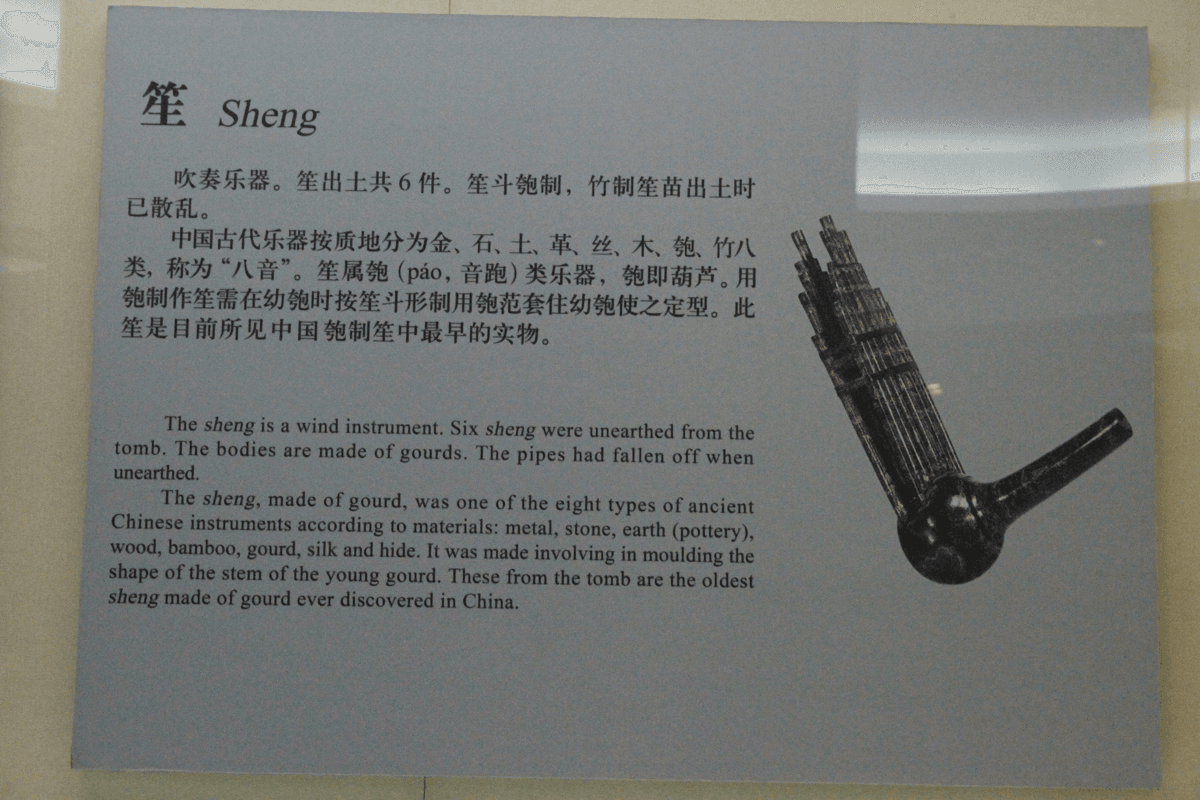
The accordion runs on the FREE reed: a thin metal tongue fixed at one end and free at the other, mounted over a slot it can swing right through. Push air at it and the tongue is bent into the slot, springs back past it, is pushed in again — flapping back and forth many times a second and chopping the airflow into a buzzing note. Its pitch is set purely by the tongue itself — its length, thickness and stiffness — NOT by any pipe or air column, which is why an accordion needs no long tubes and can pack a whole orchestra of notes into a small box, and why you tune it by filing the tongue (tip thinner = higher, base thinner = lower) just like an mbira key. This is the exact same free reed as the Chinese sheng and the Lao khaen — and that is no coincidence: the free reed reached Europe from China around 1800, and within a couple of decades makers in Berlin and Vienna had wrapped it in a bellows to create the accordion, concertina and harmonica. The accordion's own invention is the BELLOWS as a built-in, tireless wind supply: where the sheng and khaen need the player's lungs and the pipe organ needs a pump, the accordion's pleated bellows lets the player push OR pull air at will, so (with a reed for each direction) the sound never stops for a breath. Add leather valves so air only drives the intended reed, and pad-and-button levers to choose notes, and you have a portable, self-powered reed organ — the instrument that carried folk and dance music across nineteenth-century Europe and the Americas.
Materiais
7- 1 peçaReferência
- 1 peçaReferência
- 1 peçaReferência
- Referência
- Referência
- Referência
- 12 peçasReferência
Ferramentas necessárias
3- Referência
- Referência
- Referência
Blueprints relacionados
Estes blueprints compartilham conhecimento — técnicas, materiais ou princípios
CC0 Domínio Público
Este blueprint é liberado sob CC0. Você é livre para copiar, modificar, distribuir e usar este trabalho para qualquer finalidade, sem pedir permissão.
Apoie o Maker comprando produtos através do Blueprint, onde ele ganha uma Comissão Maker definida pelos vendedores, ou crie uma nova versão deste Blueprint e inclua-o como conexão no seu próprio Blueprint para compartilhar receita.