ARTE
BELEZA E BEM-ESTAR
ARTESANATO
CULTURA E HISTÓRIA
ENTRETENIMENTO
MEIO AMBIENTE
COMIDA E BEBIDAS
ENGENHARIA REVERSA
CIÊNCIAS
ESPORTES
TECNOLOGIA
TECNOLOGIA VESTÍVEL
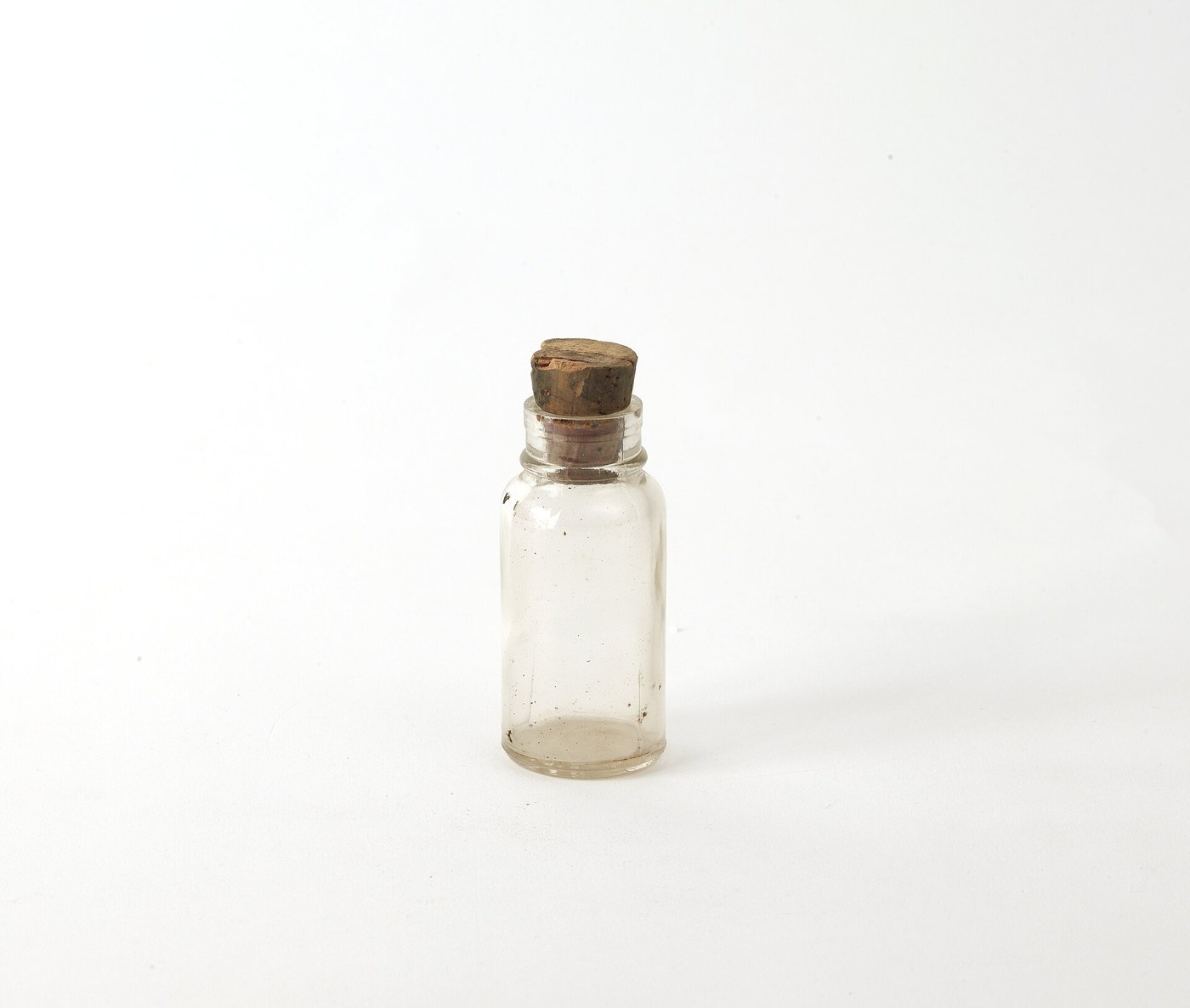


Glass Vial: a Corked Specimen Vial Closed and Flanged from Glass Tube (after Frary, 1914)
A small glass vial with a cork, for specimens, gold flakes or samples: an 18 mm glass tube closed to a round bottom, cut to length and flanged at the mouth so a cork goes in without cracking it, then annealed. The methods are from Francis Frary's Laboratory Manual of Glass-Blowing (1914). About 14 ml.
Intermediário
About 30 minutes a vial, plus practice
Instruções
1
1
Watch a test tube made
Watch a test tube made
A tube closed to a round bottom at the torch (The Fusing Shop). A vial is the same, shorter, with a flanged mouth.
2
2
How much it holds
How much it holds
A carregar o notebook Jupyter…
Ferramentas necessárias:
 Paquímetro digital de 6 polegadas
3
3
Make a flanging tool
Make a flanging tool
Frary's tool: a triangle of copper or brass about 1/16 in. (1.5 mm) thick on a handle; his Fig. 2 sizes are a = 1 in., b = 1 in. and a = 2 in., b = 1 in. Cut it from brass sheet and fit it in a slot sawn in a hardwood dowel (ours: he wraps the shank in asbestos paper, which we never use).
Ferramentas necessárias:
 Chapa de latão
 Cavilhas de madeira dura
 Tesoura de chapa
 Limas (lima de mão)
4
4
Close the end
Close the end
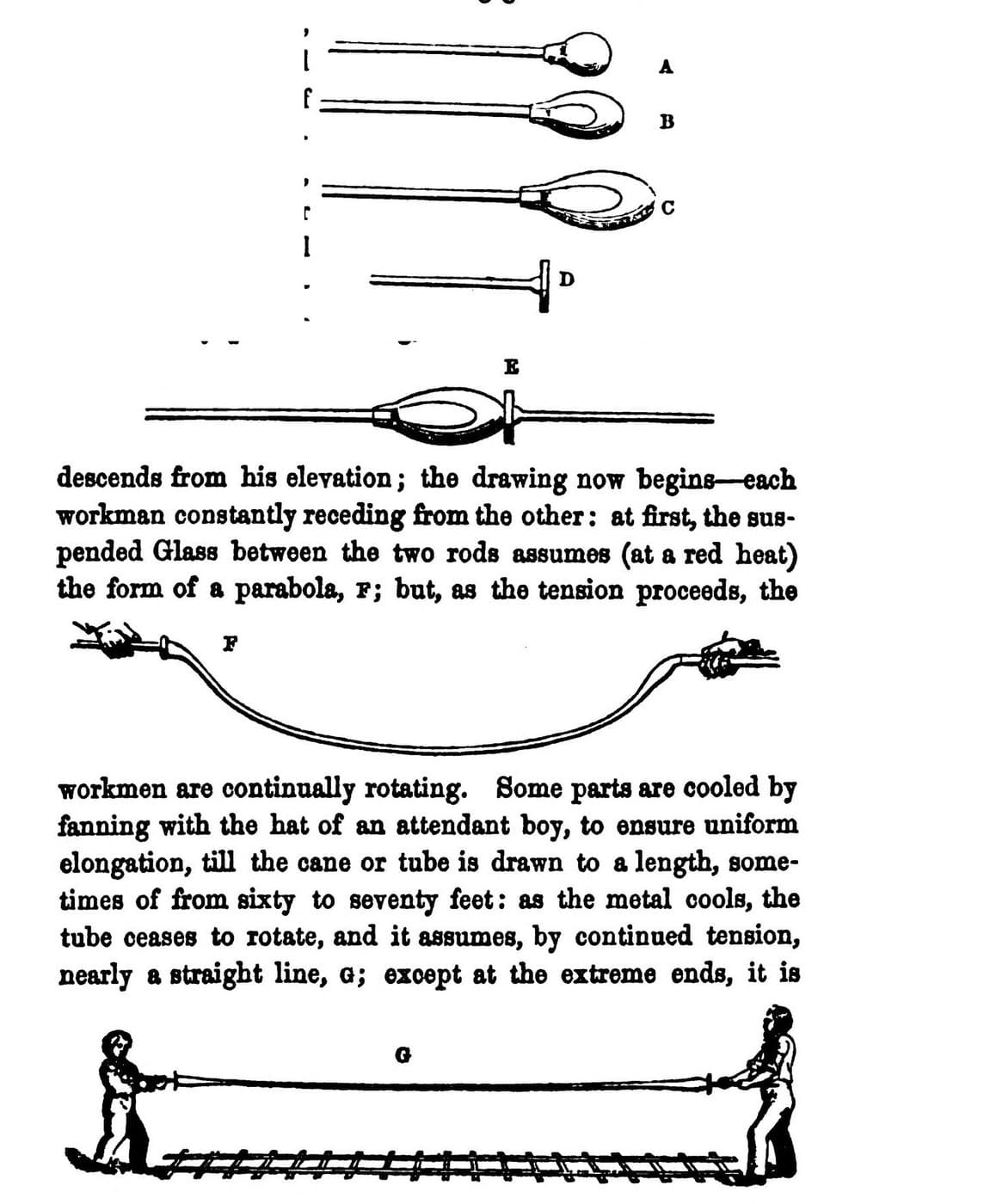
Heat the tube near one end, turning it all the time, and draw it off in a short cone. Draw off the tail with a fine flame passing just below it, lifting the work out when the thread gets thin, so no lump is left. Blow out the little lump slightly, shrink the whole cone a little and blow gently to a round end like a test tube, with walls as thick as the tube's.
Materiais para este passo:
 Tubo de vidro1 piece (18 mm x 1.2 mm wall, 200 mm)
Ferramentas necessárias:
 Maçarico de vidreiro de bancada
 Óculos de segurança
 Luvas resistentes ao calor
5
5
Anneal the bottom
Anneal the bottom
Turn the flame smoky and hold the round end in it until coated with soot, then reduce the flame and cool it in the hot air above until it will not singe cotton wool. Let it cool fully.
Ferramentas necessárias:
Maçarico de vidreiro de bancada Algodão hidrófiloLuvas resistentes ao calor
6
6
Cut to length
Cut to length
Make one scratch with the file edge 80 mm from the bottom (one stroke, no sawing), then pull the ends apart while bending very slightly to open the scratch. The end must be square.
Ferramentas necessárias:
Limas (lima de mão)Paquímetro digital de 6 polegadasLuvas resistentes ao calor7
7
Flange the mouth
Flange the mouth
Turning the vial, heat only the last 2-3 mm of the mouth until it softens and starts to shrink. Warm the flanging tool, touch it to the wax, put it in at an angle and press on the soft edge while turning the vial quickly. Repeat if the flange is too small. Reheat the mouth to softening and anneal it as before.
Materiais para este passo:
 Parafina1 g
Ferramentas necessárias:
Maçarico de vidreiro de bancadaLuvas resistentes ao calorÓculos de segurança8
8
Fit the cork
Fit the cork
Choose a tapered cork that starts into the mouth by about a third of its length. Twist it in; never force a cork into an unannealed vial.
Materiais para este passo:
 Rolhas1 piece (tapered, about 15 to 18 mm)
9
9
Troubleshooting
Troubleshooting
Vial problems and fixes.
Flow
Loading...
10
10
History and honest limits
History and honest limits
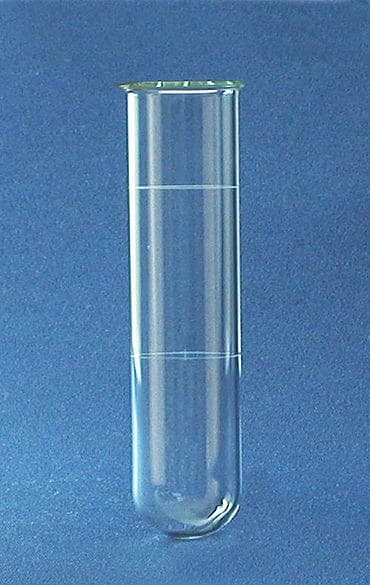
From Francis C. Frary, Laboratory Manual of Glass-Blowing (1914): cutting (p. 7), flanging (pp. 11-12), the rounded test-tube end (Exercises 6 and 8) and annealing in the smoky flame (pp. 3-4). He used a gas blast lamp; borosilicate tube needs a hotter oxygen torch than soft glass. The picture shows a vial from the chemist Georg Bredig's laboratory (moulded, flat bottom); ours has a round blown bottom. Ours: the sizes, the cork and the wooden tool handle. Not made by us yet.
Materiais
3- 1 piece (18 mm x 1.2 mm wall, 200 mm)Referência
- 1 gReferência
- 1 piece (tapered, about 15 to 18 mm)Referência
Ferramentas necessárias
9- Referência
- Referência
- Referência
- Referência
- Referência
- Referência
- Referência
- Referência
- Referência
Materiais de Blueprints conectados

Este projeto faz

Blueprints relacionados
Estes blueprints compartilham conhecimento — técnicas, materiais ou princípios
CC0 Domínio Público
Este blueprint é liberado sob CC0. Você é livre para copiar, modificar, distribuir e usar este trabalho para qualquer finalidade, sem pedir permissão.
Apoie o Maker comprando produtos através do Blueprint, onde ele ganha uma Comissão Maker definida pelos vendedores, ou crie uma nova versão deste Blueprint e inclua-o como conexão no seu próprio Blueprint para compartilhar receita.