Colaboração
ARTE
BELEZA E BEM-ESTAR
ARTESANATO
CULTURA E HISTÓRIA
ENTRETENIMENTO
MEIO AMBIENTE
COMIDA E BEBIDAS
ENGENHARIA REVERSA
CIÊNCIAS
ESPORTES
TECNOLOGIA
TECNOLOGIA VESTÍVEL
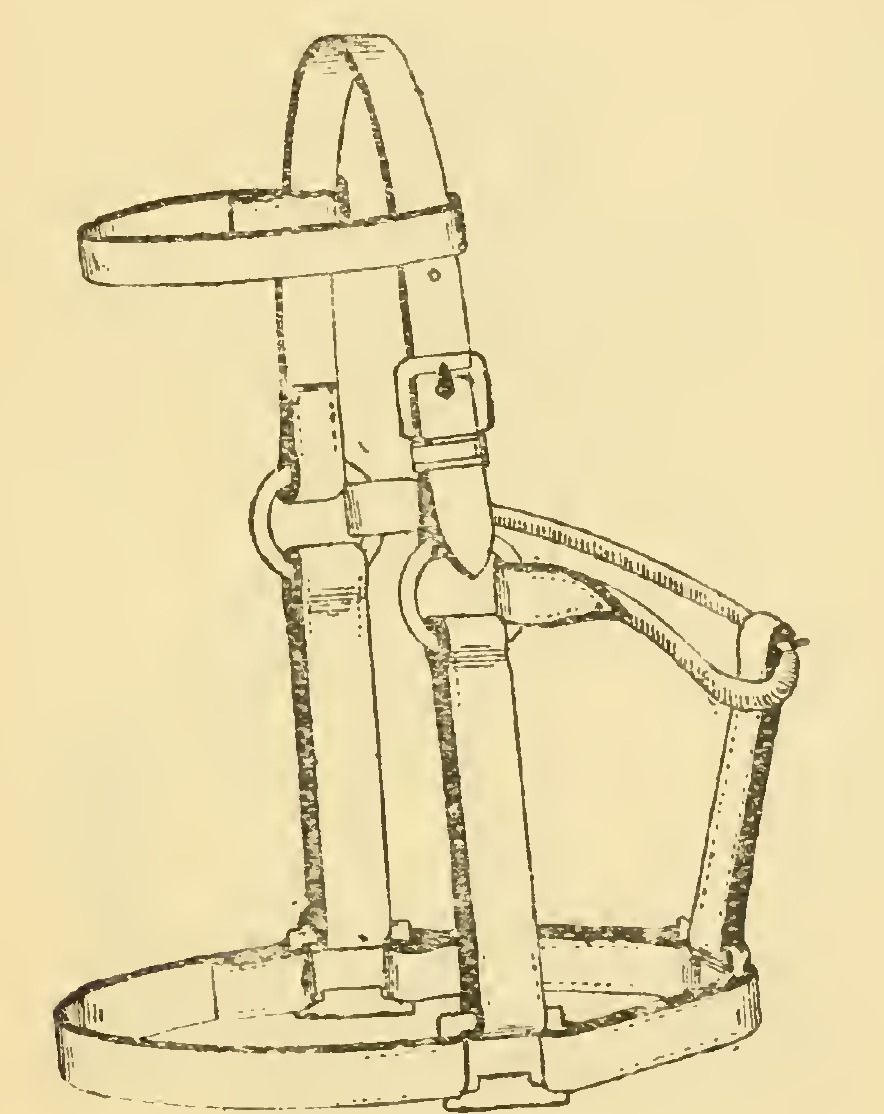


Newmarket Head Collar: Stable Halter With Squared Stays, Noseband, Cheeks and Throat Lash (Hasluck, Saddlery, 1904)
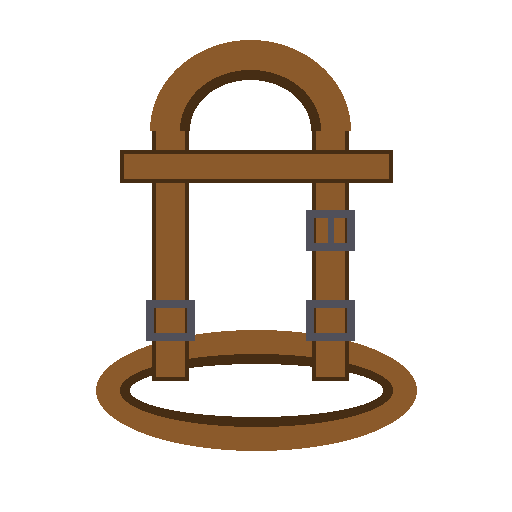
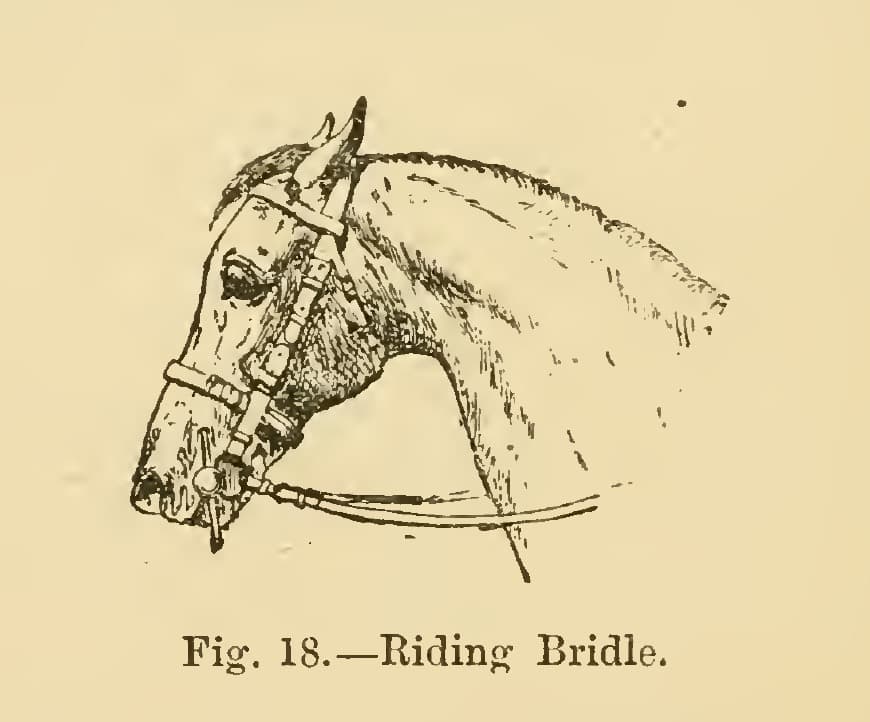
A head collar, also called a headstall or stable collar, ties a horse up in the stable. This is the Newmarket pattern from Paul N. Hasluck's Saddlery (1904): two short stays carrying three stop squares, a noseband, two cheeks, an upward stay, a forehead band, a top strap and a throat lash. Every size is his.
It has no bit; the rein is fastened to the centre square.
Intermediário
About 1 day
Instruções
1
1
Cutting list
Cutting list
A carregar o notebook Jupyter…
2
2
Read Saddlery, ch. VIII
Read Saddlery, ch. VIII
"Head collars, also called headstalls and stable collars, are made in various ways, and one of the most useful styles will be described in this chapter."
3
3
Make the short stays
Make the short stays
Cut two short straps 1 ft by 1-1/4 in and turn them in to 5 in long, leaving 1 in or a little more for overlap. Shave the ends and prick them eight to the inch. Put one square in the centre between them and one in each end, with the stops on the same side. Lay a strip of leather along the centre of each to raise the stay, then stitch with beeswaxed three-cord hemp thread, with a strong cross-stitch at the end of each line.
Materiais para este passo:
 Couro para arreios1 peça
 Quadrado de cabeção3 peças
 Cordel de cânhamo1 peça
 Cera de abelha1 peça
Ferramentas necessárias:
 Faca para couro
 Vazador de costura
 Sovela
 Duas agulhas de correeiro
 Torno de seleiro
 Fita métrica
4
4
Make the noseband
Make the noseband
Cut the noseband 1 ft 3 in long when turned down. Prepare it and put one end, forming a chape, in each of the end squares of the short stays. Stitch two rows along the edges of the turn-down and trim the ends neatly.
Materiais para este passo:
Couro para arreios1 peçaCordel de cânhamo1 peçaCera de abelha1 peçaFerramentas necessárias:
Faca para couroVazador de costuraSovelaDuas agulhas de correeiro5
5
Make the cheeks
Make the cheeks
Cut a pair of cheeks 1-1/4 in by 8 in when bent in both ends. Prepare one end of each for a buckle and shave the points of the other turn-down. Put a runner on each cheek and a loop and the 1-1/4 in roller buckle on one end, then stitch the opposite ends to the two outer squares.
Materiais para este passo:
Couro para arreios1 peça Fivela de rolo1 peçaCordel de cânhamo1 peçaCera de abelha1 peça
Ferramentas necessárias:
Faca para couroSovelaDuas agulhas de correeiro Forma de passadores
6
6
Make the upward stay
Make the upward stay
Cut the short upward stay and stitch it behind in the centre square. Its length when doubled is about 4-1/2 in, with an opening left at the top for the throat lash to run through.
Materiais para este passo:
Couro para arreios1 peçaCordel de cânhamo1 peçaCera de abelha1 peçaFerramentas necessárias:
Faca para couroSovelaDuas agulhas de correeiro7
7
Make the forehead band, top strap and throat lash
Make the forehead band, top strap and throat lash
Make the forehead band like the snaffle bridle front. Cut the top strap 2 ft by 1-1/4 in and, when finished, punch about four holes on both sides. Make the throat lash 3 ft 6 in by 3/4 in, with the 3/4 in roller buckle, a loop and a runner, and about nine holes.
Materiais para este passo:
Couro para arreios1 peçaFivela de rolo1 peçaCordel de cânhamo1 peçaCera de abelha1 peçaFerramentas necessárias:
Faca para couro Vazador para couroSovelaDuas agulhas de correeiroForma de passadores
8
8
Put it together
Put it together
Put the forehead band on the head strap and buckle it on both sides in the cheeks. Run the throat lash from the near side through the opening in the upward stay and under the head strap, then through the opening in the forehead band on each side, and bring the point down to the buckle on the near side. If the collar has only one cheek, on the near side, make the strap on the other side 2 ft 9 in long.
9
9
Troubleshooting
Troubleshooting
Head collar troubleshooting.
Flow
Loading...
10
10
History and honest limits
History and honest limits
From **Saddlery**, edited by Paul N. Hasluck, David McKay, 1904 (archive.org saddlery00hasl), chapter VIII, "Head Collars", the Newmarket head collar, Fig. 23; every fraction was read on the scan. His list names one 1-1/4 in roller buckle and one 3/4 in buckle; the throat lash takes a roller buckle of its own width, and fitting the larger one to the cheek is our reading. Not made here: the Albert and Queen's pattern collars and the head collar reins. The metric figures are ours.
Materiais
5- 5 peçasReferência
- 3 peçasReferência
- 5 peçasReferência
- 5 peçasReferência
- 1 peçaReferência
Ferramentas necessárias
8- Referência
- Referência
- Referência
- Referência
- Referência
- 1 vendor sell this, none ship to you yetReferência
- Referência
- Referência
Este projeto faz
Blueprints relacionados
Estes blueprints compartilham conhecimento — técnicas, materiais ou princípios
CC0 Domínio Público
Este blueprint é liberado sob CC0. Você é livre para copiar, modificar, distribuir e usar este trabalho para qualquer finalidade, sem pedir permissão.
Apoie o Maker comprando produtos através do Blueprint, onde ele ganha uma Comissão Maker definida pelos vendedores, ou crie uma nova versão deste Blueprint e inclua-o como conexão no seu próprio Blueprint para compartilhar receita.