ARTE
BELEZA E BEM-ESTAR
ARTESANATO
CULTURA E HISTÓRIA
ENTRETENIMENTO
MEIO AMBIENTE
COMIDA E BEBIDAS
ENGENHARIA REVERSA
CIÊNCIAS
ESPORTES
TECNOLOGIA
TECNOLOGIA VESTÍVEL
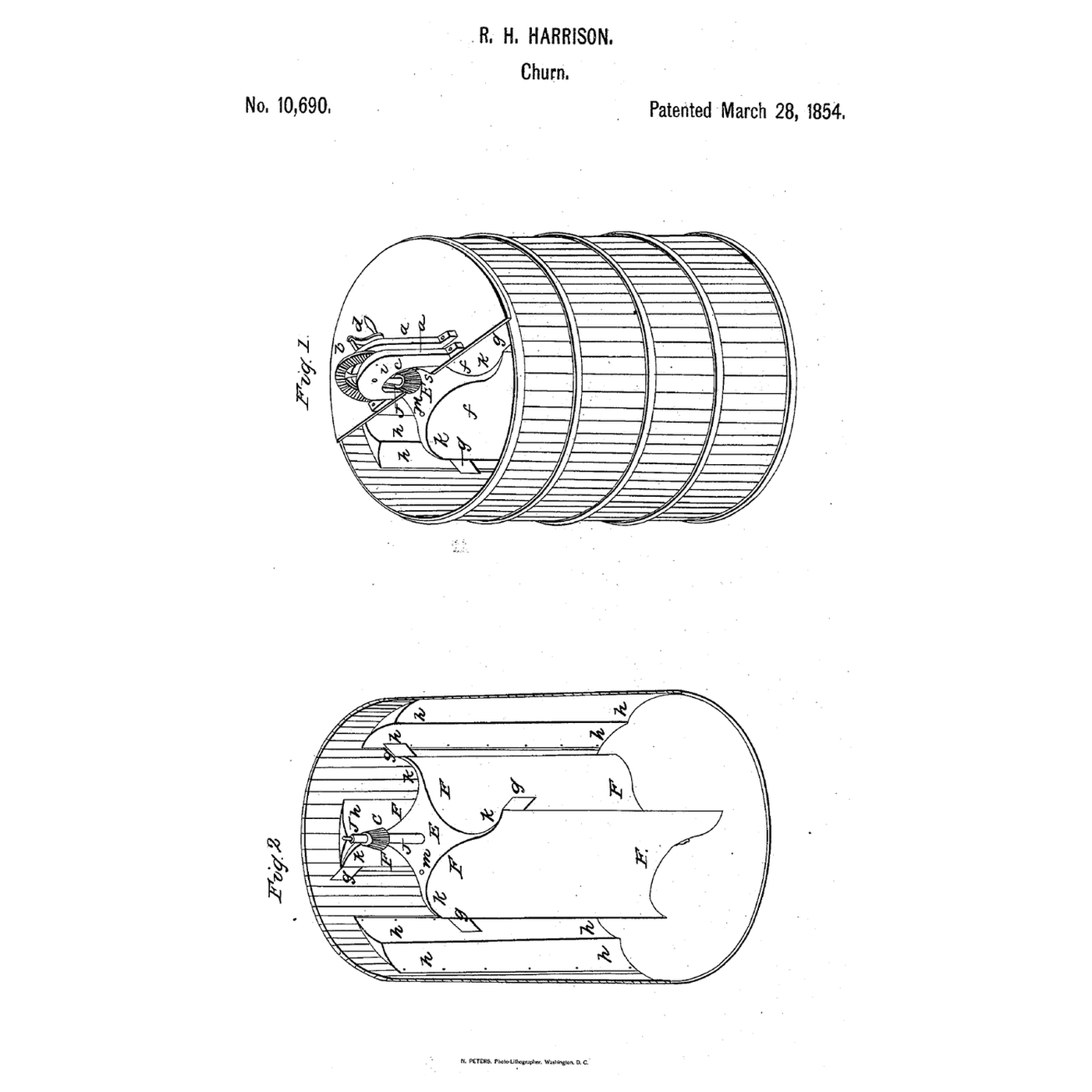

Hydrothermal Reservoir Dasher Churn: Warm Water in the Dasher to Churn, Cold to Firm the Butter
Harrison carried the water to temper the cream inside the dasher itself.
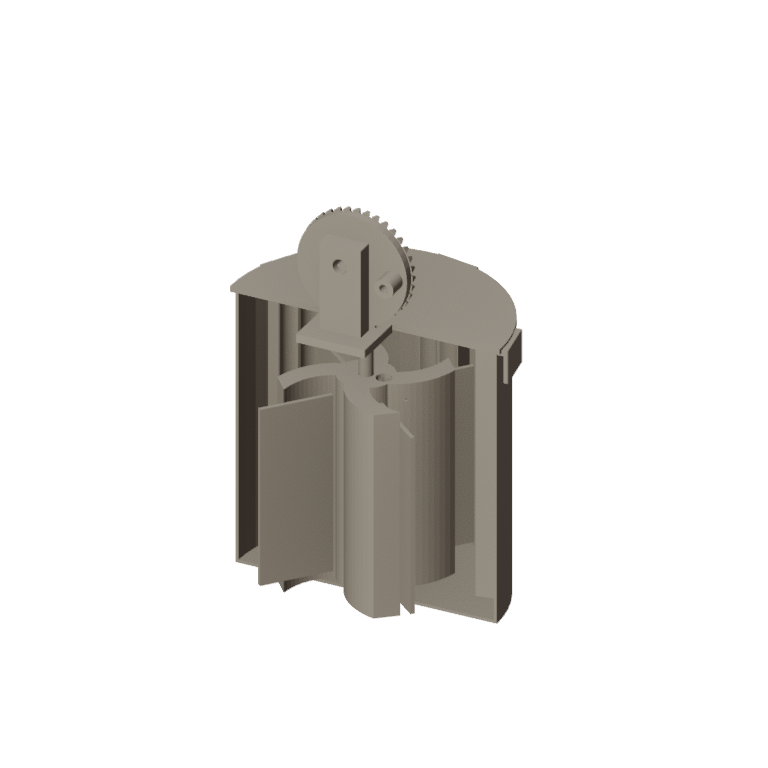
Robert H. Harrison of Washington, District of Columbia, assignor to R. H. Harrison and Jno. S. Gallaher, Jr., received US 10,690, dated 28 March 1854, for what he termed "the hydrothermal churn": a vertical "concavo-convex rotary reservoir dasher having hollow, deflective, or curved radial chambers" and straight radial wings, turned by a winch through a driving wheel and bevel gear, with "double concave vertically arranged cleats or butter gatherers" of tin round the vessel's inside, which can hold water too. Hot water poured in through a hole in the dasher tempers the cream; once the butter appears, cold water substituted for it firms the butter, and in hot weather cold water or pounded ice goes in.
This rung works out how far the dasher's water can move the cream's temperature, then prints the reservoir dasher, gatherers and gears, builds the churn, and makes butter.
Intermediário
About 4 hours, plus printing
Instruções
1
1
Water in the dasher
Water in the dasher
A carregar o notebook Jupyter…
2
2
Tempering the cream with water before it
Tempering the cream with water before it
The embedded blueprint puts hot or cold water in a chamber under the churn. Harrison puts it inside the dasher and the side gatherers, where it turns through the cream.
3
3
Read US 10,690
Read US 10,690
"These particles are not spontaneously accumulated in concrete mass, but by the aid of cold water substituted in lieu of the warm water, which is withdrawn from the dasher by detaching the dasher from the churn vessel, the concave gatherers F, F, F, F, and h, h, h, h augmenting the concretion and forming the mass of butter without requiring much, if any, additional agency."
4
4
Print the parts
Print the parts
Print the hollow reservoir dasher with its four curved chambers, wings and filling hole (/uploads/blueprints/hydrothermal-reservoir-dasher-churn-reservoir-dasher.stl) standing up with 4 walls so it holds water, three or four hollow gatherers (/uploads/blueprints/hydrothermal-reservoir-dasher-churn-gatherer.stl), the 36-tooth crown wheel (/uploads/blueprints/hydrothermal-reservoir-dasher-churn-crown-wheel.stl), the 12-tooth pinion (/uploads/blueprints/hydrothermal-reservoir-dasher-churn-pinion.stl) and the standard (/uploads/blueprints/hydrothermal-reservoir-dasher-churn-standard.stl). Fill the dasher and gatherers with water and check for leaks before use. Print in PETG at 0.2 mm layers, 30 % infill, 4 walls; wash before first use.
Materiais para este passo:
 Filamento PETG1 peça
Ferramentas necessárias:
 Impressora 3D de filamento (FDM)
5
5
Vessel and gatherers
Vessel and gatherers
Use a straight-sided round food-grade container about 190 mm across inside and 200 mm deep. Hook the gatherers over its rim, spaced round the side, their double-concave faces inward.
Materiais para este passo:
 Recipiente de armazenamento de grau alimentar1 peça
Ferramentas necessárias:
 Lixa
Lixa6
6
Dasher, gears and winch
Dasher, gears and winch
Slide the reservoir dasher onto a 10 mm stainless rod and tighten its set screw, its foot standing in a shallow hole in a scrap of the lid laid in the bottom. Fix half the lid over the vessel with a hole for the rod, the pinion on the rod's top, and the standard with the crown wheel meshing it; screw a dowel handle into the wheel's boss. Fit a cork to the filling hole.
Materiais para este passo:
 Varão de aço macio1 peça
 Rolhas1 peça
 Cavilhas de madeira dura1 peça
 Parafuso para madeira n.º 8 x 1"1 peça
 Parafusos de máquina1 peça
Ferramentas necessárias:
 Serra de arco para metais
 Berbequim sem fios
 Jogo de brocas
 Conjunto de chaves de fendas
7
7
The build in 3D
The build in 3D
FreeCAD model of this build, not of the patent: the vessel cut away to show the hollow reservoir dasher with its four curved chambers and wings, the hollow gatherers hooked over the rim, and the crown wheel and pinion on the half lid.
8
8
Temper, churn, then firm
Temper, churn, then firm
Check the cream's temperature. If it is below about 15 °C, fill the dasher with lukewarm water, cork it and stir slowly until the cream reaches about 15 °C; if it is above, use cold water. Pour in 1.5 litres and turn the winch at a moderately rapid rate; time until the butter comes. Lift out the dasher, empty it, refill it with cold water or ice and water, and turn slowly to gather the butter. Pour off the buttermilk, add cold water, churn a little and pour off again until it runs clear; work in a pinch of salt and weigh the butter.
Materiais para este passo:
 Natas para bater1500 ml
 Cubos de gelo1 peça
 Sal marinho grosso1 peça
 Água1 peça
Ferramentas necessárias:
 Termómetro de sonda permanente
 Cronómetro
 Balança digital de cozinha
 Taça grande de aço inoxidável
9
9
A dasher that leaks, cream that will not warm
A dasher that leaks, cream that will not warm
Hydrothermal churn troubleshooting.
Flow
Loading...
10
10
History and honest limits
History and honest limits
**Robert H. Harrison** of Washington, District of Columbia, assignor to R. H. Harrison and Jno. S. Gallaher, Jr., received US 10,690, dated 28 March 1854. He wrote that turning for "3 to 5 minutes" is all that is required for the separation, that fresh milk can be used, and that the wings act "as coolers or fans" drawing cool air in through a vent round the spindle; these are his claims, not tested here. He claimed the vessel with double concave gatherers or water reservoirs, the reservoir dasher with curved chambers and radial wings combined with them, and the double application of warm and cold water or ice with both; he did not claim the use of hot or cold water alone in butter making, "as the same have been employed separately, or distinctly heretofore."
**Honest limits.** A container, printed parts and a crown wheel with a spur pinion stand in for his tin and bevel gearing. PETG softens at about 55–60 °C, so we use lukewarm water rather than hot. The notebook's temperatures are upper bounds with an estimated specific heat. FDM prints hold food in their layer lines, so wash well and replace when worn. Your times and weights are the result.
Materiais
11- 1 peçaReferência
- Referência
- 1 peçaReferência
- 1 peçaReferência
- 1 peçaReferência
- Referência
- 1 peçaReferência
- 1500 mlReferência
- 1 peçaReferência
- 1 peçaReferência
- 1 peçaReferência
Ferramentas necessárias
10- Referência
- Referência
- Referência
- 1 vendor sell this, none ship to you yetReferência
- Referência
- Referência
- Referência
- Referência
- Referência
- Referência
Ficheiros de design
1Blueprints relacionados
Estes blueprints compartilham conhecimento — técnicas, materiais ou princípios
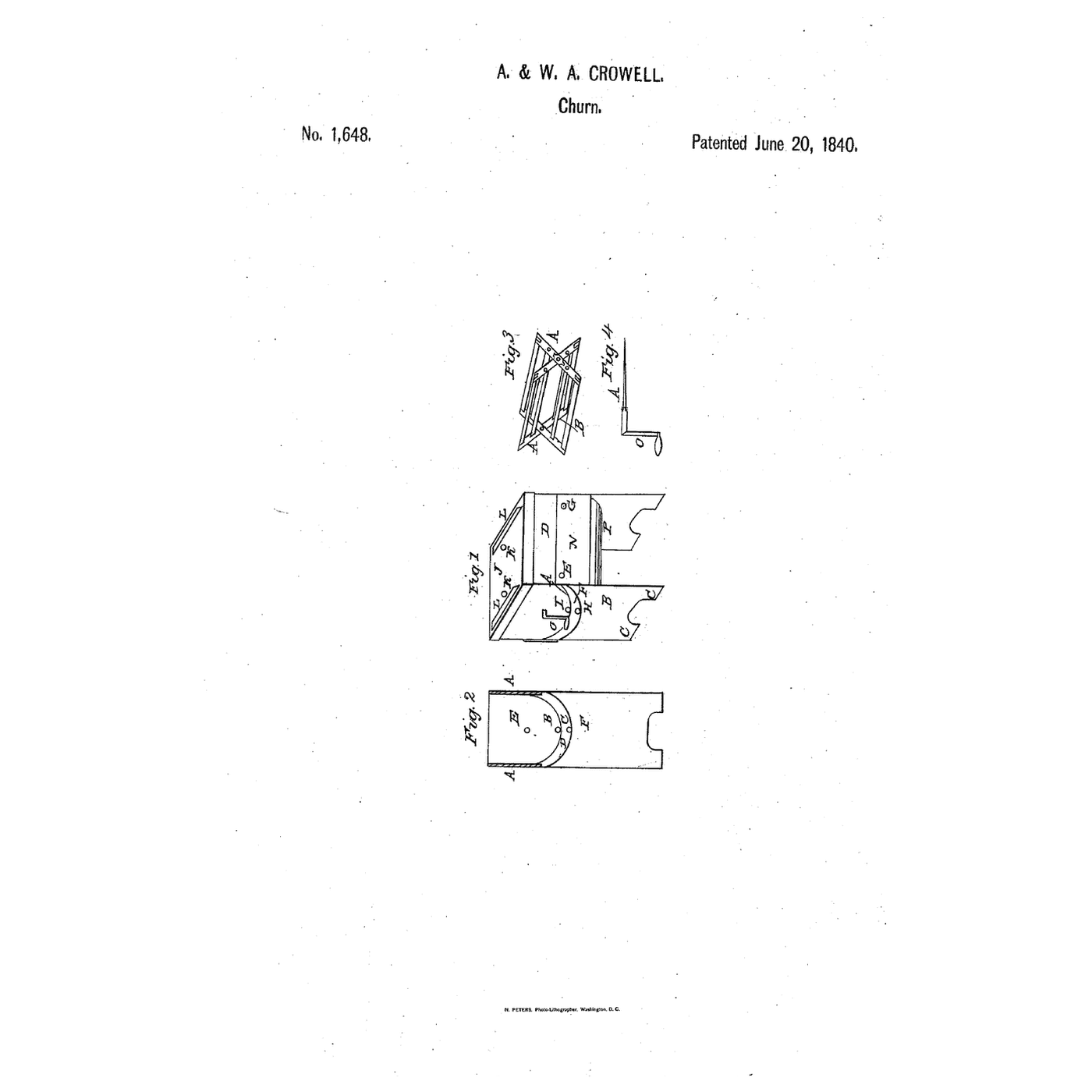
Water-Jacketed Churn: Hot or Cold Water Under a Metal Plate Tempers the Cream
por Karen
COMIDA E BEBIDAS
1
0
0
0
0
0
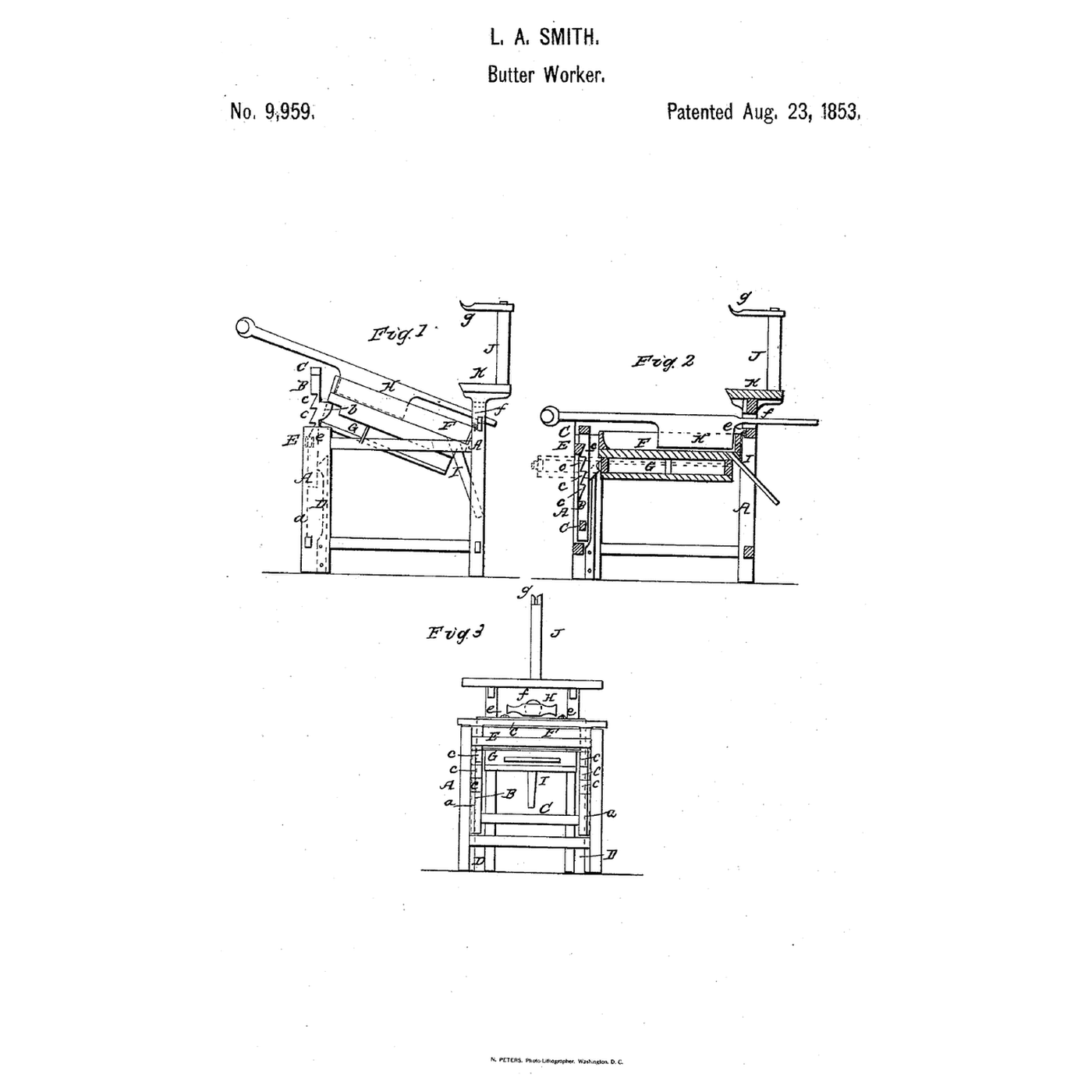
Ice-Drawer Butter Worker: An Ice Box Under the Tray, a Worker With Acute Edges
por YourGrandma
Marcenaria
1
0
0
0
0
0
Churning Butter from Cream — The 5,000-Year-Old Fat Separation
por TheChef
ARTESANATO
47
0
0
0
0
0
CC0 Domínio Público
Este blueprint é liberado sob CC0. Você é livre para copiar, modificar, distribuir e usar este trabalho para qualquer finalidade, sem pedir permissão.
Apoie o Maker comprando produtos através do Blueprint, onde ele ganha uma Comissão Maker definida pelos vendedores, ou crie uma nova versão deste Blueprint e inclua-o como conexão no seu próprio Blueprint para compartilhar receita.