ARTE
BELEZA E BEM-ESTAR
ARTESANATO
CULTURA E HISTÓRIA
ENTRETENIMENTO
MEIO AMBIENTE
COMIDA E BEBIDAS
ENGENHARIA REVERSA
CIÊNCIAS
ESPORTES
TECNOLOGIA
TECNOLOGIA VESTÍVEL
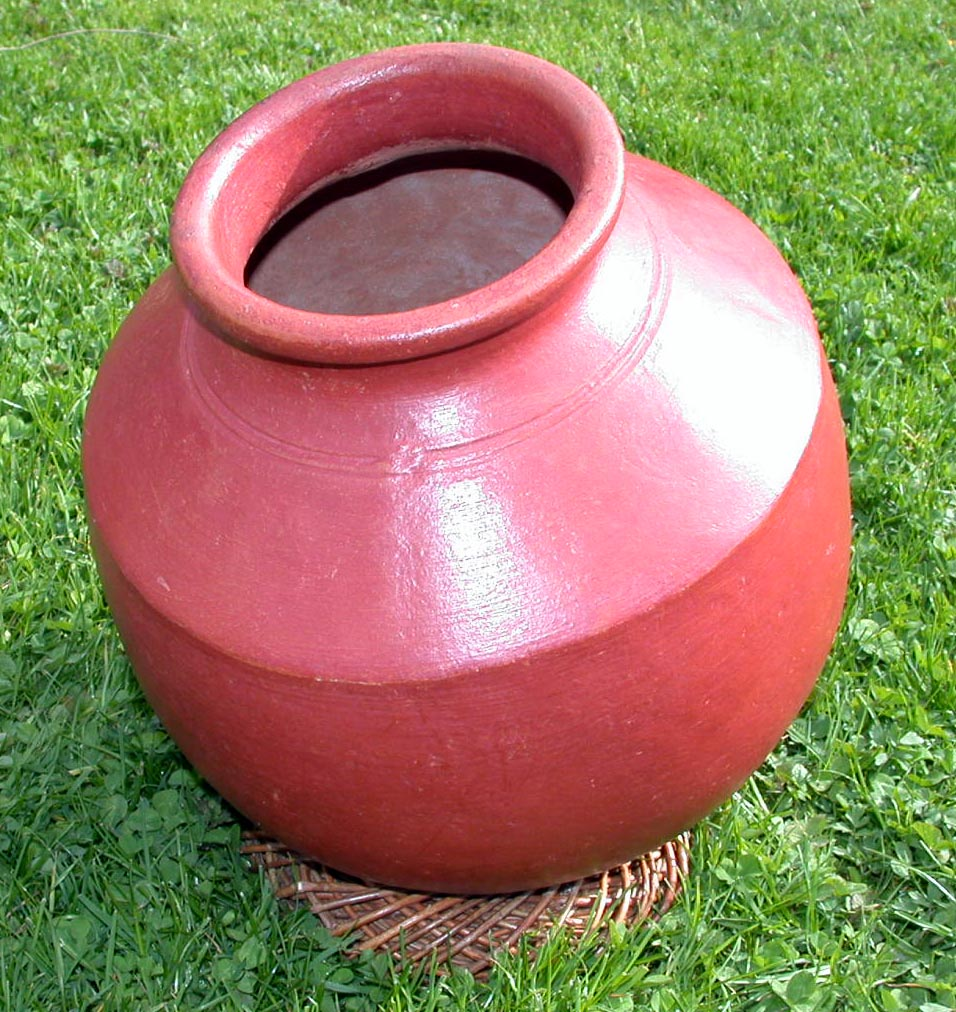


Making a Ghatam — The South Indian Clay Pot Drum
Make a ghatam: a fired clay pot played as a drum in South Indian music. Your hands strike its rim and belly for the tones, and pressing its open mouth to your bare stomach bends a deep bass boom. A buildable ceramics school project that is two instruments in one — an idiophone you strike and a Helmholtz resonator you tune with your body.
Iniciante
45 minutes
Instruções
1
1
A pot you play with your whole body
A pot you play with your whole body
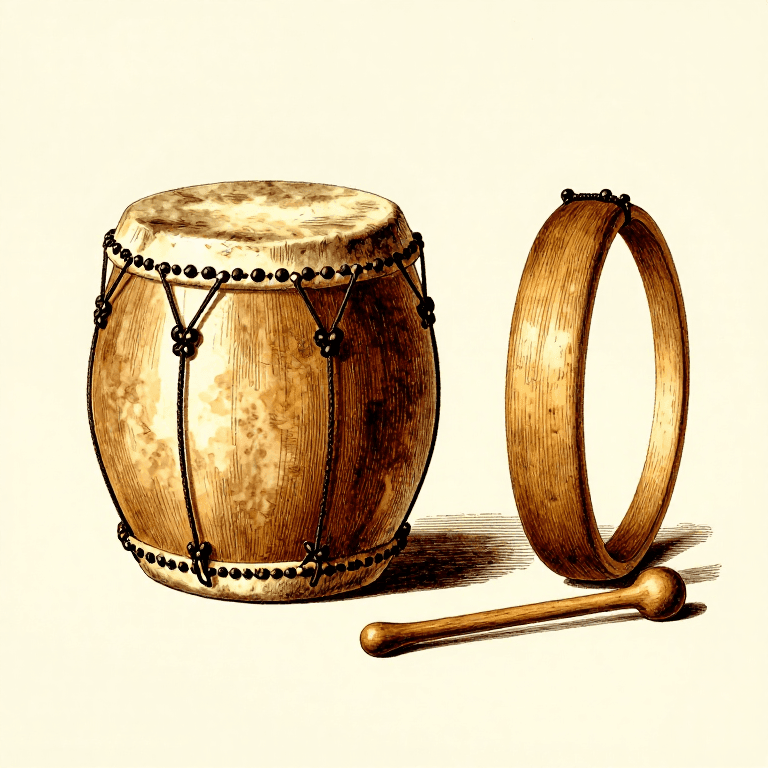
The ghatam is a fired clay pot played as a drum. Your hands make the tones on its rim and belly, and pressing its open mouth against your stomach bends a deep bass note.
2
2
Prepare the clay
Prepare the clay
Wedge a large ball of clay firmly to press out every air bubble. The famous Manamadurai ghatams mix a little brass filings into the clay for a bright, ringing tone.
Materiais para este passo:
 Argila de faiança2000 g
3
3
Form the pot body
Form the pot body
Shape a rounded pot with a full, bulging belly and thick, even walls. The wall thickness sets the pitch — thicker walls ring lower.
Ferramentas necessárias:
 Conjunto de ferramentas de oleiro
4
4
Narrow the mouth
Narrow the mouth
Draw the top of the pot inward to a fairly narrow, round mouth. The size of this opening tunes the deep bass note you will play against your belly.
5
5
Smooth the walls
Smooth the walls
Smooth the walls inside and out and check they are even all round. Even, well-made walls ring cleanly; thin or lumpy spots sound dull or crack in the fire.
6
6
Dry it slowly
Dry it slowly
Dry the pot slowly for several days, out of direct heat, until it is bone-dry and pale. Rushing this cracks a big pot.
7
7
Fire it
Fire it
Fire the pot hard in a kiln. Firing turns soft clay into ringing ceramic — a well-fired ghatam has a bright, clear voice when you tap it.
8
8
Find the hand tones
Find the hand tones
Sit with the pot on your lap, mouth toward your belly. Tap the belly with your fingers for round mid tones, and the hard rim near the mouth for high, sharp cracks.
9
9
Play the bass boom
Play the bass boom
Strike the pot and at the same instant press its open mouth flat against your bare stomach. The trapped air gives a deep 'gu' boom. Lift the mouth away and the bass slides upward.
10
10
Build a rhythm
Build a rhythm
Move between rim, belly and belly-bass using fingers, palms, wrists and nails to build the fast, rolling rhythms of South Indian Carnatic music.
11
11
Compendium — the pot as idiophone and resonator
Compendium — the pot as idiophone and resonator
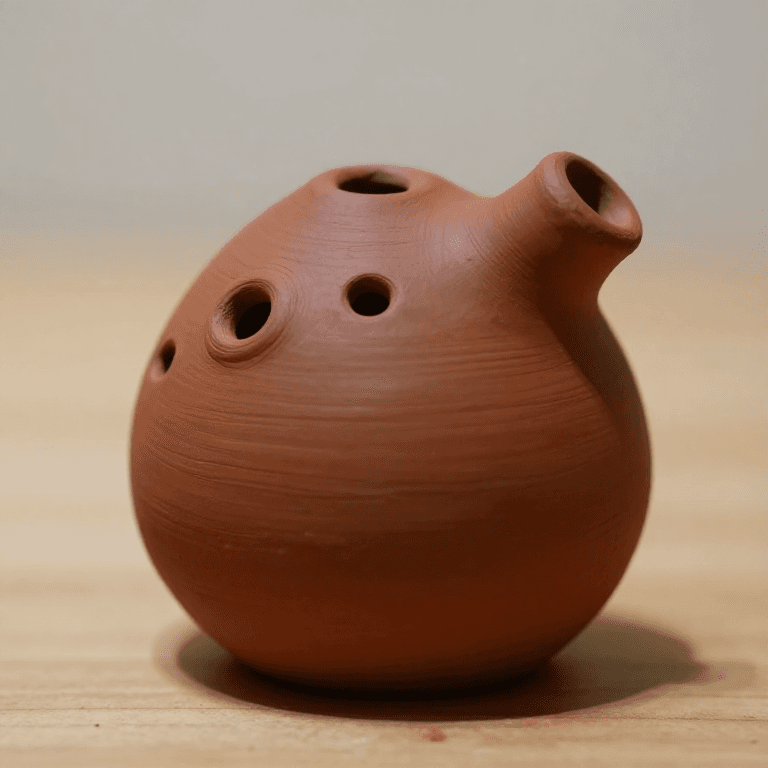
The ghatam is two instruments in one clay pot. Struck, the hard fired clay body itself rings — it is an idiophone, sounding from its own material like a bell or a bone clapper, and where you hit it (the thin rim versus the thick belly) picks out higher or lower ringing tones. But the pot is also a Helmholtz resonator: the body of air trapped inside springs in and out through the mouth opening, exactly like blowing across a bottle, giving a deep bass note whose pitch depends on the pot's VOLUME and the size of its MOUTH. That is why the ghatam's most magical sound, the deep 'gu', is made by pressing the open mouth against the player's bare belly, which nearly seals it: closing the opening lowers the Helmholtz pitch for a booming bass, and lifting the pot away opens it and slides the bass back up. The whole pot is tuned by its size and wall thickness at the moment it is made and fired — there are no holes, skins or strings to adjust — so players keep several pots of different pitches. Its cousins on Youblob are the clay ocarina, which uses the very same Helmholtz air-spring to make its notes, and the frame drum and bone clappers, its fellow percussion. Ghatams from Manamadurai in Tamil Nadu are prized for clay blended with brass filings that gives them a bright, metallic ring.
Materiais
1- 2000 gReferência
Ferramentas necessárias
1- Referência
Blueprints relacionados
Estes blueprints compartilham conhecimento — técnicas, materiais ou princípios

CC0 Domínio Público
Este blueprint é liberado sob CC0. Você é livre para copiar, modificar, distribuir e usar este trabalho para qualquer finalidade, sem pedir permissão.
Apoie o Maker comprando produtos através do Blueprint, onde ele ganha uma Comissão Maker definida pelos vendedores, ou crie uma nova versão deste Blueprint e inclua-o como conexão no seu próprio Blueprint para compartilhar receita.