Colaboração
ARTE
BELEZA E BEM-ESTAR
ARTESANATO
CULTURA E HISTÓRIA
ENTRETENIMENTO
MEIO AMBIENTE
COMIDA E BEBIDAS
ENGENHARIA REVERSA
CIÊNCIAS
ESPORTES
TECNOLOGIA
TECNOLOGIA VESTÍVEL
Longquan Celadon Bowls: Glaze of Glaze Stone, Husk-and-Lime Ash and Zijin Clay, Reduction Fired
Clay

Criado por

Clay

1. novembro 2026DK
13
0
0
0
0

Longquan Celadon Bowls: Glaze of Glaze Stone, Husk-and-Lime Ash and Zijin Clay, Reduction Fired

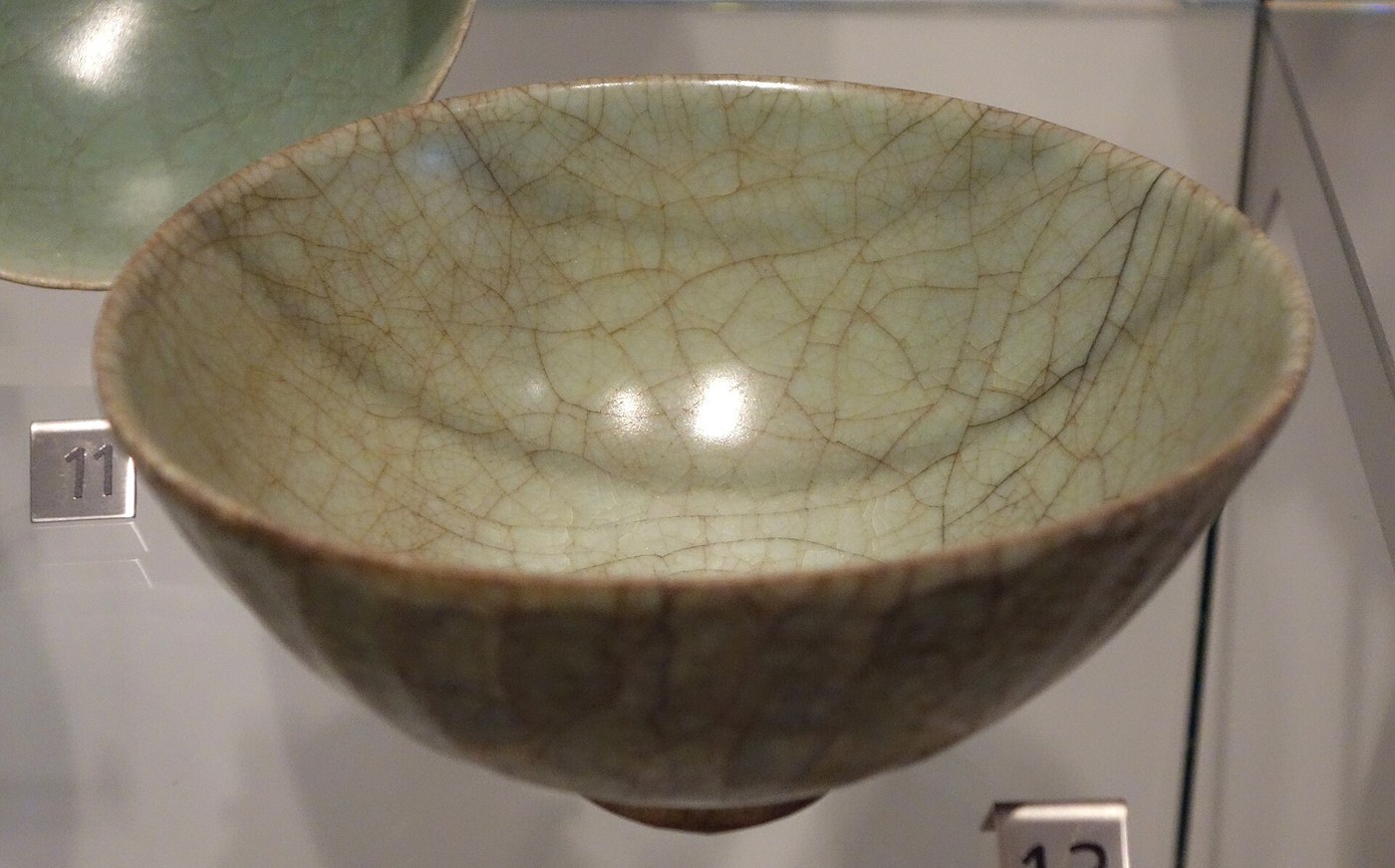
Longquan celadon, made in Longquan, China, since the 10th century, is a thick jade-green glaze over a bisque-fired body. The glaze is three powders washed out of local materials: glaze stone, the ash of rice husk burnt together with limestone, and iron-rich Zijin clay. Fired in reduction between 900 and 1230 °C, the iron in the glaze turns blue-green. Result: thick-glazed, jade-green celadon bowls. Source: the video 'Longquan celadon' by Shanbai (2025), checked frame by frame against its captions. Not given: amounts, the glaze proportion, ageing times, how iron is taken out, firing times. Unknown: the clay body of the bowls; the video does not show it. Photo: Southern Song Longquan bowl, Royal Ontario Museum, by Daderot (CC0).
Avançado
several weeks

Instruções

1

Watch: Longquan celadon from stone to bowl

The whole process in eight minutes, by Shanbai: preparing the three glaze materials, throwing and bisque firing the bowls, glazing, and the reduction firing.
2

Pound the glaze stone

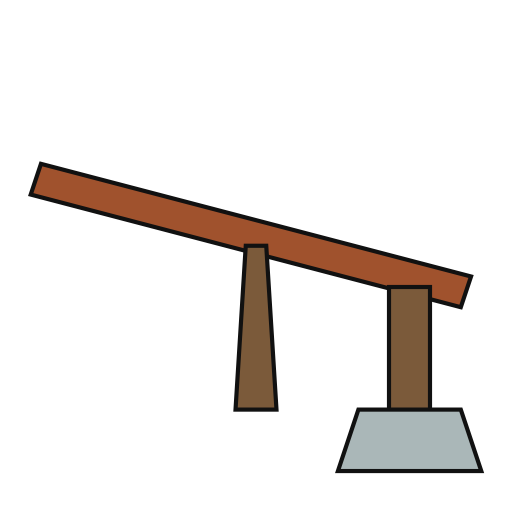
Crush the glaze stone in a stone mortar with a foot-trodden pestle.

Materiais para este passo:

Pedra de vidradoPedra de vidrado1 as required

Ferramentas necessárias:
Pilão de péPilão de pé
3

Sieve and settle the stone

Sieve the crushed stone and pound the coarse bits again. Stir the fine stone into water in a vat, sieve off the fine particles suspended in the water into another vat, and let them settle.

Ferramentas necessárias:

Conjunto de peneiras (malha graduada)Conjunto de peneiras (malha graduada)
ÁguaÁgua
Frasco de cerâmica com tampaFrasco de cerâmica com tampa
Concha de servirConcha de servir
4

Burn rice husk with limestone

In a brick-edged bed outdoors, lay rice husk and limestone in alternate layers and burn them. Turn the materials several times during the firing so the husk burns completely.

Materiais para este passo:

Casca de arrozCasca de arroz1 as required
Bloco de calcárioBloco de calcário1 as required

Ferramentas necessárias:
TijoloTijolo
PáPá
5

Sieve and wash the ash

Sieve the ash into a vat. Add water and ladle it through a fine sieve into a fresh vat. While this 'black glaze' settles, change the water and wash it several times.

Ferramentas necessárias:

Conjunto de peneiras (malha graduada)Conjunto de peneiras (malha graduada)
Frasco de cerâmica com tampaFrasco de cerâmica com tampa
ÁguaÁgua
Concha de servirConcha de servir
6

Mill and settle the Zijin clay

Grind the dry Zijin clay to powder in a stone hand mill. Mix it well with water, sieve it into a fresh vat and let the fine particles settle.

Materiais para este passo:

Argila zijinArgila zijin1 as required

Ferramentas necessárias:
Moinho de mão de pedraMoinho de mão de pedra
ÁguaÁgua
Conjunto de peneiras (malha graduada)Conjunto de peneiras (malha graduada)
Frasco de cerâmica com tampaFrasco de cerâmica com tampa
7

Dewater in bags, then age

Drain the water off each of the three vats without stirring up the settled powder. Scoop each paste into a cloth bag, lay the bags on a board and press them under a millstone. When they are dewatered to a certain degree, let them age for a while. Not given: how long. Ours: linen bags (as in the transcript).

Ferramentas necessárias:

Concha de servirConcha de servir

Saco de linhoSaco de linho
Mó de mãoMó de mão
8

Throw the bowls

Throw the bowls on the wheel and let them air-dry in the shade. Unknown: the clay body; the video does not show what it is or how it is made.

Materiais para este passo:

Pasta cerâmica desconhecidaPasta cerâmica desconhecida1 as required

Ferramentas necessárias:
Roda de oleiroRoda de oleiro

9

Trim and stamp

Set each dry bowl upside down on a chuck on the wheel, trim the outside and the foot smooth, and stamp your mark in the foot.

Ferramentas necessárias:

Roda de oleiroRoda de oleiro
Ferramentas de torneamento em verdeFerramentas de torneamento em verde
Carimbo de oleiroCarimbo de oleiro
10

Bisque fire at about 800 °C

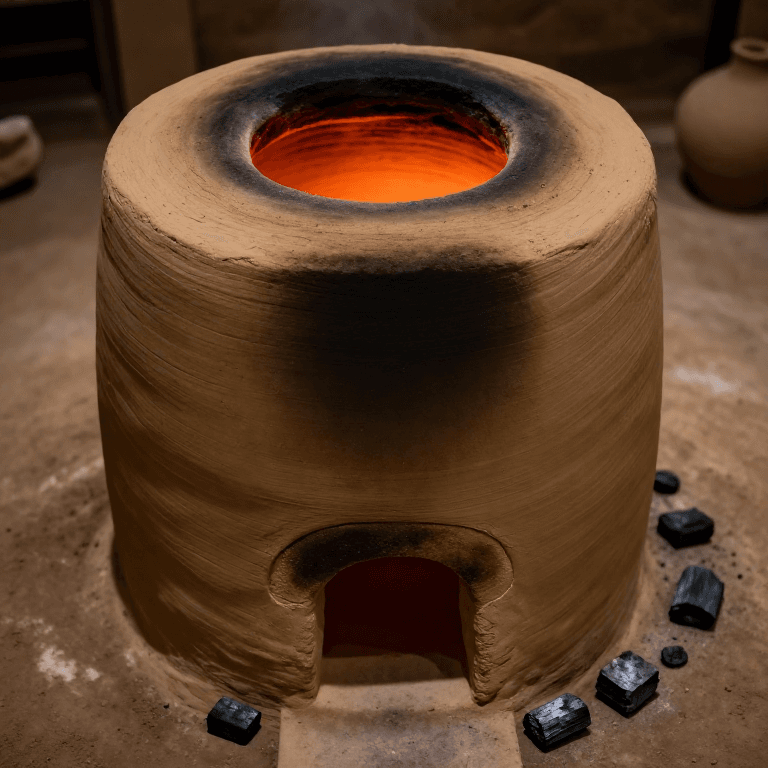
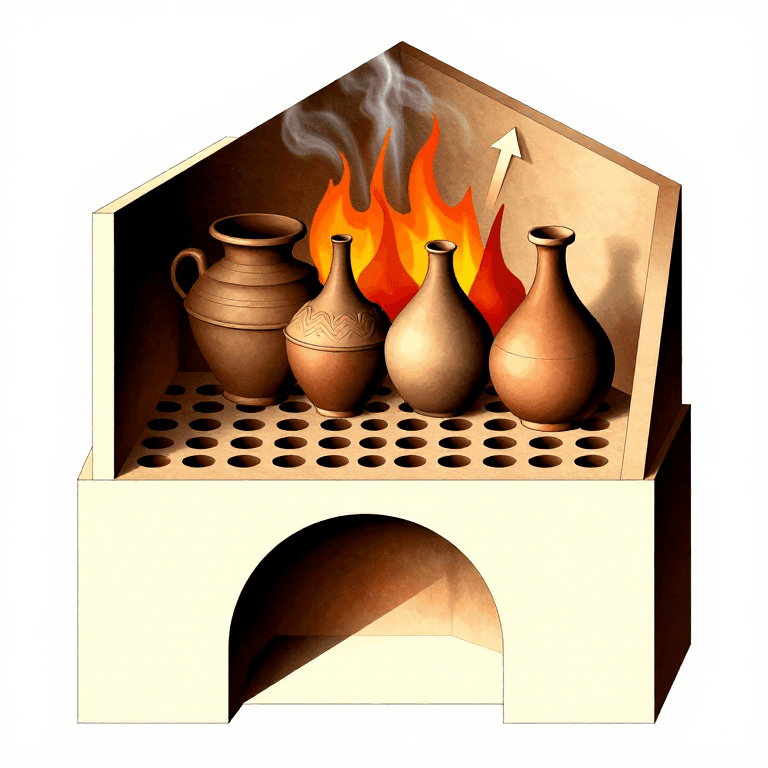
Stack the bowls in the kiln, brick up the door and seal it with mud, and fire with wood to about 800 °C. The bisque firing makes the body stronger and more absorbent, so the glaze takes better.

Ferramentas necessárias:

Forno cerâmicoForno cerâmico
TijoloTijolo
LenhaLenha
PirómetroPirómetro
11

Make the glaze

Mix the burnt husk-and-lime ash, the glaze stone and the Zijin clay in proportion, add about an equal amount of water, stir and grind fine. Sieve it, take out the iron, and let the glaze age in the glaze vat. Not given: the proportion, how the iron is removed, how long it ages. Rice husk ash, glaze stone and Zijin clay give the silica, feldspar and kaolin; Zijin clay's iron is the colourant; lime and the potash and soda of feldspar lower the melting point.

Ferramentas necessárias:

Almofariz e pilão de pedraAlmofariz e pilão de pedra
ÁguaÁgua
Conjunto de peneiras (malha graduada)Conjunto de peneiras (malha graduada)
Frasco de cerâmica com tampaFrasco de cerâmica com tampa
12

Dip the bowls

Hold each bisque bowl with wire tongs and dip it into the glaze. Let it air-dry.

Ferramentas necessárias:

Tenaz de mergulhoTenaz de mergulho
Frasco de cerâmica com tampaFrasco de cerâmica com tampa
13

Spray on more glaze

Set the bowl upside down on a chuck on the wheel and spray glaze evenly over the outside with a mouth-blown sprayer. Repeated bisque firings, dipping and thin spray coats build a thick glaze; Longquan celadon is a lime-alkali glaze that stays put at high temperature. Scrape the glaze off the foot with a knife.

Ferramentas necessárias:

Roda de oleiroRoda de oleiro
Pulverizador de vidrado sopradoPulverizador de vidrado soprado
FacaFaca
14

Reduction fire in saggars

Set the bowls in saggars, stack them in the kiln and seal the door. Between 900 °C and 1230 °C, feed fuel often, and when combustion is insufficient fire in reduction: the iron in the glaze gives up oxygen, and the mix of divalent and trivalent iron turns the glaze blue-green. Not given: how long the firing takes.

Ferramentas necessárias:

Caixa refratáriaCaixa refratária
Forno cerâmicoForno cerâmico
TijoloTijolo
LenhaLenha
PirómetroPirómetro

Materiais

5

Ferramentas necessárias

21

CC0 Domínio Público

Este blueprint é liberado sob CC0. Você é livre para copiar, modificar, distribuir e usar este trabalho para qualquer finalidade, sem pedir permissão.

Apoie o Maker comprando produtos através do Blueprint, onde ele ganha uma Comissão Maker definida pelos vendedores, ou crie uma nova versão deste Blueprint e inclua-o como conexão no seu próprio Blueprint para compartilhar receita.

Discussão

(0)

Entrar para participar da discussão

Carregando comentários...